Nov 12 2008

Cold Wind At Dawn

Published by Kate St. John under Musings

Clouds (photo from Shutterstock)The one good thing about winter is that it’s easy for me to be up before the sun.  Despite the cold I sit on my front porch and watch the sky, waiting for the birds to wake up. 

It is still dark.  The wind is cold.  The weather has changed. 

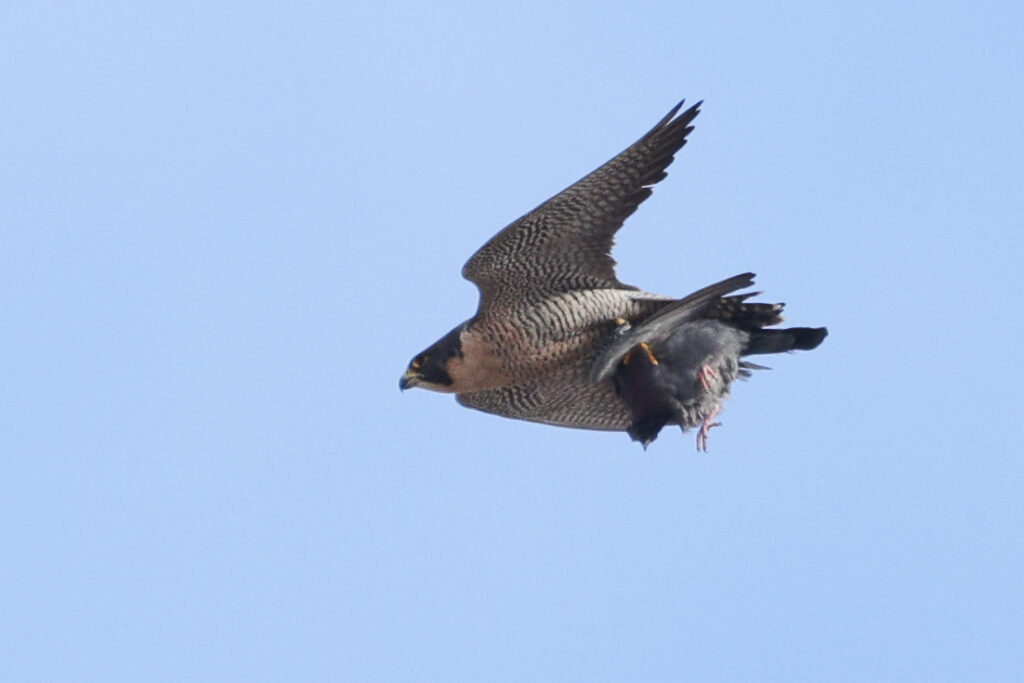
Silhouetted against the clouds a lone mourning dove shoots for the sky and suddenly dives for cover.  He’s seen a coopers hawk perched above, invisible to me in the half light.  The coopers hawk tries for the dove, misses, and flies away.  The idea of a dove for breakfast roused him earlier than he’d planned.

A moment of silence and then I hear a distant caw.  The first flock of crows has left the roost.  Over a hundred crows in this initial push, flying close together, doubling back on themselves, making a circle above my house.  The wind complicates their progress and keeps them focused and silent.  For the next twenty minutes flocks of crows pulse by, a hundred at a time.

The sky brightens a little and high above the crows loose flocks of robins fly south.  I wonder if they’re migrating today or merely going out to forage and return. 

Now the dark-eyed juncoes begin to twitter from the hedges while squadrons of starlings pass overhead.  More birds call from the underbrush - cardinals and song sparrows.  There are so many birds on the move that I can no longer count them, though the sun hasn’t risen yet.

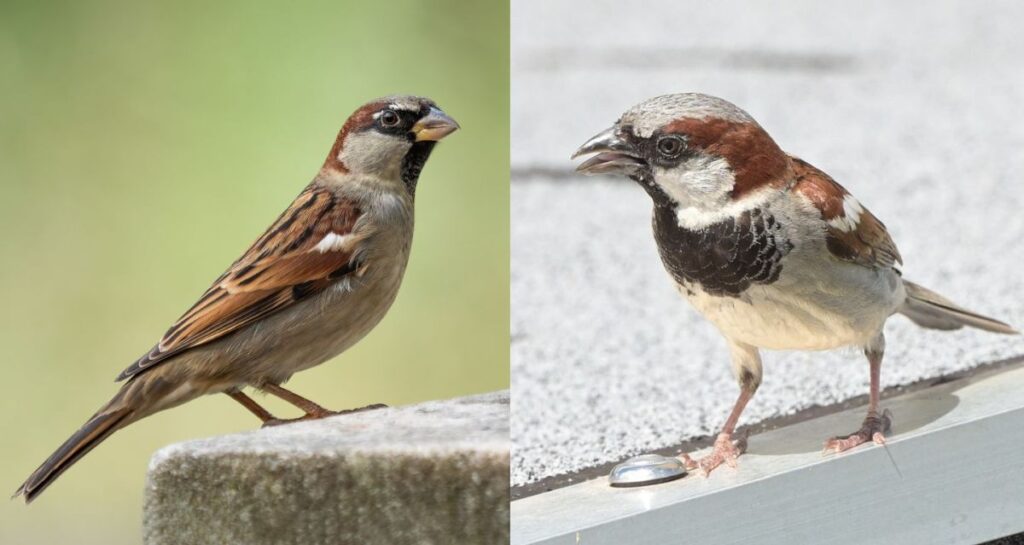
Then exactly at dawn a single house sparrow in my neighbor’s spruce says “cheep.”  Soon the entire flock is chattering inside the tree, conducting a long conversation to greet and plan the day.

The cold has penetrated my coat.  I’ve finished my coffee.  If I wait any longer I’ll be stiff from cold.  Time to go indoors and start my day, too.

(stock photo from Shutterstock)

No responses yet

Nov 11 2008

Snowbirds

Published by Kate St. John under Migration, Songbirds

Though a few dark-eyed juncos have been in Pittsburgh since late October, the flocks showed up in force last weekend.  When they arrive I always think of this poem by William Stafford.

During the breeding season juncos prefer colder climates.  They breed in Canada and New England into northern Pennsylvania and the Appalachian mountains.  Habitat is everything.  That’s why they’re found on Laurel Mountain in the summer.

Interestingly, eastern Massachusetts doesn’t have the right habitat for them to breed.  So it’s from my Boston friends that I learned juncos are called “snowbirds” because they arrive with the first snow.

Juncos aren’t the only snowbirds on the move.  Chuck and Joan Tague left town last weekend to spend the winter in Florida.  Chuck supplies most of the photos on my blog, so I’m hoping my stay-at-home friends will supply me with a few pictures of Pennsylvania’s winter birds.  Thus, this photo is by…

(photo by Marcy Cunkelman)

2 responses so far

Nov 09 2008

Bird Blog is one year old!

Published by Kate St. John under Books and Events, Musings

Birdblog is one year old!Outside My Window is one year old today!

Little did I know when I started this blog how far it would come and how many people I’d meet.

A year ago blogging was all new to me.  I didn’t know the mechanics of WordPress (the software that displays this blog), I desperately needed photos to illustrate each entry, and I had a low level dread of running out of things to write about.  Added to that was the fear that no one would read it and my efforts would be pointless.

Those worries quickly disappeared.  Chuck Tague, and many new friends, supply me with beautiful photos.  I seldom run short of subject matter and the blog has been fun to write especially when I have to do research.  I’ve learned more about birds and hope you have too.

There have been ups and downs along the way, the happiness of baby birds and the sadness of a young peregrine’s death, the exciting blogs and the boring ones.  I’ve even received a little bit of unexpected fame.

But the best part has been meeting you, my readers.  I am amazed and pleased at how many of you there are.   You’ve helped me with questions, suggestions, photos and - thankfully - corrections.

So this celebration is really about you.  I’d love to meet more of you.  Leave a comment below and let me know which blogs were your favorites.  Have I missed a topic you’d like me to explore?  Do you have a photo or a question?

And please do tell me where you’re from.  I would love to know how far this blog reaches.  Does it go around the world?  Only you can tell.

(Thanks to Joan Guerin for the birthday cake.  Click on the cupcake and wait a few seconds to see a surprise.)

12 responses so far

Nov 06 2008

Arctic Peregrine Makes Unplanned Stop in Pittsburgh

Published by Kate St. John under Migration, Peregrines

Juvenile arctic Peregrine Falcon found downtown (photo by Todd Katzner)

John Moore had a surprise last week at the construction site where he works on Fort Duquesne Boulevard downtown.  There on the balcony, apparently trapped, was a juvenile peregrine falcon.  He immediately called the National Aviary and the PA Game Commission.

Todd Katzner arrived from the Aviary and captured the bird.  The peregrine was unbanded so he knew at a glance it was not one of those born in Pittsburgh.

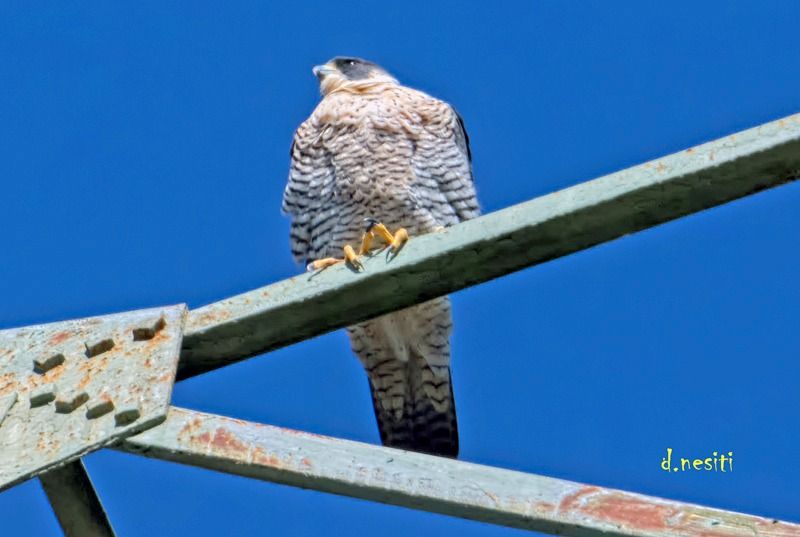
The bird’s plumage gave the nod to its origins.  This peregrine was born in the arctic, probably Canada, and was traveling to the tropics and beyond on his first migration.  He had become trapped on the construction site and was undernourished and dehydrated.

The National Aviary does not rehabilitate birds so, coordinating with Wildlife Conservation Officer Beth Fife, Todd took the peregrine to the Animal Rescue League Wildlife Center in Verona where it was fed and rehydrated.

Time is of the essence.  This peregrine has far to go to complete his migration and he needs food along the way.  He arrived here with the push of migratory birds (his food source) and he needs to resume his journey while there’s still enough to hunt on the wing.  His destination is South America, a journey as long as Elizabetha’s.  He can’t afford to linger in Pittsburgh.

Fortunately, after two weeks of rehabilitation, Jill Argall of the Wildlife Center deemed that this peregrine is in good condition and ready to leave.  He was released this morning at 9:30AM.

Good luck to him.  We wish him well in this, his first and hardest year of life.

p.s.:  See the video of his release at http://www.post-gazette.com/multimedia/?videoID=101161

(photo by Dr. Todd Katzner of the National Aviary)

4 responses so far

Nov 05 2008

One foot, Two foot, Red foot, Blue foot

Published by Kate St. John under Travel, Water & shore

Red-footed Booby and Blue-footed Booby (photo by Deborah Acklin)Dr. Seuss was talking about fish but when I received these two photos from Deb Acklin this title immediately came to mind. 

Here are two unusual characters you’re never going to see at home.  Deb saw them at the Galapagos Islands last month.

Meet the red-footed booby and the blue-footed booby

No lie!  These birds are called boobies from the Spanish word for dunce because they’re very clumsy on land.  Their fancy feet aren’t made for walking, they’re made for impressing the opposite sex.  Same idea as stiletto heels.

The two species have different nesting habits (red-footed boobies nest in trees, blue-footed on the ground) but they have similar courtship displays in which their feet play a part.

During courtship the males of both species point their bills and tails at the sky, raise their wings and, most importantly, display their feet.  The blue-footed booby even does a dance in which he lifts and stamps each foot to show it off. 

All this is to impress the ladies who are flying by in hopes one of them will stop and get to know him.  If she does, the pair will put their feet to another use - incubating the eggs.  Boobies don’t have a brood patch so they use their feet, just like their relatives the northern gannets.

Interestingly, female blue-footed boobies have bluer feet than the males.  Click on the picture to see how blue they can get!

The boobies’ courtship efforts are successful at the Galapagos but their nesting success depends on the food supply - fish - and the food supply is governed by ocean temperature.  During an El Nino event, the ocean heats up and the fish go elsewhere.  This spells trouble for the boobies.  Their chicks starve, with as much as 70% nest failure for red-footed boobies who lay only one egg per year.  Even if the chicks survive, during an El Nino they grow so slowly that it takes a year to mature.

Sadly, red-footed boobies face another threat.  Unlike blue-footeds whose largest breeding population is on the Galapagos, red-footed boobies breed on many Pacific islands.  In some places they are in decline because the islanders eat them. 

Fortunately the Galapagos has protection programs to keep the birds safe.   I hope to go there some day and see these fancy feet for myself. 

(photos taken at the Galapagos Islands by Deborah Acklin)

No responses yet

Nov 03 2008

Bonnies

Published by Kate St. John under Migration, Water & shore

Bonaparte's Gull (photo by Chuck Tague)Fall migration is bringing gulls to southwestern Pennsylvania.  Yesterday at Moraine State Park their numbers were up considerably compared to my last visit in late September.

Though most people call them “sea” gulls, those who visit Pittsburgh breed in interior Canada and Alaska and spend the winter in similar habitat further south.  Species who breed at the ocean don’t tend to come here as there’s no point in crossing the mountains.  Gulls, however, are great for making exceptions to every rule - so don’t quote me.

There’s one gull who makes a radical habitat change from summer to winter, from nesting in trees in the taiga to wintering at the ocean.   We don’t see many of them here but it’s my favorite gull, the Bonaparte’s gull, named for Philadelphia ornithologist Charles Lucien Bonaparte in the early 1800s. 

Bonaparte’s are smaller than most gulls, have bright white primaries (the long feathers at the end of the wings) and are easy to identify by their floating, mothlike flight. 

That said, gulls are notoriously difficult to identify.  They go through many plumages as they mature so if you’re an expert - which I am not - you can tell the species, the time of year, and the age of the gull by looking at its feathers. 

I usually can’t do that but the Bonaparte’s gull in Chuck Tague’s picture is holding still so I can tell you it’s in its first winter.  That’s because he has black lines on the outer edge of his wings and a black line across his shoulder that looks like an ‘M’ when he flies.  Adult Bonaparte’s have crisp all-white primaries above and below and no black shoulder line. 

I would love to see more Bonaparte’s gulls - and more often - but they aren’t going to stay.  They’re headed for the Atlantic.  As Chuck says, “My Bonnie lies over the ocean.”    

(photo by Chuck Tague)

No responses yet

Oct 31 2008

Like Pepper in the Sky

Published by Kate St. John under Migration, Songbirds

American Robins flock near the roost (photo by Tom Pawlesh)

Flocks are my weakness. 

I love to watch the grandeur and sweep, the beauty of wings in flight, the triumph of nature that thousands of birds represent.

So though I’m not happy that the days are getting shorter, the weather colder, the skies cloudier, I’m thrilled that this is the one time of year when I see huge flocks in Pittsburgh.

The excitement begins an hour before sunset.  Outdoors I look up to see groups of twenty to forty birds all flying in the same direction.  They’re American robins and they’re heading for the roost.

There are at least two roosts in Pittsburgh - one near the Bloomfield Bridge, the other near Holy Trinity Catholic Cemetery in Carnegie - but I’m not at either one.  I’m at a point along their flyway.

The robins keep coming, the groups get larger, but they will not land here.  On and on they come… and pass me by.  It hardly looks like a flock, but they’re moving together intent on their destination.

They look like pepper in the sky.

(photo by Tom Pawlesh of American robins circling the roost in Carnegie last winter.)

3 responses so far

Oct 29 2008

Even though it’s cold…

Published by Kate St. John under Peregrines

Dorothy and E2 courting in October at Univ of PittsburghIt’s gray and windy today with snow flurries - the first snow of the season.

Despite the weather, I walked toward the Cathderal of Learning after I got off the bus to see if I could find any peregrines. 

Yes, Dorothy was perched on a stone peak on the 40th floor facing southeast. 

As I watched, E2 arrived carrying food and Dorothy swooped out to greet him.  They flew a few circles together and then he landed in their favorite cache spot to prepare breakfast.

So, even though it’s cold and snowy our peregrines are staying home and staying together in Pittsburgh.

(National Aviary webcam photo of Dorothy and E2 courting in October.)

7 responses so far

Oct 28 2008

What to Look For: Early November

Published by Kate St. John under Phenology

Brant in flight (photo by Chuck Tague)Another installment - a little early - of November phenology for southwestern Pennsylvania.   Here are some of Chuck Tague’s suggestions on what to look for in the next few weeks, plus a few of my own.  

  • We have lots of cloud cover in November.  The sun shines only 37% of the time.
  • With the trees bare - around Nov 11 in the city - you’ll be able to see bird and squirrel nests.
  • Migration continues overhead.  Watch for tundra swans.  They won’t stop on Pittsburgh’s rivers unless the weather is terrible but you can find them resting at Yellow Creek State Park.
  • Ducks, geese, and loons will pass overhead and pause on our rivers and lakes, especially at Moraine and Yellow Creek State Parks. 
  • Expect:  Canada geese, common loons, mergansers, ring-necked, ruddy and wood ducks.  There will be so many kinds of ducks there’s no room to list them all.
  • Watch for the unexpected:  A brant (the small geese pictured here) sometimes stops briefly at Yellow Creek.  You might find a red-throated loon or a few snow geese.
  • Fox sparrows should be here soon.
  • Chipmunks and squirrels are caching food.   Will you notice when the chipmunks have gone underground for the winter?  It’s difficult to notice an absence, isn’t it?

Chuck’s complete phenology can be found here.

(photo of Brant by Chuck Tague)

2 responses so far

Oct 26 2008

Owned by a Parrot

Published by Kate St. John under Books and Events

Book Cover of The Parrot Who Owns Me, by Joanna BurgerIf you haven’t read it yet, I highly recommend The Parrot Who Owns Me: The Story of a Relationship by Joanna Burger, published by Villard in 2001.  I just finished reading it and I loved it.

Joanna Burger is an ornithologist and animal behavior scientist at Rutgers University.  The book is about Tiko, a Red-lored Amazon who has lived with her and her husband Mike since 1986. 

Tiko is a commanding presence in their household.  He’s the alpha parrot in a flock of three:  himself, Joanna and Mike.  His view is that he owns them, not the other way around.  Now that I’ve read the book and understand parrots better, I can see that he’s right.

Like all parrots, Tiko is highly intelligent and social.  Living with him means knowing him as an individual and learning to understand what he’s communicating.  He is very good at making his meaning clear.

For those of us who don’t live with parrots, these concepts are fascinating.  For Joanna Burger, a bird behavior specialist, it changed her life.  Tiko’s flock dynamics, his vigilance, loyalty and devotion, and his use of tools spurred her to study the same behaviors among wild birds and mammals.

The book gave me insights into the beauty of a long term relationship across species and the behavior of birds that I hope to see in the wild myself. 

(Click on the photo of the book cover to read excerpts or buy at Amazon.com)

No responses yet

« Prev - Next »

Bird Stories from OnQ