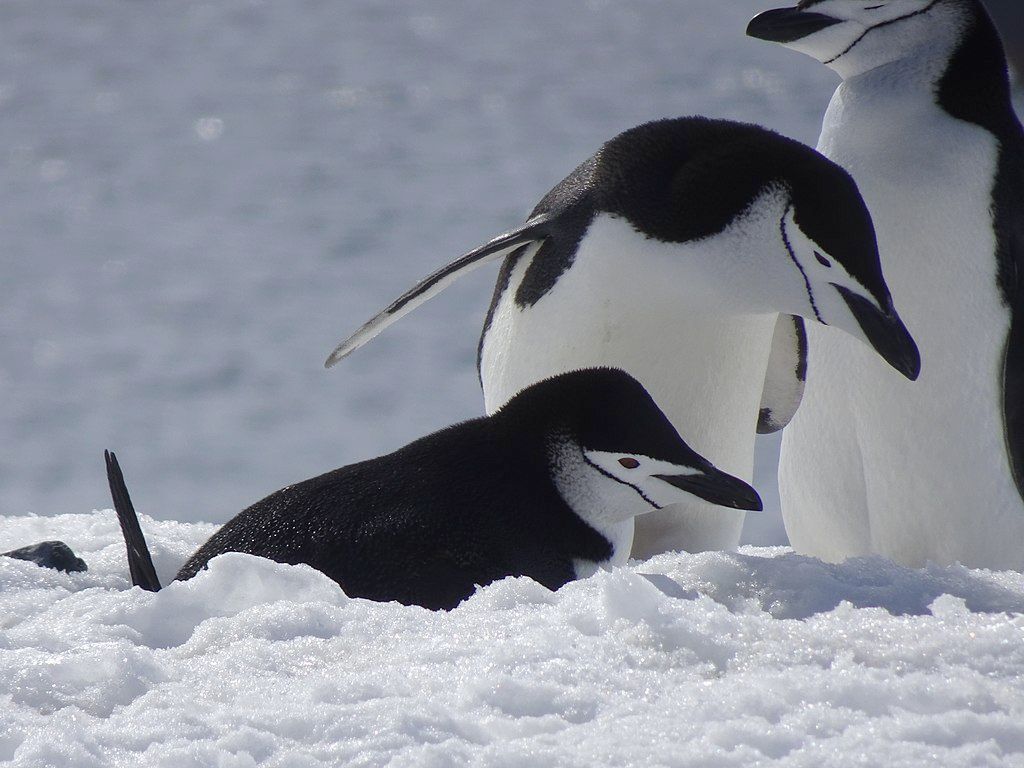
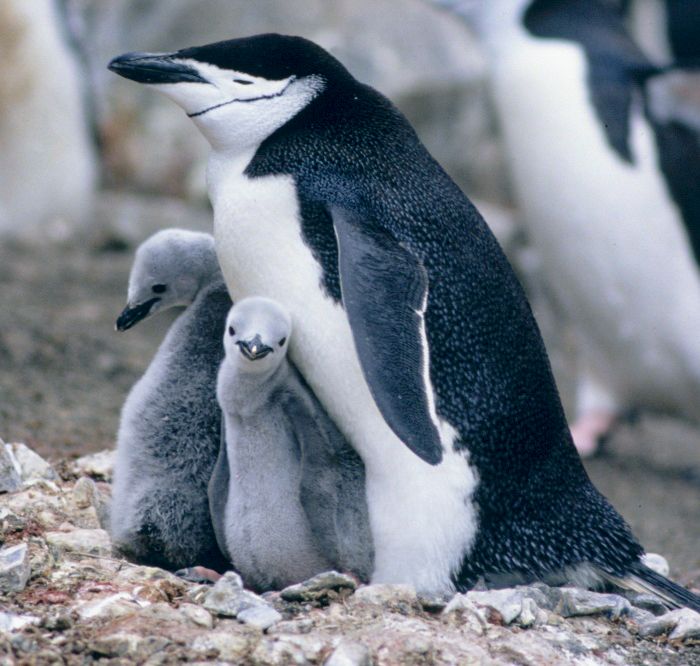
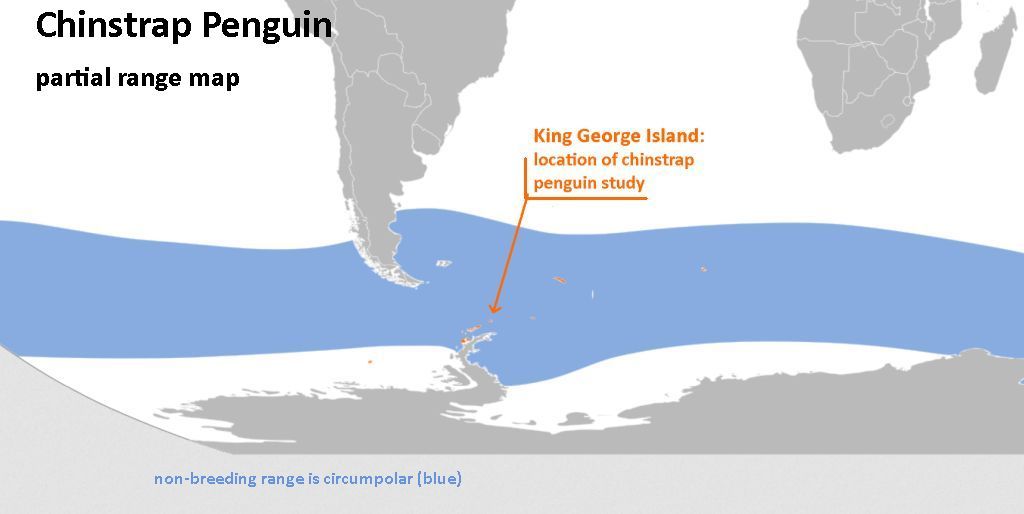
Lots of animals don’t sleep for long periods like we do but a new study has found a polar opposite in Antarctica (pun intended) where chinstrap penguins (Pygoscelis antarcticus) take 10,000 4-second naps each day during the breeding season. In this way they accrue 11 hours of daily sleep.
For us, the micronaps would be a form of sleep torture since we cannot enter restorative deep sleep in such a short time. But the chinstrap penguins do.
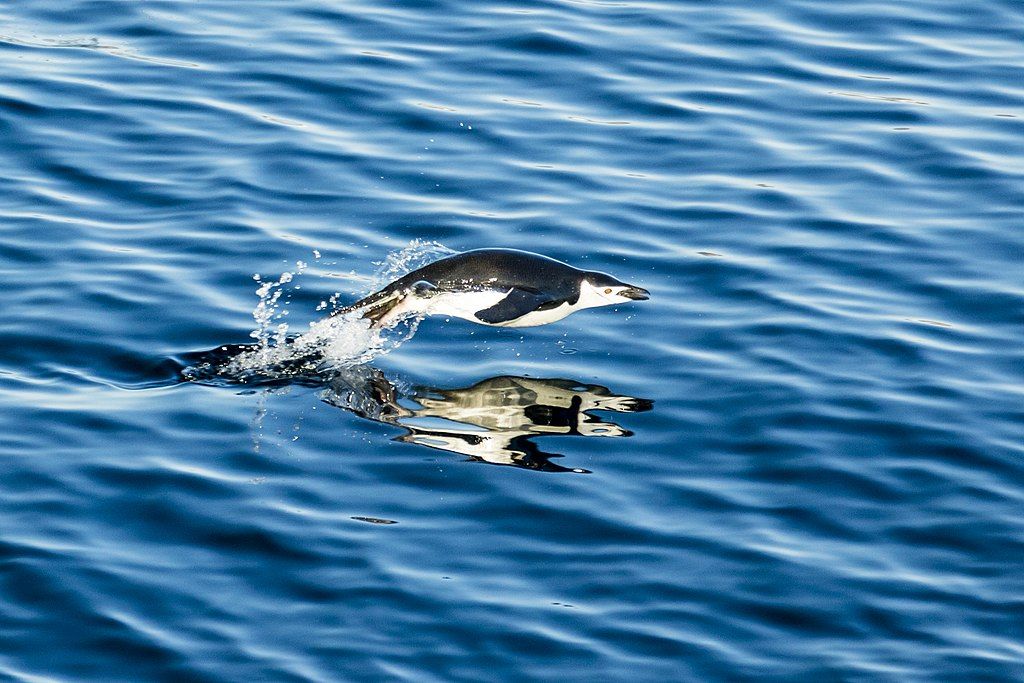
Brain waves showed the penguins experience slow wave (deep) sleep during those micro-naps. They nap while incubating or guarding their chicks and even while floating on the ocean.
So now I’m looking at group photos of chinstrap penguins and, sure enough, in every photo some of the adults are sleeping. They’re getting their beauty rest 4 seconds at a time.
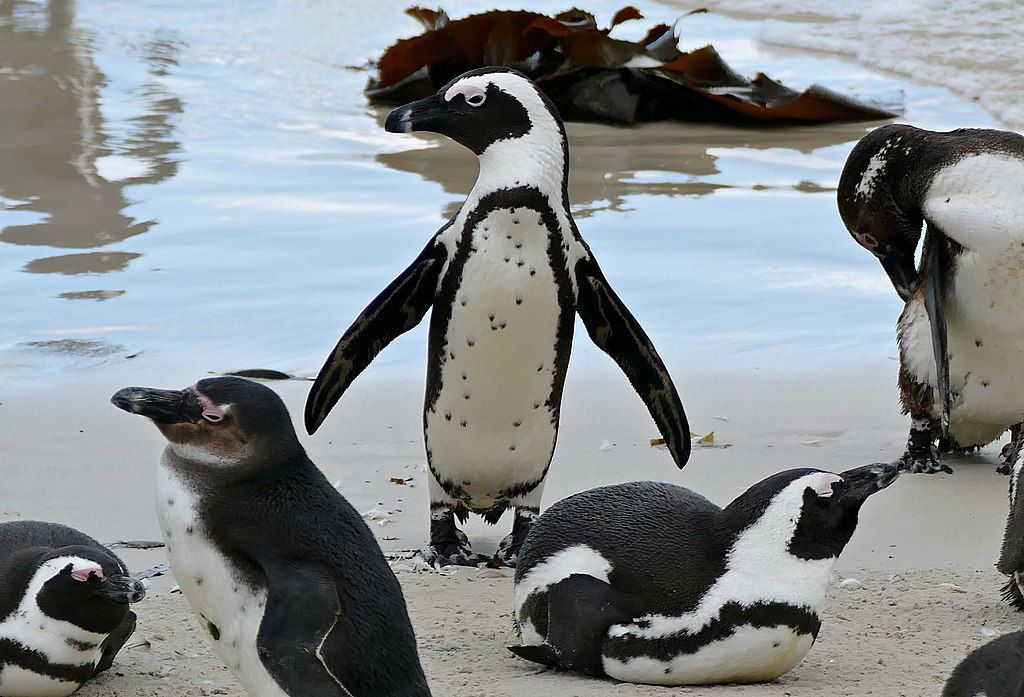
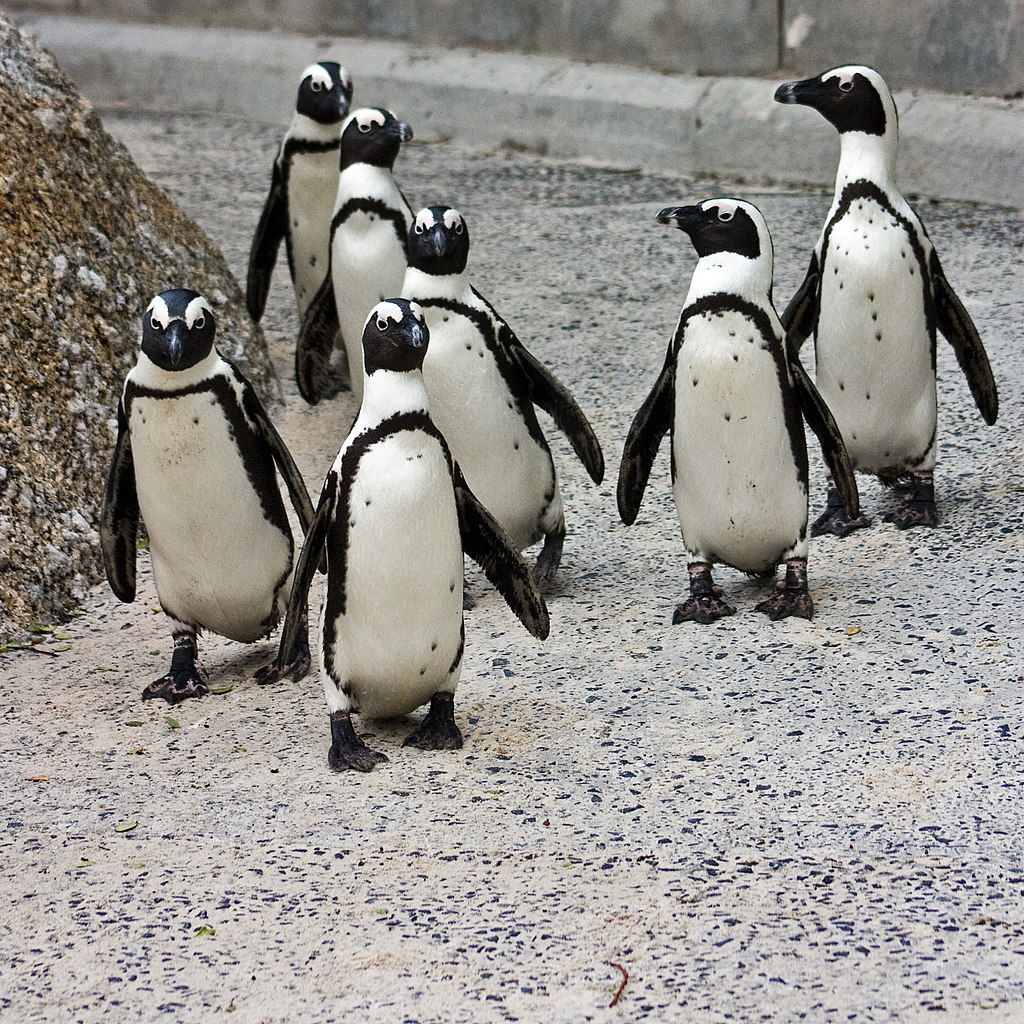
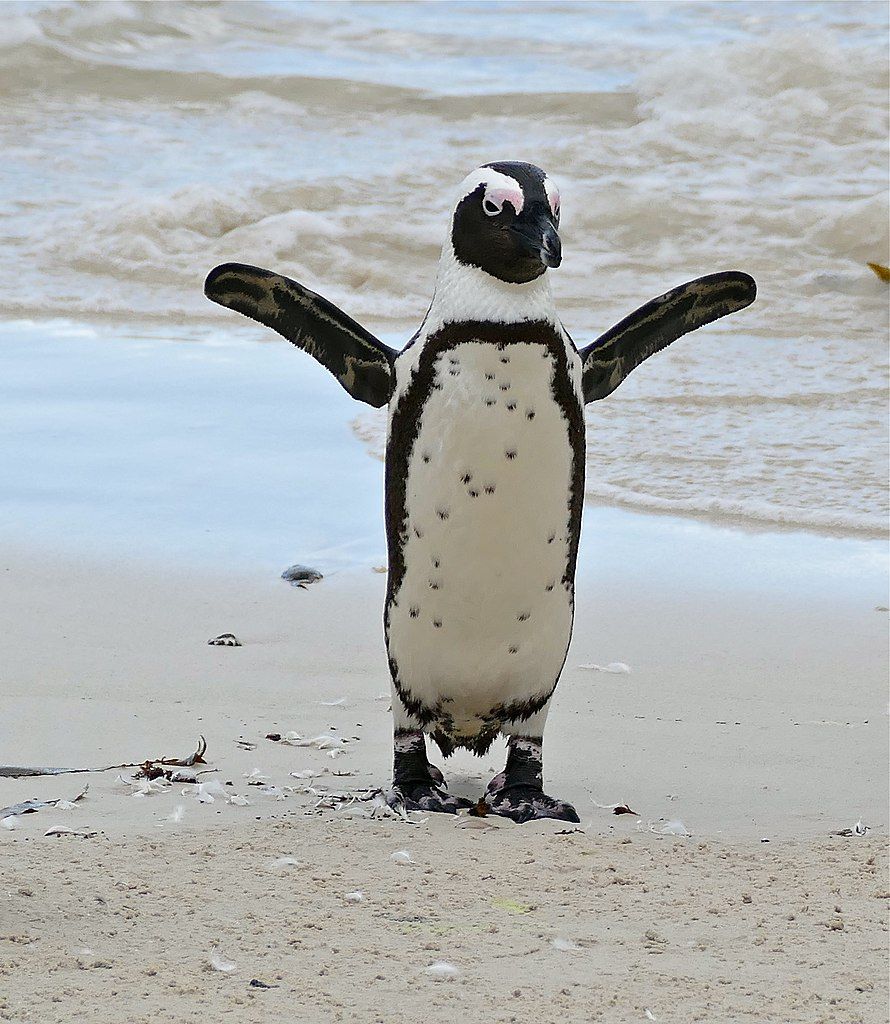
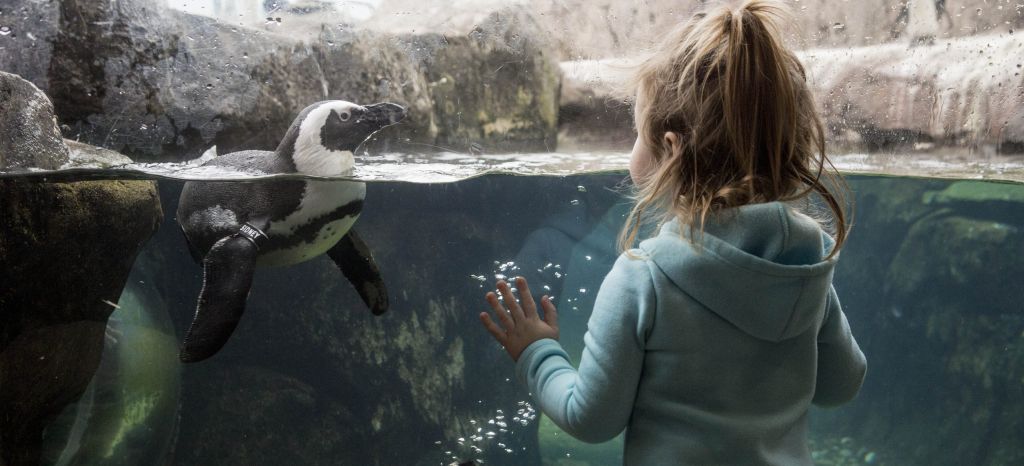
We humans recognize each other by face and can sometimes recognize individuals in other species as well. For instance, African penguins (Spheniscus demersus) have unique patterns of dots on their chests that zookeepers use to tell them apart. Psychologist Luigi Baciadonna wondered if the dots functioned the same way for the penguins themselves so he ran an experiment at Zoomarine Italia in Rome.
In the experiment individual penguins were herded into a small corral with life-size portraits of two group members, at least one of which was his/her mate. African penguins like to hang out near their mates so if the visiting bird stared at the mate’s portrait and gravitated toward it, he/she was recognizing the mate. The experiment had three variations:
Test #1: Accurate photos: one of the mate, one of another member of the colony. Result: In this video of Test#1 a male penguin, Gerry, is presented with an image of his partner, Fiorella, on the left and one of group member Chicco on the right. Notice what he does.
Test 2: Two photos of the mate: one accurate, one with dots digitally removed. Result: The birds spent more time looking at the mate photo with dots.
Test 3: Dots digitally removed from both photos: mate and another member of the group. Result: The birds no longer seemed to recognize their mate. There was no difference in how long they gazed at the mysteriously spotless portraits.
Quiz! Now that I know African penguins have unique chest dots I discovered that the penguin pictured below is also in a photo above. Which one is he?
Stirring up the pigeons in Cleveland, 2017 (photo by Chad+Chris Saladin)
17 November 2023
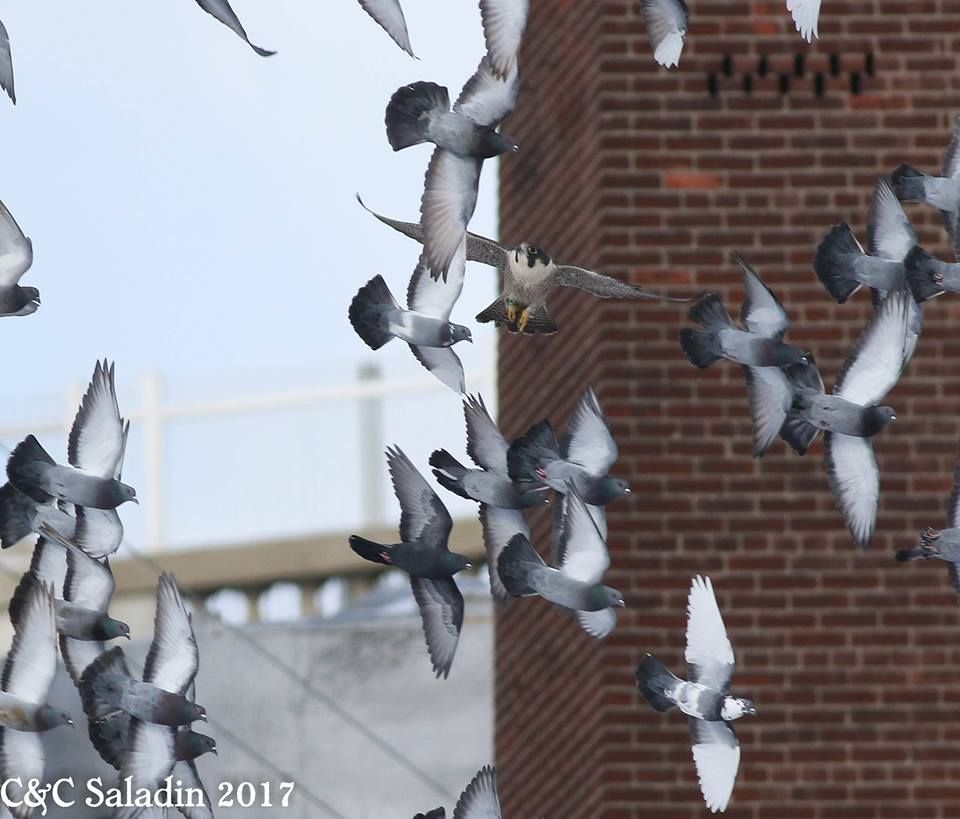
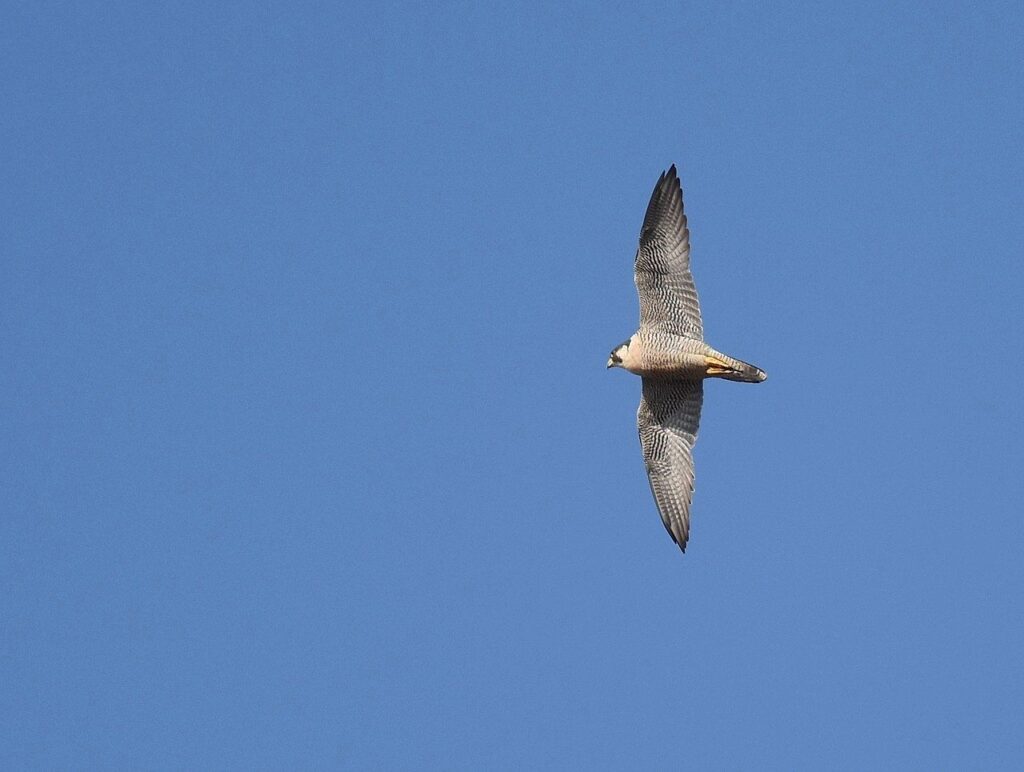
Can you spot the peregrine?
When peregrines are hungry, the birds they’d like to eat flock tightly and move as fast as they can. The denser the flock the harder it is for the peregrine to pick out a solo bird to catch for dinner.
In the photo above pigeons are flying crosswise to avoid an oncoming peregrine. Can you spot the peregrine in the picture?
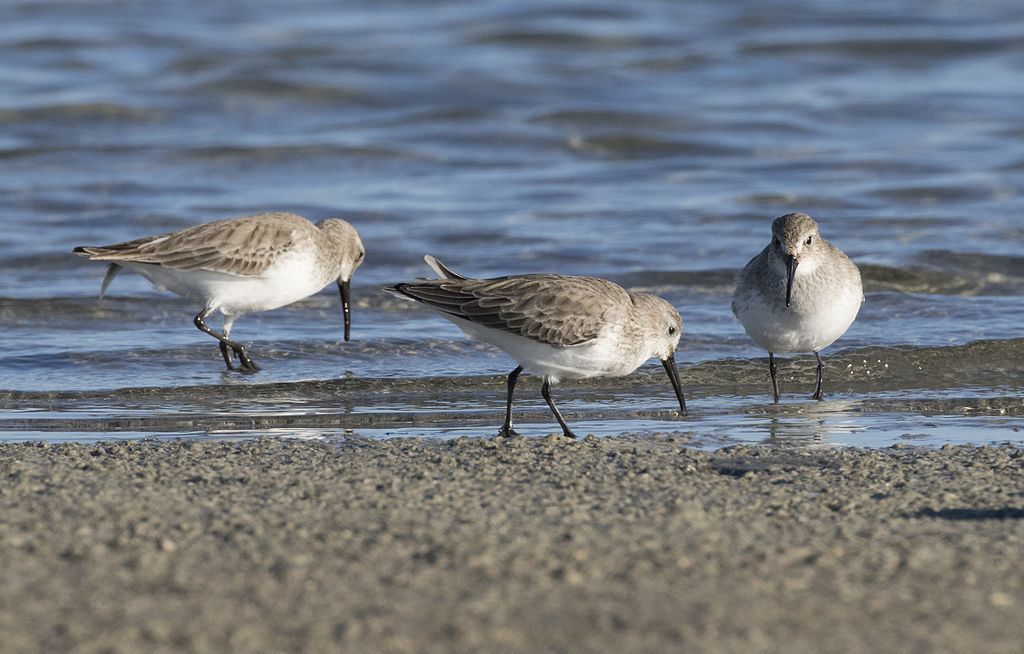
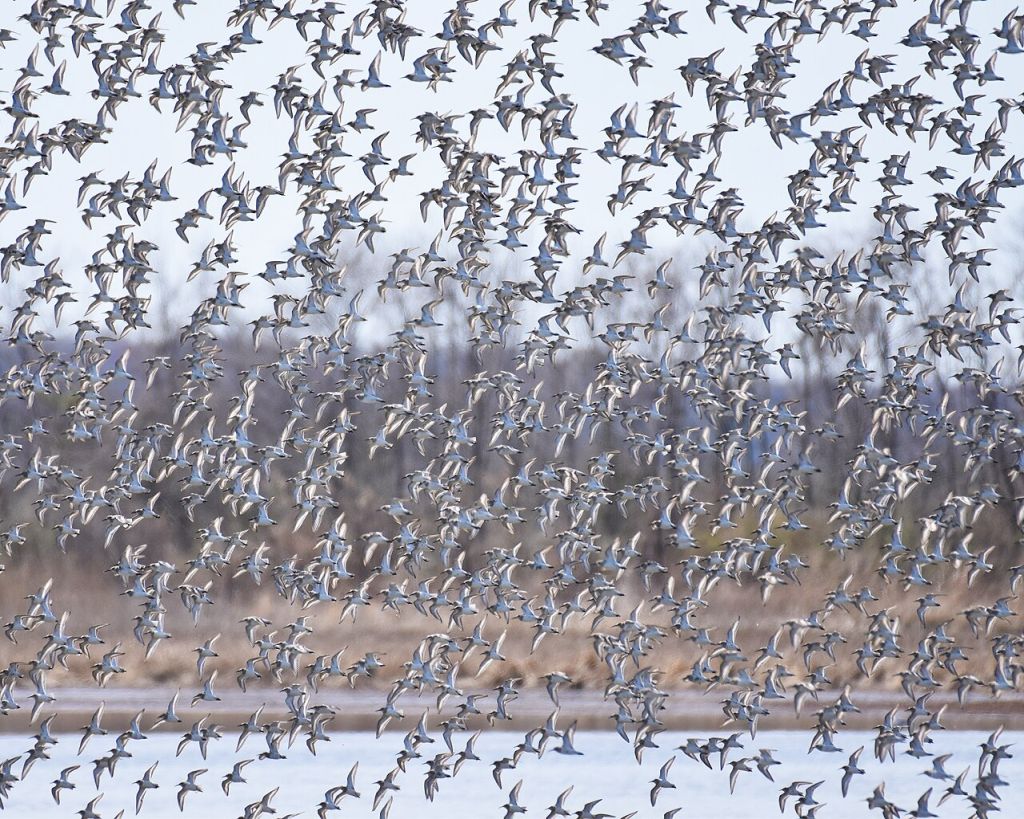
Dunlin (Calidris alpina) are masters of tight flocking and evasive maneuvers when threatened from the air. In the video below by Pacificnorthwestkate (@pnwkate) the dunlin move like a murmuration of starlings as a peregrine harasses them. Can you spot the peregrine?
Notice how the dunlin flock winks off and on in the video, dark at one moment then so white they disappear. In winter plumage dunlin have brown-gray backs and white bellies. The flock changes color as the birds turn in unison in the air.
Most people who find discarded bird tracking technology don’t know what they’re looking at and even when they do they don’t usually repurpose it. But every once in a while a transmitter goes roaming.
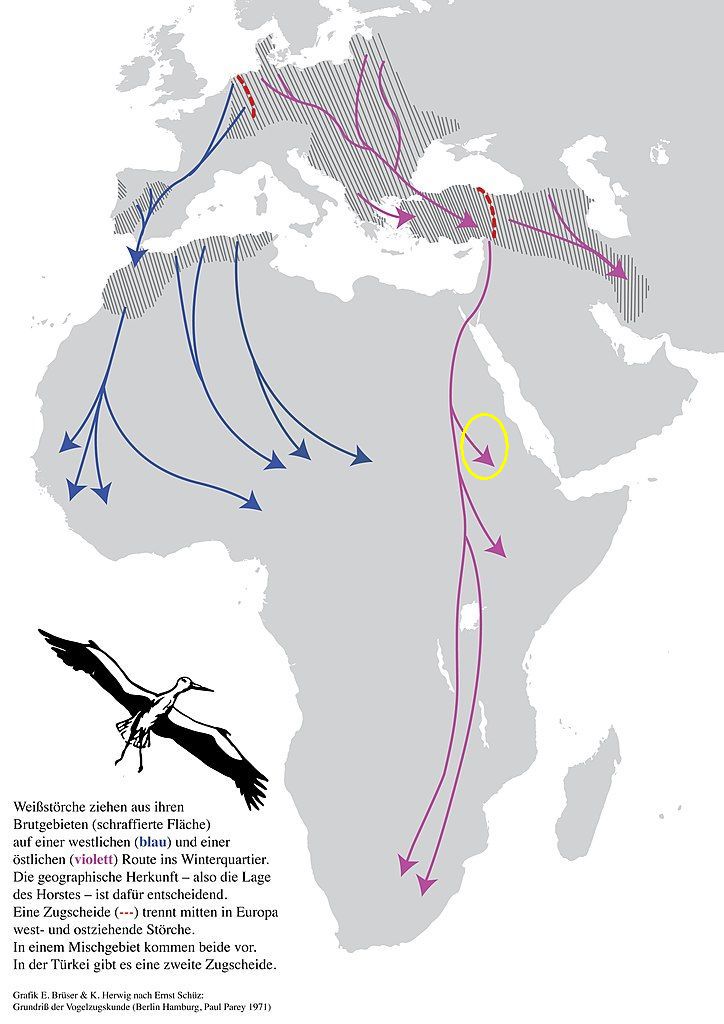
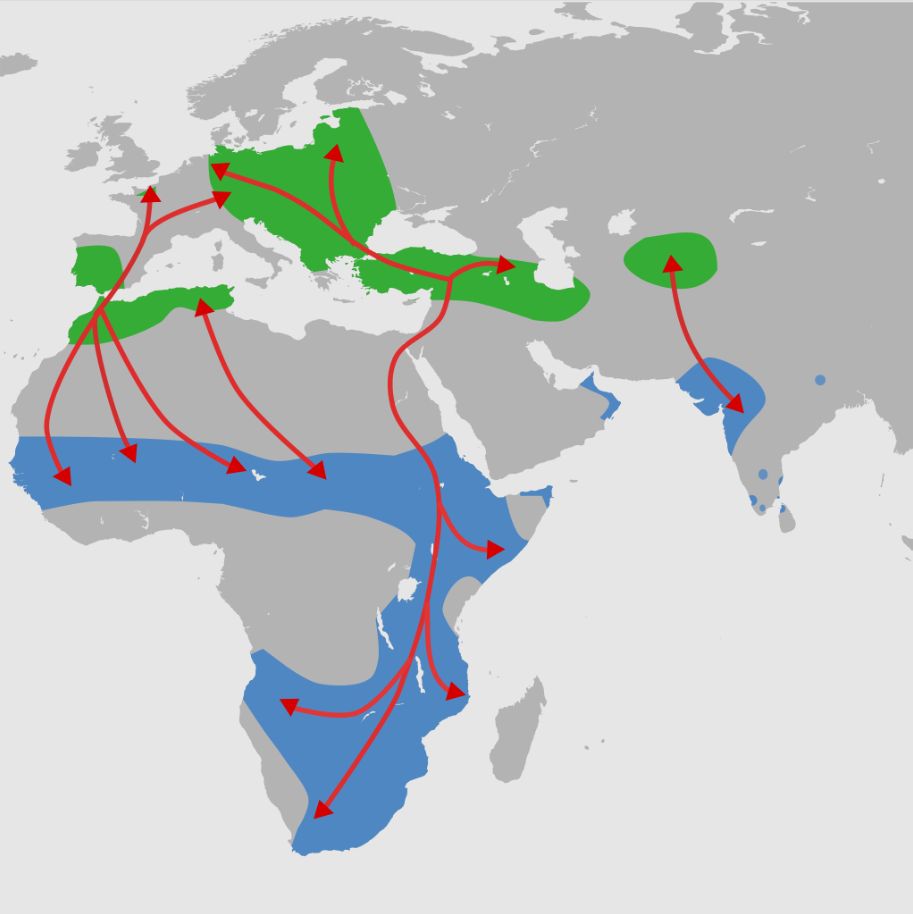
White storks (Ciconia ciconia) that breed in Poland migrate to eastern and southern Africa for the winter. For some, their final destination is the Blue Nile River valley, circled in yellow on the map below.
That autumn she flew to the Blue Nile River valley in Sudan where she became mysteriously inactive. Eventually she stopped moving altogether and had either died or the transmitter fell off. Researchers couldn’t figure out what happened until they got the phone bill.
Questions were raised when Kajtka lingered in the area for more than eight weeks, only roaming around 25 km [15 miles] in various directions.
In 2018, the mystery was solved when EcoLogic Group received a phone bill for 10,000 Polish zloty, the equivalent of £2,064 [$2,500]. Someone had picked up the tracker in Sudan and taken the opportunity to make 20 hours of phone calls using the SIM card.
Fortunately for cash-starved bird research this sort of episode is rare.
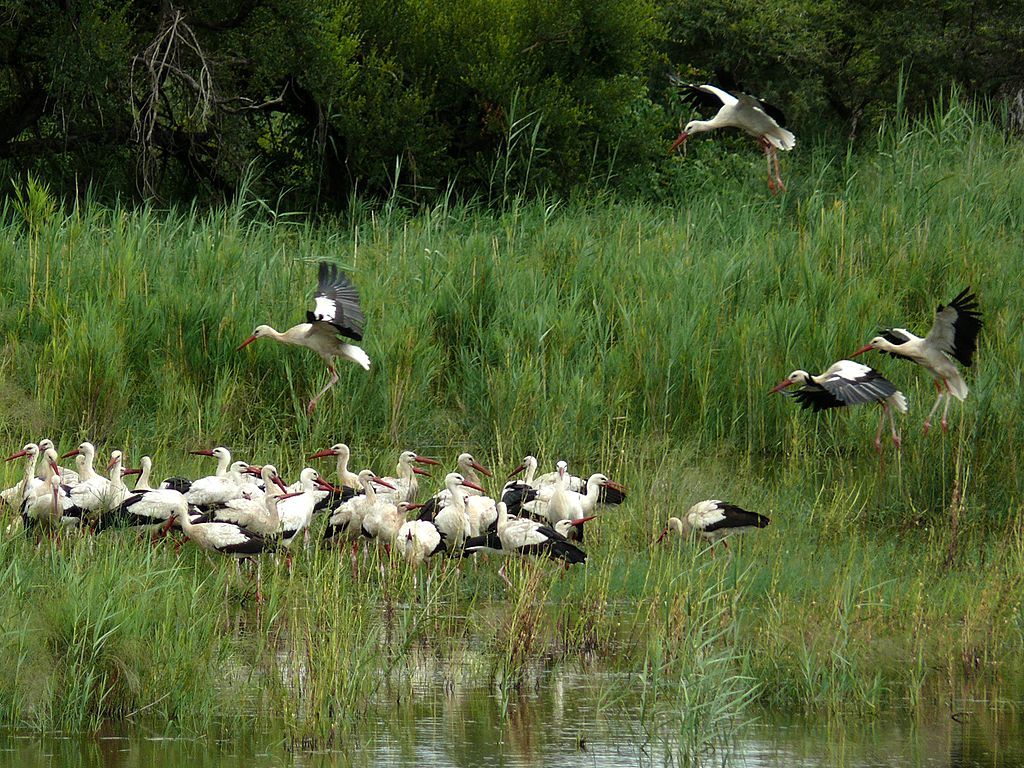
If Kajtka had survived she would have joined her fellow white storks moving north in March, perhaps with a stopover in the Hula Valley shown below. Gorgeous!
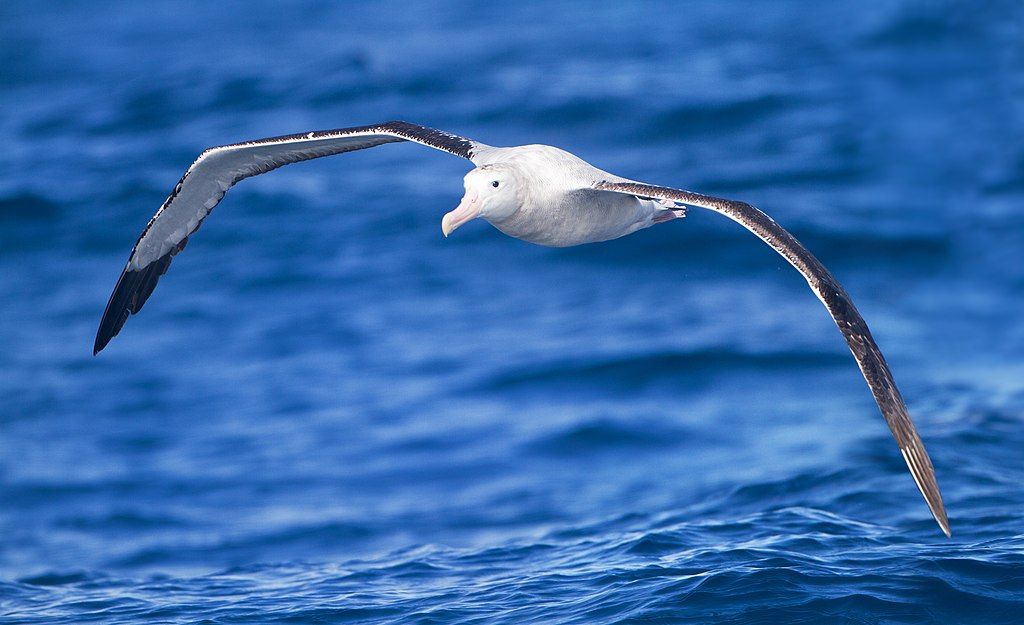
Like elephants, albatrosses can hear low frequency sounds below our range of hearing, a skill that’s very useful for their lifestyle.
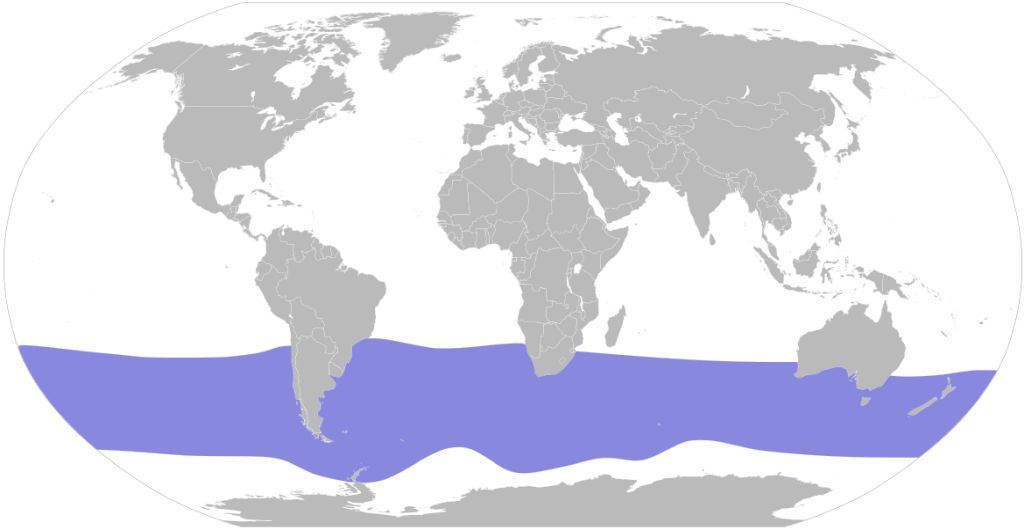
Wandering albatrosses (Diomedea exulans) spend their lives making incredibly long journeys over the ocean. They are known to circumnavigate the Southern Ocean three times in one year, a distance of more than 75,000 miles (120,000 km).
To do this with the least amount of effort, they have the longest wingspan of any living bird — 8 to 12 feet (2.5 to 3.66m) — and use the wind to glide as much as possible.
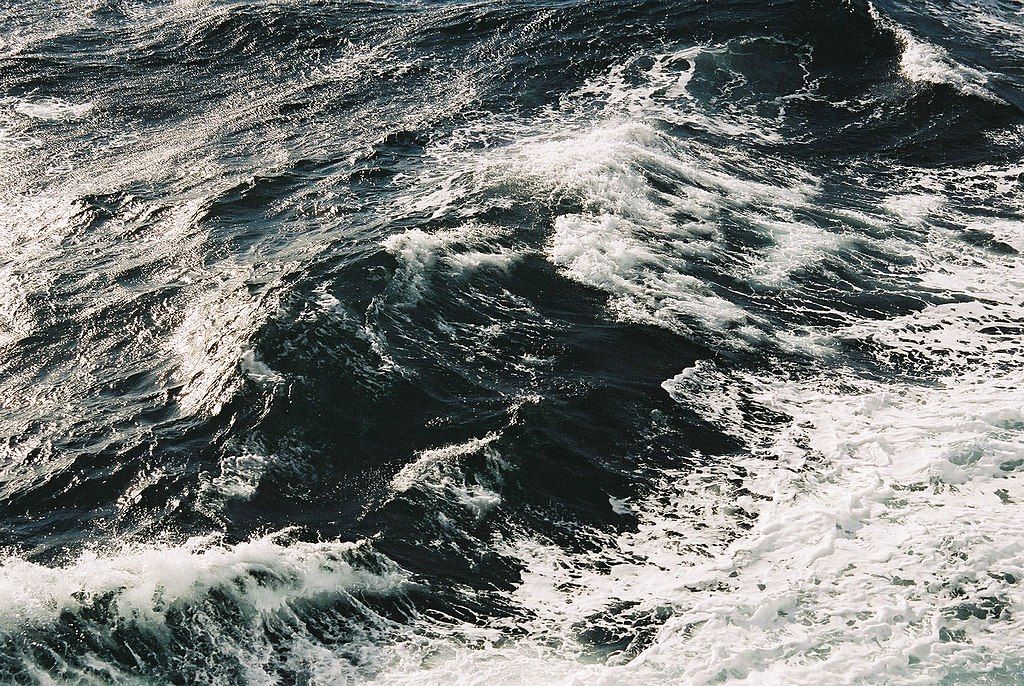
The best gliding happens at updrafts over the water and the best updrafts are caused by large waves. So how do wandering albatrosses find those large waves? They hear them from very far away, possibly 1,000 miles.
According to Science Magazine, “Big waves produce a very low frequency sound, below 20 hertz, that can travel thousands of kilometers, particularly when they collide with long distance swells, such as when storms develop.”
Would an albatross approach or avoid these waves in the Southern Ocean?
To figure out how the birds choose where to go, Samantha Patrick of University of Liverpool and her team tagged 89 albatrosses with GPS trackers at their breeding grounds on Crozet Island near Antarctica. When the birds returned a year later to breed again, researchers retrieved the tags and analyzed the data.
Geophysicists on the team combined the biologger recordings with infrasound monitoring data from Kerguelen Island in the Southern Ocean to build “soundscape” maps on the birds’ journeys. …
During their long-distance flights, the birds tended to change course whenever they encountered a loud infrasound, the team reports. The infrasounds often indicate wave turbulence, even storms—though it’s not yet clear how the birds make use of this information. The infrasound clearly impacted the birds’ behavior, although the scientists couldn’t identify a clear pattern of whether they avoided or aimed for these low frequencies.
“Some tea with your river, Sir?” asks the caption on the satellite photo below where Rupert Bay meets James Bay in Quebec, Canada. James Bay’s incoming tide is pushing Rupert Bay’s tea-colored water upstream.
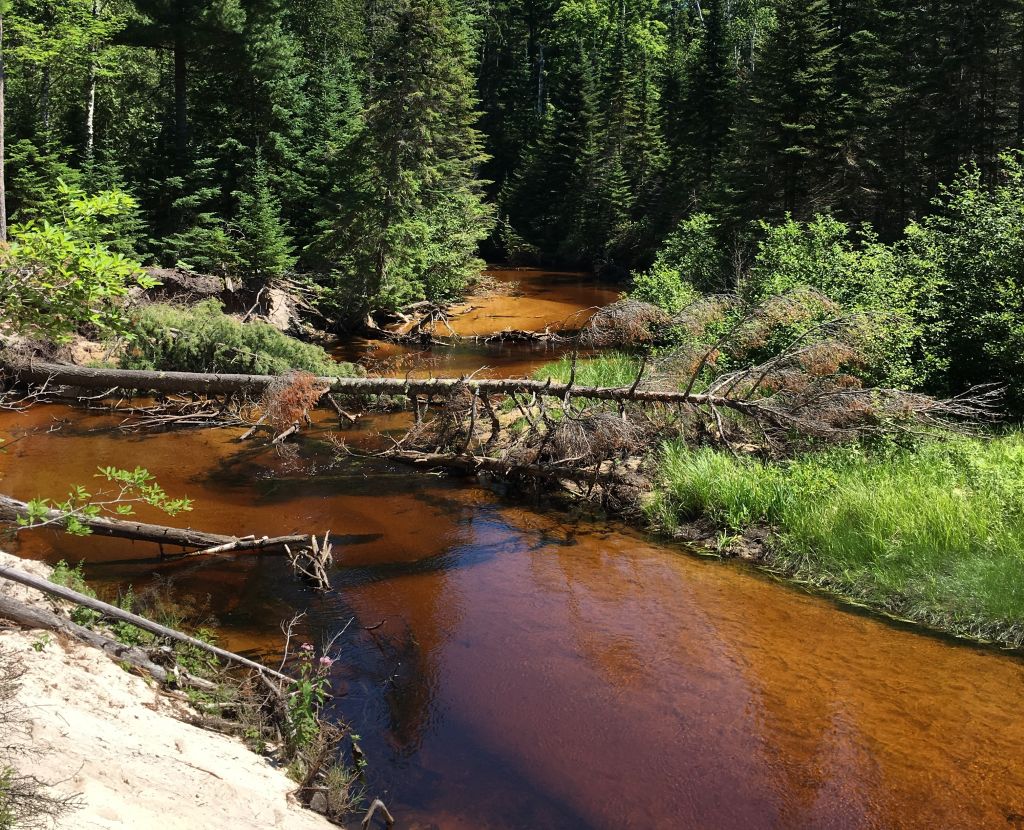
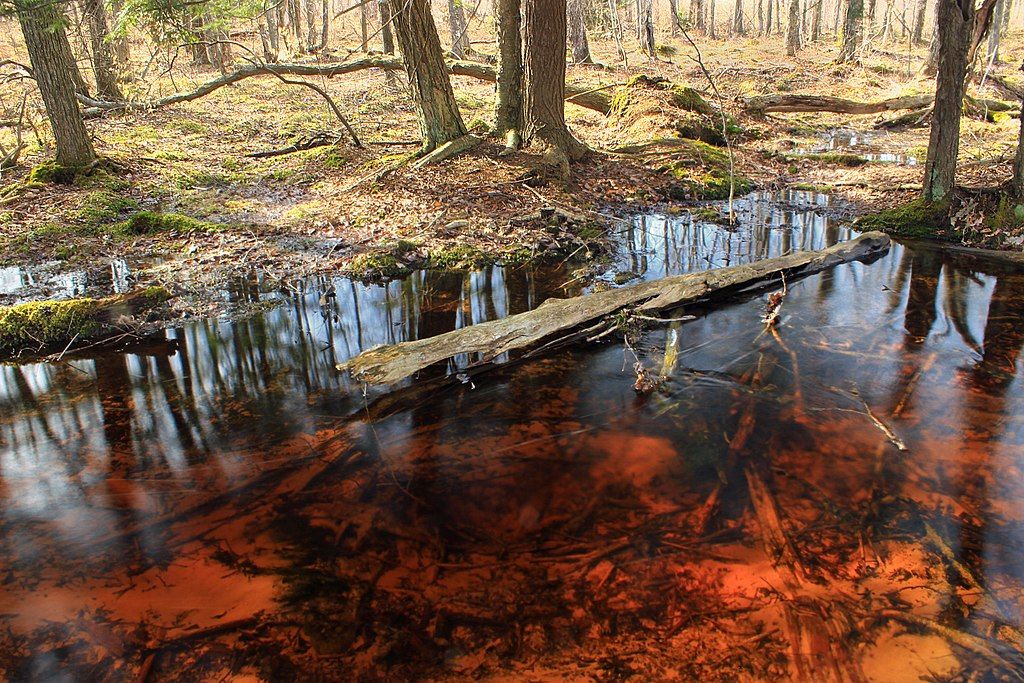
In woodland and wetland settings, tea-colored water indicates that natural plant and water processes are occurring.
Frequently, water in streams and rivers becomes tea-colored from naturally occurring tannins, a chemical found in many plants around the world. The tannins can leach out of plants and plant debris and into groundwater, lakes, rivers, and streams. Although they can make the water more acidic, it’s important to note, tannins are not harmful to fish and wildlife.
This process occurs in many waterways that run through wooded areas and wetlands with high levels of plant mass and organic matter. Because there is always water flowing through these areas, tannins leach out of plants into the water, making it appear tea-colored.
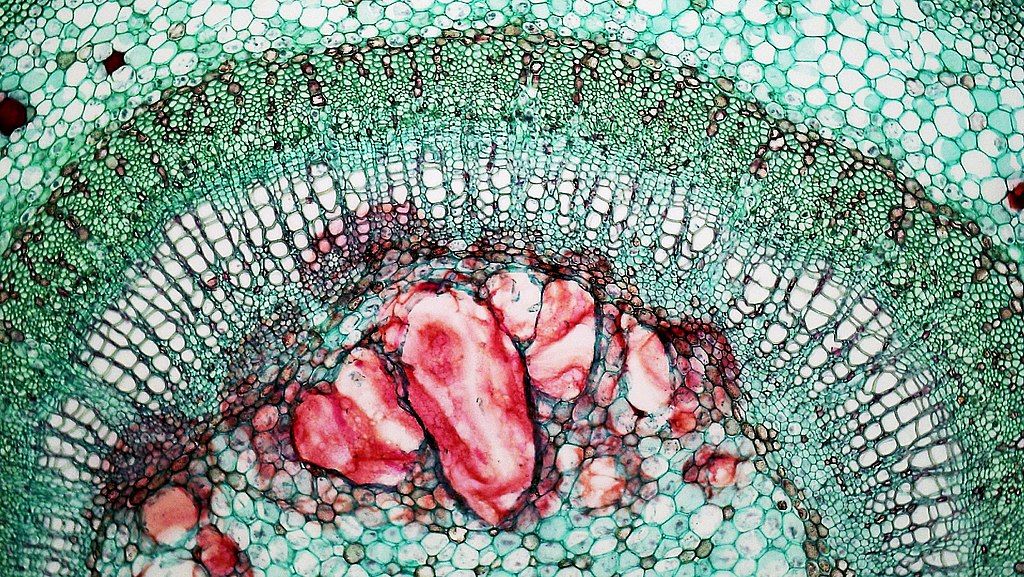
Tannins leach from all kinds of plant debris, especially soaked bark, leaves and pine needles in the north woods. There are tannins in this magnified Woody Dicot Stem: Tannins in Early First Year Tilia. Its caption reads: “Many cells in the periderm, cortex and pith contain dark staining tannins.”
And there are some special lakes on Florida’s Panhandle coast where the tea-colored water flows into the Gulf of Mexico. This video describes the dune lakes of Walton County.
Tannins are OK to drink though they may not taste good. In fact, it’s the tannins in tea leaves that make the beverage tea-colored.
Orange water deposits are bad.
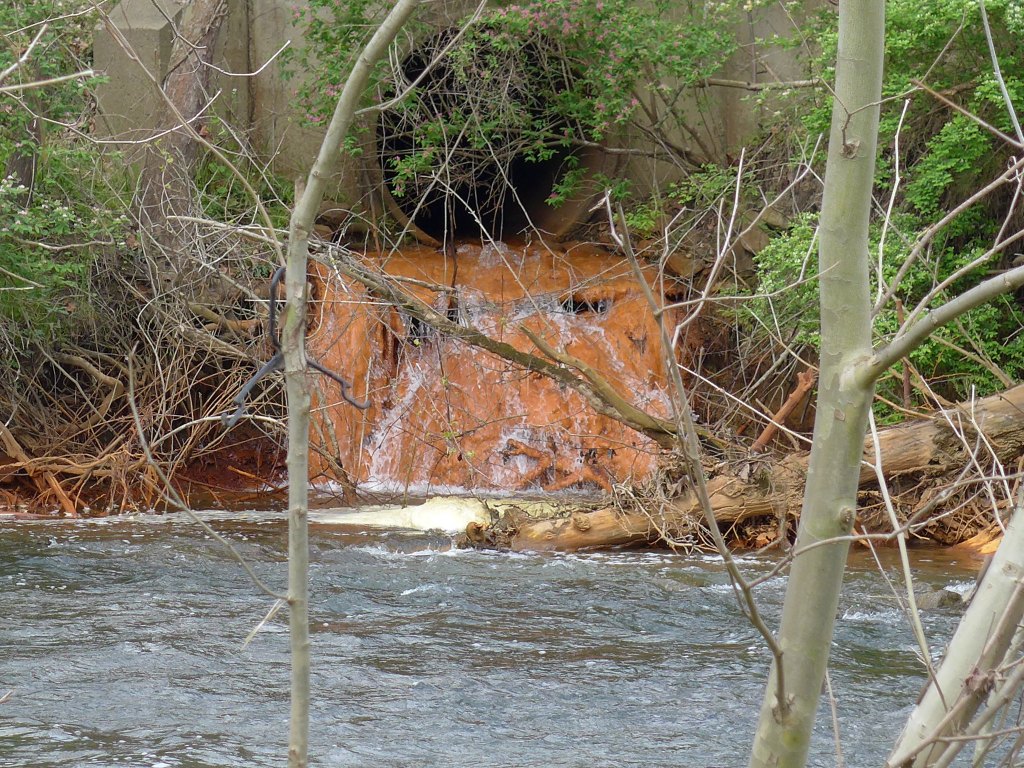
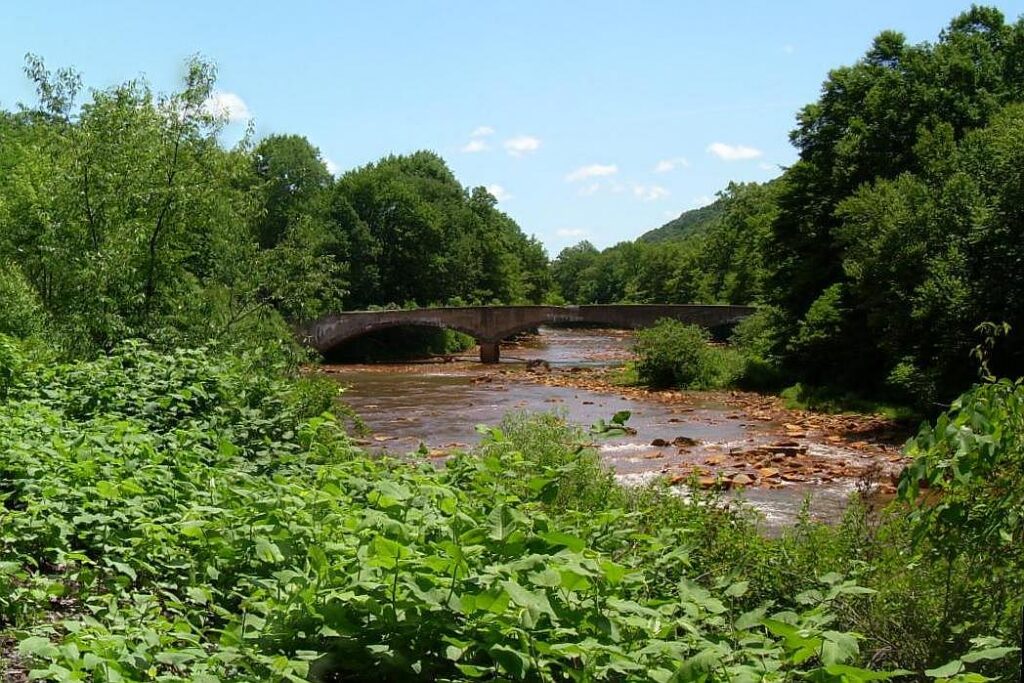
Bright orange deposits are bad, even when the water is clear. In western Pennsylvania the orange color comes from abandoned coal mine drainage. Here the outflow of a polluted culverted stream dumps into Chartiers Creek near Bridgeville. Yuk!
Inflow of abandoned mine drainage into Chartiers Creek near Bridgeville (photo by Kate St. John)
Blacklick Creek in Cambria County, PA is another example.
(credits are in the captions; click the links to see the originals)
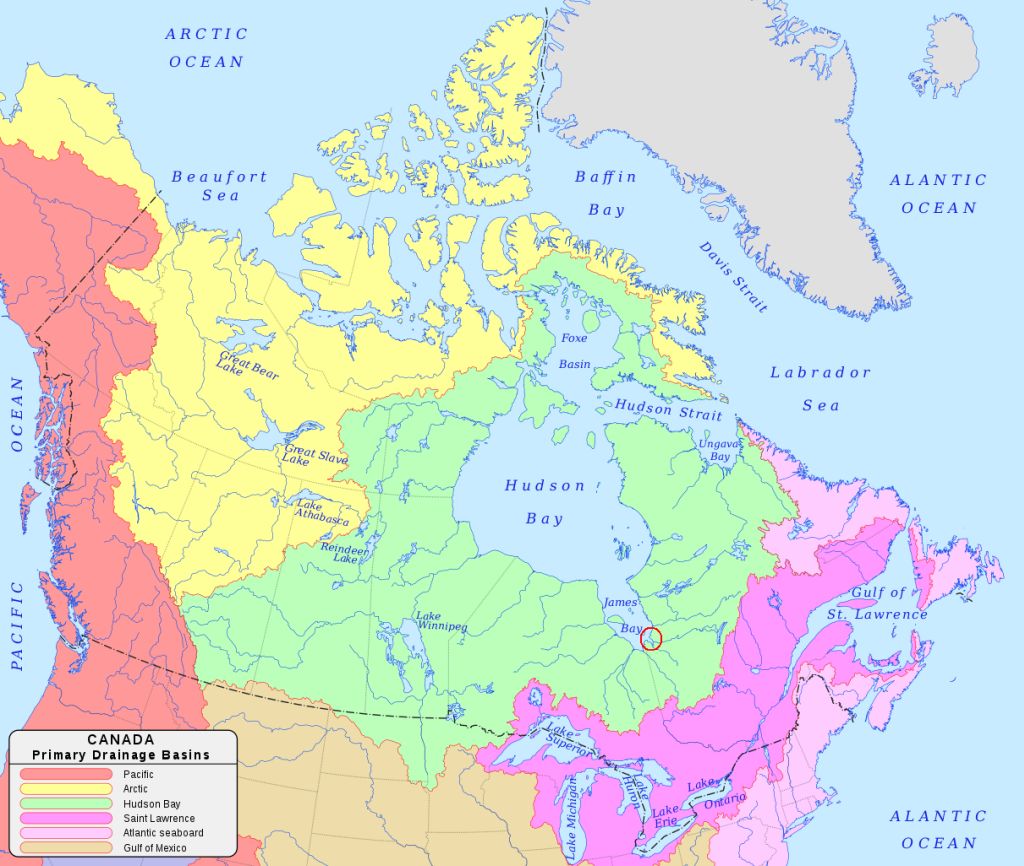
p.s. GEOGRAPHY! Though far inland, James Bay is tidal because it is the southern tip of Hudson Bay which connects to the Atlantic Ocean. This watershed map shows Hudson Bay watershed in green. Note the tiny red circle I added for the location of Rupert Bay.
When peregrine falcons migrate down the Pacific Coast in autumn they often pause at Canada’s Fraser River Delta to hunt shorebirds. Pacificnorthwestkate (@pnwkate) filmed one working a sandpiper flock at Roberts Bank.
Peregrines on the hunt hope to separate a single bird from the crowd because they cannot catch anything in such a tight flock. When a lone bird can’t keep up it becomes the peregrine’s dinner.
A new study, published this month in Phys.org, looked at the interaction from the peregrines’ perspective and found that the falcons haze the dunlin flocks to keep them moving. Peregrine hunting success improved at the end of those 3-5 hours of continuous flying because the dunlin had to stop for a rest.
The hunting data showed that dunlins were at greatest risk of predation just before and just after high tide, and spent most of the riskiest period flocking. However, there was a sharp increase in kills two hours after high tide, because the dunlins were not flocking despite elevated risk. [They were resting.]
So the dunlin changed their behavior to avoid peregrine predation and the peregrines changed their behavior to wear out the dunlin. Peregrines have more stamina that dunlin.
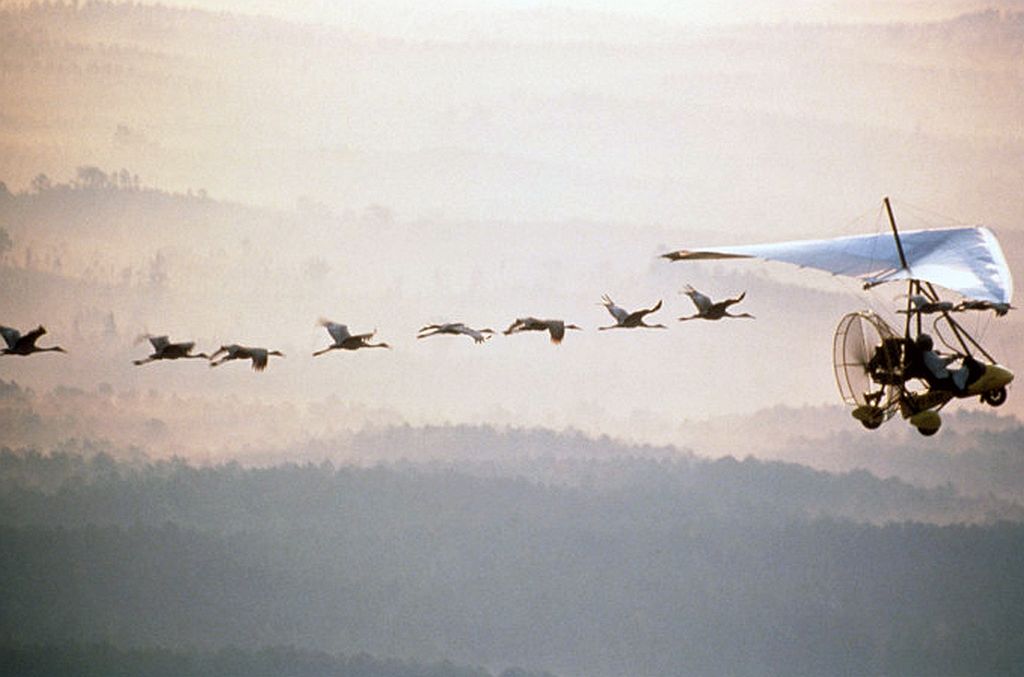
For nearly 30 years ultralights have been used to establish safe migration routes for endangered geese and cranes as they are reintroduced to the wild.
In 1993 ultralight pioneer Bill Lishman, along with Joe Duff, conducted the first ever human-led bird migration by guiding a small flock of young Canada geese from Ontario to Virginia. His experiment proved that young geese imprinted on an ultralight will follow the aircraft and learn the migration route. After leading the birds just once, in one direction, the geese knew the route and returned on their own in the spring.
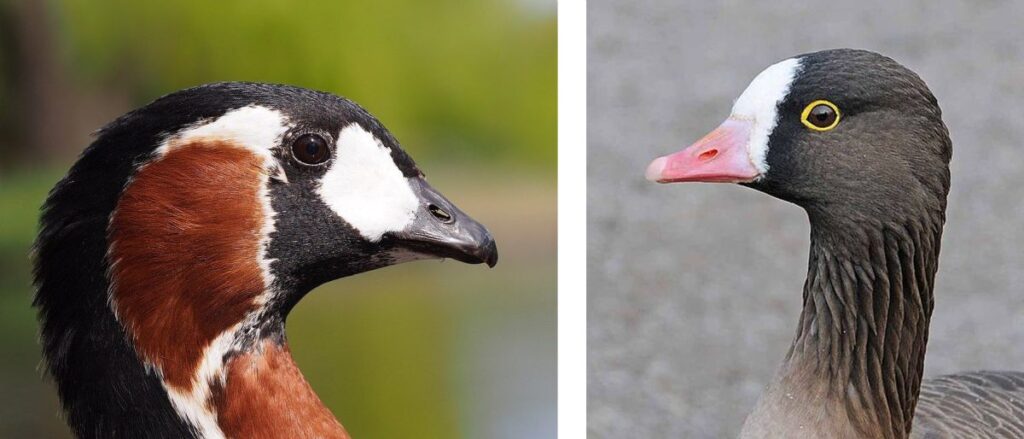
Christian “Birdman” Moullec was the first to do it in Europe when he guided lesser white-fronted geese (Anser erythropus) from their future breeding grounds in Sweden to new wintering grounds in Germany in 1999. He has since led red-breasted geese (Branta ruficollis) and many other species.
The migration spectacle at the Strait of Gibraltar is still underway as thousands of birds stretch their wings and fly to Africa. They can see their goal from the European side but sometimes the wind is a brutal wall that prevents their crossing. On 4 September the wind was right and they didn’t have to flap. Thousands glided south to Morocco.
569 White Stork cruised out to Africa just above us! 570 European Honey Buzzards, as 222 Booted Eagles, increasing numbers of Short-toed Eagles & 274 European Bee-eaters dodged migrating Pallid & Common Swifts! pic.twitter.com/OxrulL3BZ2
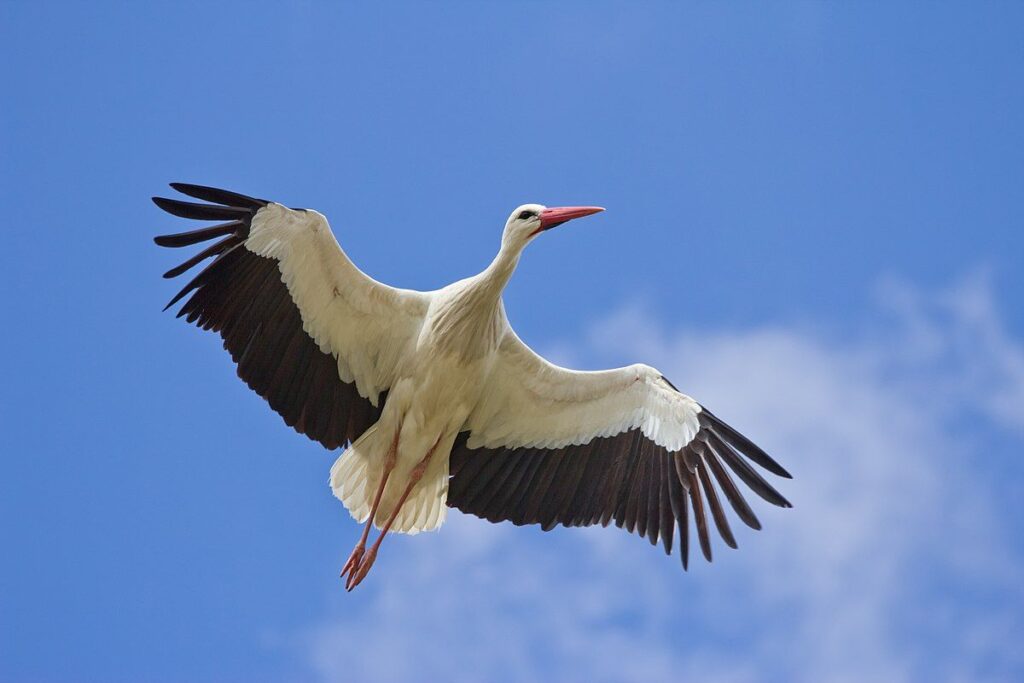
Fifty years ago white storks were extinct in most of Western Europe and this spectacle at the Straits died with the absent birds. Reintroduction programs in the late 20th century brought them back to a growing population of now 224,000 to 247,000 European white storks.
For those who lived through the lean years, their tears at the Straits are tears of joy.
(credits are in the captions including links to the sources)
Except for a few rare sightings in Florida, flamingos seen in the U.S. are not from the wild, they’re escapees from a zoo. Then suddenly last week, after Hurricane Idalia, flamingos have been popping up all over.
At top, 16 flamingos visited Fred Howard County Park near Tarpon Springs, FL. Below, 6 flamingos stopped by St. Mark’s National Wildlife Refuge, 30 miles south of Tallahassee.
The groups have often been a mix of pink adults and gray youngsters.
As of Saturday evening the totals were:
100+ in Florida
11 at Pea Island, North Carolina
2 in South Carolina
2 in Virginia
3 in Alabama
5 in Tennessee
UPDATE on 4 Sep 2023: 1 in Kentucky
and 2 in OHIO! at Caesar Creek State Park. These were seen for only a day and then gone.
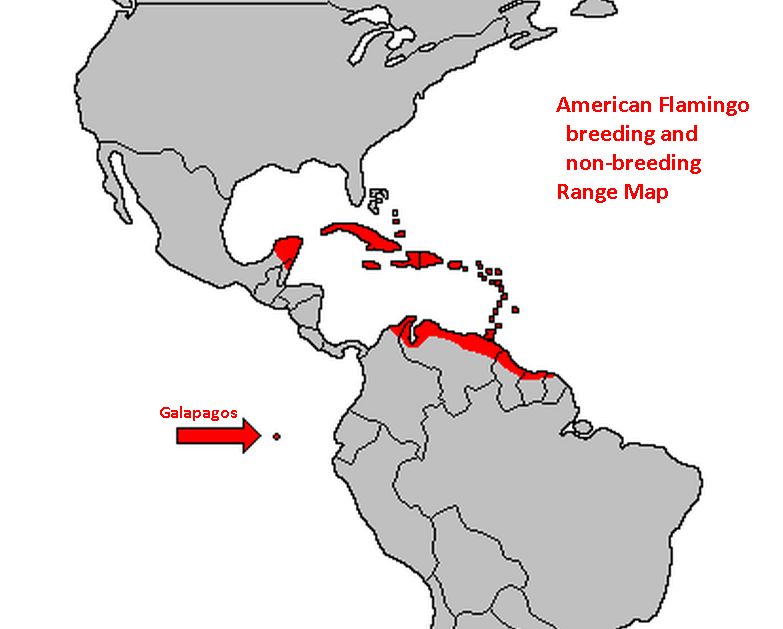
American flamingos (Phoenicopterus ruber) are native to the northern shore of South America, the Caribbean islands, Cuba, and the Yucatan in Mexico. Hurricane Idalia plowed through a few of those locations.
This WKRG video on 27 August shows Hurricane Idalia gaining strength as it spans the Caribbean, overlaying part of the Yucatan and all of Cuba. The flamingos would have felt it coming and flown north and northeast to get out of its way. Notice the lower speed winds (shades of green) on the edge of the weather map. The green wind track is where most of the flamingos have been found.
Considering the storm track, the flamingos are probably from Cuba and the Yucatan including at least one banded bird.
Given all the discussion about the flamingos now appearing all over Florida (and farther north), this eBird list from Amy Grimm is especially relevant. This afternoon, Grimm documented 8 flamingos at Marathon, in the Florida Keys, and noted that “One has large yellow band on the right leg code DXCL, small silver band on left leg.” Do the bands mean it’s escaped from captivity? No. This combination — yellow PVC band on one leg with 4-letter code in black letters, ordinary band on other leg — has been used for years in the ongoing project to band American Flamingos in the big colony at Rio Lagartos, on the north coast of Mexico’s Yucatan Peninsula.


.JPG)

