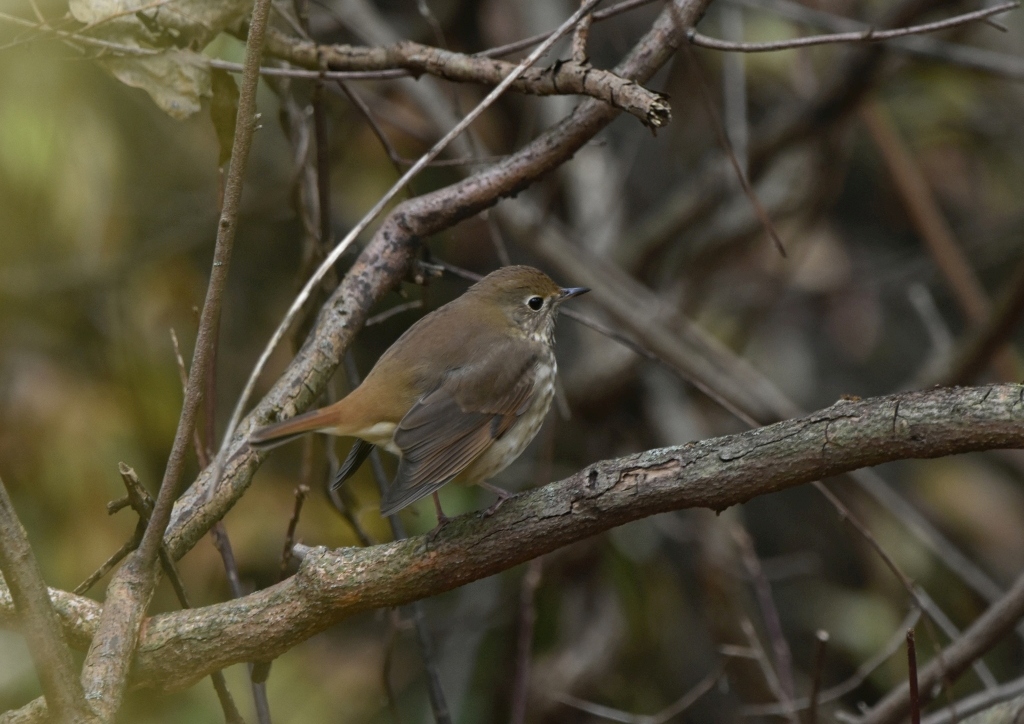
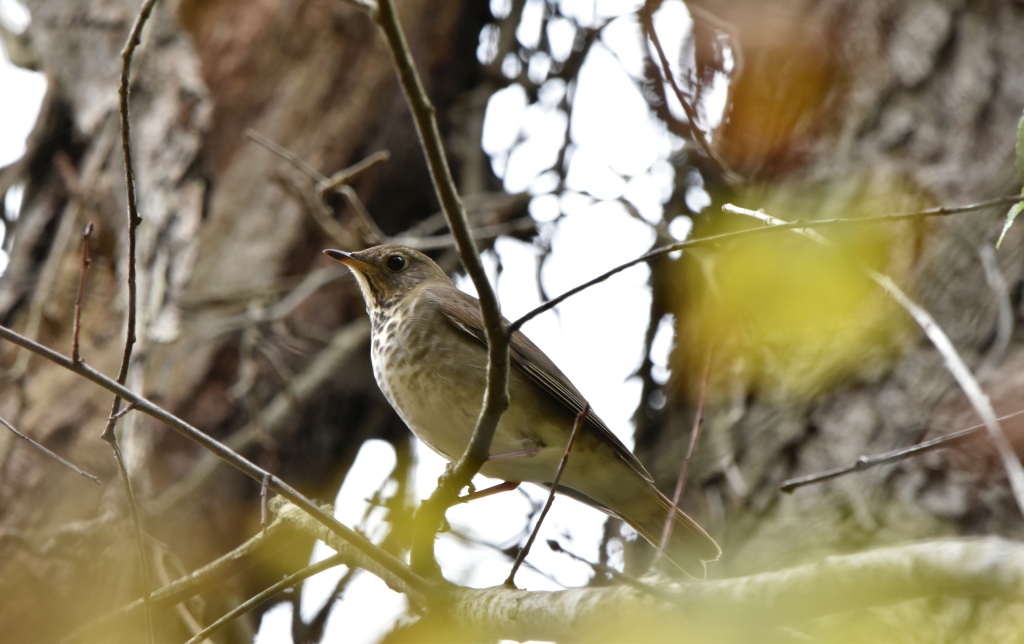
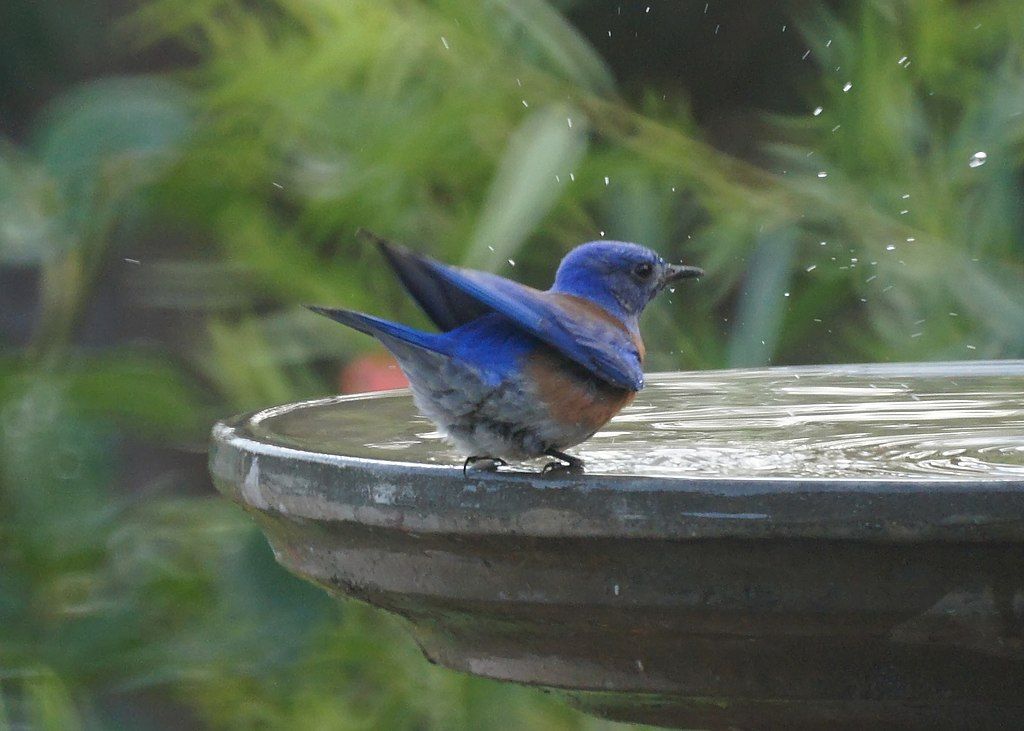
I know it’s only 12 January but a starling told me on Tuesday that spring is coming soon. I could see it in his beak.
Most of the birds that spend the winter in Pittsburgh wear the same colors all year long. Blue jays, chickadees and red-tailed hawks don’t change their look from winter to spring. European starlings (Sturnus vulgaris) do make a change but it’s subtle.
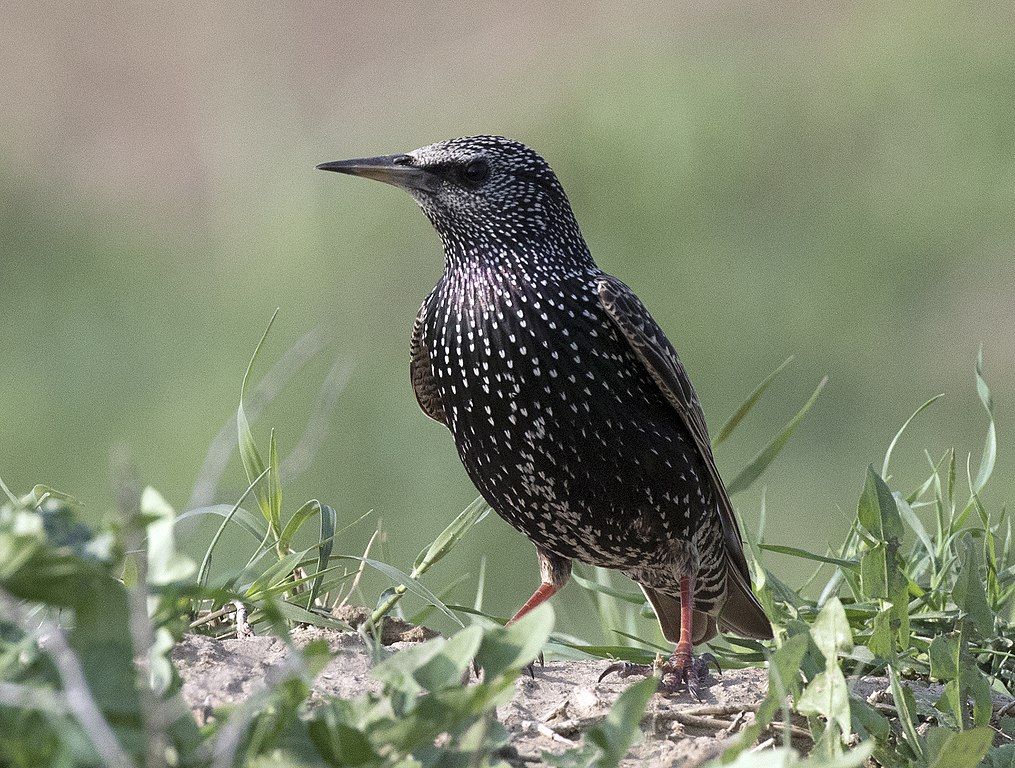
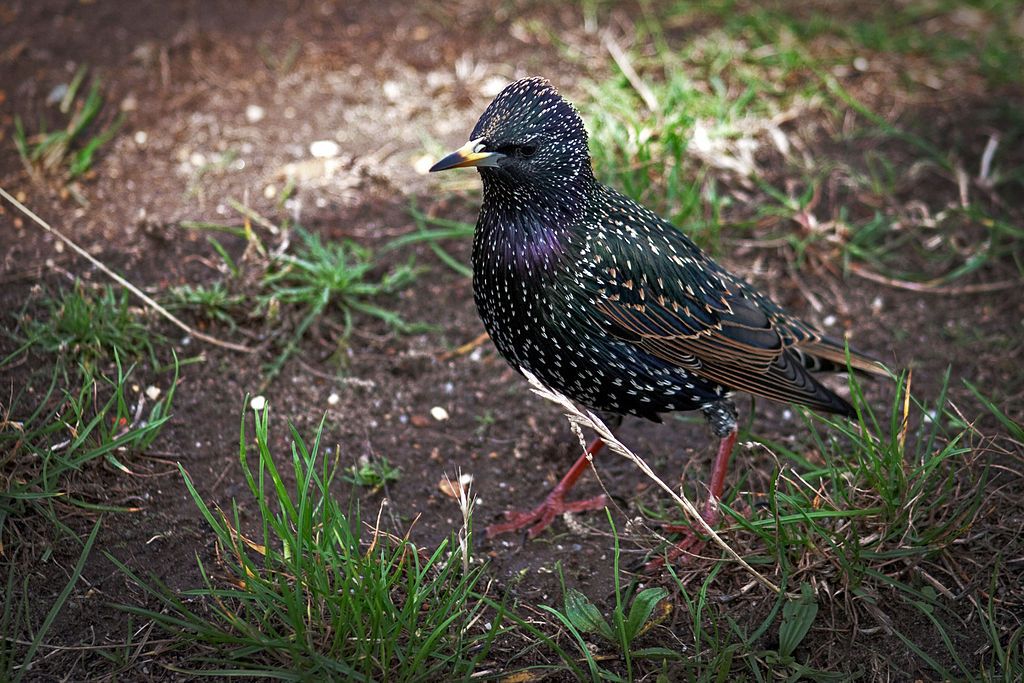
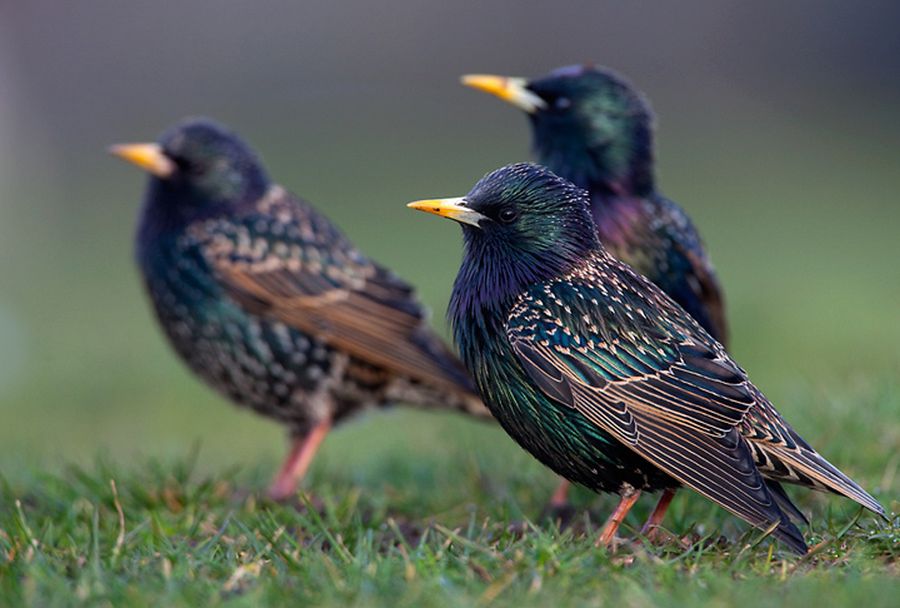
In winter they live up to their name with “starry” spotted feathers, dull dark pink legs, and gray-black beaks. When spring comes their spots wear off, their legs become brighter red and their beaks turn yellow.
Last Tuesday I saw a starling whose beak was turning yellow, though still black-tipped like the one pictured below.
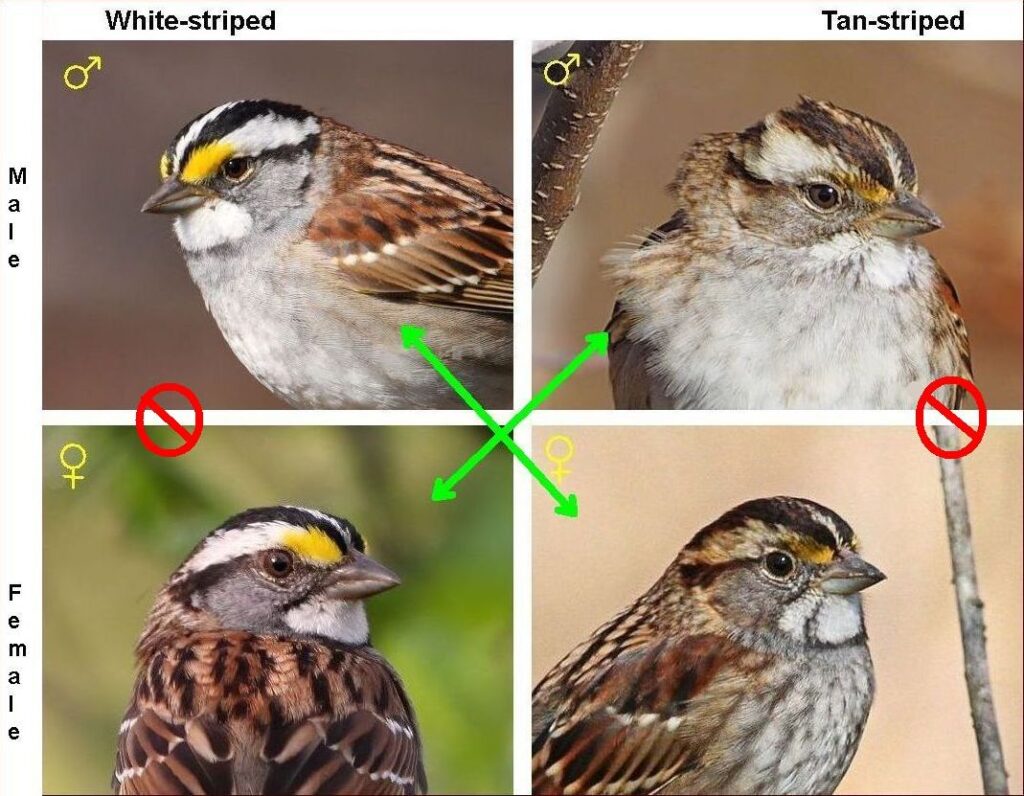
White-throated sparrow colors and sexes — green arrows show the only combinations that can mate successfully (photos from Wikimedia Commons)
8 January 2023
White-throated sparrows (Zonotrichia albicollis) come in two color morphs with either white-striped or tan-striped heads. The color tells us nothing about the sex of the bird because both morphs contain males and females. Last week a new article about a 2016 study reiterated the white-throated sparrow’s affinity for mating with the opposite color morph. It’s deeper than just a preference. These birds cannot reproduce with their own color.
Thirty years of research by Elaina Tuttle and Rusty Gonser into the genetics and behavior of white-throated sparrows revealed a mutation in chromosome 2 that makes it impossible for same-color-morph birds to reproduce. The birds seem to know this and only look for mates among birds of the opposite color. Instead of half the population as possible mates, fellow researcher Christopher Balakrishnan points out that “One individual can only mate with one-quarter of the population. This bird acts like it has four sexes.”
White-stripe Male
Tan-stripe Male
White-stripe Female
Tan-stripe Female
A system of four sexes is quite rare and there’s a reason. As Balakrishnan says, “it is evolutionarily unstable and one of these alleles will ultimately go extinct.”
White-throated sparrows have declined 69% in the U.S. over the past 50 years and overall (including Canada) by 33%. Are they declining because of habitat loss? window kills? Is their four-sex system also taking a toll? If so they’re probably the only species with that challenge.
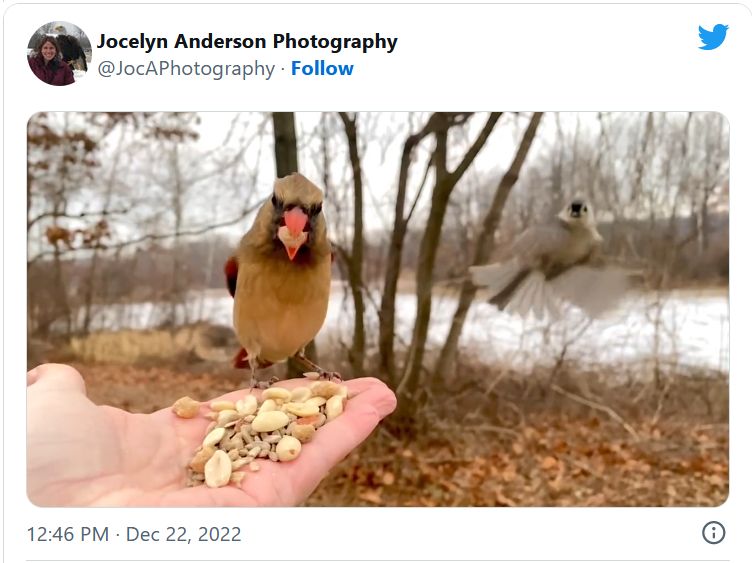
When Michigan photographer Jocelyn Anderson (@JocAPhotography) takes a walk in the park she brings her camera and a pocketful of shelled peanuts, sunflower seeds and suet nuggets. While balancing her camera she films the birds eating out of her hand in beautiful closeups.
Before last week’s cold snap the birds were very hungry and very active as seen in the screenshot above and her video below. (Videos are in slow motion.)
Soon after starting my walk I was greeted by the Queen, a Northern Cardinal. She flew up to me and since I didn’t have her snacks ready, she flew back to her perch. I quickly grabbed a handful from my bag. Tufted Titmice and a Downy Woodpecker grab snacks as well. pic.twitter.com/uESRCYgfkN
Days later it was too cold for bare hands so she offered the food on her mitten.
The Queen, a Northern Cardinal, flew over to me on a cold and windy morning. She landed by my boots while I grabbed some snacks for her. She goes with her usual combo, a peanut and a suet nugget. pic.twitter.com/3F6Cpltuvs
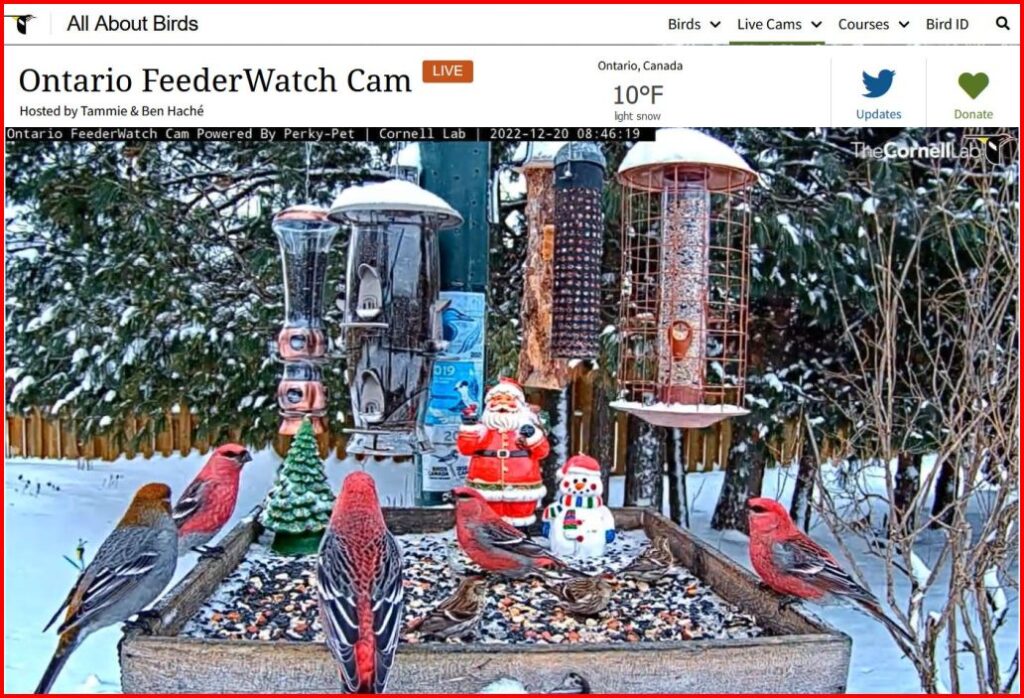
Severe cold weather has people huddling indoors and birds flocking to feeders across North America. If you don’t have a feeder you can still watch birds online at Ontario Feederwatch, one of the best around.
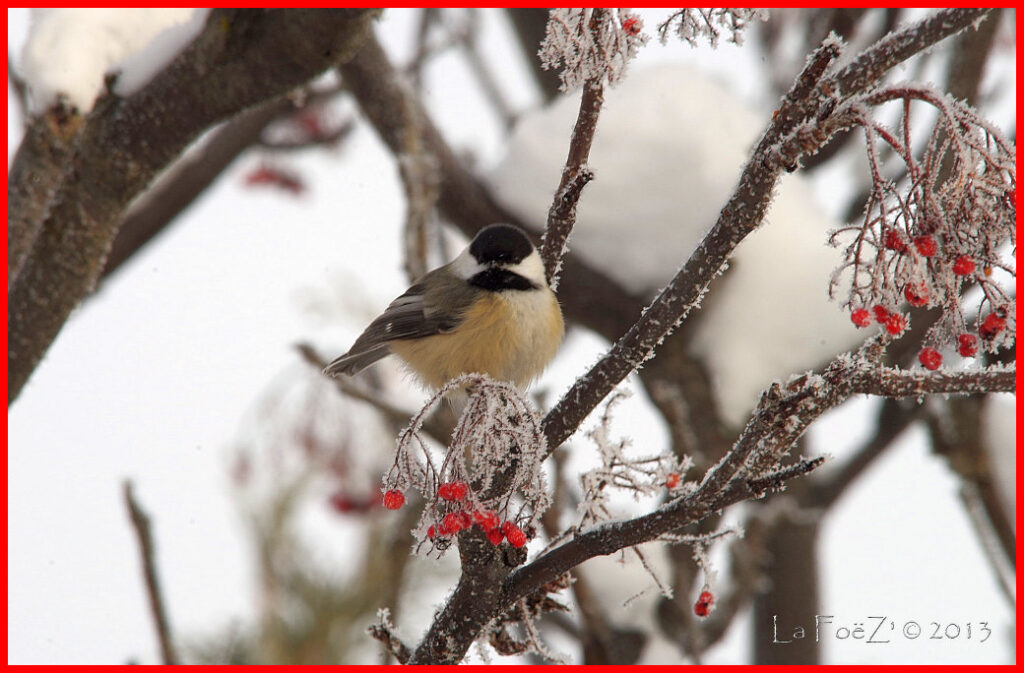
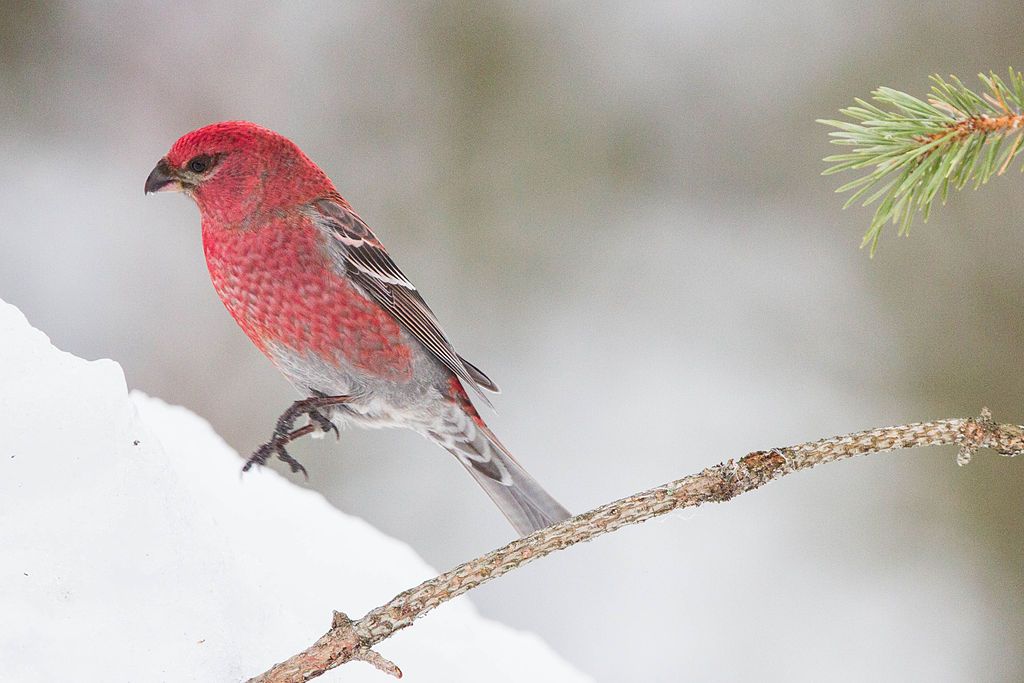
Tune in to see the usual suspects — cardinals, chickadees, blue jays — and some boreal specialities including common redpolls, pine siskins, pine grosbeaks (above), evening grosbeaks, and crossbills.
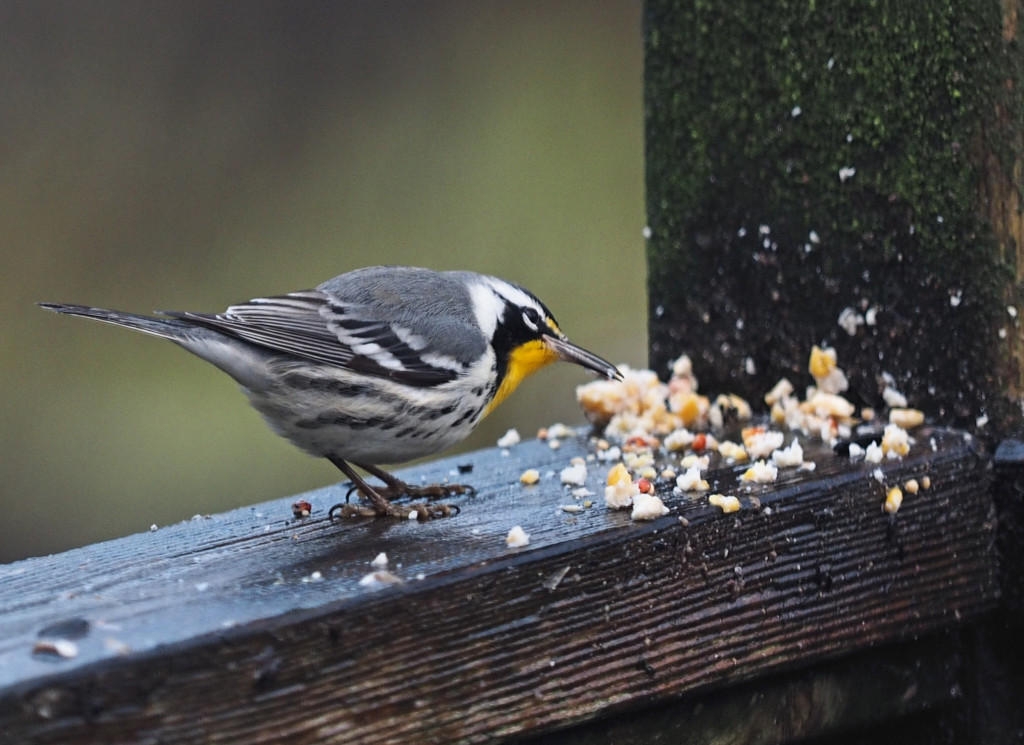
A yellow-throated warbler (Setophaga dominica) would not be rare in Pittsburgh in early May but to see one in Canada in December is amazing.
This bird was photographed in St. John’s, Newfoundland on 9 December by Phillip (Felip1).
It’s not a very sharp picture but enough to identify him: a Yellow-throated warbler. He showed up for some suet early this morning.
I was half-expecting him. He had been visiting a suet feeder a couple of hundred metres away from us a few days ago. And one of the flickers had chopped up lotsa suet for him from the suet holder above. Those flickers are pigs but the other birds appreciate it.
Even though it is mid-December, the weather’s been mild and there are a half-dozen warblers who have apparently decided to try their luck to spend the winter around this town, St. John’s, Newfoundland, when all their relatives decamped a couple of months ago for more southern climes.
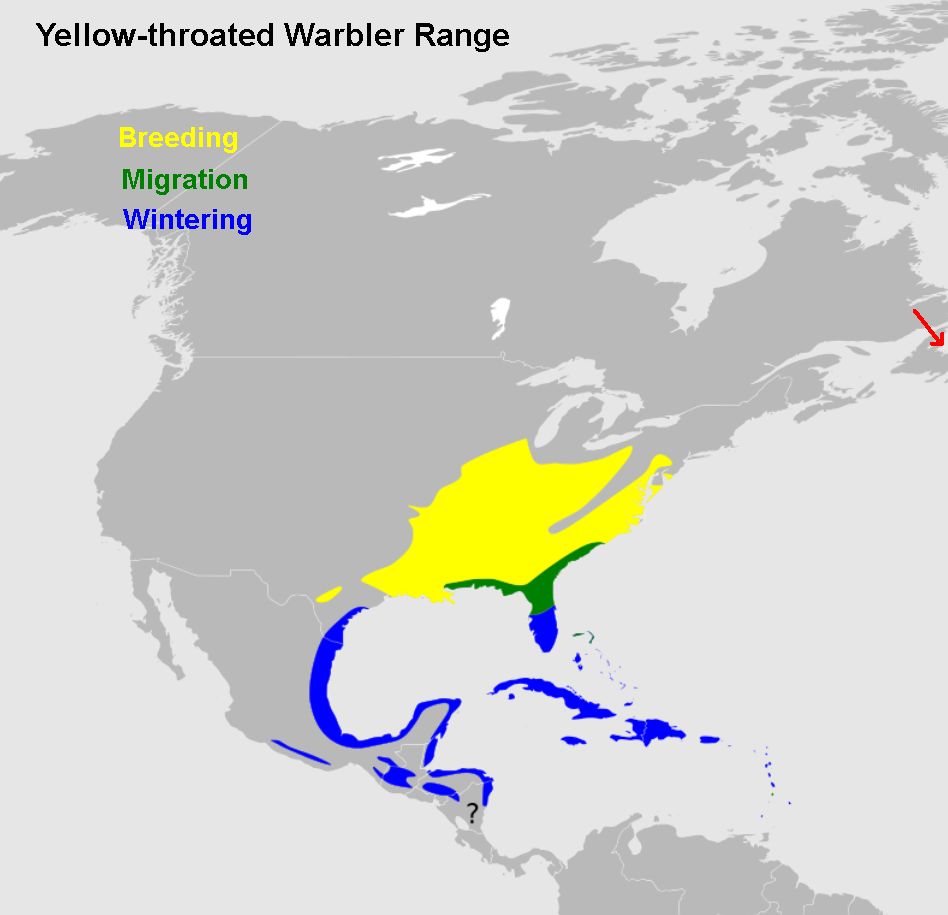
Pennsylvania is typically the northern limit of the yellow-throated warbler’s range and it’s a short-distance migrant to Florida and the Caribbean. St. John’s, Newfoundland is not even on the map (red arrow points toward it) but Newfoundland is about as far as Florida if you’re migrating from PA in the wrong direction.
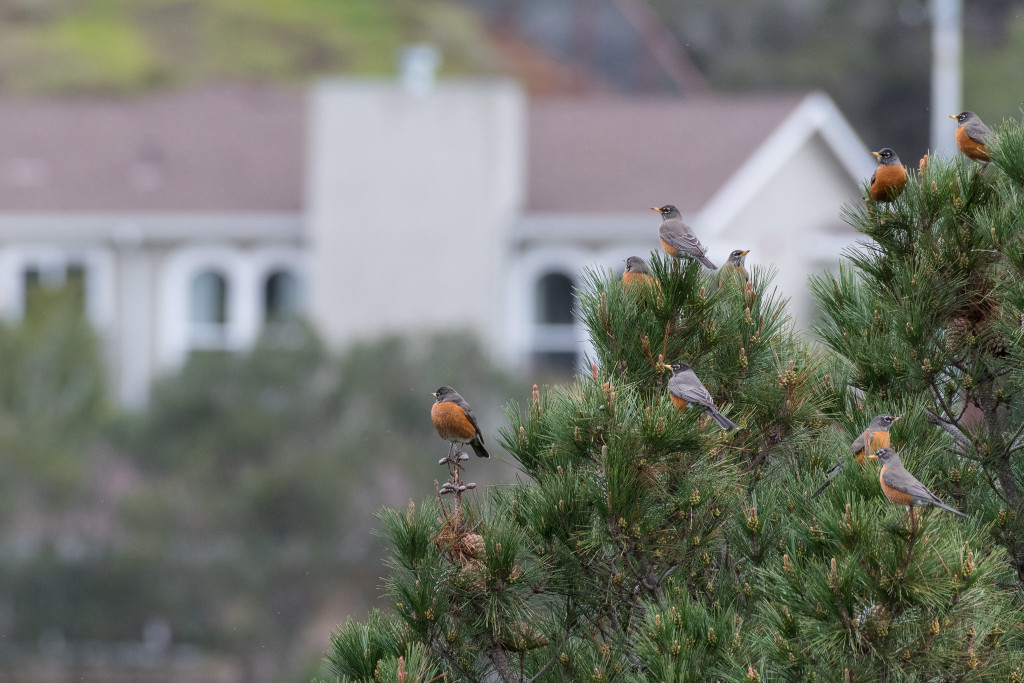
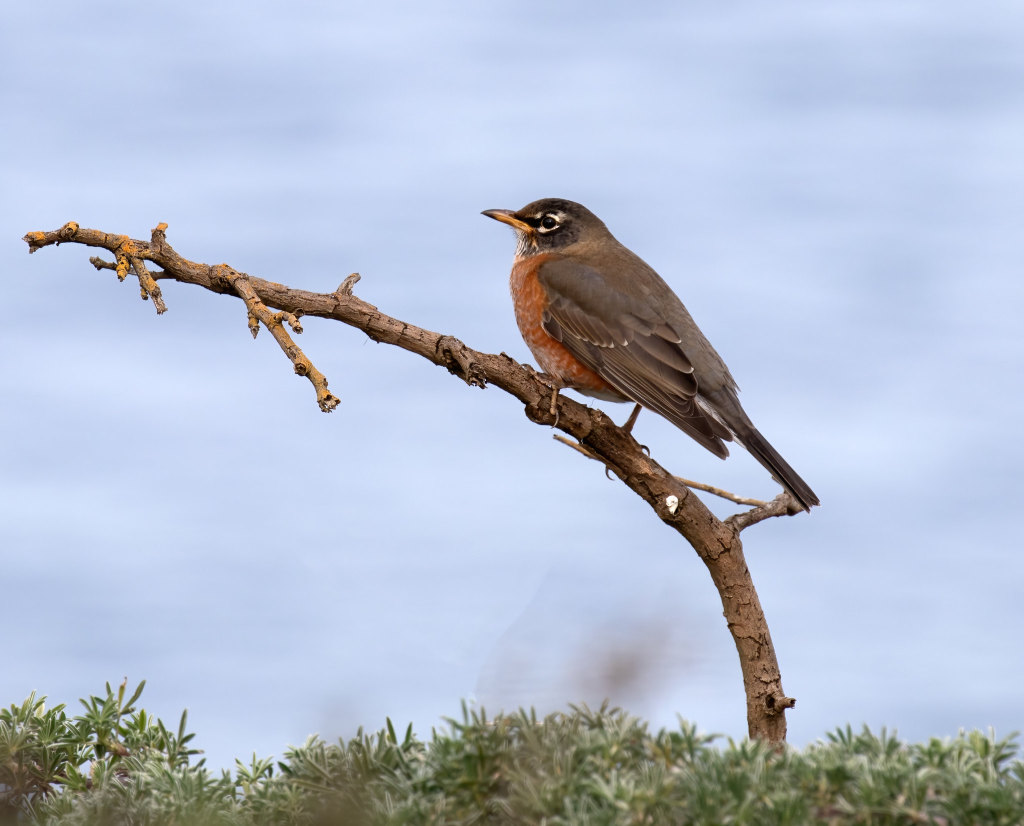
In mid November hundreds, perhaps thousands, of American robins (Turdus migratorius) were in the east end of Pittsburgh but left abruptly when the weather dropped below freezing on November 18th. By the 21st it was 17 degrees F and the robins were long gone.
Robins can cope with cold weather but not with frozen ground so they stay just south of the freeze line as winter approaches.
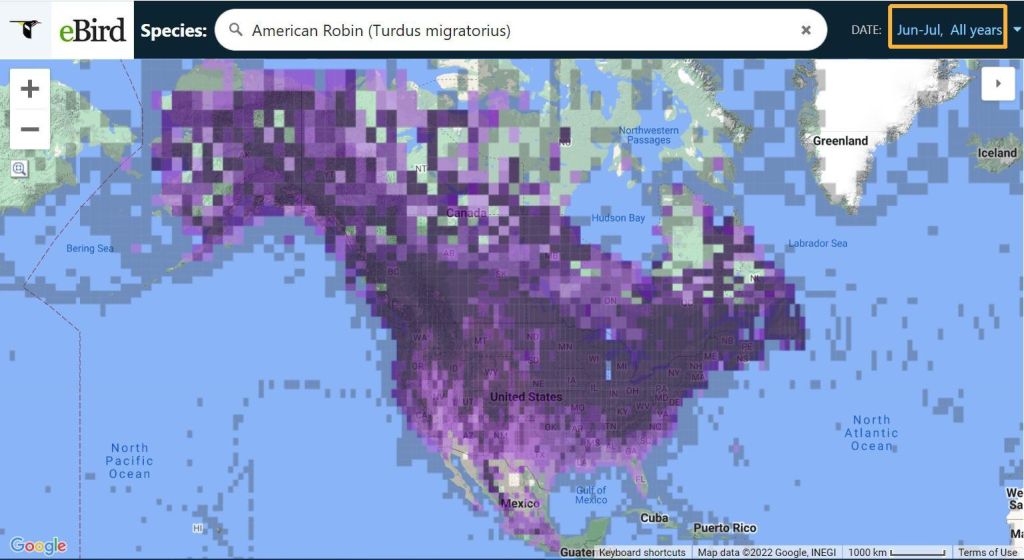
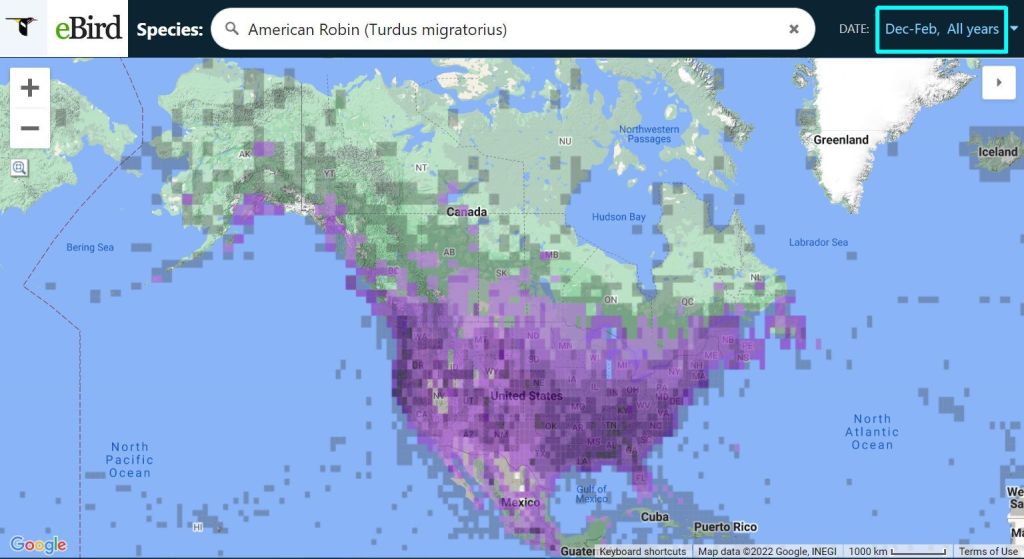
eBird distribution maps for June-July and December-February show that robins vacate the north to populate temperate zones in winter. June-July is dark purple with robins everywhere except for the hottest southern U.S. In Dec-Feb they’re concentrated in the Pacific Northwest and the Southeast including Florida.
Robins were on the move here in November. Now they’re south of us, wrapping up.
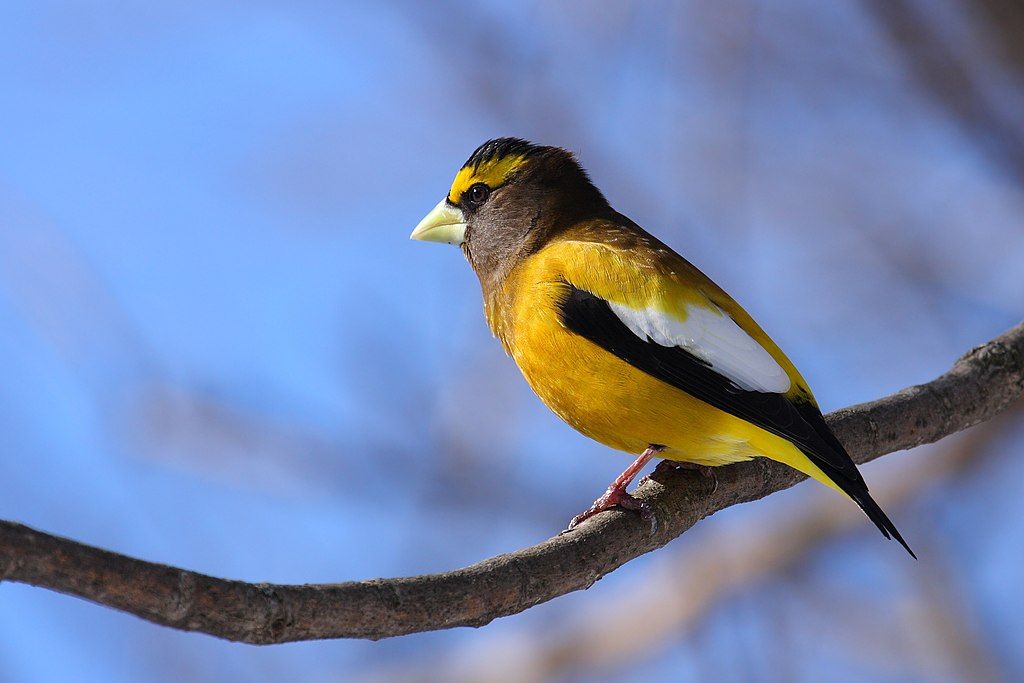
(photos by Robin Agarwal and Douglas on Flickr via Creative Commons license; click on the captions to see the originals)
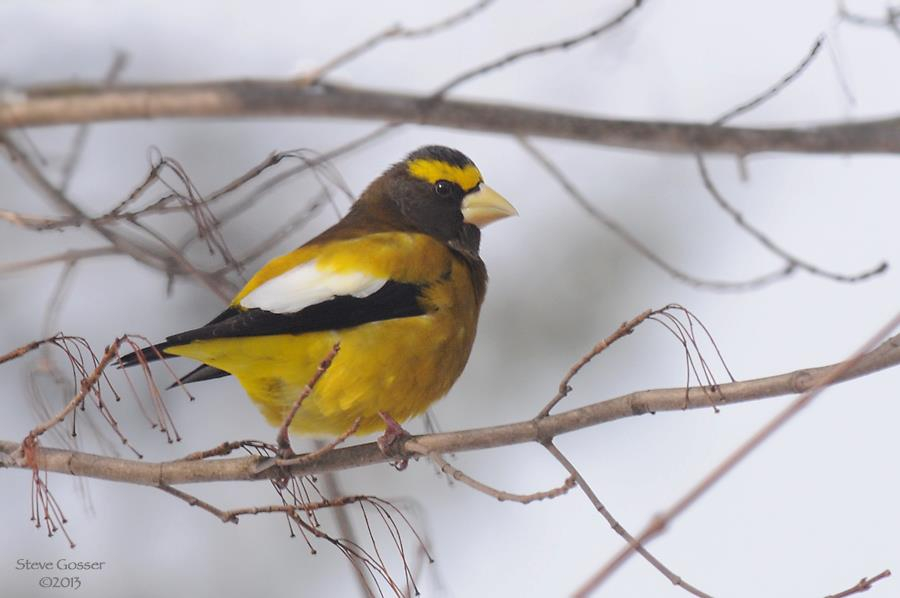
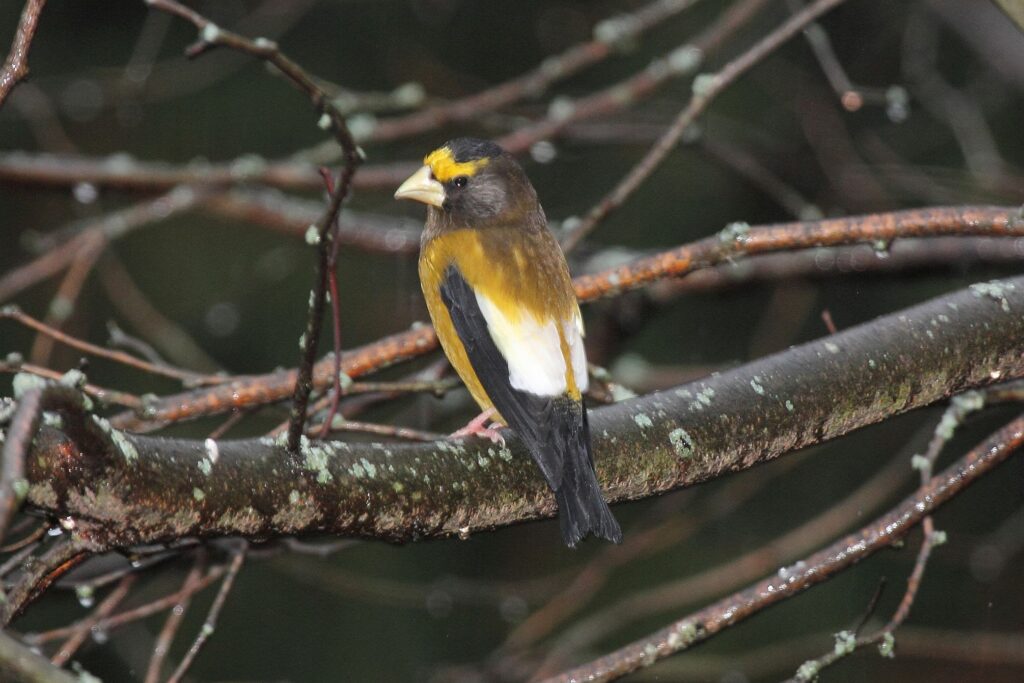
Evening grosbeak, January 2013 (photo by Steve Gosser)
21 November 2022
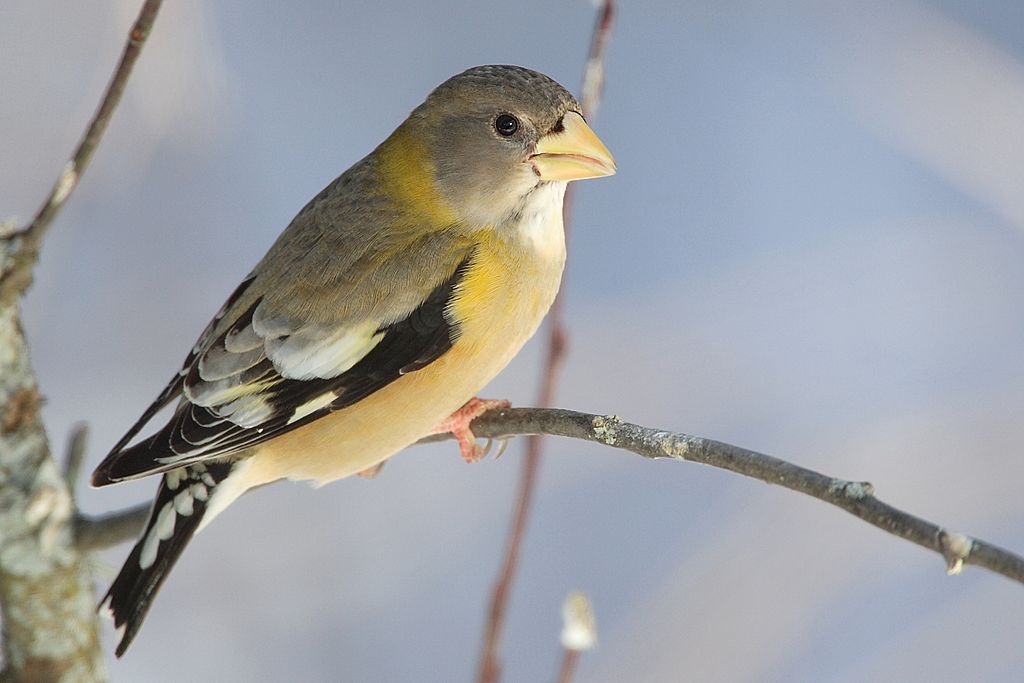
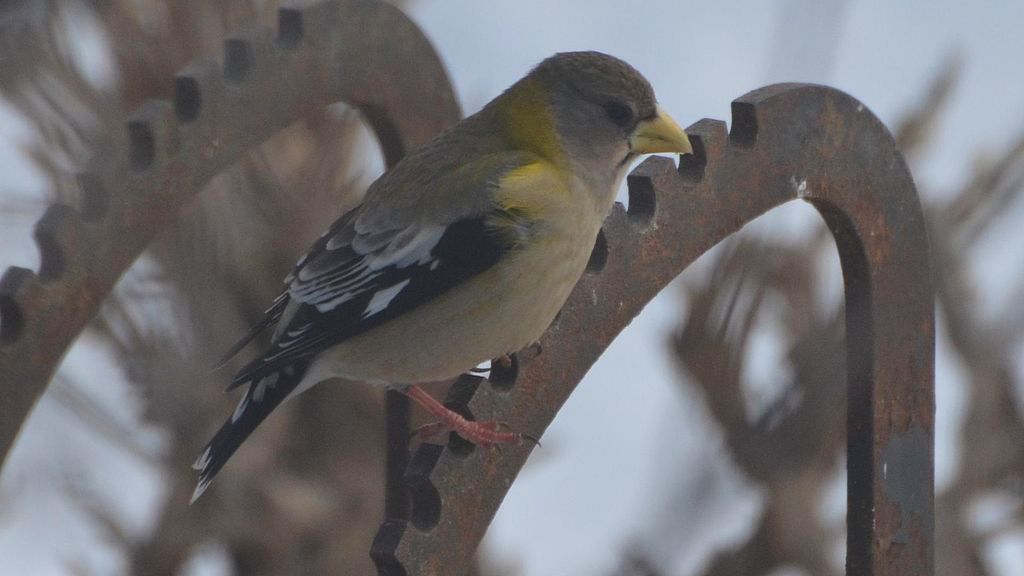
In September the Finch Research Network’s Winter Finch Forecast predicted that evening grosbeaks and pine siskins would irrupt southward this winter. In the past week Pennsylvania Rare Bird Alerts reported 55 sightings of evening grosbeaks and 11 of pine siskins in the state. Some are in western Pennsylvania right now and both are seed-eaters so you might see them at your feeders. Here’s what to look for.
Evening grosbeaks are big bulky finches, larger than northern cardinals, that are shaped like rose-breasted grosbeaks. The male is bright yellow with black accents and white wing patches. When you see him at your feeder you’ll fall in love.
The females and immature males are not as striking but still beautiful. In bright light they look like enormous goldfinches with fat necks and big beaks.
Evening grosbeaks love sunflower seeds so keep some on hand to attract any that might be flying over. Doug Gross says they also love these wild foods: Seeds of box elder, ash, elm, tulip poplar, hackberry, pine, spruce, larch. Fruits of cherries, apples, crabapples, poison ivy, hawthorn, juniper (red cedar), Russian olive.
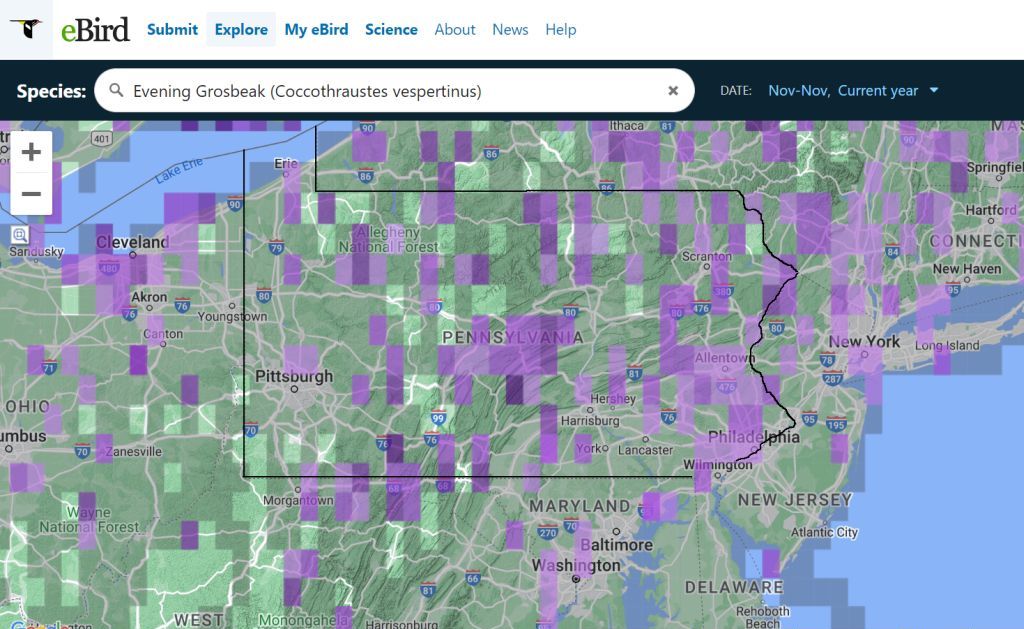
This PA map shows where evening grosbeaks have been reported in eBird this month through 20 Nov.
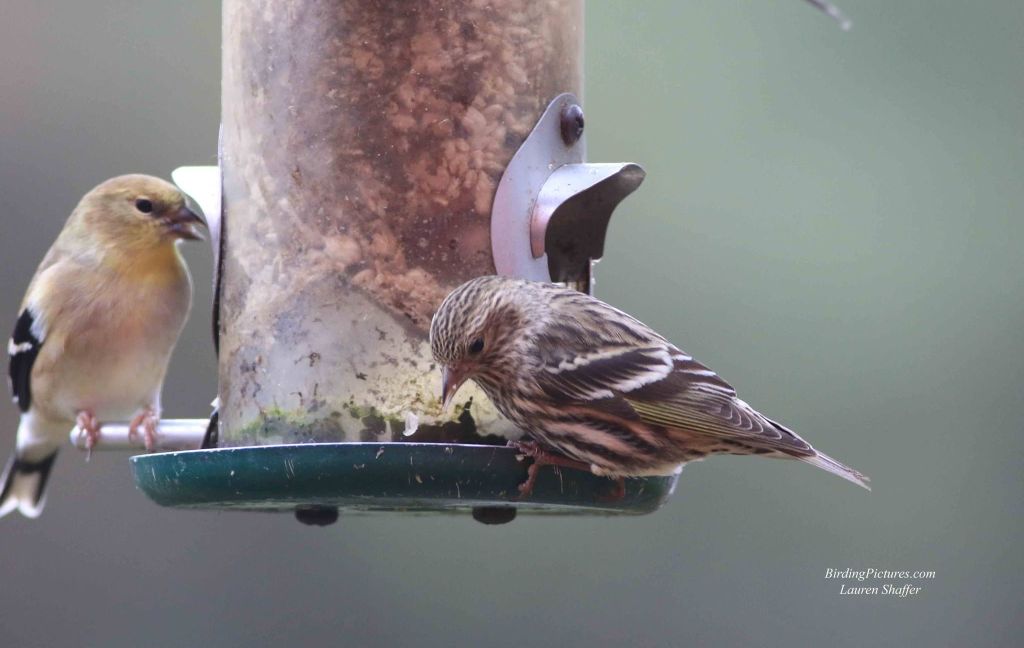
Pine siskins resemble female house finches but are warm brown in color (not gray-brown) and have sharp pointy beaks with a faint touch of yellow on their wings. They often hang out with goldfinches.
Pine siskin at feeder with American goldfinch (photo by Lauri Shaffer)
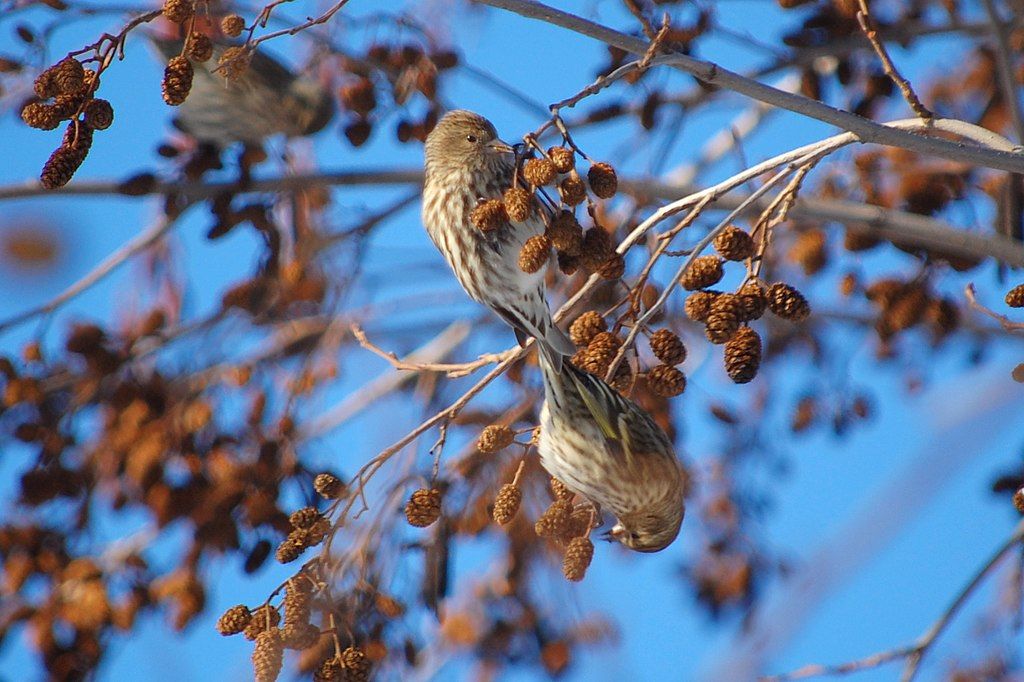
They love niger at the feeder and pull seeds from alder and arborvitae cones.
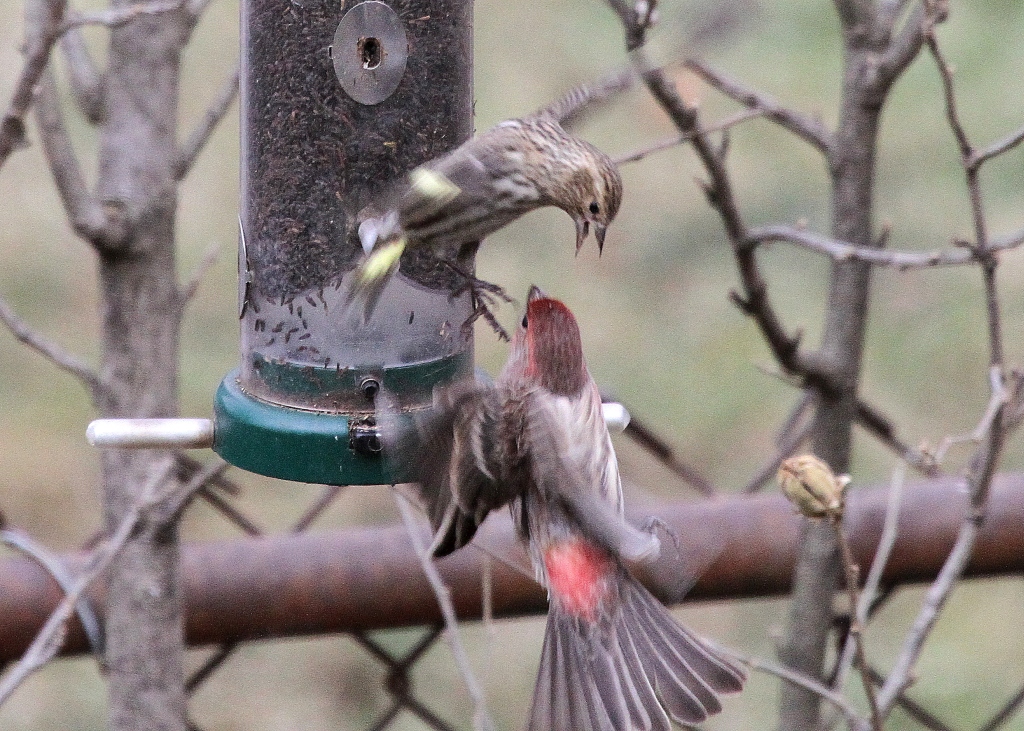
Though petite in size, pine siskins strenuously defend their feeder perches against other birds. Here one shouts at a male house finch.
Pine siskin yells at a house finch (photo by Tom Moeller)
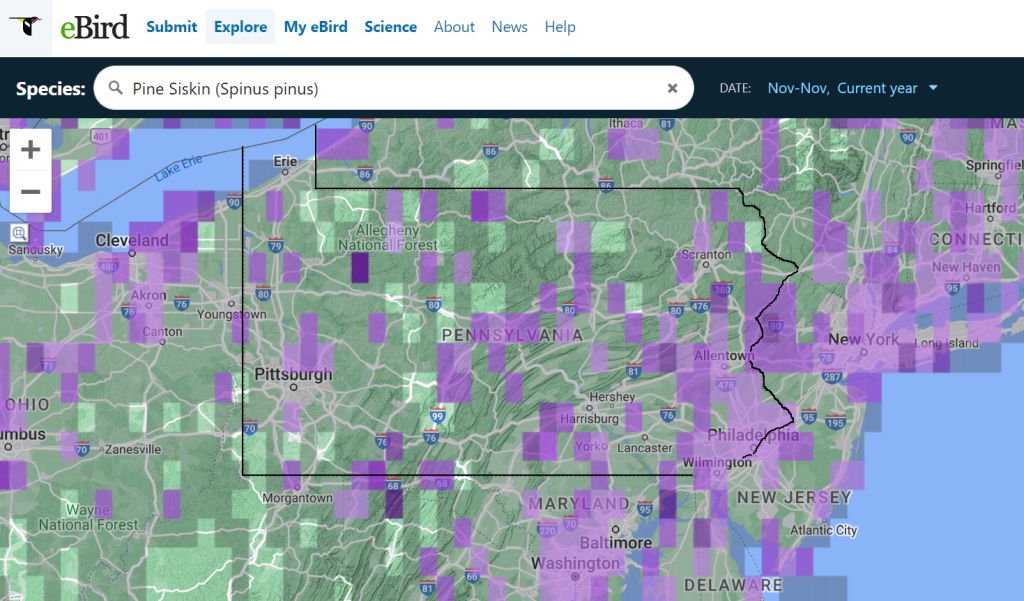
Keep your niger feeder filled and look hard at those goldfinches. This PA map shows where pine siskins have been reported in eBird this month through 20 Nov.
Third northern parula, Frick Park, 14 Oct 2022 (photo by Charity Kheshgi)
17 October 2022
In just two days the mix of songbirds at Frick Park changed from warblers to thrushes and sparrows.
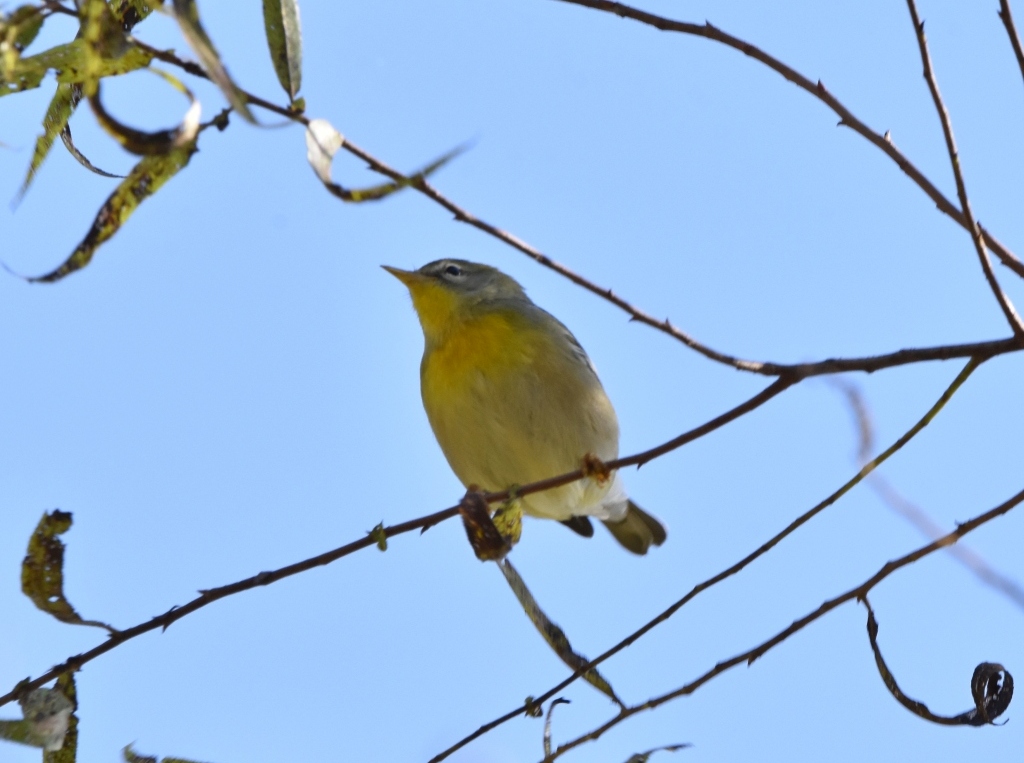
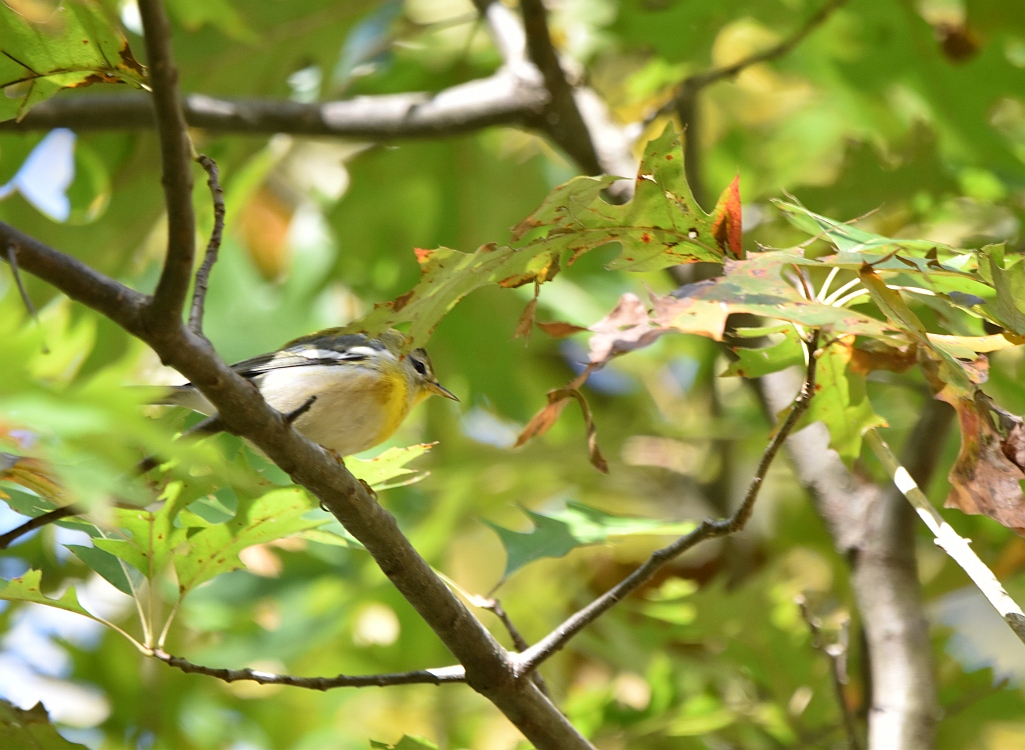
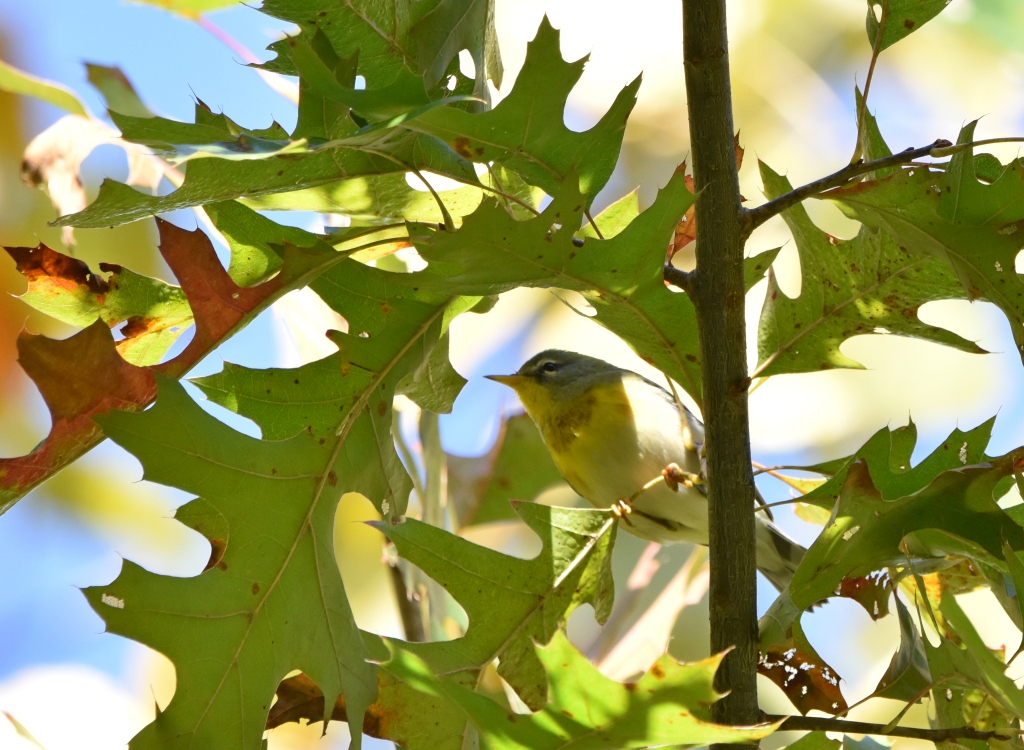
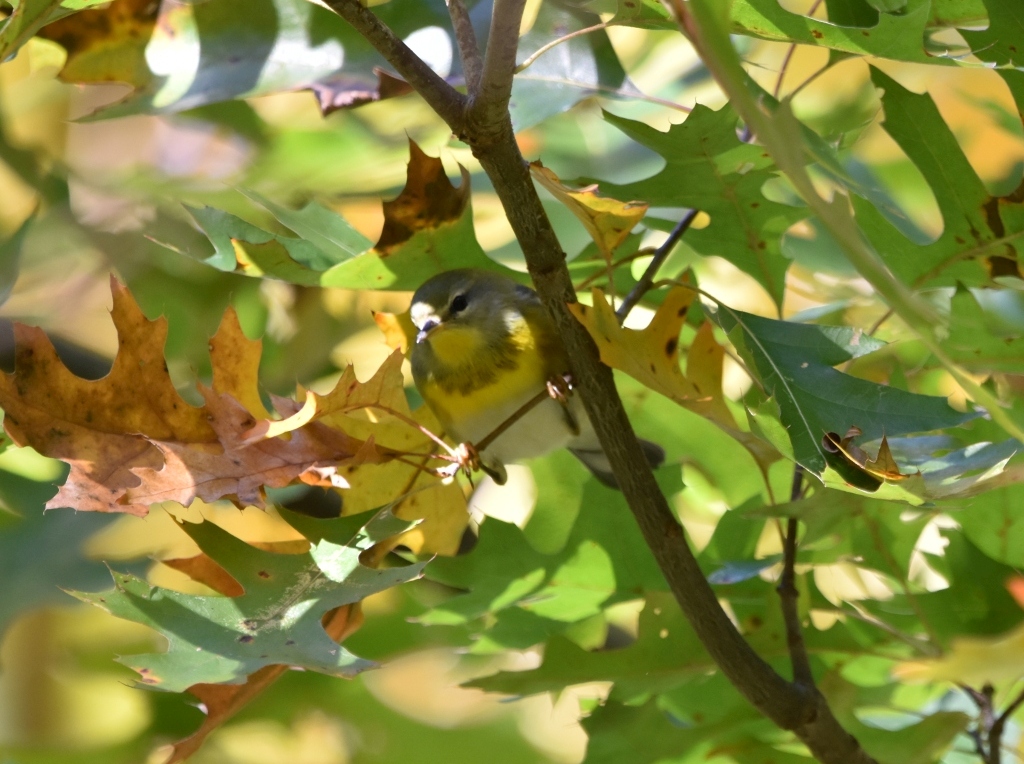
On Friday 14 October Charity Kheshgi and I found three northern parulas (Setophaga americana) along Nine Mile Run at Frick Park. eBird said they were worthy of a Rare Bird Alert. Fortunately Charity got photos of all three, shown in the slideshow below with three photos of each. Two of them are very easy to tell apart because they are at the extremes of bright vs. pale colors.
1. First northern parula, Frick Park, 14 Oct 2022 (photo by Charity Kheshgi)
1.
1.
2. Second northern parula, Frick Park, 14 Oct 2022 (photo by Charity Kheshgi)
2.
2.
3. Third northern parula, Frick Park, 14 Oct 2022 (photo by Charity Kheshgi)
3.
3.
On Saturday night migration was intense which often means that all the birds leave Pittsburgh. Instead, on chilly Sunday morning we found a new mix of songbirds including those pictured below.
Gray-cheeked thrush, Frick Park, 16 Oct 2022 (photo by Charity Kheshgi)
There were many more American robins [50 instead of 7] and white-thoated sparrows (Zonotrichia albicollis) [36 instead of none] and we even heard a fox sparrow (Passerella iliaca) (example below). I wish we could have seen it.
Meanwhile we’re still waiting for dark-eyed juncos but not the snow that comes with them.
Songbirds are attracted to water — to streams, puddles, marshes, ponds — especially on migration.
Watch a soothing video of birds enjoying the water in Richard Hall’s backyard in Athens, Georgia.
I was shocked/thrilled at how many folks over the world enjoyed the #WarblerPartyPond video, so here’s another 90 seconds of heaven, highlighting the migrant and resident birds flocking to bathe in my small in-town yard this weekend. How many can you ID? Species list in comments. pic.twitter.com/AOeeSyWLak