Archive for the 'Songbirds' Category

Jan 26 2013

Camouflage With Snow

Published by under Songbirds

Again on the theme of camouflage…

Here’s a snow bunting whose winter plumage is makes him hard to see on partially snow-covered ground.

His eye is like a dark pebble, his brown cheek and necklace like mud between the melting snow.

(photo by Shawn Collins)
2 responses so far

Jan 15 2013

Look Closely

Published by under Migration,Songbirds

If you merely glanced at this feeder from afar, you might assume all the birds are goldfinches.

They’re all the same size, but the two birds at the top are common redpolls, the latest arrivals in a massive irruption of winter birds.

In western Pennsylvania they’ve joined purple finches, red and white-winged crossbills, pine siskins, evening grosbeaks, and red-breasted nuthatches, all of whom came south because of the drought up north.

I’ve chronicled other irruptions (see list below) but I don’t remember a year in which so many species visited at the same time.  This year the only thing we seem to be missing are snowy owls.
Look closely at your feeders.  You might have some exciting visitors.

(photo by Marcy Cunkelman)

9 responses so far

Jan 12 2013

Red Belly

Published by under Songbirds

The red streak on his belly gave the red-bellied woodpecker his name.

(photo by Marcy Cunkelman)

4 responses so far

Jan 07 2013

Scarce Loggerheads

Still on the theme of South Florida birds…  last month when I visited Wakodahatchee Wetlands I noticed that a formerly common bird was missing.

I used to see loggerhead shrikes out there, but this year I didn’t see any. As I drove around the area I could see why.

On my first visit to Wakodahatchee in December 1996 the site had been newly transformed from an open sewage treatment facility to a man-made wetland complete with boardwalk.  Back then the site was still embedded in farmland, Jog Road was only two lanes wide, and the road grid from Delray ended nearby.

Since then Wakodahatchee’s habitat proved its worth for birds and made the area more appealing to people by removing the sewage smell.  Now, 17 years later, the farmland is gone and the wetland is surrounded by housing developments, shops, parking lots, and a widened road grid.  The last bit of open habitat, Green Cay Wetlands, was preserved by Ted and Trudy Winsberg when they sold their farm to Palm Beach County Water Utility.

The suburbanization of western Palm Beach County eliminated the open habitat required by loggerhead shrikes and probably reduced the insect and rodent population they feed on.  When their habitat disappeared, the shrikes moved elsewhere.  Unfortunately, both the loggerhead shrike and their favored habitat are becoming scarce.

And so, this year I didn’t see any loggerhead shrikes at Wakodahatchee.  I am not surprised but I’m not pleased.

As Joni Mitchell sings in Big Yellow Taxi, “Don’t it always seem to go that you don’t know what you’ve got till it’s gone. ”

(photo by Chuck Tague)

3 responses so far

Dec 29 2012

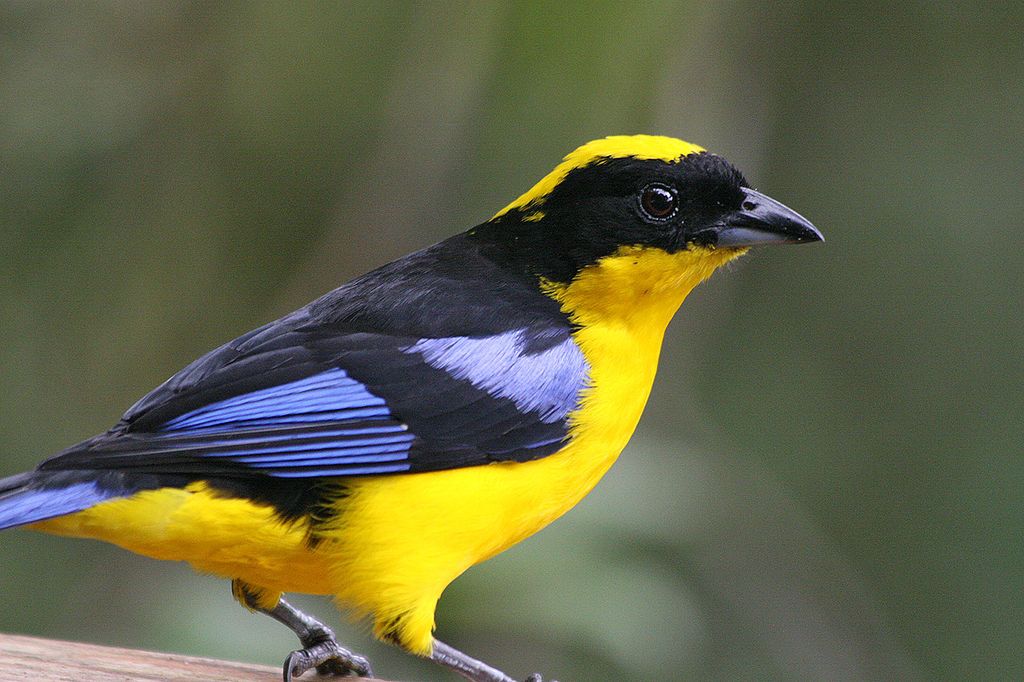
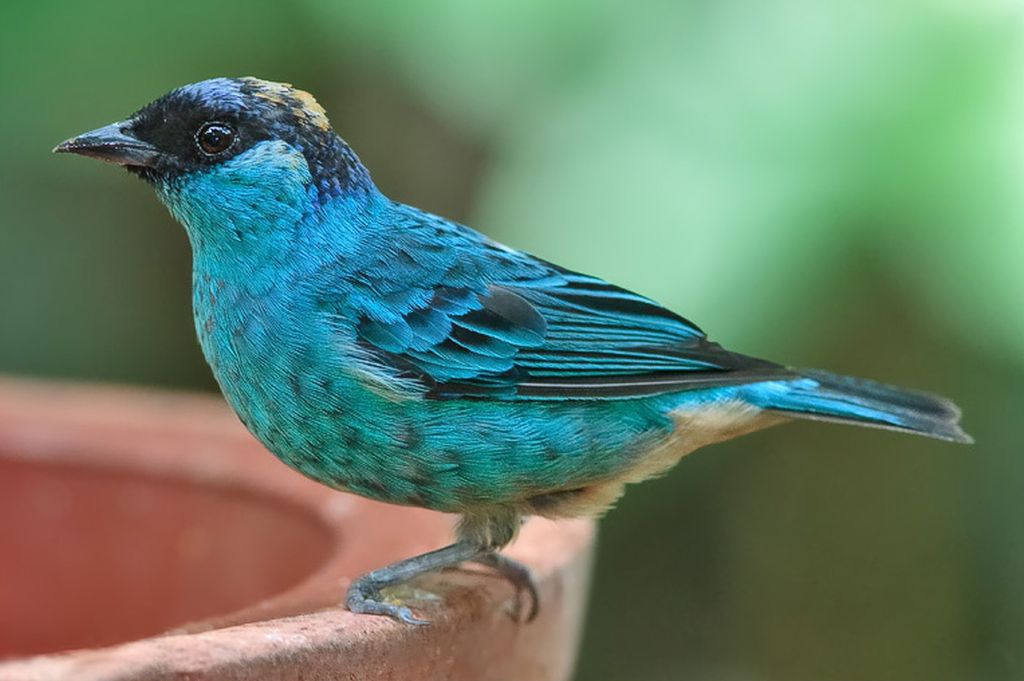
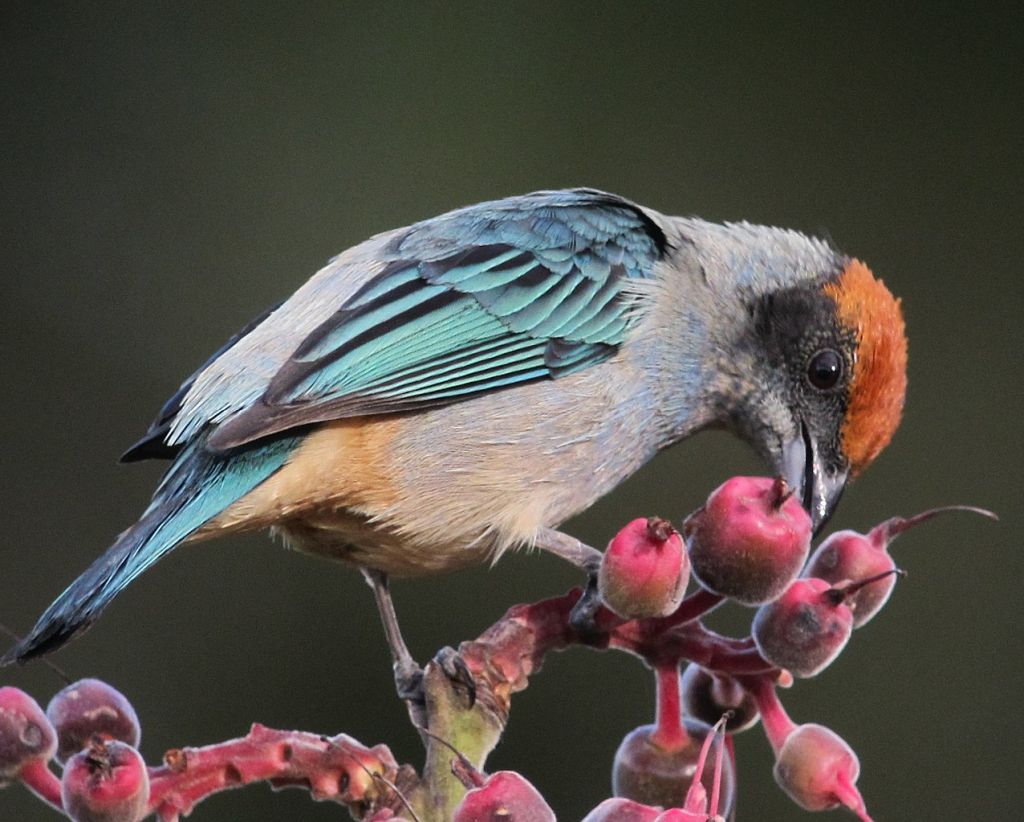
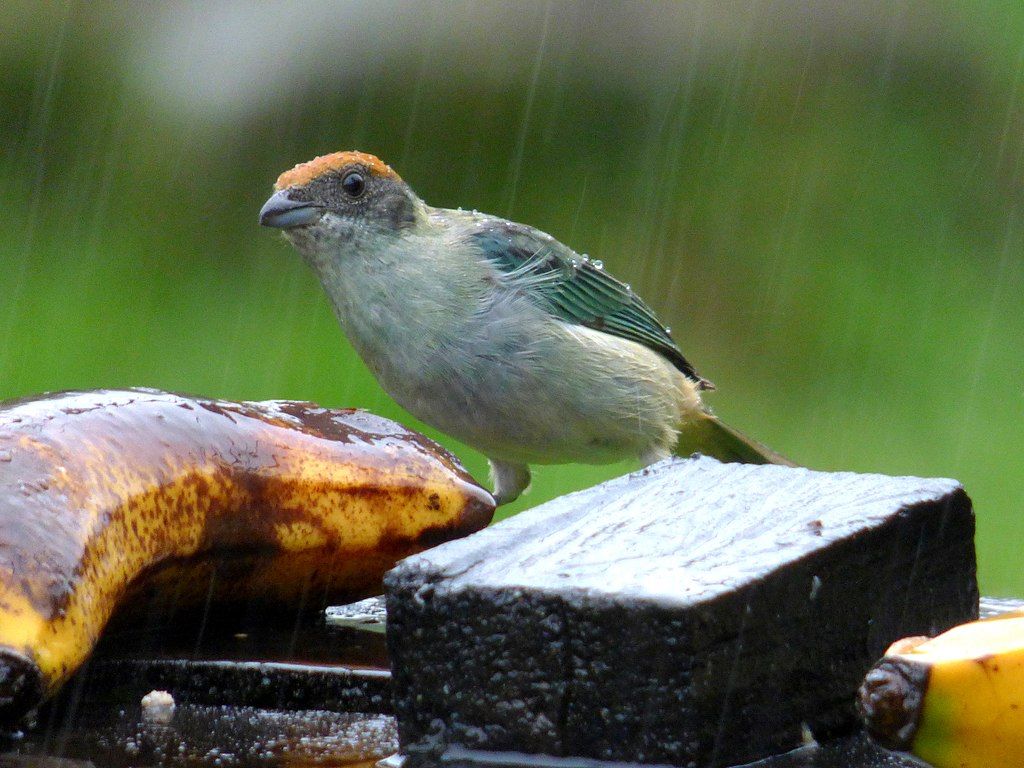
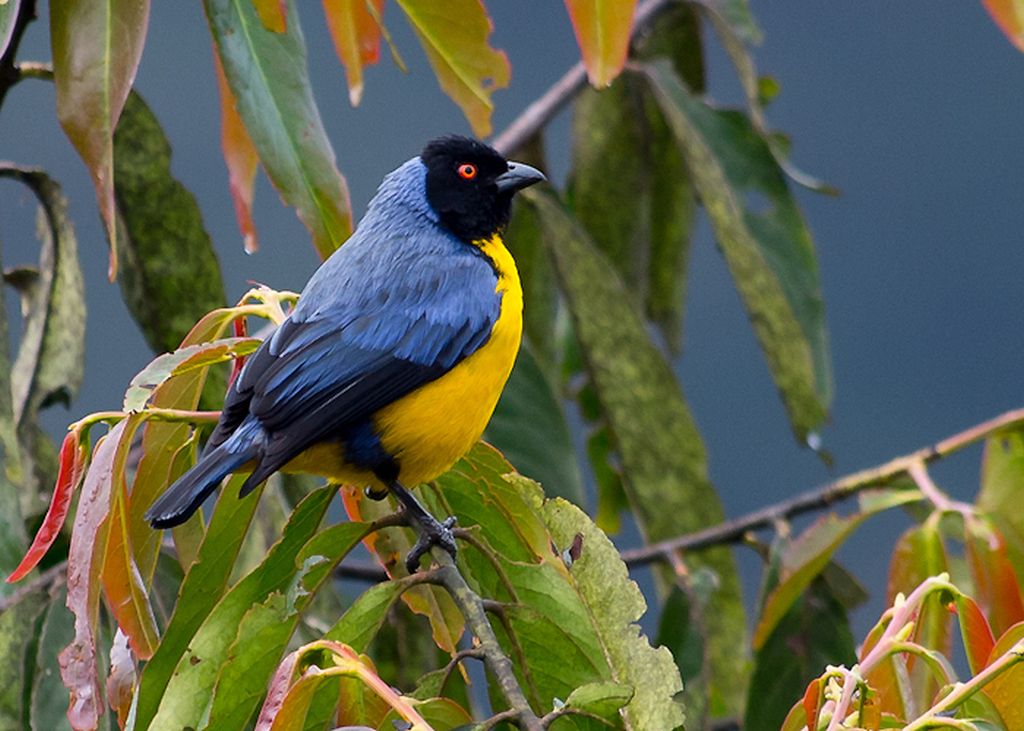
Silver-throated Tanager

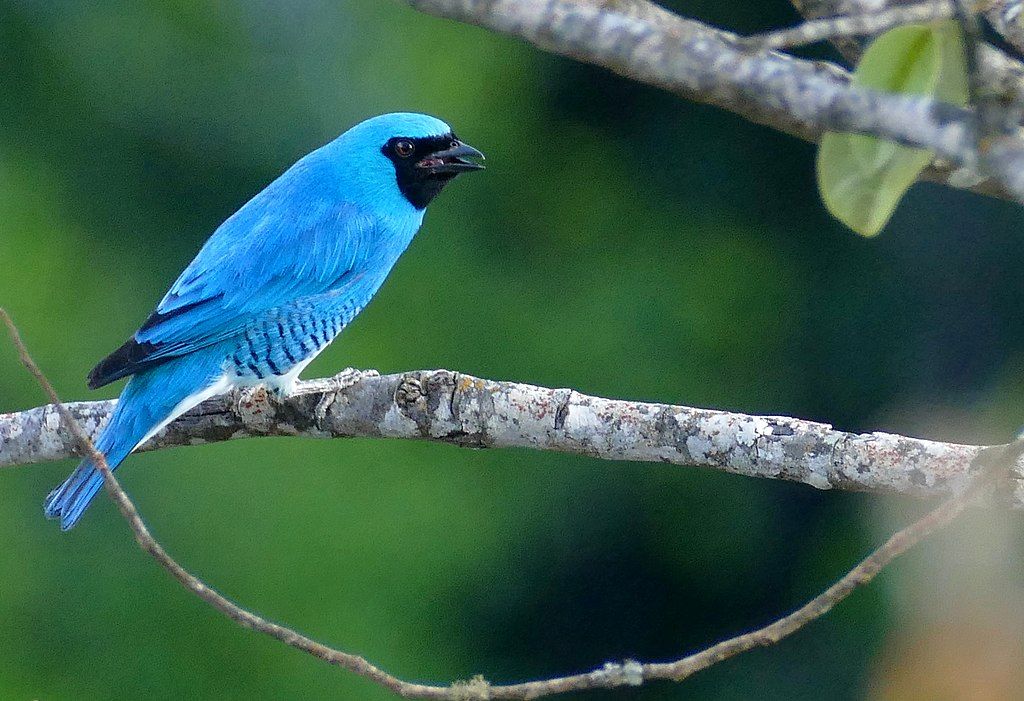
Here’s a beautiful little bird that’s a favorite of mine though I’ve never actually seen him.

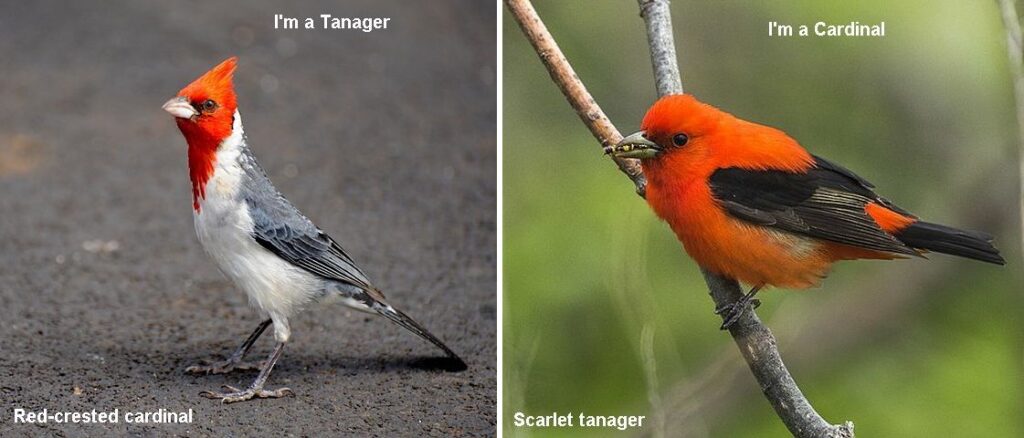
Similar in size to a Carolina wren, the silver-throated tanager (Tangara icterocephala) is a true tanager in the Thraupidae family. Our “tanagers” (scarlet, western, summer, etc.) are now considered cardinals (Cardinalidae).

Silver-throated tanagers don’t migrate so you have to go to the mountain forests of Central or South America to see them.  When not breeding they hang out in mixed flocks with other small birds of similar color. Black and yellow is their flock badge.

Since 85% of their diet consists of fruit, I hear it’s easy to attract them to feeders. Wouldn’t it be stunning to see this colorful little bird in your backyard!

Charlie Hickey photographed this one at Dota, San Jose, Costa Rica, last month.


(photo by Charlie Hickey.  Click on the image to see the original.)

One response so far

Dec 24 2012

Here To Stay

Published by under Songbirds

“Gone away is the bluebird, here to stay is a new bird.  He sings a love song as we go along, walking in a winter wonderland.”  — Winter Wonderland

Even though Winter Wonderland doesn’t mention Christmas, we sing it at this time of year with thoughts of snow and love.

The lyrics were inspired by snowfall in Honesdale, PA.  I like to think they have a special meaning for Pennsylvania birders.

Eastern bluebirds leave northern and western Pennsylvania during cold snowy winters so it’s accurate for a snowy song to say, “Gone away is the bluebird.”  (Bluebirds remain further north during mild winters.  Eight days ago it was 58 degrees during the Buffalo Creek Watershed IBA 80 Christmas Bird Count; I counted 35 bluebirds!)

And who is the new bird?  My choice would be the northern cardinal.

In 1800 northern cardinals were southern birds but they expanded their range northward as people changed the landscape and improved food availability.  Cardinals reached northern Ohio in the mid 1800s and were common in Pennsylvania and New Jersey by 1900.

So when the lyrics to Winter Wonderland were written in northeastern Pennsylvania in 1934, the northern cardinal was already here to stay.

(photo by Steve Gosser)

3 responses so far

Dec 15 2012

Speaking of Plumage

Published by under Bird Anatomy,Songbirds

Speaking of plumage as I did yesterday

Here’s a bird in juvenal plumage. 

If you didn’t know that immature white-crowned sparrows are cream-and-brown colored, you’d have trouble identifying him.

Here’s what his parents look like in basic plumage.

Quite a difference!


(photos by Marcy Cunkelman)

5 responses so far

Dec 04 2012

They’re In The Maples!

Published by under Migration,Songbirds

This was it. If I was going to see an evening grosbeak it had to be this winter while they’re irrupting across Pennsylvania.  I missed them at Marcy Cunkelman’s (above), but flocks of 40 to 80 are reported every day at Dave Yeany’s feeders in Marienville.  Last Sunday I made the 2+ hour trip to see them.

Before I left I studied the sound and appearance of these beautiful birds and learned that their call resembles the chirp of a house sparrow (Click here to hear.  If that link doesn’t work, try this one).

When I arrived at 7:30am I heard loud chirps like a house sparrow who’d taken voice lessons.  Close by I saw and heard a real house sparrow.  Aha!  The grosbeaks were here but I couldn’t see them.

I crossed the street to view Yeany’s feeders but there were no grosbeaks there nor in any of the trees.  Another car pulled up.  Surprise!  Fellow birders Tom and Nancy Moeller from Pittsburgh.

Dave Yeany came out to say hello and assured us the grosbeaks would come in at 8:00am.  They would start in the spruce, then settle in the maples, then come to the feeders.  So we waited.

Sure enough at 8:00am the grosbeaks came to the spruce.  Yay! Life birds at last!  But the light was poor.  Rain was coming.  We wanted to see them closer.  We waited.  By 8:30am the grosbeaks landed in the maples but something spooked them and they flew away.  No!

We had come this far and couldn’t bear to leave without seeing the grosbeaks at the feeders.  It began to rain so we retreated to Moellers’ car. It was nice to be waiting with friends.

When the rain subsided at 9:00am we found 40+ evening grosbeaks in the maples preening and nibbling the buds.  They fluttered down level by level.  At last they came to the feeders.  Here, Tom Moeller captured them surrounding a starling.


Thanks to Dave Yeany’s hospitality and advice we waited for the grosbeaks to come to the maples.  Our surprise was that the grosbeaks like to eat sugar maple buds.

People like maple products, too.  Dave Yeany has acres of sugar maples that he taps to create pure Pennsylvania maple syrup.  If you visit when he isn’t home you can buy it from the red cupboard on his front porch.

We had the advantage of chatting with Dave and learning about his additional maple products.  I couldn’t resist the maple cream which I’d never tried before.  It looks like honey butter and it tastes great.  Mmmmmmm! Good!

If you visit Dave Yeany’s evening grosbeaks you’ll find a big flock of beautiful birds and a sweet treat at the end.  In the meantime you can “like” Yeany’s Maple Syrup on Facebook.


(Male evening grosbeak by Marcy Cunkekman, Nov 2012.  Flock at the tray feeder by Tom Moeller, 2 Dec 2012.  Photo of Yeany’s delicious maple cream by Kate St. John)

3 responses so far

Nov 27 2012

Two Levels Of Distortion

Earlier this month I watched a flock of robins and starlings feast on the Bradford pears near Heinz Chapel.  Birds usually don’t sing in the fall but this flock was muttering and whisper-singing.  Three birds in particular caught my ear.

A robin sang softly.
A starling mimicked the robin.
A mockingbird mimicked the starling mimicking the robin.

By the time the robin’s song came out of the mockingbird’s mouth it was nearly unrecognizable.   (Click here for the robin’s song.)

European starlings, on the left above, are considered mimics but they have wiry voices that distort whatever they say.  Here’s a typical starling song. At the 00:32 mark he does a good imitation of a house sparrow. I couldn’t find an audio clip of a starling mimicking a robin.

Northern mockingbirds, on the right, are much better mimics than starlings.  They can follow a robin’s tune and cadence but miss the melodious thrush harmony.  They brazenly mask this deficiency: “I meant to sing the tune without the harmony.”  Click here to hear a mockingbird mimicking many birds, including robins.

The mockingbird at Heinz Chapel clearly copied the starling’s wiry song including his poor imitation of the robin.

It was like a game of telephone.  There were two levels of distortion.

(European starling by Paul Carter via Wikimedia Commons. Northern mockingbird by Dick Daniels via Wikimedia Commons. Click on these imbedded links to see the original photos.)

4 responses so far

Nov 11 2012

Will I Ever See…?

I have never seen an evening grosbeak, but this winter I might get my chance.

For the first time in years, evening grosbeaks are coming south in big numbers because there aren’t enough tree seeds in Canada.  Without food at home they’re on the move in a variable migration called an irruption.

Winter irruptions are not uncommon, but evening grosbeaks are.  Last winter snowy owls came to western Pennsylvania, pine siskins and white-winged crossbills visited in 2008-2009 and redpolls in 2007-2008.  But evening grosbeak sightings have declined over the years.

Happily, on November 5 the grosbeaks arrived at Marcy Cunkelman’s yard in Indiana County (here’s a beautiful male at her feeder), but alas, they were gone by this weekend when I could travel to see them.

So now I wait for news of a reliable *weekend* flock of evening grosbeaks near Pittsburgh.

Will I see my first one this winter? I hope so.

(photo by Marcy Cunkelman)

6 responses so far

« Prev - Next »

Bird Stories from OnQ