Archive for the 'Peregrines' Category

May 08 2013

Taking A Bath

Published by under Peregrines

I often see robins and starlings take baths but I’ve never seen a peregrine do so.

Meredith Lombard monitors the peregrines who nest at the Route 462 bridge over the Susquehanna near Lancaster, PA.  Early this month she observed one of them bathing in the river.  Fortunately she had her camera and scope ready.  Unfortunately it was windy, but it was well worth recording.

This video is a window on the lives of peregrine falcons.


(video by Meredith Lombard)

6 responses so far

May 07 2013

Quality Time

Published by under Peregrines

Dorothy and nestling face-to-face (photo from the National Aviary falconcam at University of Pittsburgh)

Dorothy is spending quality time with her chick.

Thanks to @PittPeregrines for capturing this Pic-of-the-Day snapshot.

(photo from the National Aviary falconcam at University of Pittsburgh)

2 responses so far

May 06 2013

Downtown Peregrines On Camera At Last

Published by under Nesting,Peregrines

Downtown Pittsburgh Peregrines website at the National Aviary

It’s been two years since we’ve seen Pittsburgh’s Downtown peregrine family on camera.

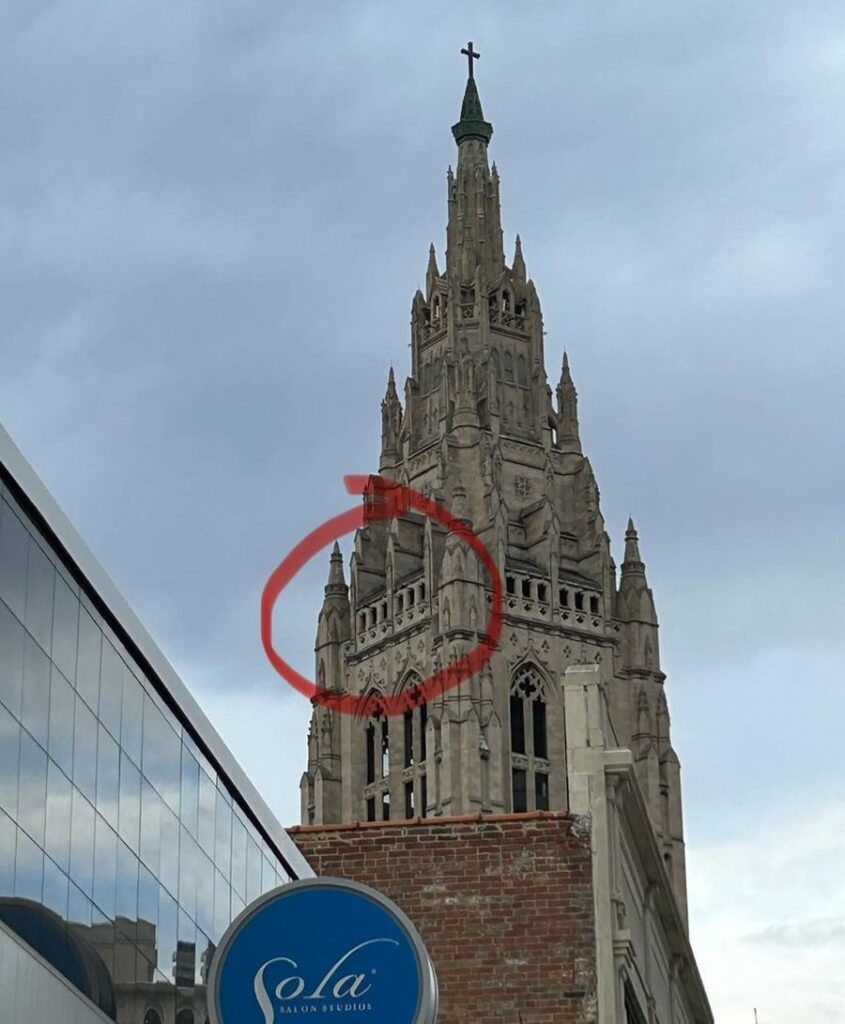
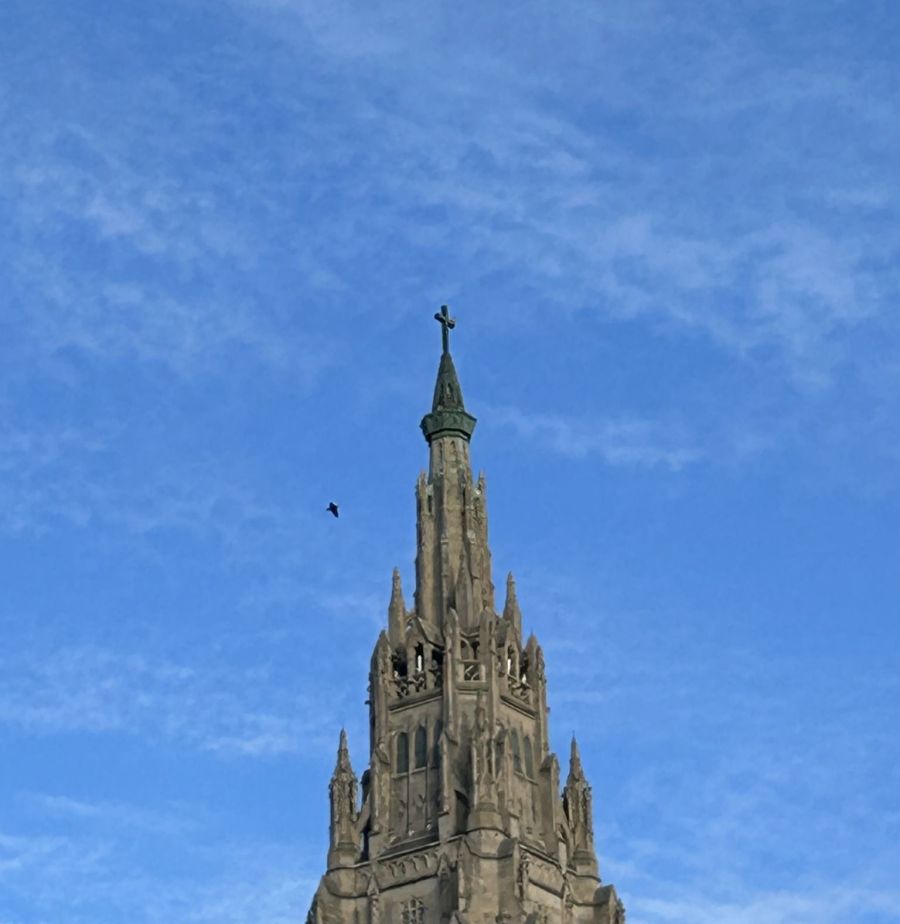
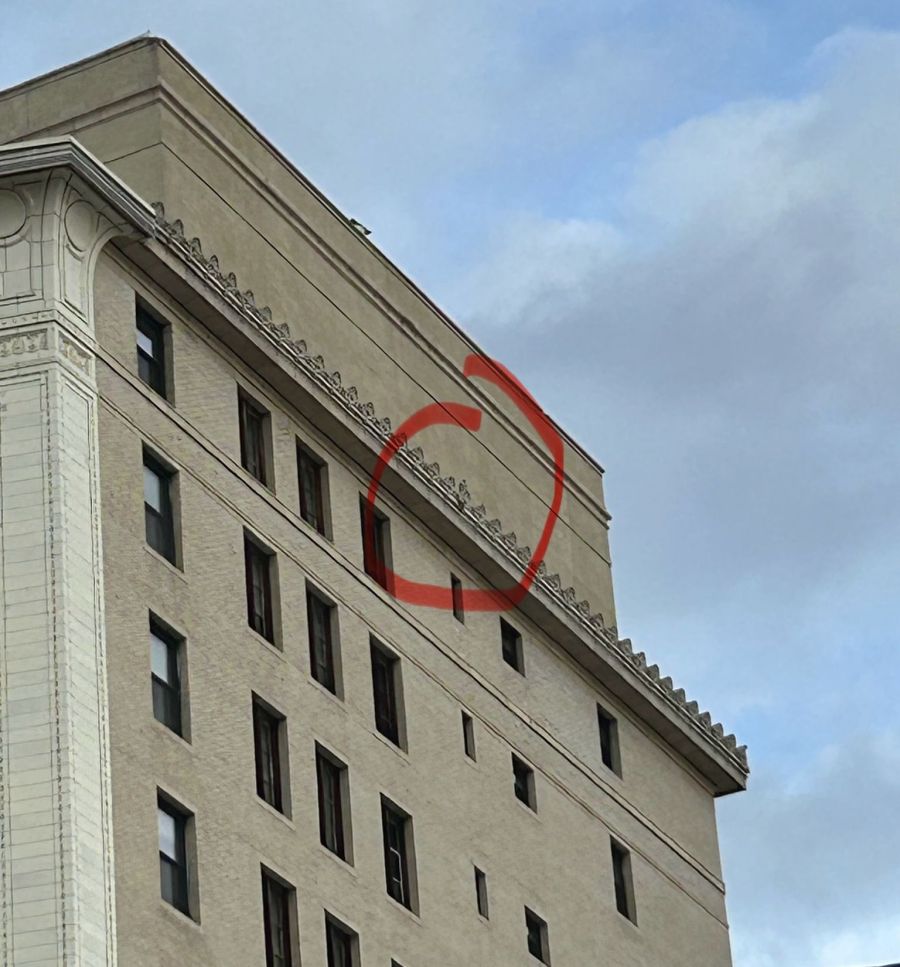
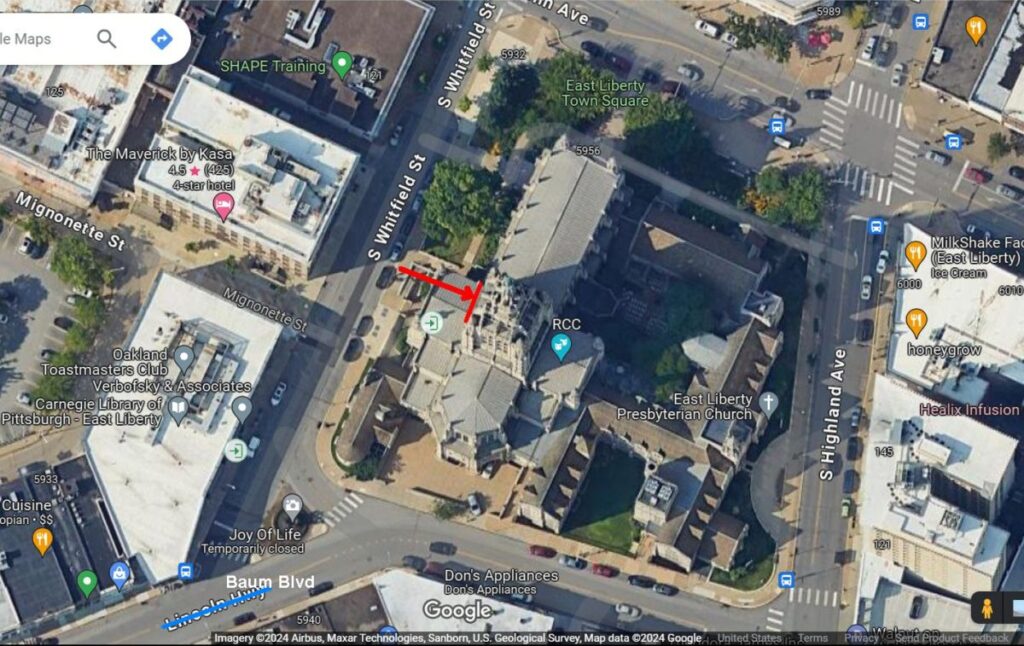
Louie and Dori used to nest at the Gulf Tower where we had a great close-up view of their activities but in 2012 they abandoned Gulf for a building on Fourth Avenue.  They’ve nested in the same place this year but I was unsuccessful in finding the proper contact to permit a camera.

It looked like we’d have another year without a view of the Downtown pair until Amanda McGuire came to the rescue.   She works for Point Park University and her balcony is Louie and Dori’s favorite perch during the nesting season.  I was excited when Amanda said, “I think we can put a webcam on my balcony” so I began a flurry of email to put everyone in touch with each other.

Amanda made all the arrangements with Point Park, Bill Powers of PixController donated his time and equipment, and Point Park University donated the camera location and Internet access.  It all came together when Wildearth began streaming and the National Aviary put the Downtown peregrine page on their website.

The webcam is located here on the National Aviary website or by clicking on the image above.  That’s Dan Costa’s photo of Dori on the splash-screen.

When you watch the webcam, keep in mind that it’s a block away from the nest so you’re seeing an exterior view without sound and nightlights.  Bright sunlight hides the interior space so you’ll find that best viewing is during cloudy days or at dawn and dusk.

The image below shows the nest opening with Louie perched on the left while it rained Monday evening, April 29.  Yes, Louie matches the building.

Downtown falconcam view with Louie at left, 29 April 2013 (photo from the Downtown falconcam at Point Park University)

Here’s a marked up snapshot that describes what you’re seeing.

Description of Downtown falconcam scene (snaphot from the Downtown falconcam at Point Park University)

By now Louie and Dori’s chicks are moving around the nest and visible in the back corner.  They’re white and fluffy but will turn brown as they grow their juvenile feathers.  Fortunately they’ll move to the front of the nest opening as they grow up.

Around June 1 they’ll attempt their first flight and leave the nest, so now’s the time to watch.  Click here or on the image at top to see them on the National Aviary website.


(images from the National Aviary’s Downtown Pittsburgh Falconcam)

p.s. Yes, this temporary camera is blurry.  We’ll have something better next year.

p.p.s. Pittsburgh Falconuts Facebook group have been watching this cam for several days and have captured snapshots of Dori and Louie in the nest area.

2 responses so far

May 03 2013

Touching

Published by under Nesting,Peregrines

Dorothy touches beaks with her nestling  (photo from the National Aviary falconcam at University of Pittsburgh)

With only one nestling, Dorothy and E2 are spending lots of quality time with their only chick.

Above, after puttering around the edge of the nest Dorothy returns to the center and touches beaks with Baby.


Later, E2 takes over nest duty.  He and Baby gaze into each others’ eyes.
E2 and Baby have a long look (photo from the National Aviary falconcam at University of Pittsburgh)


And they touch beaks, too.
E2 and Baby touch beaks (photo from the National Aviary falconcam at University of Pittsburgh)


In a large brood these moments are fleeting.  We’re getting a new look at peregrine family life this year.

(photos from the National Aviary falconcam at University of Pittsburgh)

5 responses so far

May 02 2013

Almost Too Big To Brood

Published by under Nesting,Peregrines

You're almost too big to brood (photo from the National Aviary falconcam at University of Pittsburgh)

Yesterday we got a glimpse at how much Dorothy and E2′s chick has grown in the six days since he hatched.

Above, he doesn’t seem to fit under Dorothy.

He likes to play peekaboo.

Dorothy with her chick peeking out from under her (photo from the National Aviary falconcam at University of Pittsburgh)


And he draws a crowd at suppertime.  Thanks to @PittPeregrines for capturing this snapshot.

Family portrait, Dorothy, E2, Baby (photo from the National Aviary falconcam at University of Pittsburgh)


Baby is almost too big to brood.


(photos from the National Aviary falconcam at University of Pittsburgh)

2 responses so far

Apr 30 2013

Peregrines at the Water Tower!

Published by under Peregrines

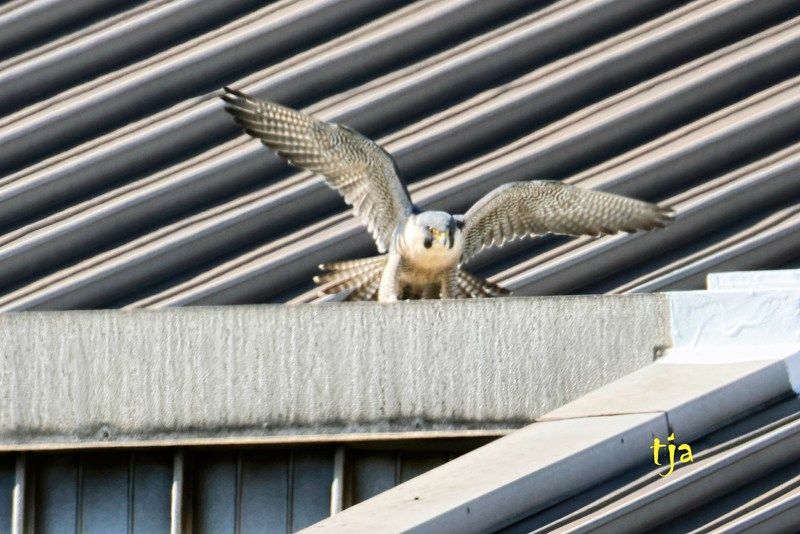
Peregrine at the Greentree Water Tower (photo by Shannon Thompson)

There’s a new pair of peregrines in town and they’ve already made the news.

“Nesting Falcons halt Green Tree water tank work,” read the headline in the Post-Gazette yesterday.  “Pennsylvania American Water has delayed a project to sandblast and repair the interior of its 2.5-million-gallon water storage tank in Green Tree after spotting a nest of peregrine falcons.”

The nest would have failed but for a handful of dedicated observers.

Back in March a former Aviary volunteer spotted peregrines at the Green Tree water tower.  Her report made its way to me but without a contact name her information languished.

In mid-April Chuck Dinsmore heard kakking and saw a peregrine flying around the water tower during his morning commute.  His wife Vicky went there with binoculars and found a lot of workmen banging away and a peregrine perched on a ledge under the bulb of the water tower (pictured below).  No wonder the peregrine was upset.

Water tower ledge (photo by Vicky Dinsmore)

The banging phase was short-lived but in subsequent visits Vicky and Chuck learned of plans to sandblast and paint the tower.  Vicky called WQED to let me know.

Her concern was infectious.  I notified the PA Game Commission (PGC) of a possible nest near imminent construction and called for more observers on PABIRDS.  Could someone check the water tower?

Shannon Thompson took up the challenge and photographed a peregrine perched beneath the Green Tree “G” on April 21.  The vertical striping on his breast indicates he’s a one-year-old bird so when I sent her photos to Art McMorris (PGC’s Peregrine Coordinator) I said, “Oh well, a juvenile bird,” but Art cautioned that one-year-old’s can breed so we couldn’t rule out a nest.

A few hours later Mary Jo Peden — the former Aviary volunteer! — contacted WQED to tell me that she’d seen a pair of peregrines courting at the water tower and mating as recently as the week of April 8.  She described their ledge and said she was worried about the coming construction project.  I quickly sent this news to Art with contact information for Pennsylvania American Water.

Everything was quiet for a week.  Could the Game Commission get through to the water company in time?  Then yesterday the Post-Gazette set my fears to rest.  Hooray!

Welcome to the neighborhood, new birds, and a big thank you to everyone involved!

If you’d like to see where they live their observers (and rescuers) suggest visiting the park behind the Green Tree Borough City Office.  Look beneath the G.

Vantage point for watching the Greentree peregrine (photo by Shannon Thompson)


(peregrine and tower photos by Shannon Thompson.  Ledge photo by Vicky Dinsmore)

p.s.  Based on Mary Jo’s observations you’ll probably see only one bird until mid-May when the eggs hatch.  My hunch is that this juvenile is the male, standing guard.

9 responses so far

Apr 29 2013

Things Are Getting Back to Normal

Published by under Nesting,Peregrines

E2 removes the dead chick from the nest (photo from the National Aviary falconcam at Univ of Pittsburgh)

In this morning’s blog I mentioned that Dorothy was still brooding the dead chick but that E2 would eventually take it away for disposal.

Today at 4:00pm he did just that.   E2 distracted Dorothy by bringing supper for Baby so she left the nest to prepare the meal.

In three minutes Dorothy returned with the very large meal.

Baby seems to be saying, “Is all that for ME?”

Dorothy brings baby's supper (photo from the National Aviary falconcam at Univ of Pittsburgh)


So cute!

Dorothy feeds baby, 29 Apr 2013 (photo from the National Aviary falconcam at Univ of Pittsburgh)

Things are getting back to normal.

(photo from the National Aviary falconcam at the University of Pittsburgh)

4 responses so far

Apr 29 2013

What happened?

Published by under Nesting,Peregrines

Dorothy, 1 chick, 3 eggs, 28 April 2013 (photo from the National Aviary falconcam at Univ of Pittsburgh)

Since the news yesterday that one of the Pitt peregrine chicks died and that the three remaining eggs won’t hatch (shown above), many of you have asked questions in email, Facebook and blog comments.   Here are some answers, collected in one place.

After consistently raising three to five chicks every season, this year Dorothy has one healthy chick, one handicapped and now dead chick, and three unhatched eggs.  It isn’t the cold weather or poor parental care.  It’s because Dorothy’s getting old.   She’s 14.

Older female peregrines become less fertile.  History at other nest sites bears this out.  In the last two years of Tasha’s reign at the Gulf Tower she hatched 2 of 4 eggs and 2 of 5 eggs.  In 2010, in what was probably her 14th year, Tasha laid two eggs and then was displaced by Dori.   At the Terminal Tower in Cleveland, Tasha’s daughter SW is now 14 and has hatched only 2 of 4 eggs.  A similar pattern occurred at the Harrisburg site when their female aged a few years ago.

What will happen to Dorothy?   Dorothy is my very favorite peregrine in all the world.  I don’t like to think of it, but she is mortal just like the rest of us.  Frankly, it’s a good thing I can’t predict what will happen.  Time itself will tell.  Meanwhile I’m pleased as punch that she’s a mother again and has grandchildren, great-grandchildren and — if I only knew where — great-great grandchildren.  Go, Dorothy!

Brooding the dead chick:  After the handicapped chick died Dorothy drew it back into the nest and is brooding it along with the live chick and her 3 unhatched eggs.  I believe she knows the little one is dead but she’s doing what comes naturally — keeping everything warm until she’s absolutely sure.  I suspect E2 will remove it at some point when Dorothy is away as he did when one of the five chicks died in 2011.

What will happen to the unhatched eggs?  Dorothy will brood them along with Baby until he’s able to thermoregulate and moves off the nest.  Brooding lasts 8-12 days but can be shorter in warm weather.  When Baby is mobile, the parents will push aside the unhatched eggs where they will either desiccate or rot.  Last year’s unhatched egg rotted and smelled awful when it broke on WCO Beth Fife’s shirt during the banding.

Does the empty shell mean another egg has hatched?  No, this is an old shell that is swept from here to there by Dorothy’s tail.

Will the only chick do well?   If he’s healthy, yes.   Baby will get 100% attention from two very experienced parents.  Dorothy was an “only child” and is proof that only children can go far.


(photo from the National Aviary falconcam at University of Pittsburgh)

11 responses so far

Apr 28 2013

Just One Now

Published by under Nesting,Peregrines

Dorothy feeds one chick, 27 April 2013 (photo from the National Aviary falconcam at Univ of Pittsburgh)

When you watch a feeding at the Cathedral of Learning peregrine nest you’ll see just one baby now.

As early as Friday morning, only 12 hours after he hatched, I could tell something was wrong with Chick#2.  He was noticeably weaker and his movements were odd and uncoordinated.  He seemed to have a developmental problem that caused spasms.

The big clue was that he left the nest.  This is abnormal and life-threatening behavior in a chick so young.  Peregrine nestlings must be brooded by their parents during their first week of life because they can’t thermoregulate yet.

On Friday afternoon Chick#2 literally rolled in a ball out from under Dorothy’s tail.
Chick#2 rolls in a ball out from under Dorothy (photo from the National Aviary falconcam at Univ of Pittsburgh)


And here he moved outside Dorothy’s wing in 41 degree weather on Saturday morning.  He must be twitching a lot considering the look on her face.
Chick#2 twitchy outside Dorothy's wing (photo from the National Aviary falconcam at Univ of Pittsburgh)


Midday Saturday he moved out of the nest scrape and did not return for feedings.  Here Dorothy and E2 seem to confer about him on Saturday afternoon.  (He is lying in the shade beyond them.)  There was nothing to be done. He was too handicapped to survive.
Dorothy and E2 confer about Chick#2 (photo from the National Aviary falconcam at Univ of Pittsburgh)

This leaves just one surviving baby out of five eggs.  Until this year Dorothy always raised three to five young per nesting season — but she is 14 years old now.

Her low hatch rate and handicapped chick are both normal outcomes considering her age.  Just as in humans, older mothers have fewer babies and are more likely to produce handicapped young.

I am sorry to see this happen because Dorothy is my very favorite peregrine.  But the reality is that Dorothy, like all of us, is aging.

(photos from the National Aviary falconcam at the University of Pittsburgh)


p.s. The good news is that Chick#1 is healthy and vigorous.  He will get lots of attention and education from his very experienced parents.

One bright-eyed chick awaits breakfast, 28 Apr 2013 (photo from the National Aviary falconcam at Univ of Pittsburgh)

14 responses so far

Apr 25 2013

Videos of First Hatchling at Pitt

Published by under Nesting,Peregrines

Thanks to @PittPeregines we have video of the first peregrine hatchling at the Cathedral of Learning

The video above shows the time from first pip (hole) in the shell until the chick hatches and dries out, white and fluffy beneath Dorothy’s breast.

The video below shows the first feeding and E2 arriving to meet the chick and spend some time with it.

Follow @KStJBirdblog (me) and @PittPeregrines (Dorothy & E2) on Twitter for updates.


(videos by @PittPeregrines constructed from National Aviary falconcam snapshots)

7 responses so far

« Prev - Next »

Bird Stories from OnQ