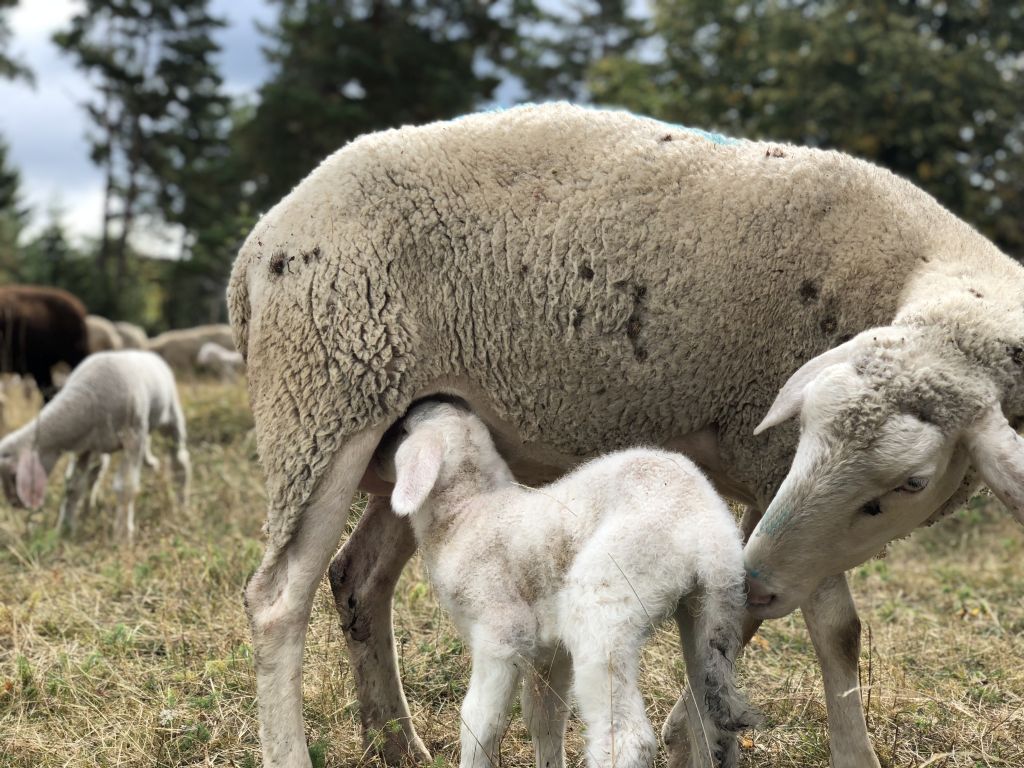
If you live in close contact with animals you get to know them well. Shepherds of small flocks develop an especially close relationship with their sheep because they tend them every day — and for 24 hours a day during lambing in early spring.
Paula Aarons, originally from Valencia PA, runs a small sheep farm in New Hampshire called the Dancing Pony Sheep Farm. Last month she appeared on Junction Fiber Mill‘s Millcast program to tell the story of her flock supporting each other and supporting her, their shepherd.
Our mutual friend Jeff Cieslak introduced her 15-minute video.
People: My friend Paula told this wonderful story about her sheep for a podcast. I watched it, and I wept a little, and now you, too, must weep.
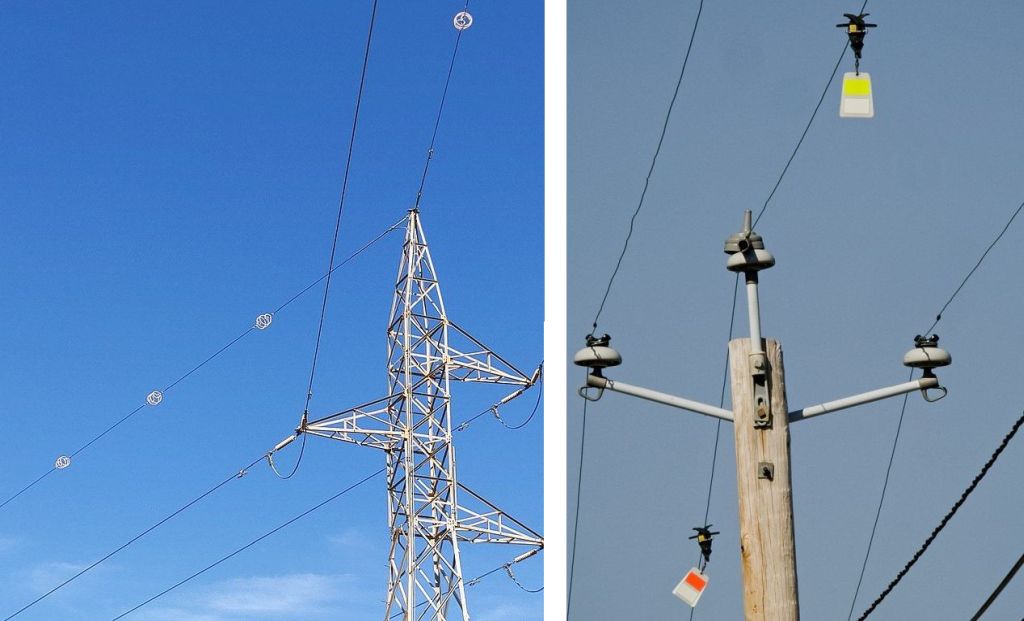
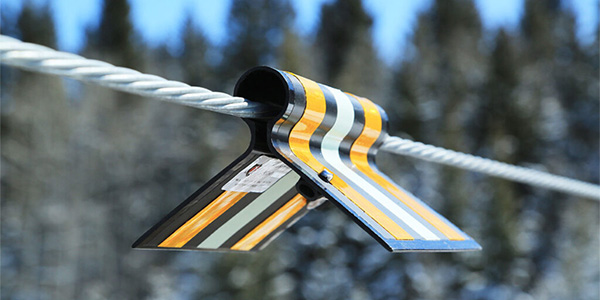
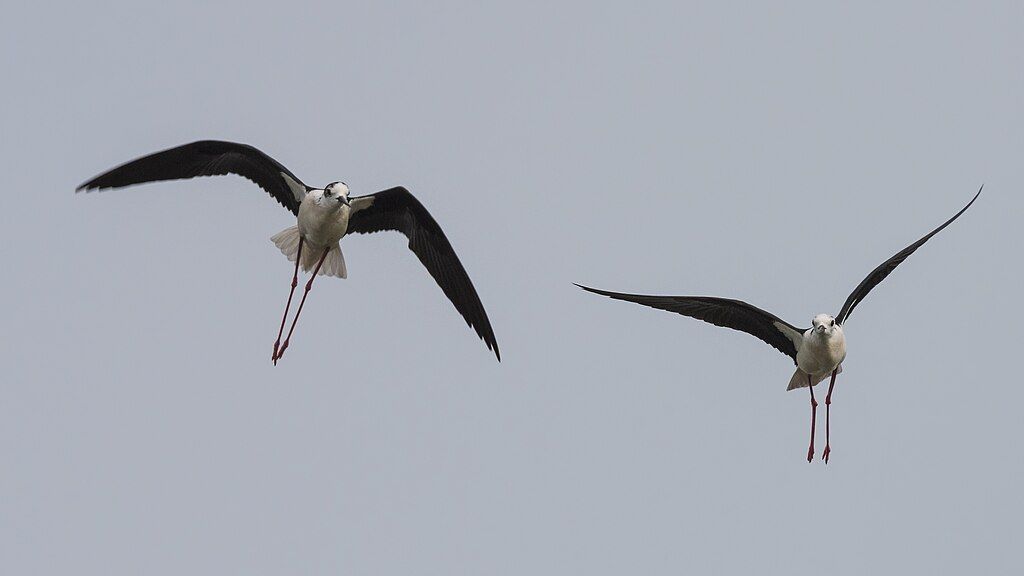
Have you seen coils or fluttering tags on power lines? Not related to power transmission, these accessories are visual cues that alert birds to the presence of wires.
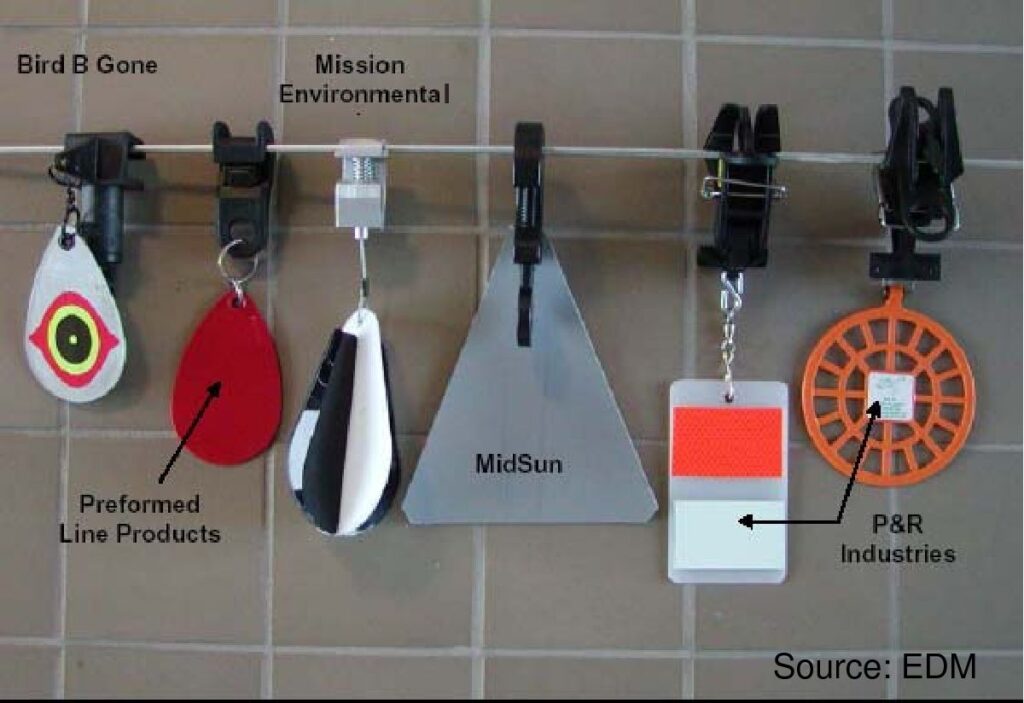
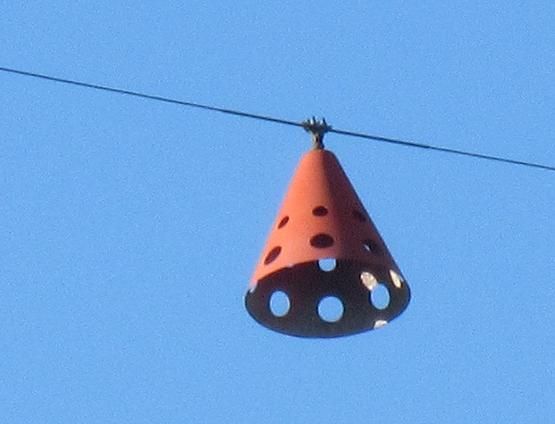
Bird diverters come in many shapes and have changed over the years as new products come to market and are approved by government agencies. California commissioned a 2008 study to evaluate the orange and fluorescent swinging tag below for use in the Sacramento Valley where hundreds of thousands of waterfowl spend the winter.
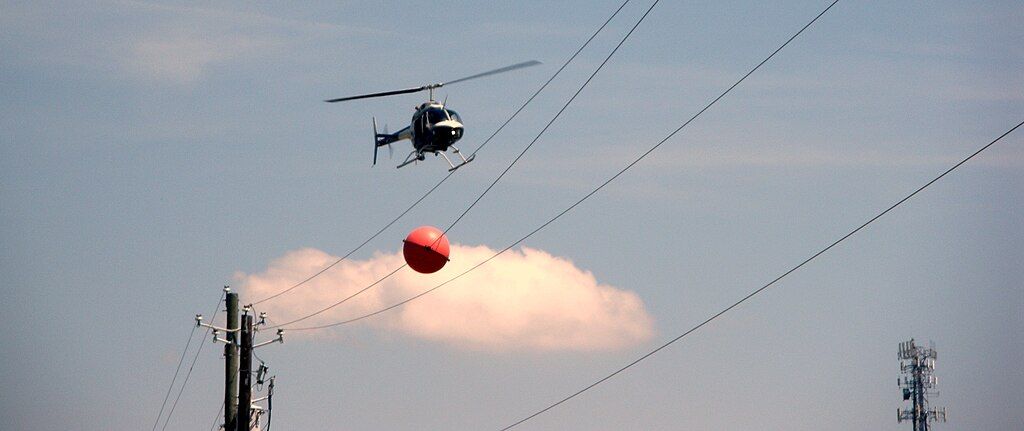
Red ball markers make power lines visible to airplane and helicopter pilots and are usually installed near airports and on long lines over rivers and canyons.
I know from personal experience (my career in Information Technology) that there is really no good time to do a server migration and it always takes longer than users want it to. Cornell Lab says they’re migrating 1.6 billion bird observations and that if it goes really well some services may be up late on 20 March.
During the outage eBird will still work on your mobile phone in offline mode. This feature was built into the app long ago because the best birds are far away from cell towers.
The eBird app works in offline mode
So hang tight while Cornell Lab data goes into hiding for two days.
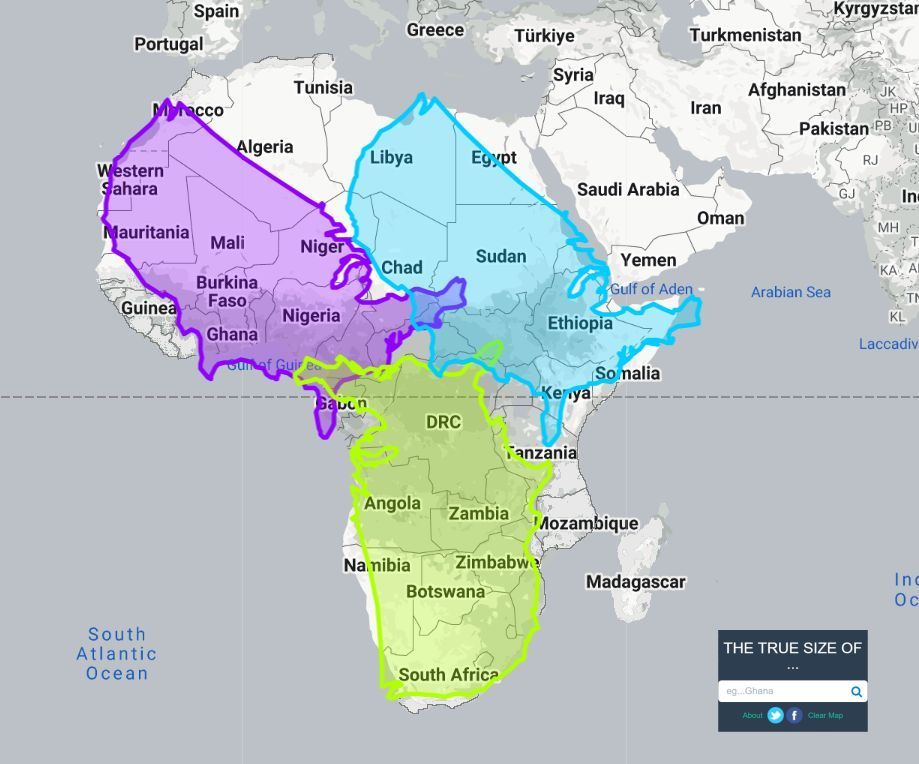
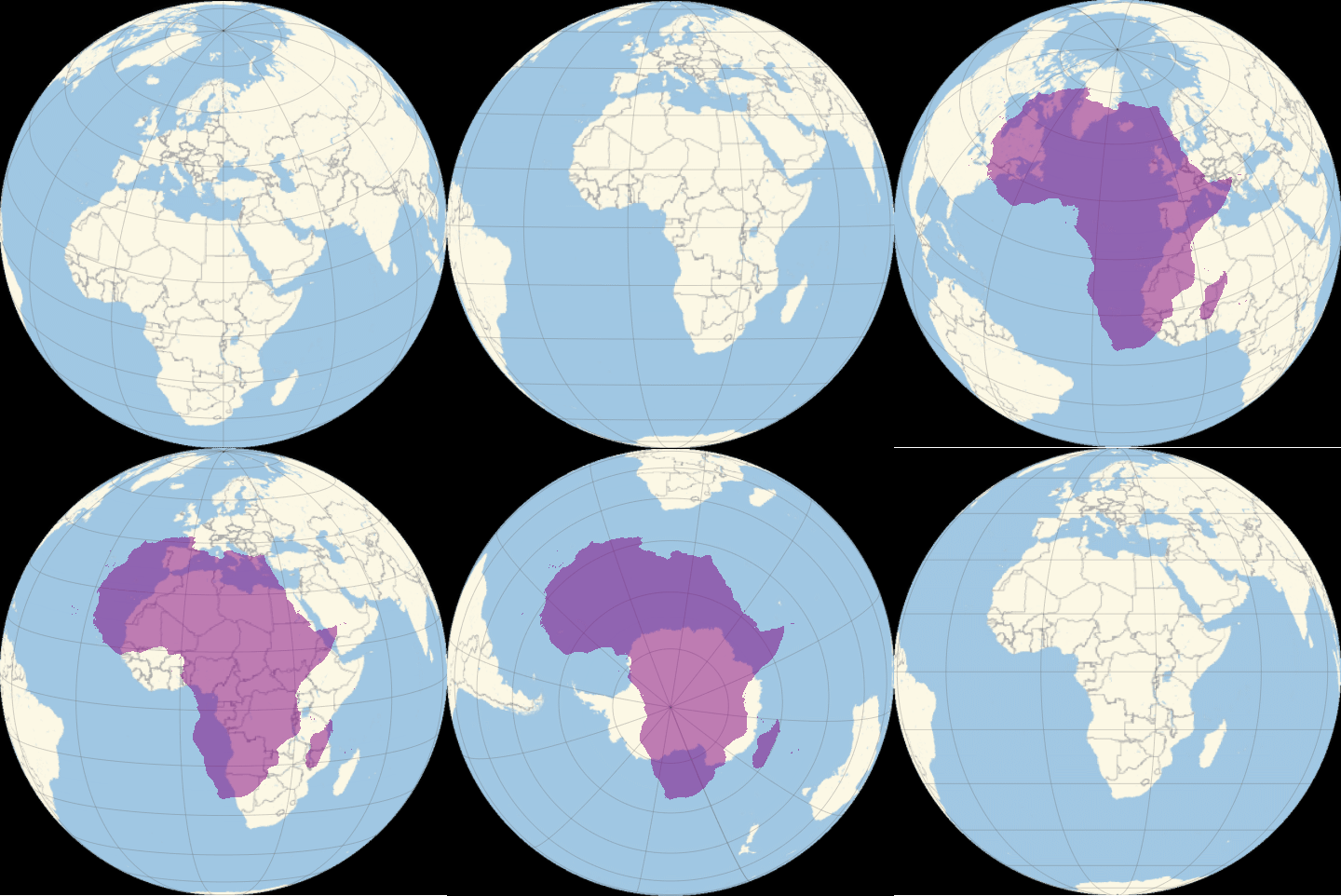
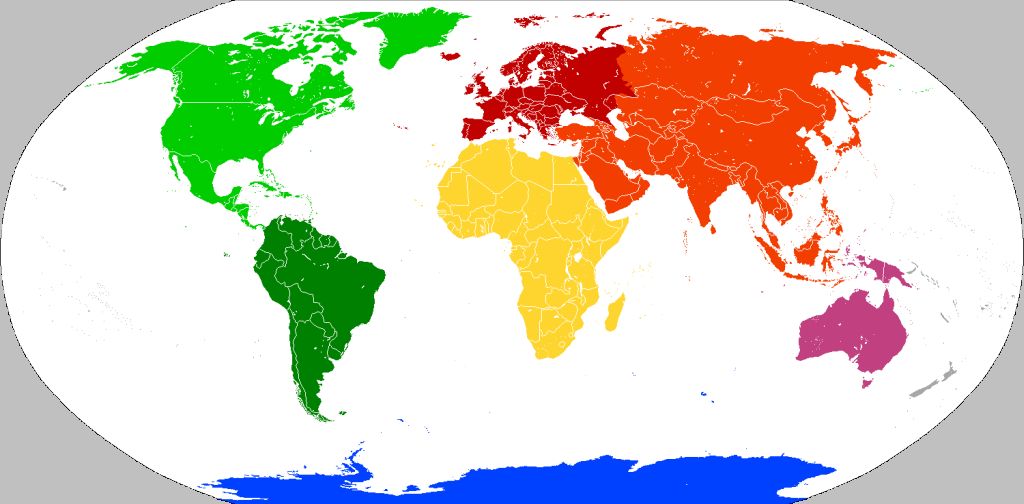
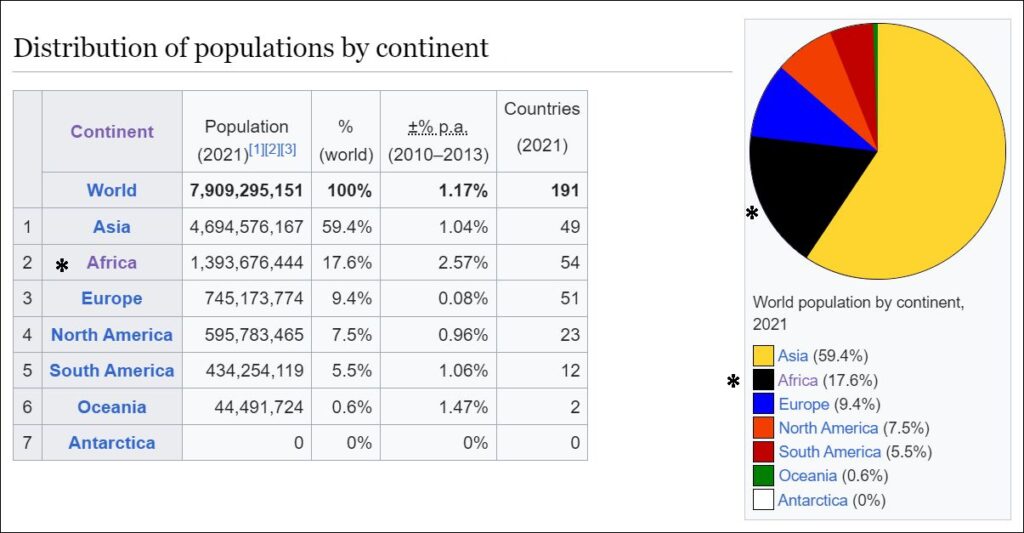
While visiting southern Africa in January I was impressed at how large the continent is. Africa is huge – so big that the contiguous U.S. can fit inside it three times, as shown above.
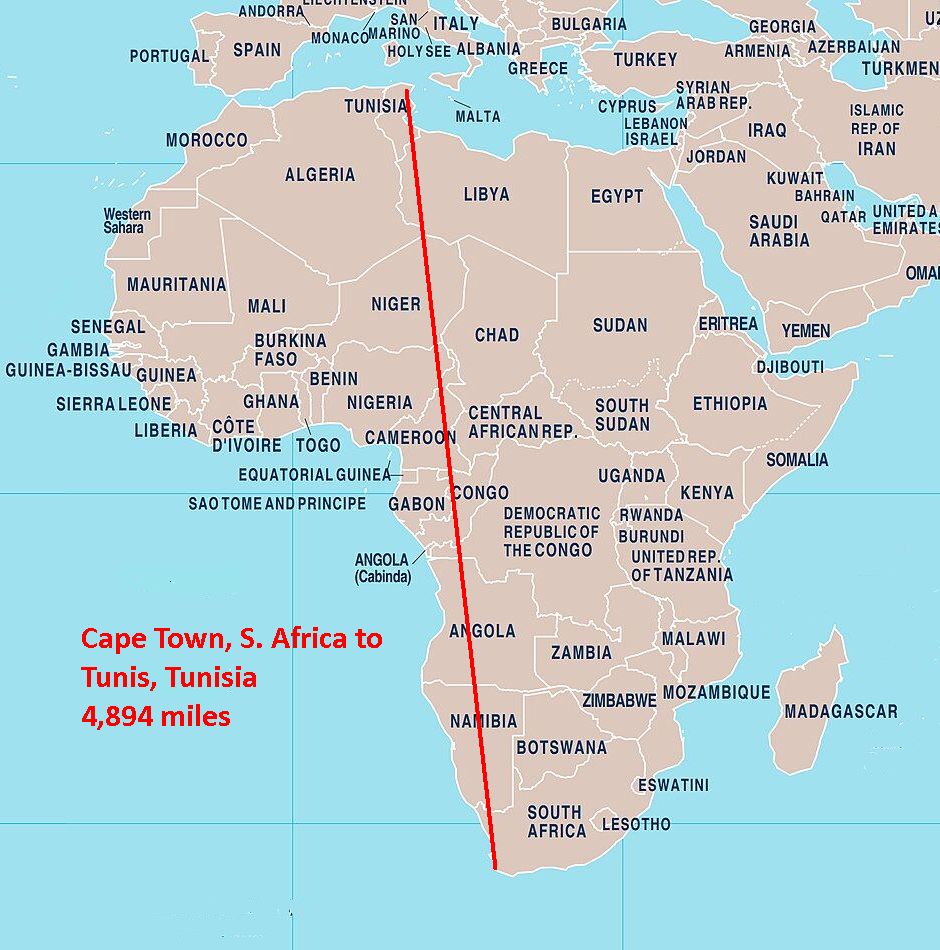
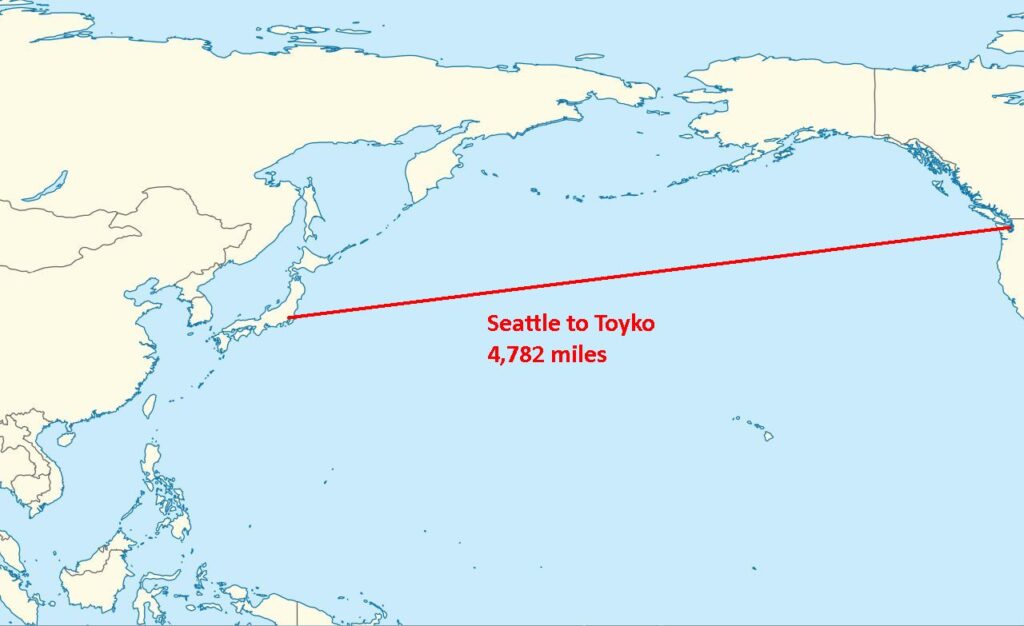
For instance, the air distance from top to bottom of Africa – Tunis, Tunisia to Cape Town, South Africa – is farther than Seattle to Toyko.
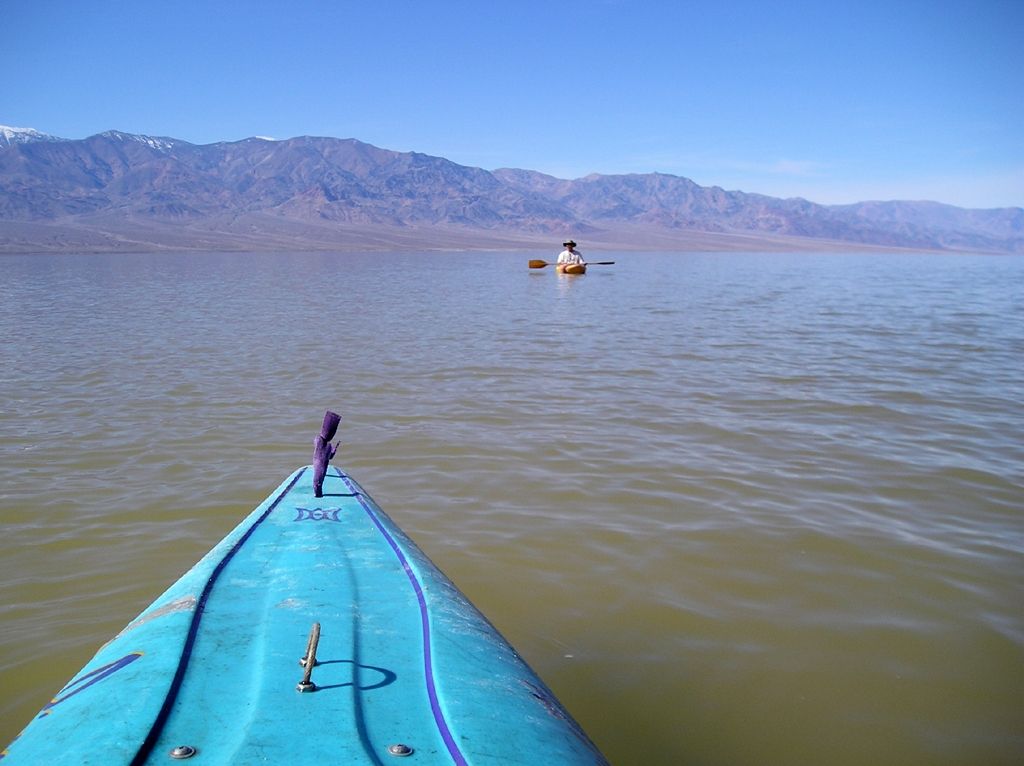
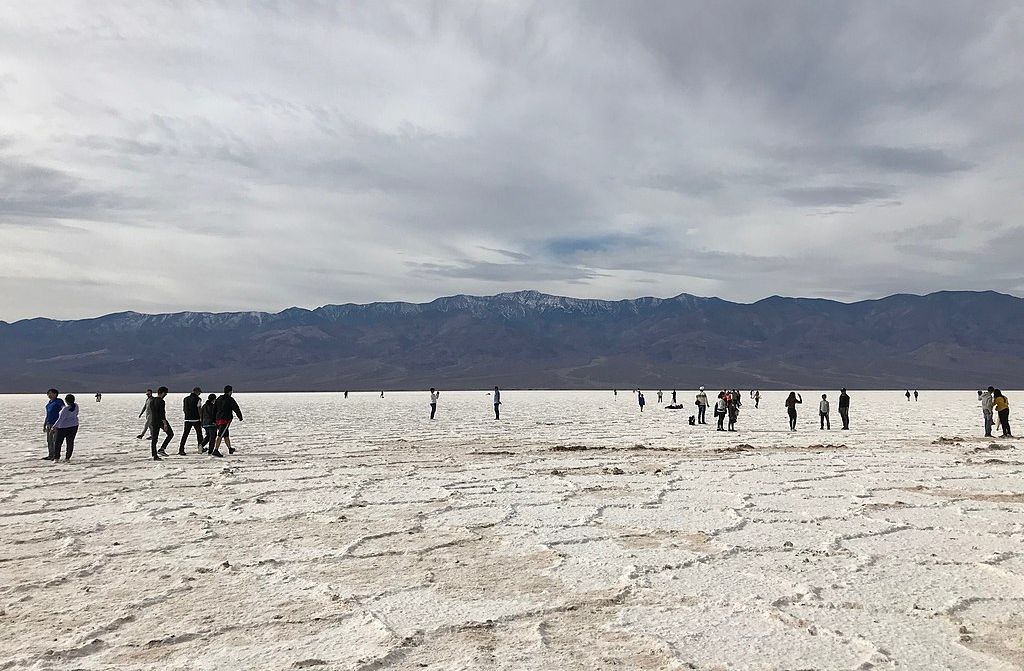
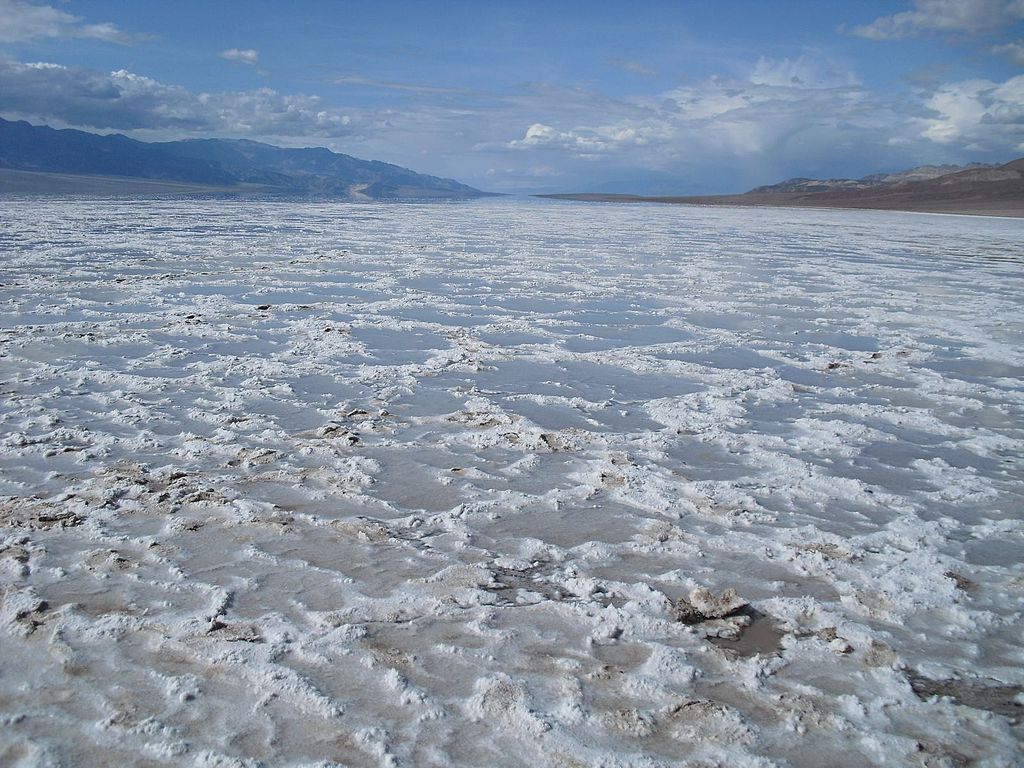
During the Ice Age, the Pleistocene 2.58 million to 11,700 years ago, there was a lake 600 feet deep in Death Valley where Badwater Basin stands today. Named Lake Manly(*) by geologists, it disappeared 10,000 years ago.
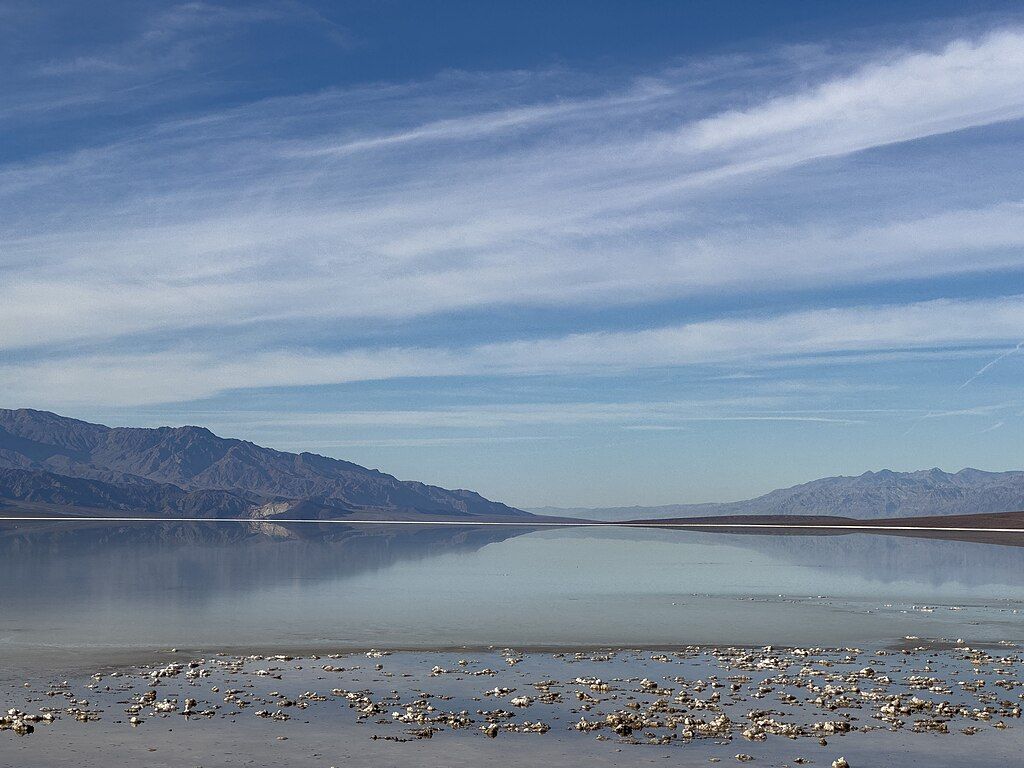
Badwater Basin is 282 feet below sea level so any water that reaches it can only evaporate yet the evaporation rate is so high that the basin is a salt pan. Occasionally — decades apart — there’s enough rain to make a shallow lake.
In the past six months California has had two unusual rain events. On 20 August 2023 Hurricane Hilary dumped 2.2 inches and caused Lake Manly to re-form in place. (The deluge also closed the Death Valley National Park for two months.) Amazingly the lake persisted through the winter.
And then the Atmospheric River event of 4-7 February dumped 1.5 more inches of rain. Lake Manly grew to a depth of 1 to 2 feet so in mid-February the National Park Service opened it to kayaking.
The last time the lake formed, in 2005, it lasted only about a week. This time NPS estimates it’ll be gone — or at least too shallow for kayaks — by April.
So if you want to kayak in Death Valley, get out there now before Badwater Basin returns to normal.
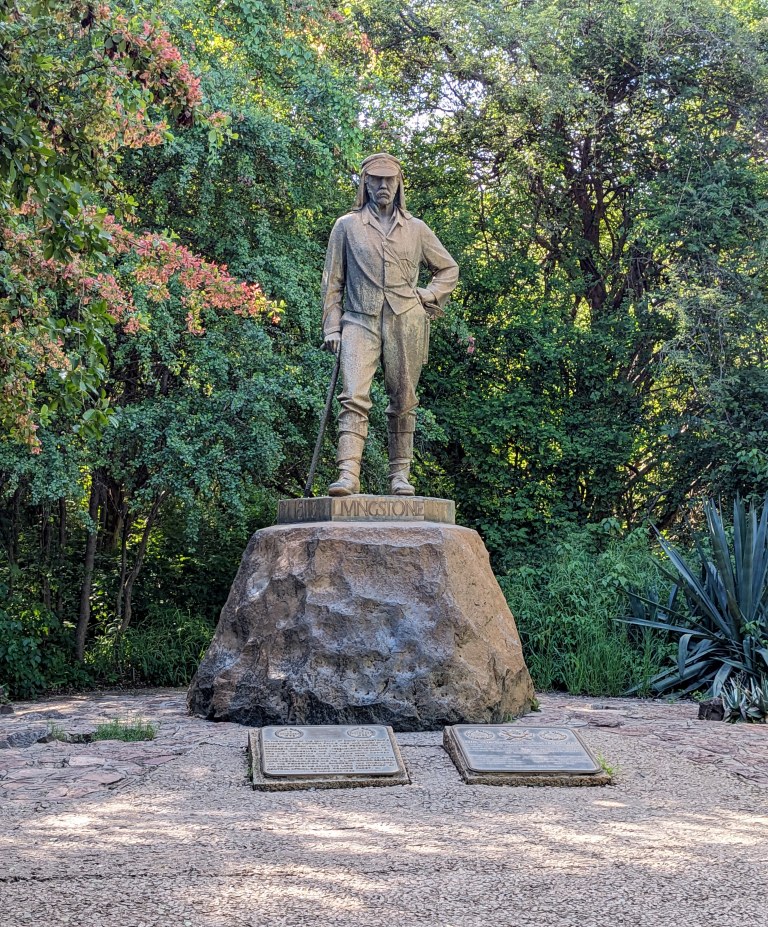
This statue of Scottish explorer Dr. David Livingstone stands in Zimbabwe at the western end of Victoria Falls. After African independence, European monuments were removed and European towns renamed but Livingstone’s statue still stands, the falls still bear the name he gave them(2), and the nearest town across the river is Livingstone, Zambia.
Twenty years ago, two attempts were made to remove Livingstone’s statue but “resistance to the removals from the local community has ensured that Livingstone’s statue remains where it was first erected, gazing sternly out towards Devil’s Cataract.(1)”
Our Zimbabwean guide pointed to a word carved on the monument that is key to Livingstone’s legacy in Africa.
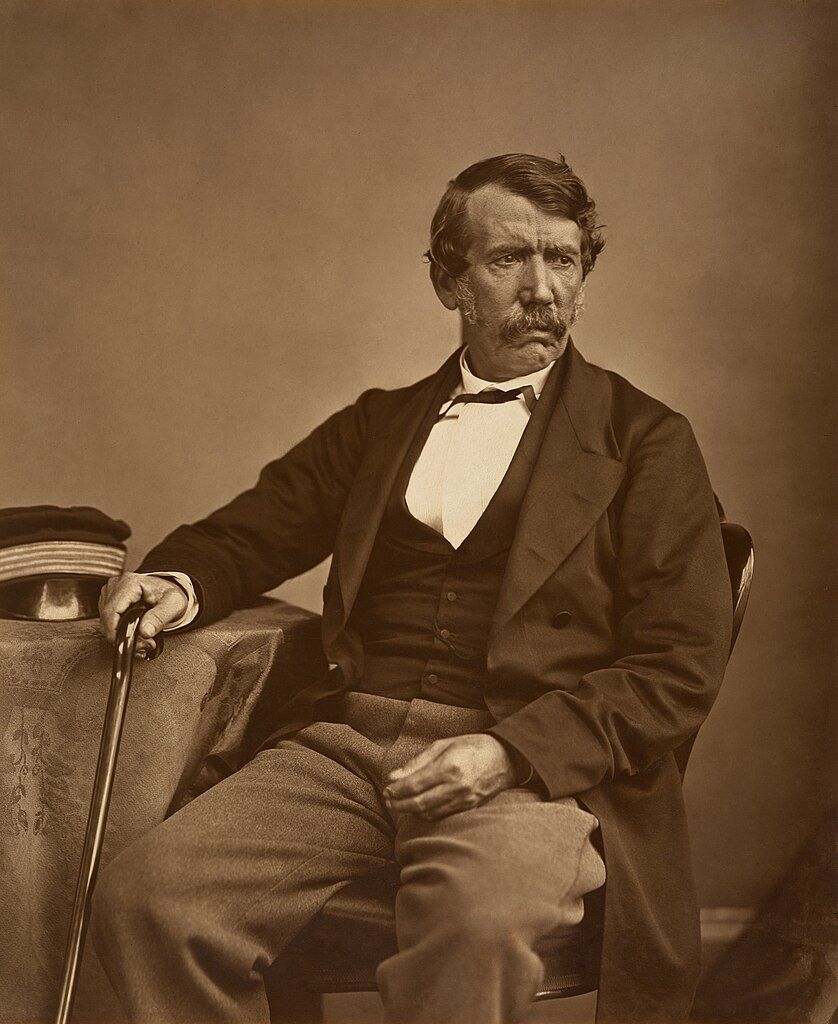
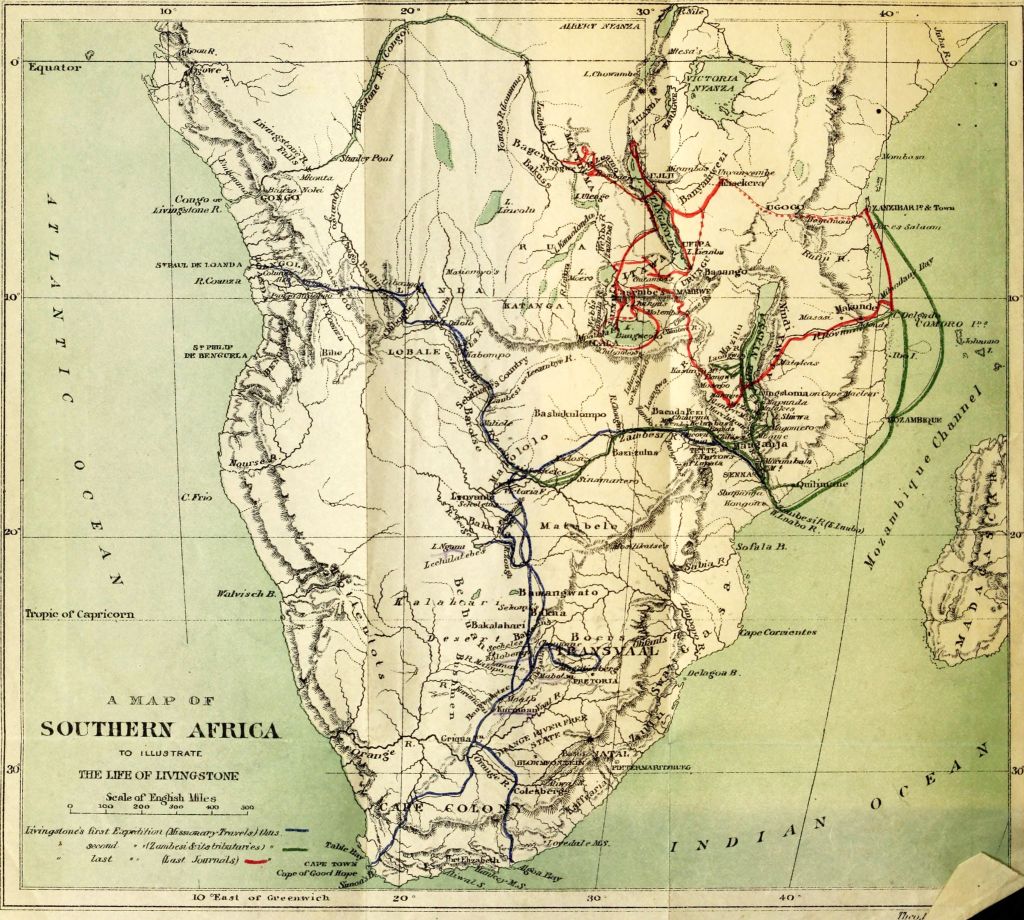
In America we think of Livingstone as a great explorer but in Africa it is his never-ending fight to end the slave trade that holds him in African hearts. Livingstone went to Africa as a Christian missionary doctor and fell in love with exploring, ultimately mapping three long journeys in southern and eastern Africa covering 40,000 miles(2).
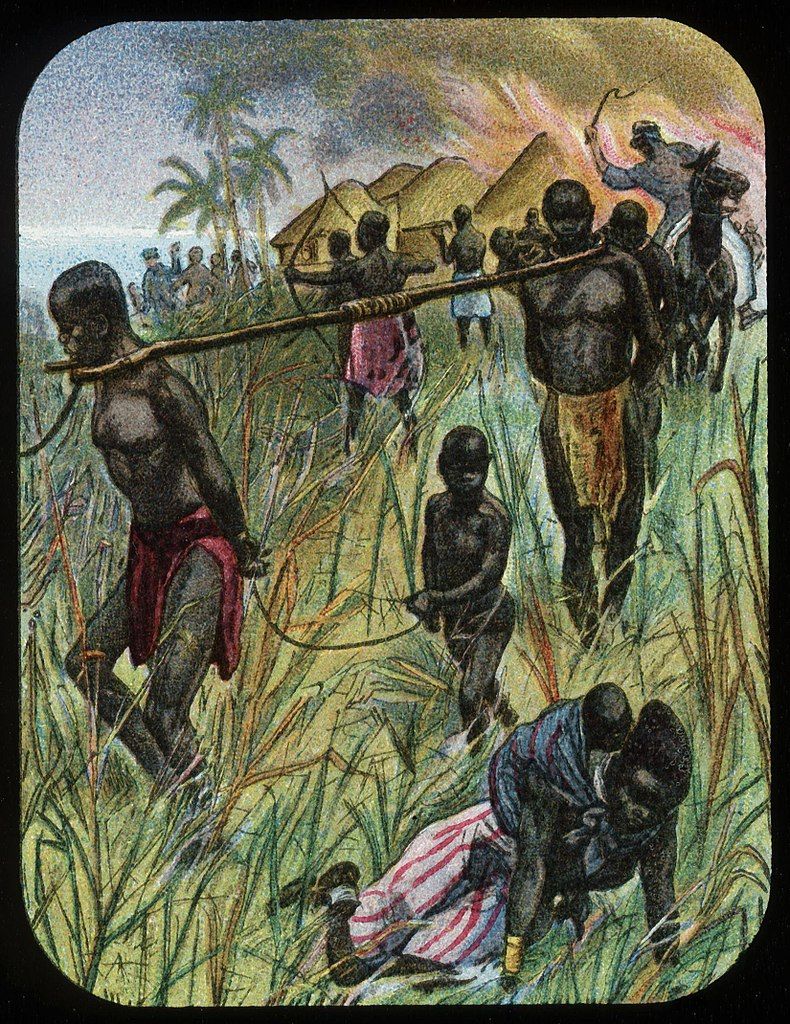
During his second expedition to the Zambezi River (1858-1864) he witnessed the horrors of the East African Arab-Swahili slave trade and vowed to end it. Men, women and children were captured in the interior and marched to trading posts on the Indian Ocean coast, one of which was Zanzibar a British colony ruled by Arabs.
Livingstone reasoned that if he became famous for finding the source of the Nile he could influence the British government to end the slave trade so he returned to Africa in 1866 to accomplish both goals.
Five years later, in the absence of news, Livingstone was presumed dead or lost. Instead he was still exploring, very weak and sick with malaria and without quinine to treat it because someone stole his medical kit. Meanwhile he wrote letters to Britain describing the slave trade but the slavers were the only ones available to carry his letters to the coast. Knowing that Livingstone was against slavery, they delivered only one of his 44 letters.
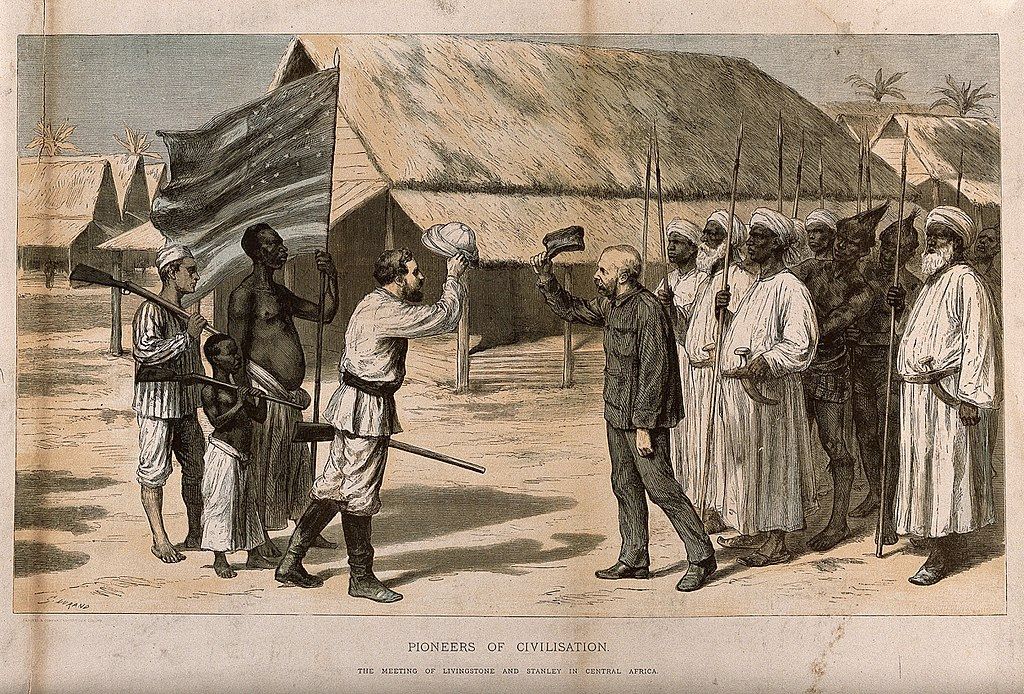
Livingstone’s disappearance was such a great mystery that the New York Herald sent journalist Henry Morton Stanley to Africa where he caught up with Livingstone at Ujiji in October 1871 and said, “Dr. Livingstone, I presume.”
British reaction was swift but Livingstone did not live to see it. “One month after his death, Great Britain signed a treaty with Sultan Barghash of Zanzibar, halting the slave trade in that realm. The infamous slave market of Zanzibar was closed forever.(2)“
More than any of his contemporaries, Livingstone succeeded in seeing Africa through African eyes.
p.s. In the U.S. most of us don’t realize that the West African slave trade that our country participated in was not the only source of slaves. Britain outlawed the trans-Atlantic slave trade in 1807 but it continued elsewhere. For instance, Mauritania in West Africa did not impose penalties on its local slave trade until 2007. Today slavery persists in some parts of Africa. Read about Slavery in Contemporary Africa here.
(credits are in the captions) Footnotes on sources.
The weather is going to turn nasty tomorrow and very cold next week so it’s time to stay indoors and watch birds where it’s warm.
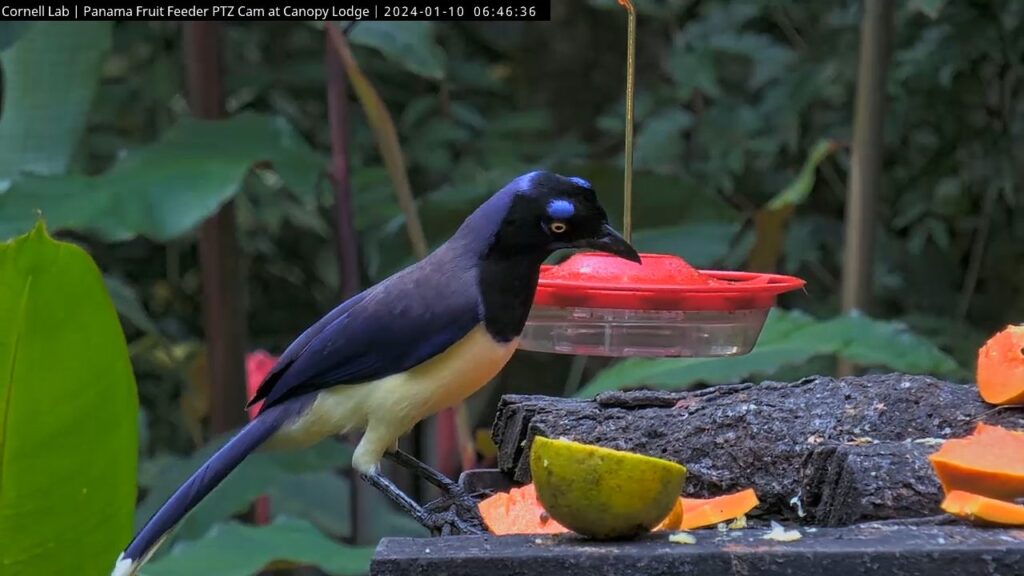
Tropical birds and feeder-hungry mammals visit the Panama Fruit Feeder Cam at Canopy Lodge. The black-crested jay, above, takes a look at a potential meal while a mother agouti, below, brings her cubs to the banquet. Agoutis show up in dark too.
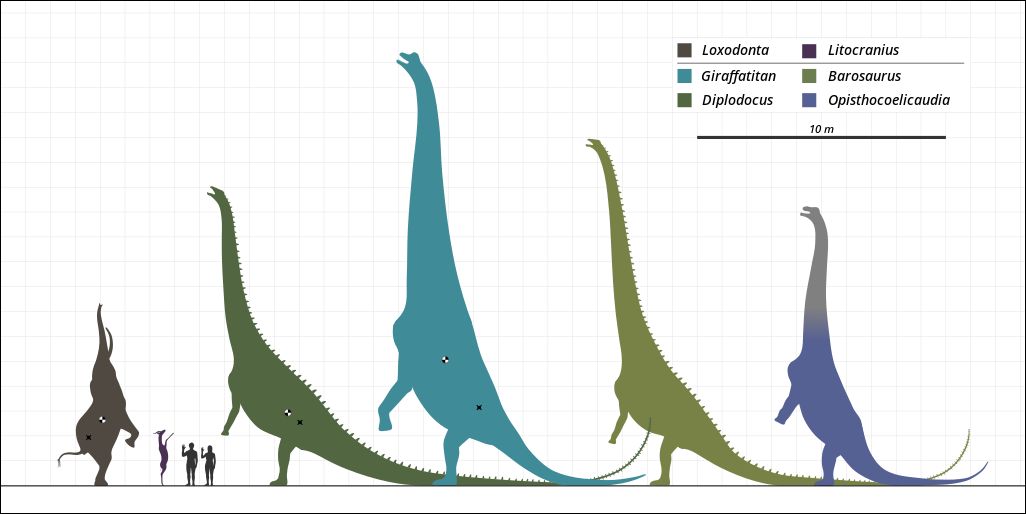
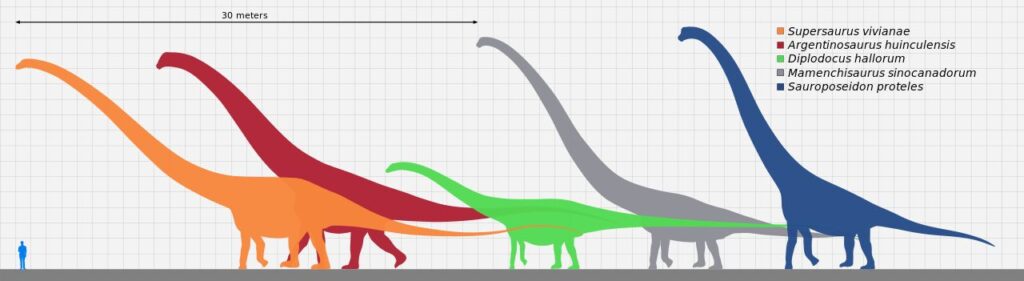
Today I found an illustration that’s full of surprises showing six animals in the rearing up position. With two humans for scale the animals are: an African elephant, a gerenuk, and four Sauropoda dinosaurs: Diplodocus, Giraffatitan, Barosaurus, and Opisthocoelicaudia. The black and white dot on the elephant and dinosaurs indicates the center of mass (COM) for balance; the tiny black square is the location of the hip socket.
The elephant and gerenuk (giraffe gazelle) both rear up to reach food but for many decades the idea that Sauropods lifted themselves from the ground was considered scientifically inaccurate.
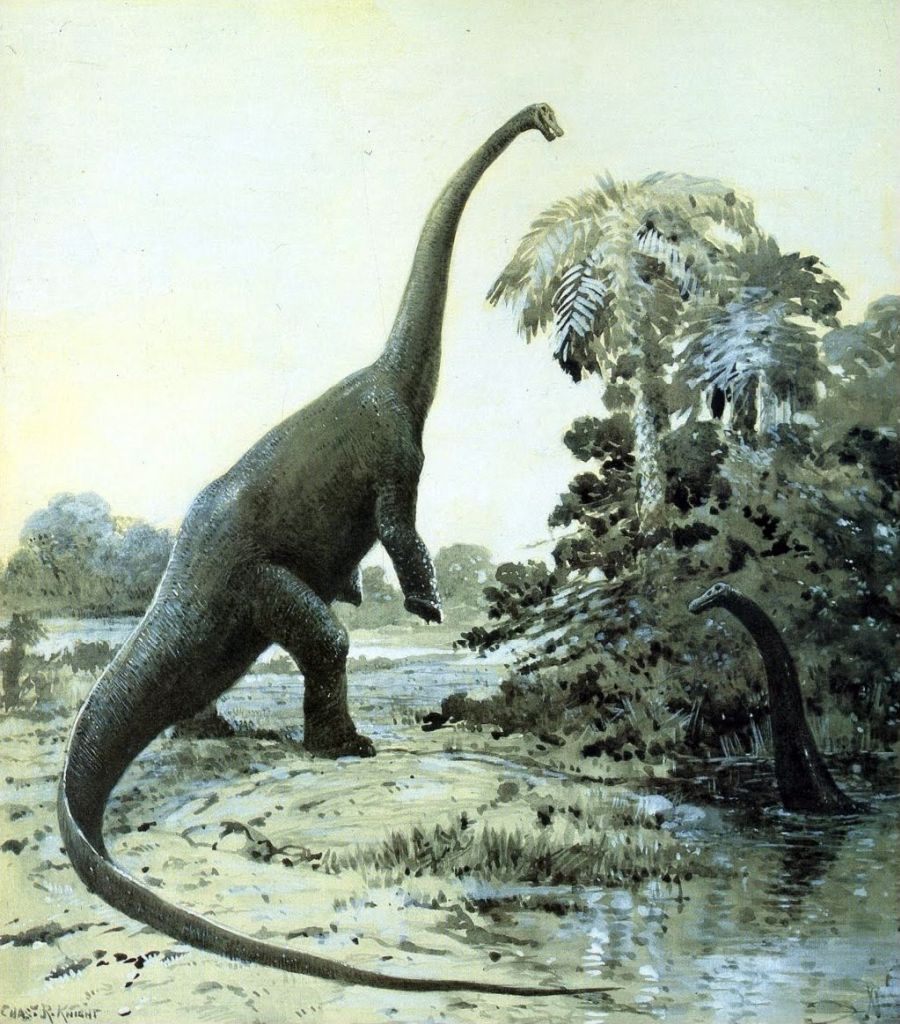
This 1907 illustration of Diplodocus by Charles Robert Knight is so noted on Wikimedia Commons.
The note says the picture is not factual because “Sauropods were terrestrial.”
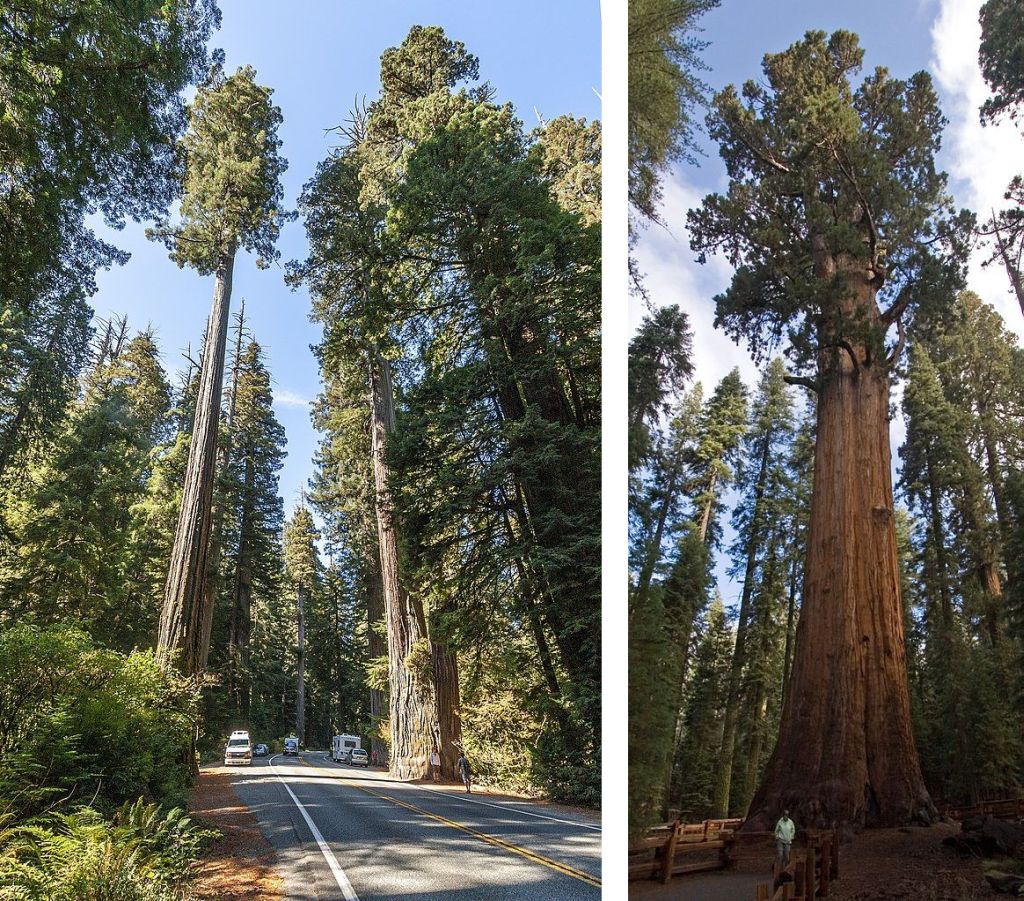
Did Sauropods always keep all four feet on the ground? They ate tall plants, two examples of which still live today in California: coastal redwoods and giant sequoias. It makes sense they would have to rear up to reach them.
Sauropod necks and torsos are lightened because of an extensive air sac system which, combined with long, muscular, and dense tails, helps shift the centre of mass (COM) backwards, closer to the hip socket in some sauropod species.
Some sauropods have retroverted pelves which might have allowed the legs to maintain greater functionality when rearing.
[Bones in] the anterior part of the tail suggest flexibility, the tail being able to serve as a prop when in a tripodal posture.
The hip socket allowed for a large range of motion, more than needed for normal quadrupedal walking.
The wide strongly flared pelvis was thought to further aid stability in a tripodal posture.
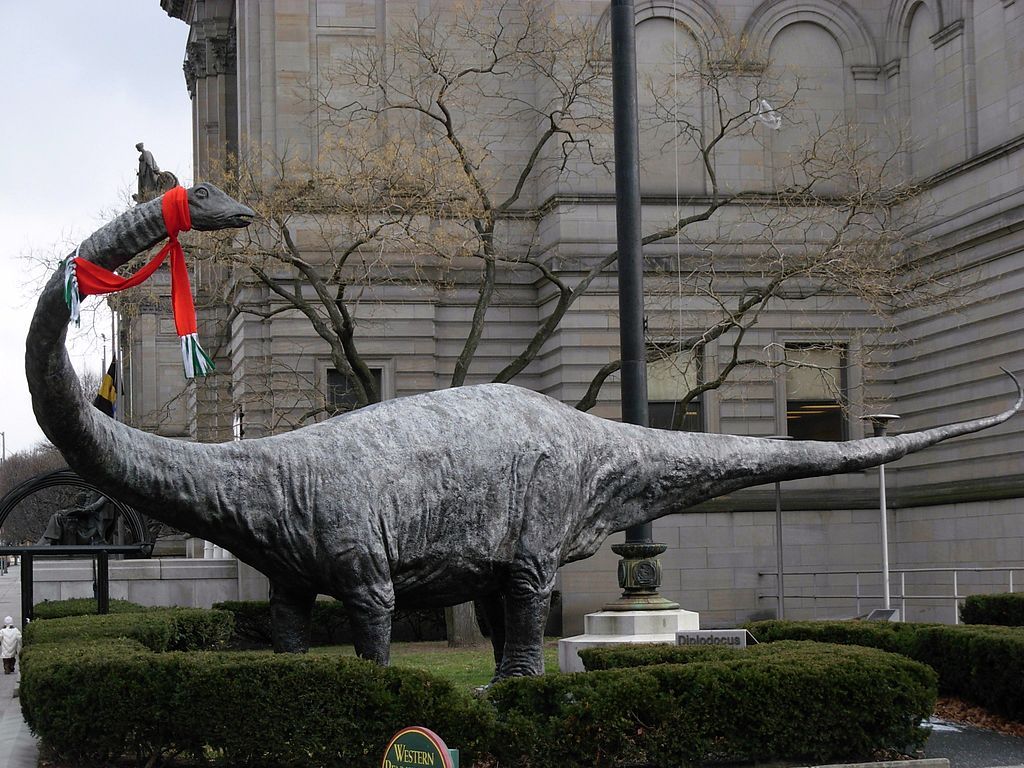
Specifically for Dippy, “The Center of Mass (COM) of Diplodocus is estimated to be very close to the hip socket. This makes prolonged rearing possible and does not require much effort to do it. Combined with its long, massive tail acting as a prop, it was also very stable. Mallison found Diplodocus to be better adapted for rearing then an elephant.”
The description also points out that Giraffatitan, the second dino from the left, would have a hard time rearing. His COM was too far from his hip socket and his tail was short.
So it’s likely that Dippy reared up on his hind legs and could do so for hours while he browsed the trees like a deer.
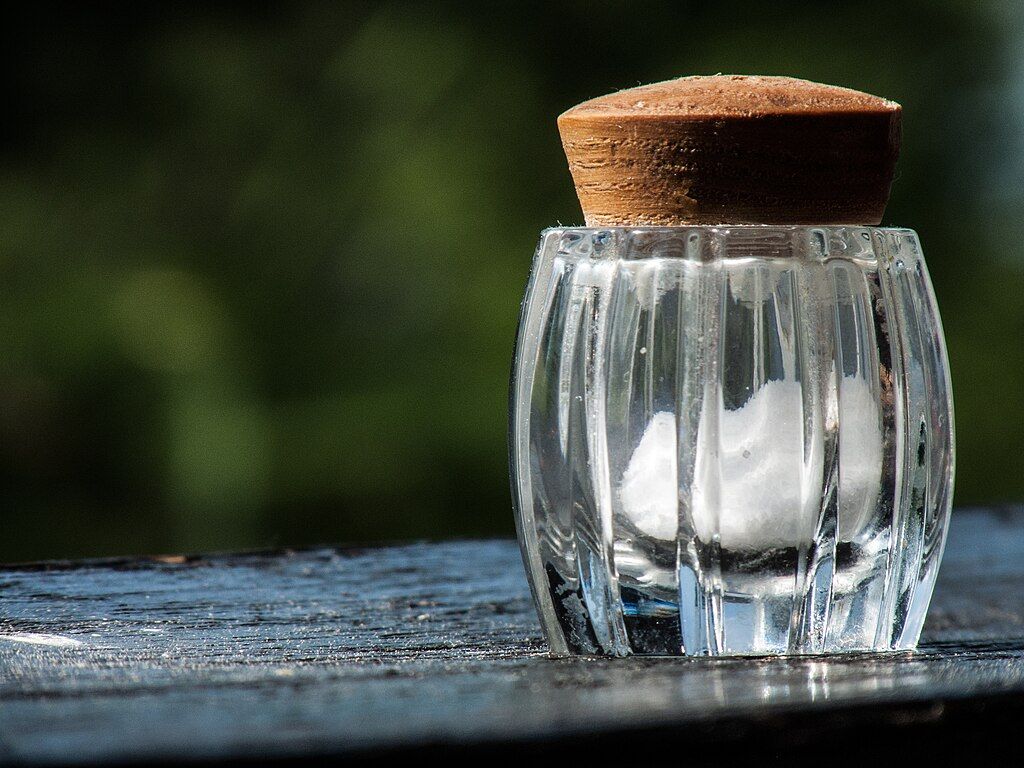
You’ve probably noticed that in humid weather table salt clumps in the salt shaker and sticks to the top. That’s because at the molecular level salt’s ions have a net positive charge that attracts atmospheric water which has a net negative charge. Salt literally pulls water out of the air and builds crystals. This process can make the top of the salt shaker moist or dampen a salted road on a humid day.
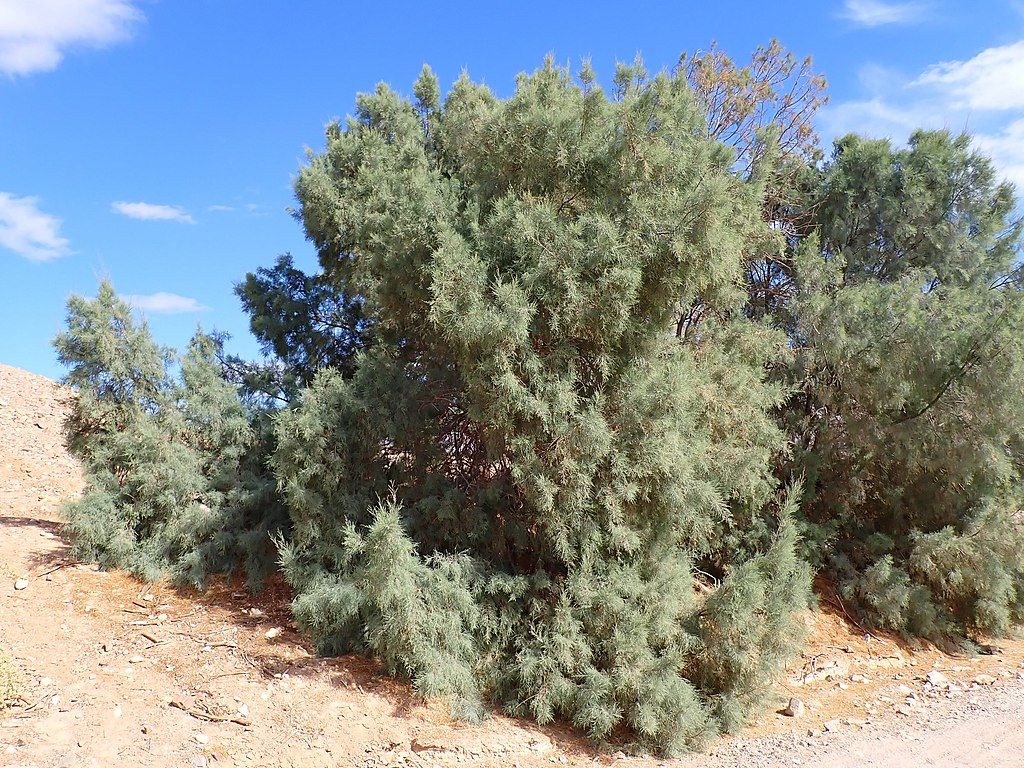
Can salt’s natural means of pulling water from the air be used to gather water in a larger way? Researchers led by Marieh B. Al- Handawi investigated Athel tamarisk (Tamarix aphylla), a desert plant native to Africa and Asia that takes up saline water with its roots and secretes excess salt through its leaves.
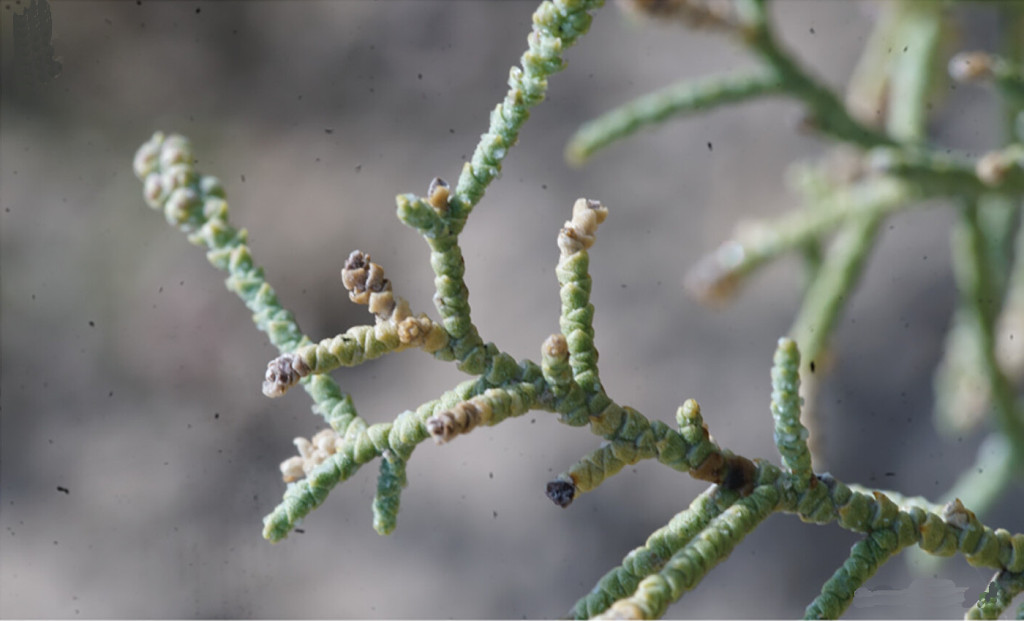
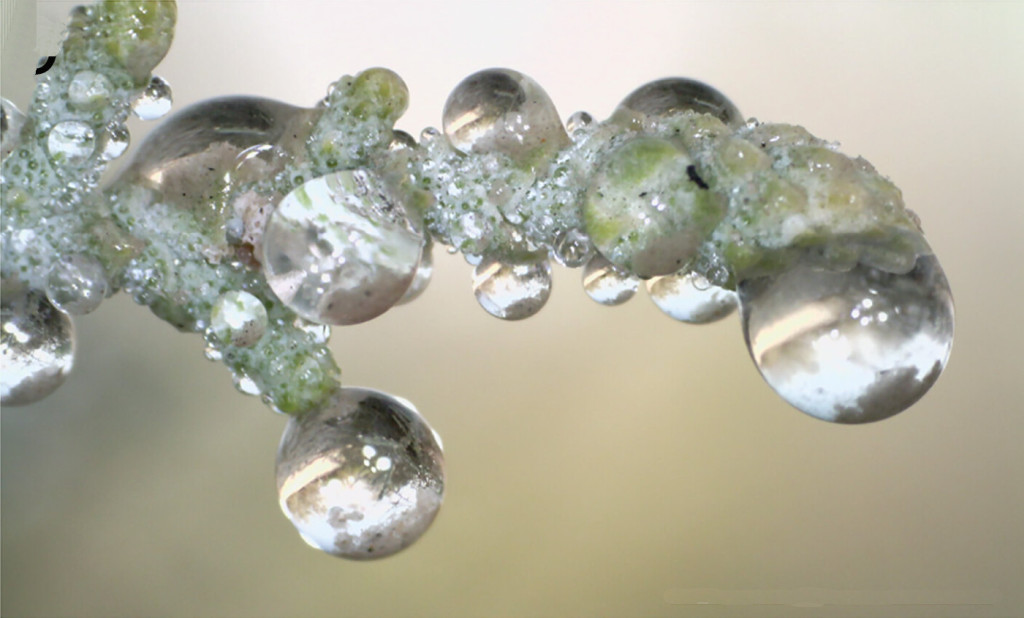
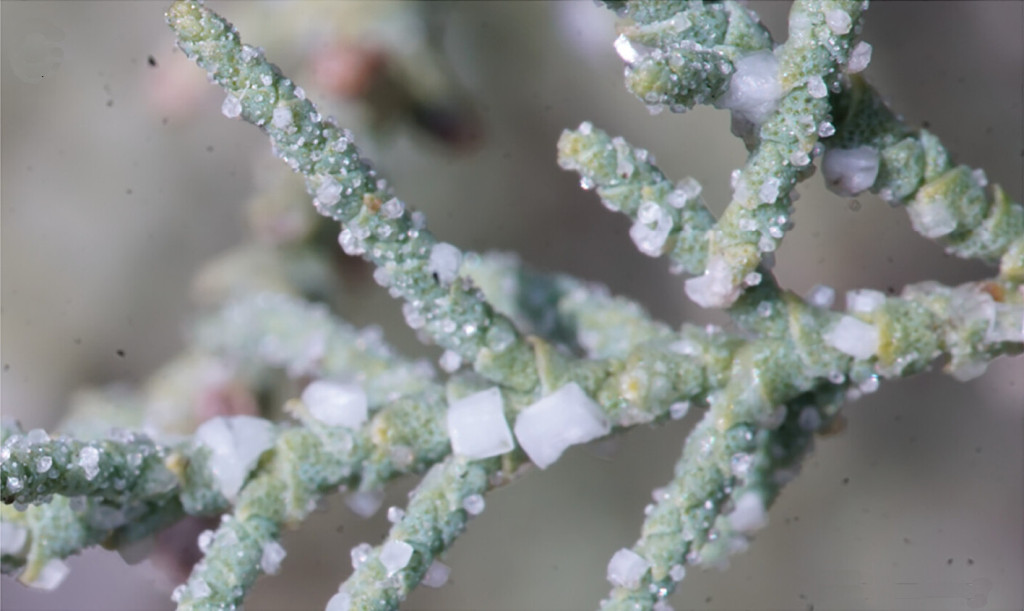
The tiny leaves are arranged alternately, almost wrapping the branches. The salt crystalizes on the leaves. Look closely and you can see tiny crystals.
The smaller crystals stay on the plant and attract more water, especially overnight as shown on this branch in the early morning (8 a.m.) with condensed water droplets.
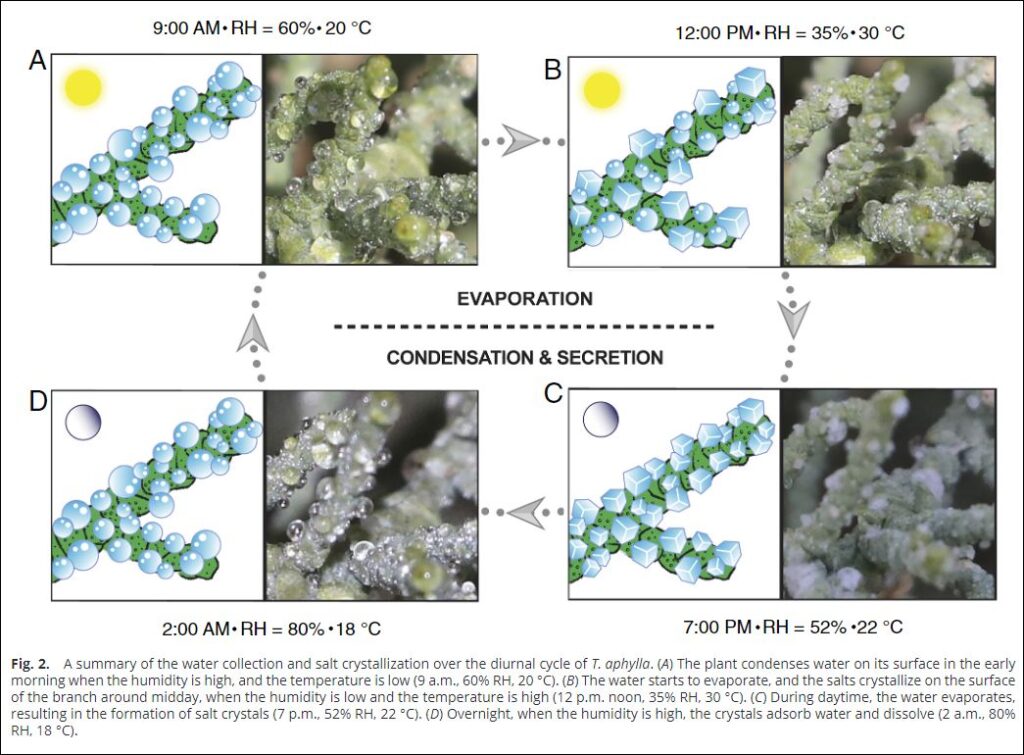
Every day the water cycle repeats: (A) branches attract water overnight, (B) water evaporates during the hot day while salt crystals grow, (C) water is gone and crystals are large, (D) during overnight high humidity the crystals attract water from the air and the plant absorbs the water. — paraphrased from PNAS: Harvesting of aerial humidity with natural hygroscopic salt excretions.
The tree is “drinking” from its leaves.
Researchers observed that at least one type of salt, lithium sulfate, forms small crystals that remain on the leaves and absorb water from the air. When the team added colored water to salty leaves, they watched the liquid stick to the crystal crust, then absorb into the plant’s leaves—evidence that the salty coating acts as a bona fide water collection mechanism.
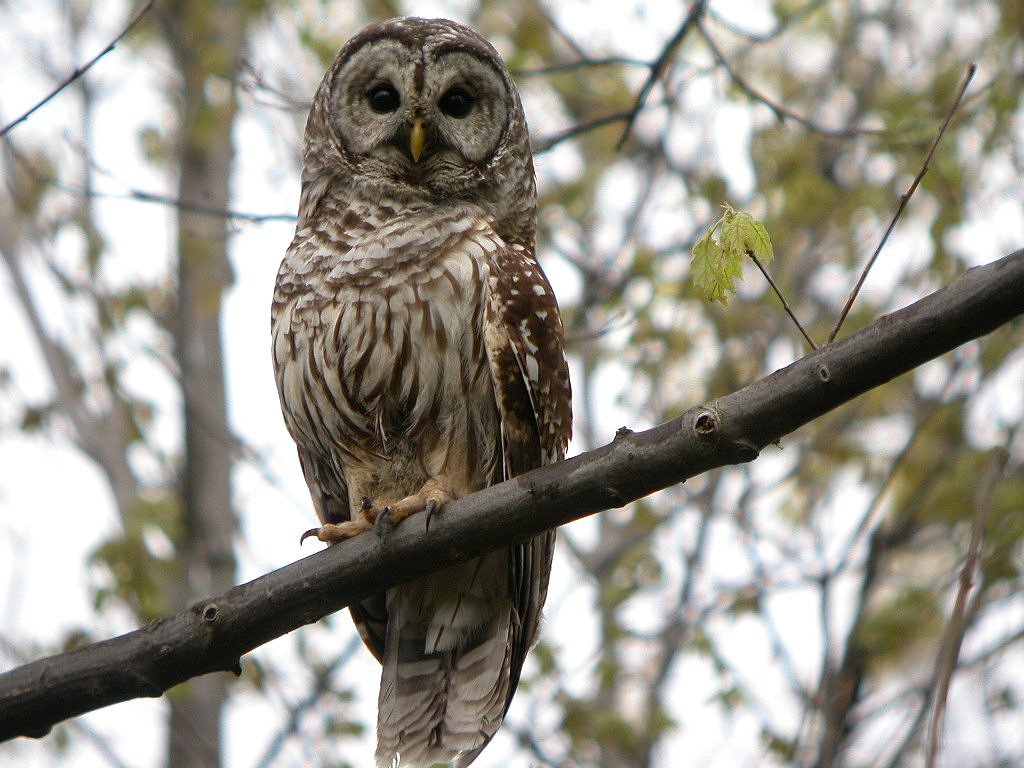
In 2013 US Fish & Wildlife proposed an experiment: Kill 3,600 barred owls (Strix varia) in the Pacific Northwest to keep them away from their close relative, the northern spotted owl (Strix occidentalis). Barred owls had spent 100 years expanding westward to the Pacific coast where they became more successful than their habitat-constrained spotted cousins and even interbred with them. Though barred owls are native to North America and moved west on their own, USFW dubbed them “invasive” and proposed killing them wherever found near spotted owls.
Nationwide comments on the culling proposal were overwhelmingly negative but local comments were in favor. The experiment went forward and barred owls were killed according to plan. The final paper describes barred owl “removal”.
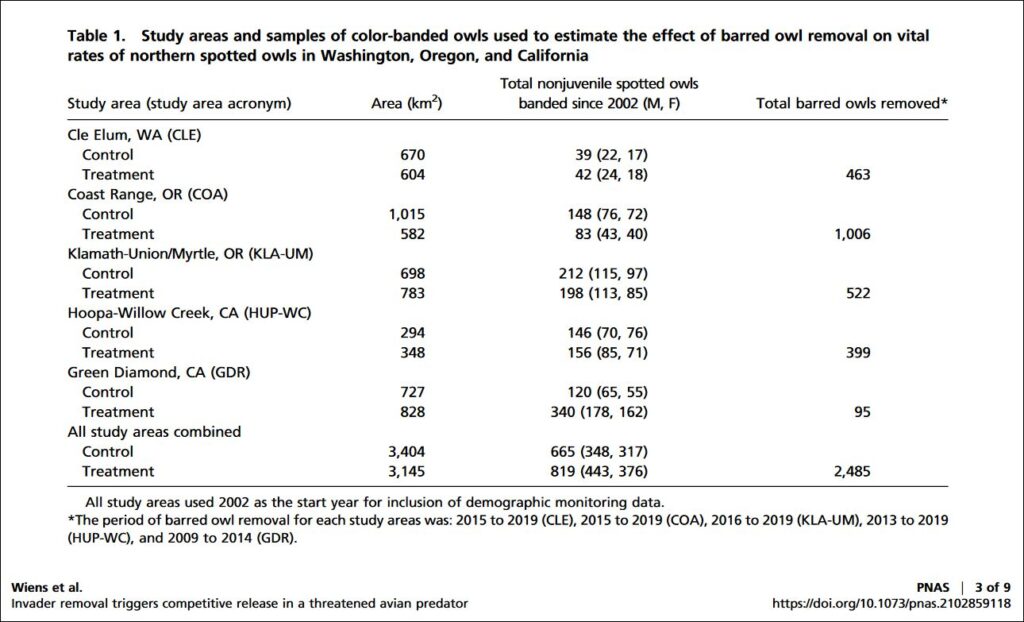
Barred owls detected in treatment areas were removed using 12-gauge shotguns and well-established field protocols (20, 22, 23). A total of 2,485 barred owls were removed from treatment segments of five different study areas during the experiment (Table 1). The mean number of barred owls removed per year was highly variable among study areas, ranging from a low of 15.8 barred owls per year in Green Diamond (GDR), to a high of 251.5 barred owls per year in the Oregon Coast Range (COA).
Interestingly at two of the five study sites — Hoopa-Willow Creek and Green Diamond, California — the killing of 494 barred owls made little to no difference for the spotted owls. Click here for the graph that shows this.
However, USFW declared the experiment a success and recently drafted a new “Barred Owl Management” proposal to continue killing barred owls and expand the project further in California. The draft is currently in its 60-day public comment period: November 17, 2023 – January 16, 2024 during which we are free to express our opinion.
Public Comments Processing; Attn: Docket No. FWS-R1-ES-2022-0074
U.S. Fish and Wildlife Service Headquarters, MS: PRB/3W
5275 Leesburg Pike
Falls Church, VA 22041–380
UPDATE on 1 APRIL 2024: This application has created an uproar. No fooling! see …