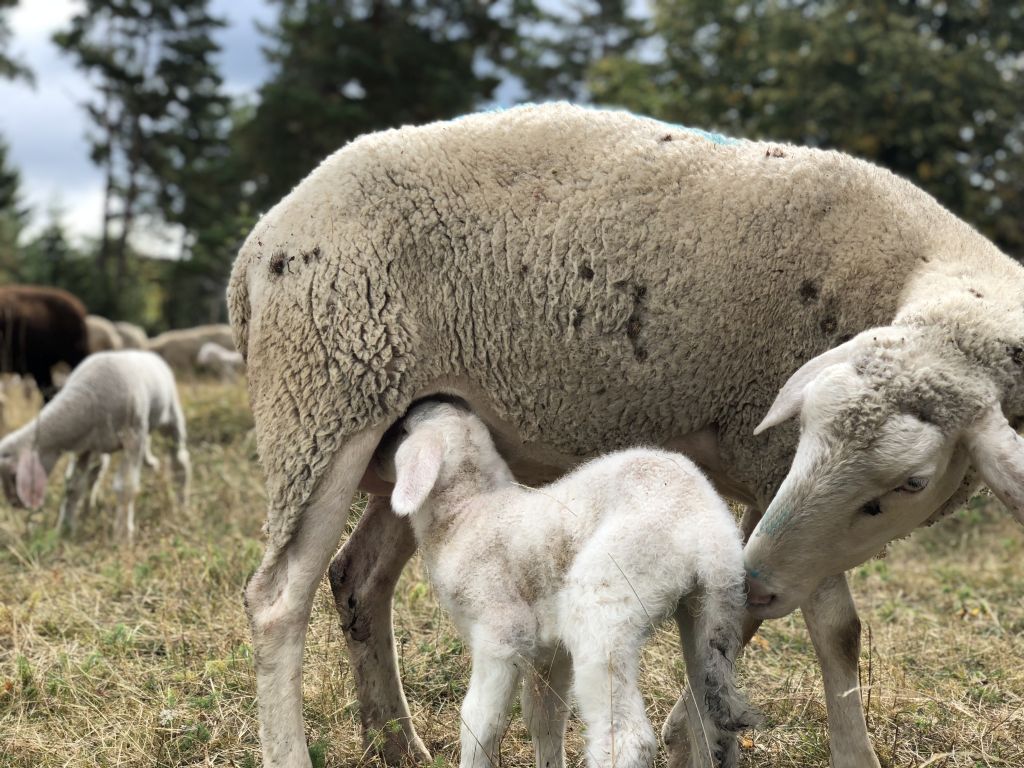
If you live in close contact with animals you get to know them well. Shepherds of small flocks develop an especially close relationship with their sheep because they tend them every day — and for 24 hours a day during lambing in early spring.
Paula Aarons, originally from Valencia PA, runs a small sheep farm in New Hampshire called the Dancing Pony Sheep Farm. Last month she appeared on Junction Fiber Mill‘s Millcast program to tell the story of her flock supporting each other and supporting her, their shepherd.
Our mutual friend Jeff Cieslak introduced her 15-minute video.
People: My friend Paula told this wonderful story about her sheep for a podcast. I watched it, and I wept a little, and now you, too, must weep.
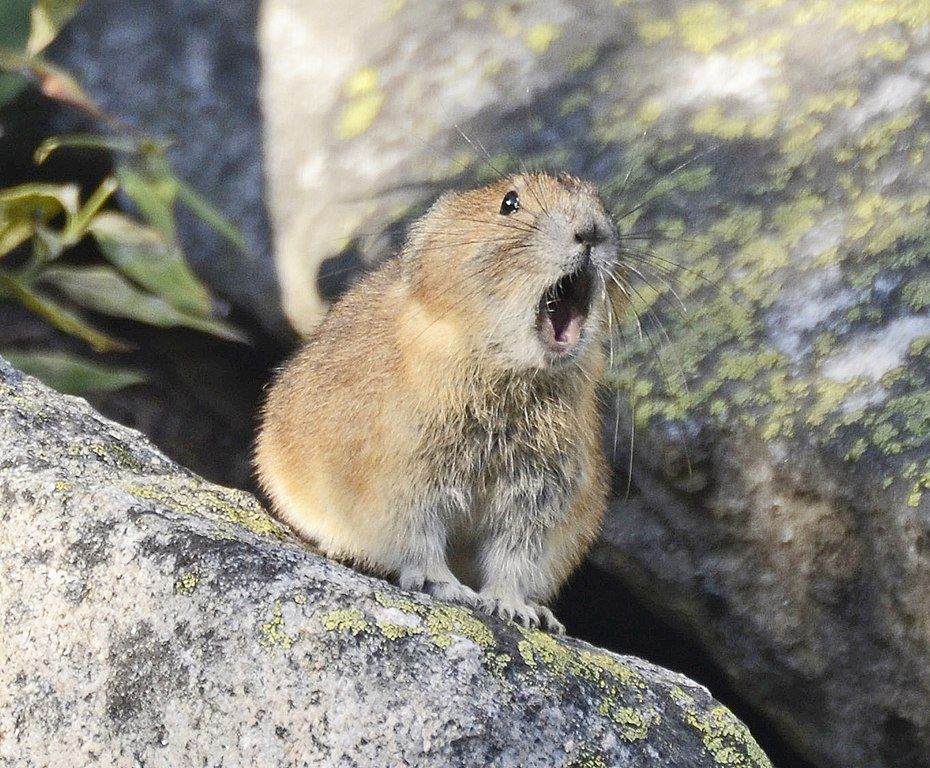
Rabbits rarely say anything but this small mammal, related to rabbits, stands on a prominent rock and shouts to his friends when he sees danger.
American pikas (Ochotona princeps) weigh 6 ounces and are only 6-8 inches long, covered from head to toe in thick fur. They live in boulder fields above the treeline where they eat flowers, grasses and other plants that they cache in a “haystack” for the winter. Though tiny these small mammals are a tasty meal for hawks, eagles, coyotes, bobcats, foxes and weasels.
Pikas very social and vocal, calling out danger and “singing” during the breeding season. When a pika sees danger he lets all the nearby pika’s know.
Though he has a small voice, he works on projection.
Akashinga Rangers set off on a patrol to establish an overnight observation post at Phundundu, near Nyamakate, Zimbabwe (photo by Davina Jogi embedded from akashinga.org)
27 March 2024
Before Women’s History Month draws to a close here’s some recent women’s history in Zimbabwe.
Poaching is a persistent problem in southern Africa because the body parts of exotic wild animals find a lucrative market in the outside world. Without effective patrols it can even happen in a national park as for example 11 years ago, in 2013, when poachers poisoned 41 elephants at Hwange National Park by putting cyanide in their watering hole.
To stem the tide of animal deaths Australian born Damien Mander founded Akashinga in 2009 to train squads of men to protect wildlife in their home areas. The men were too easily corrupted and poaching continued.
In 2017 he recruited women, many of them single mothers or formerly abused. They named themselves Akashinga — The Brave Ones in the Shona language — and the program has been a great success, not only in terms of wildlife but within their communities.
Today Akashinga has a team of 500+ staff and 9.1 million acres under management in Zimbabwe, Botswana and Mozambique. They have reduced poaching by 80% and have seen an increase in wildlife of 399%.
We were about to eat dessert on our first night at Khulu Bush Camp when our guide, Sam Mushandu, alerted us to a sound in the night. We all fell silent to listen.
The sun had set two hours ago. It was quite dark. And there were lions outside. Roaring.
“Who wants to find the lions?” said Sam.
Caution flags went off in my brain but others raised their hands so I tamped down my doubts with the thought, “When will you ever get this opportunity again? Never. So go!”
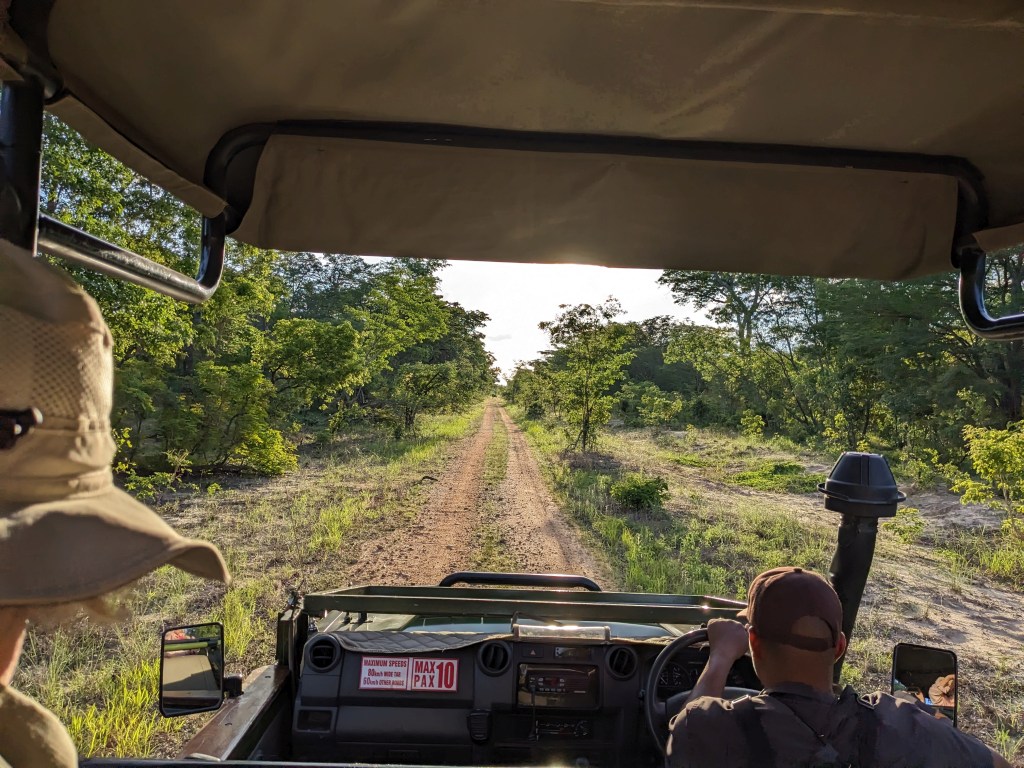
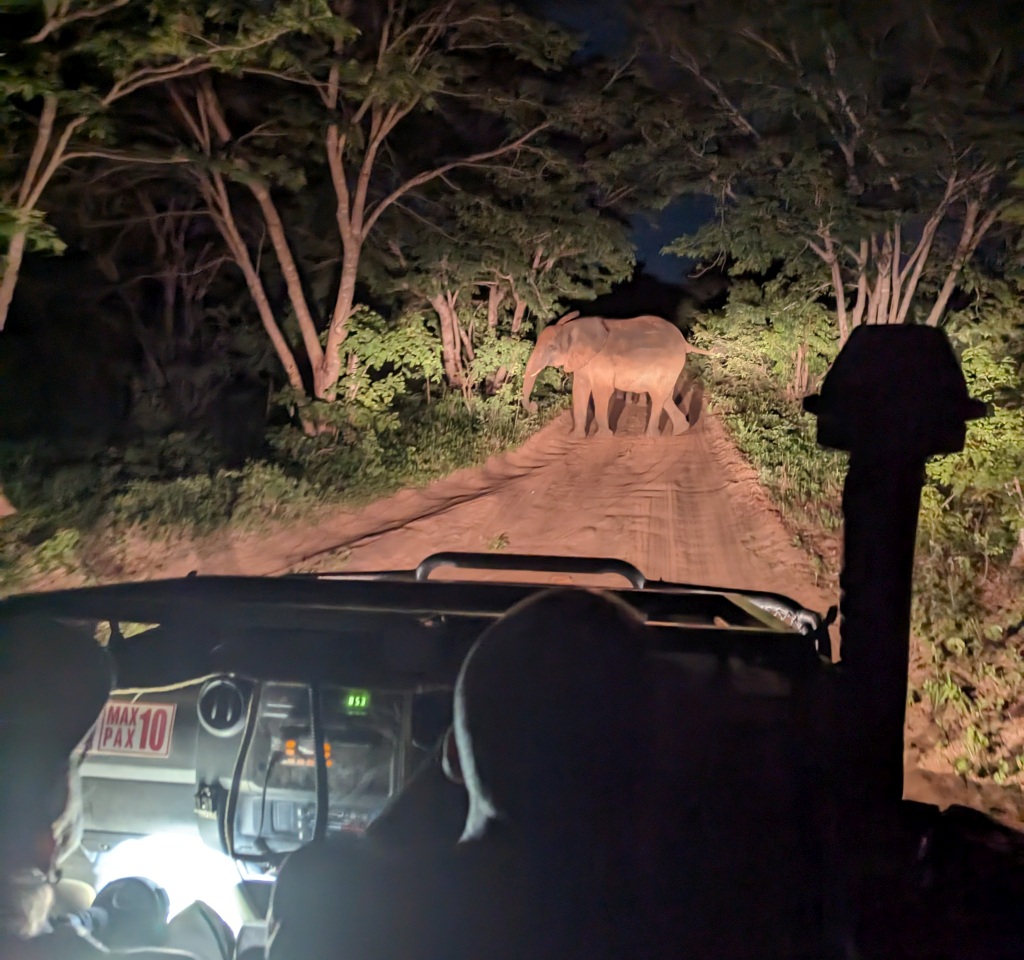
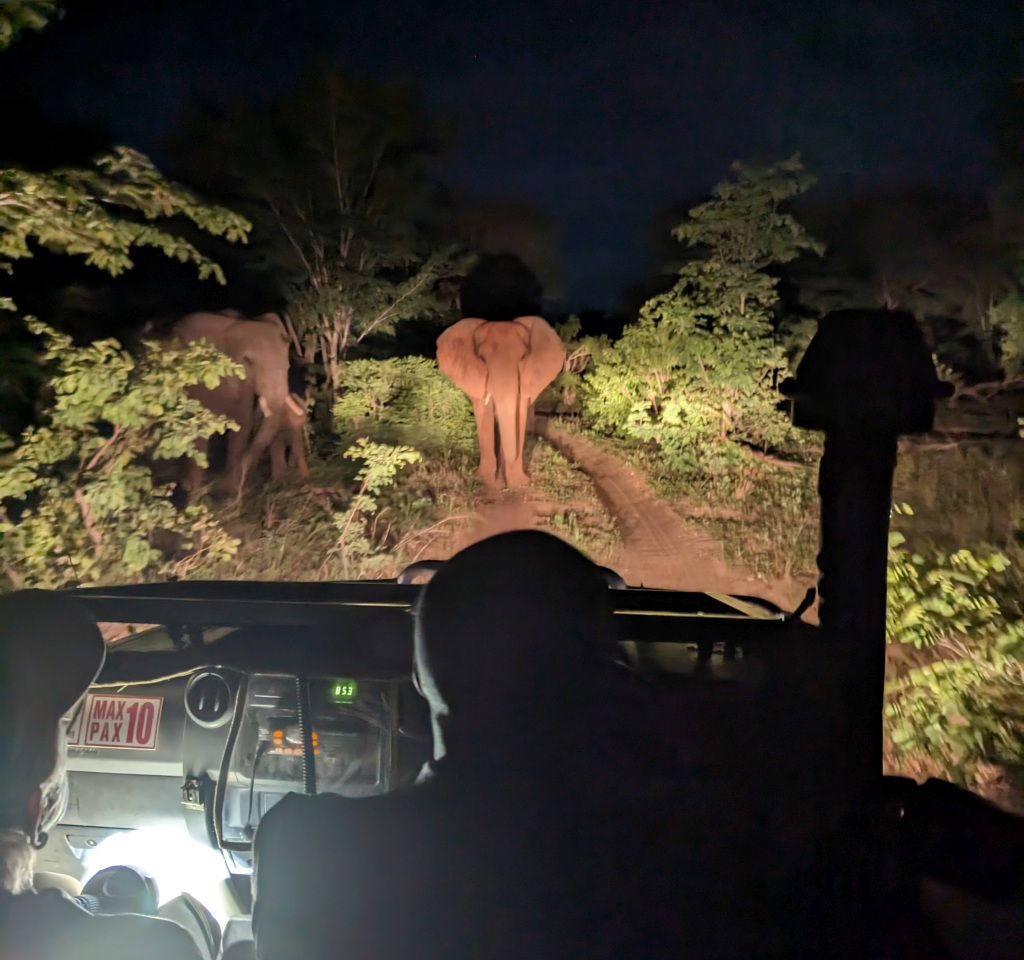
We piled into the safari vehicle and zoomed down the dirt track. Sam was on the radio with James, a Khulu guide who had gone out ahead of us to find the lions. Suddenly an elephant loomed in the dark, blocking the road. We slowed and it stepped into the bush.
Night safari with an elephant blocking the road, Khulu Bush Camp, 24 Jan 2024 (photo by Frank Koch)
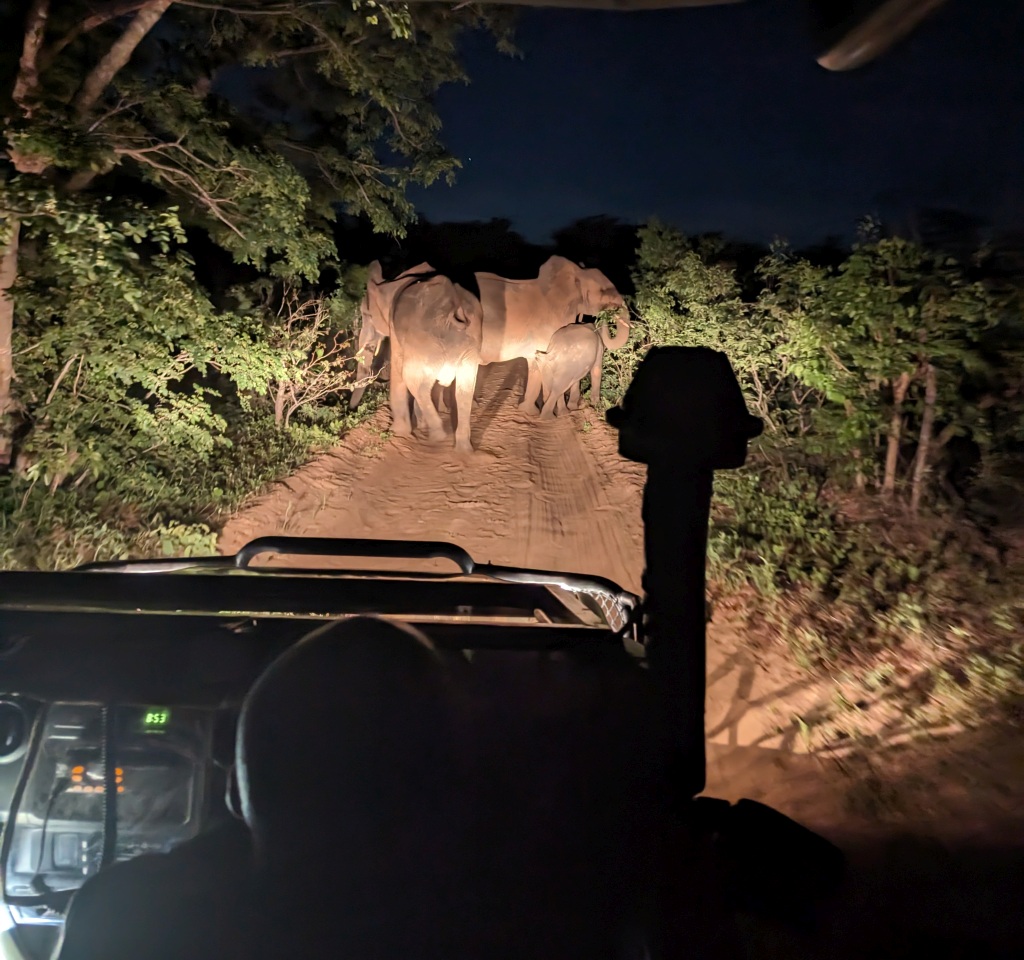
Then another elephant, then three, then four.
Night safari, three elephants, Khulu Bush Camp, 24 Jan 2024 (photo by Frank Koch)
Surprised by crazy humans pelting through the dark the elephants appeared to be telling each other, “Hey! that truck is coming down the track. You’re in my way! Move into the bush!” It struck me as funny and I couldn’t stop laughing.
Night safari, four or more elephants, Khulu Bush Camp, 24 Jan 2024 (photo by Frank Koch)
The elephants melted into the bush, then James radioed that he had found the lions, one male and two females. We turned around and headed toward them.
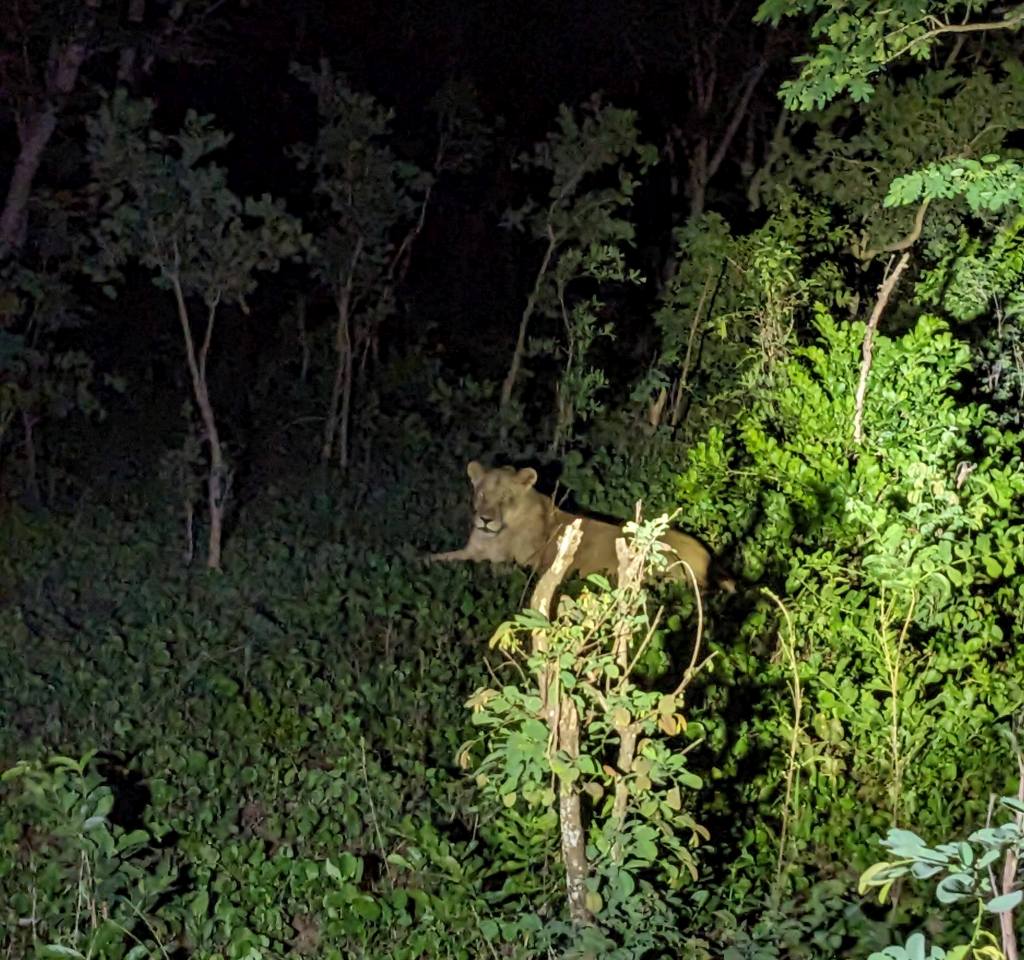
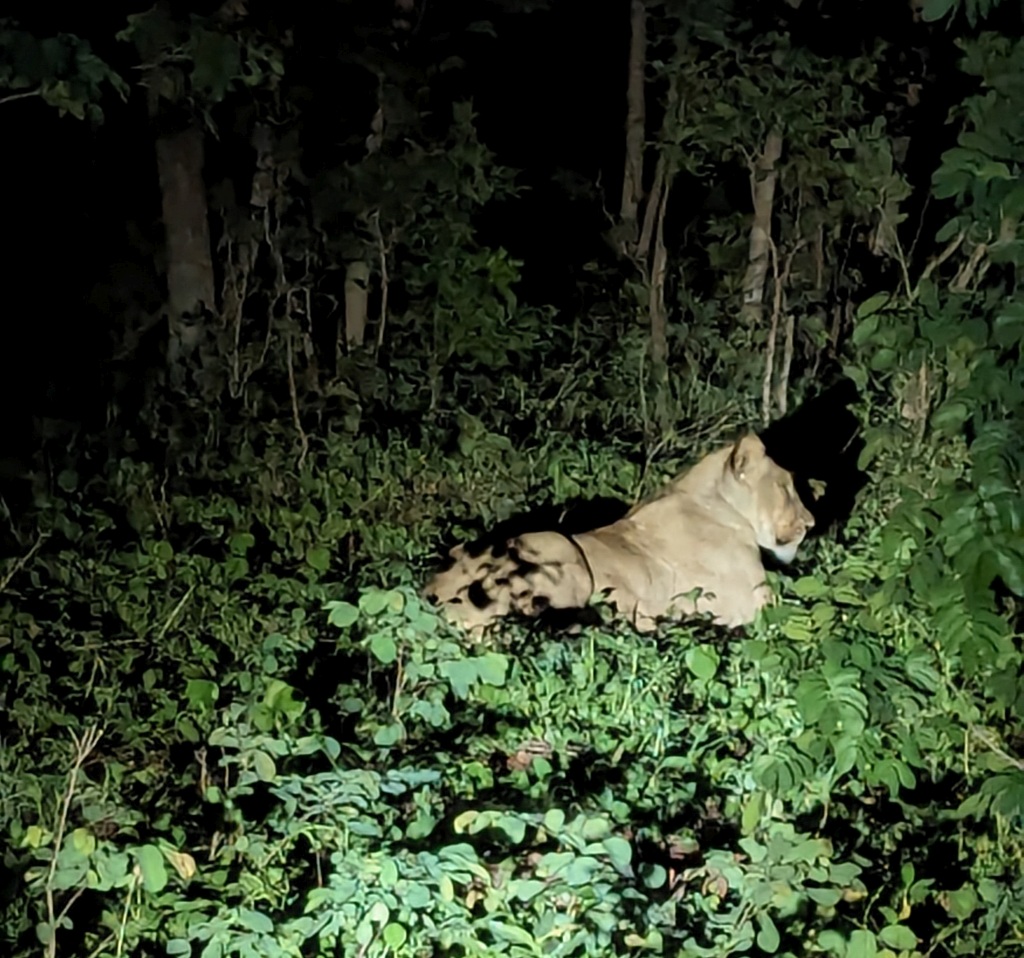
By the time we arrived the male had moved off but we found both females squinting in the bright search light. My photo shows how far away the first one was.
Night safari, female lion near Khulu Bush Camp, 24 Jan 2024 (photo by Kate St. John)
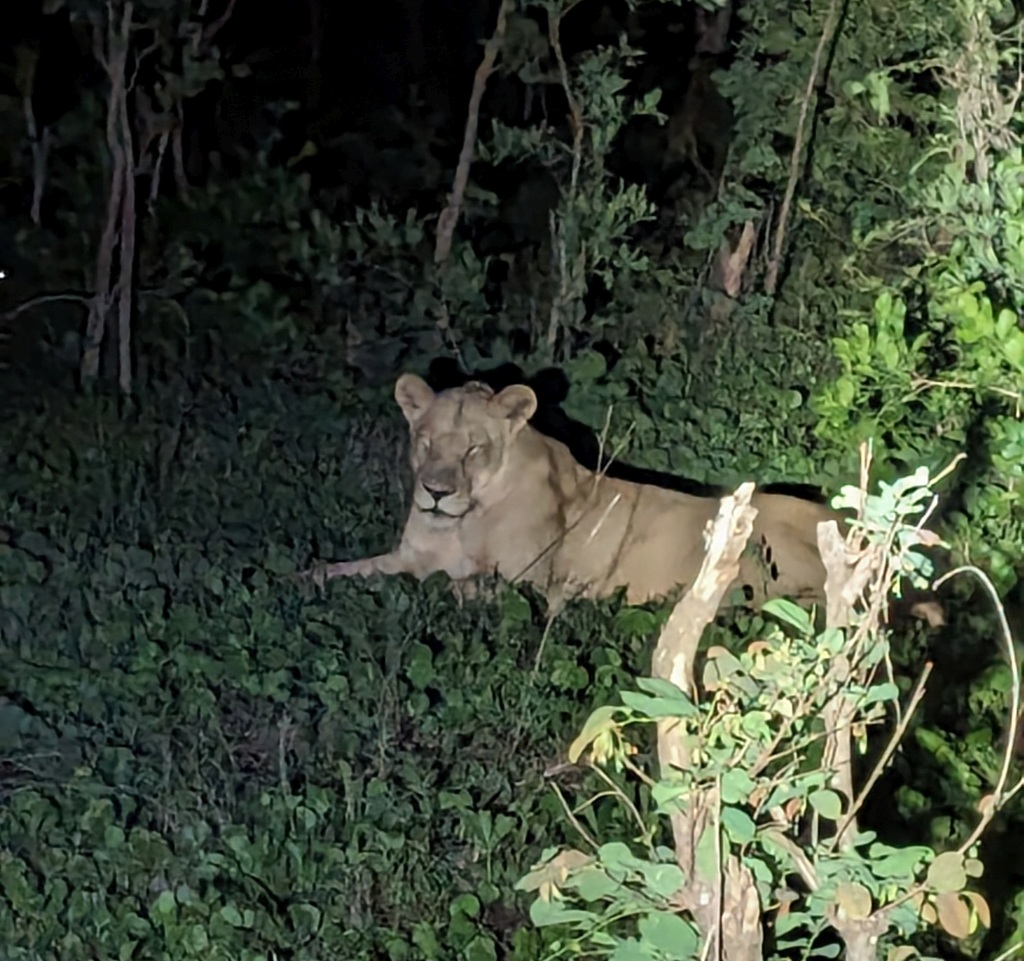
Fellow traveler Frank Koch got better pictures than I did. Here are both females.
Night safari, female lion near Khulu Bush Camp, 24 Jan 2024 (photo by Frank Koch)Night safari, 2nd female lion near Khulu Bush Camp, 24 Jan 2024 (photo by Frank Koch)
What an unforgettable experience!
Grateful thanks to our guide Sam Mushandu, to James (guide at Khulu Bush Camp) who knows the habits of lions, Khulu Bush Camp itself for a wonderful stay, and Road Scholar for arranging the tour. And thank you to Frank Koch for his photos of our night safari.
p.s. In case you’re wondering what a lion looks like when it roars, here’s a video from Brookfield Zoo. Keep in mind that both males and females roar so all three may have been speaking that night in the bush, 24 January 2024.
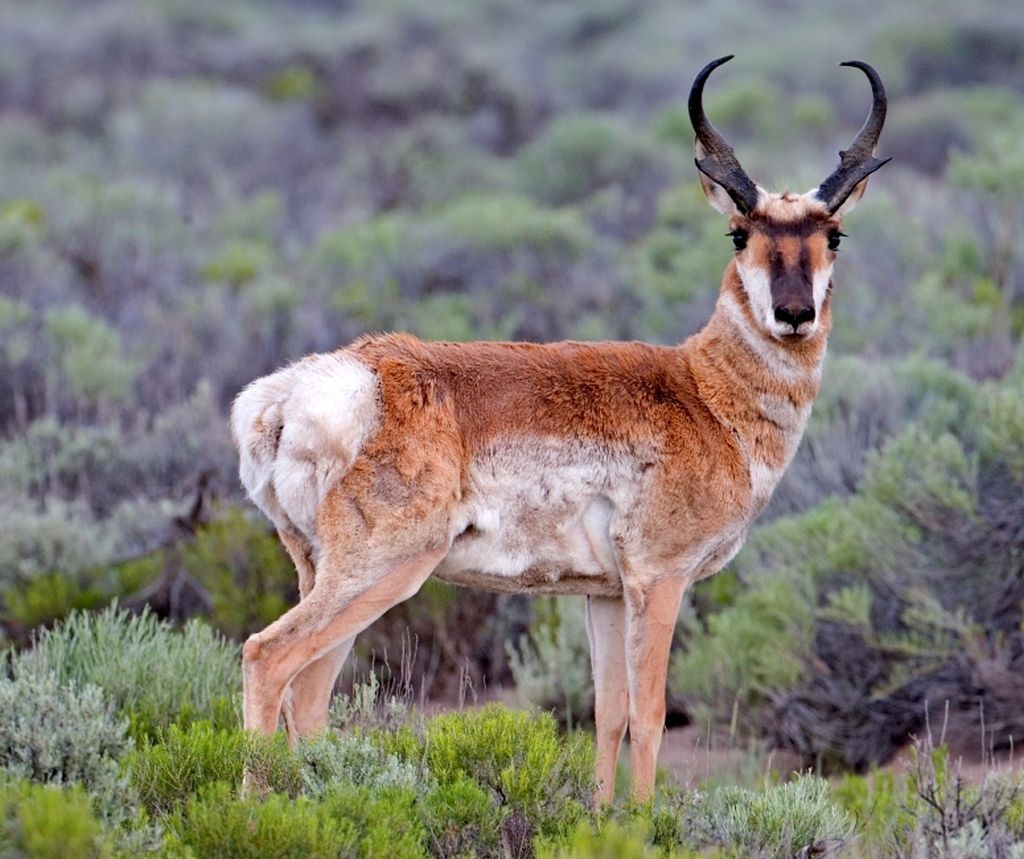
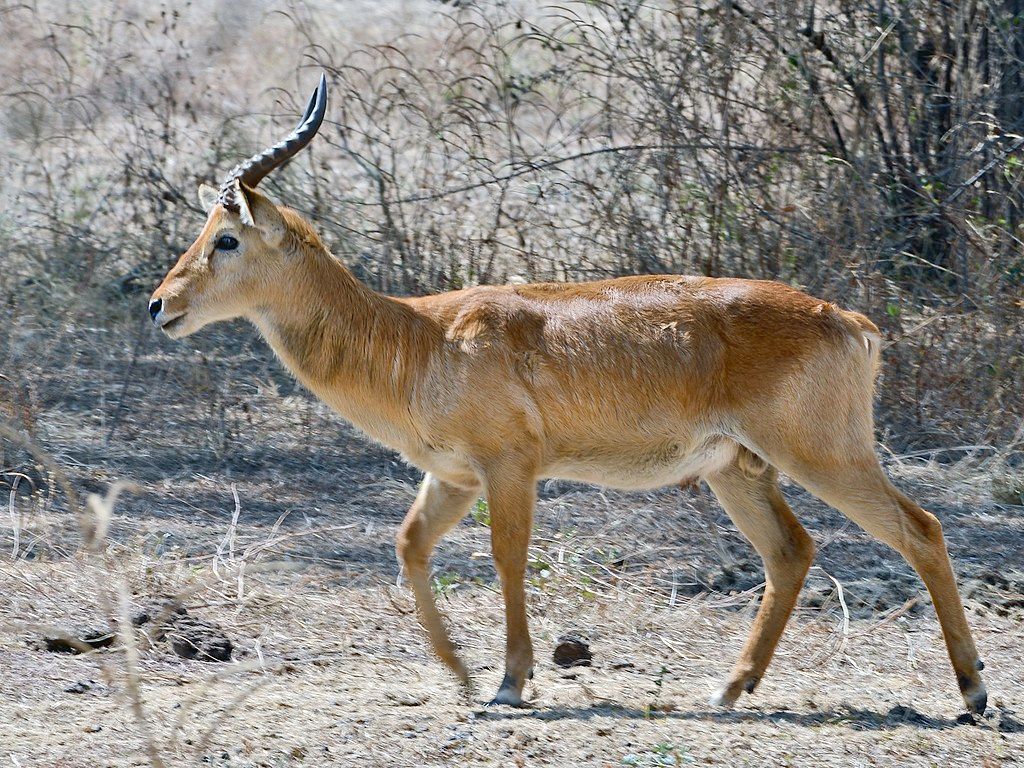
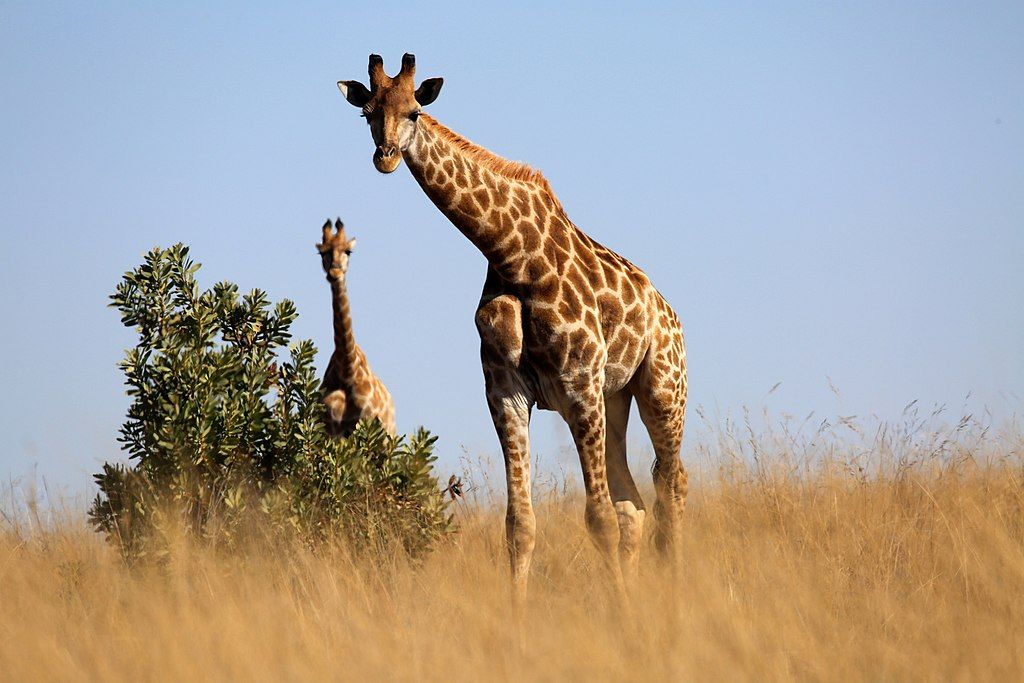
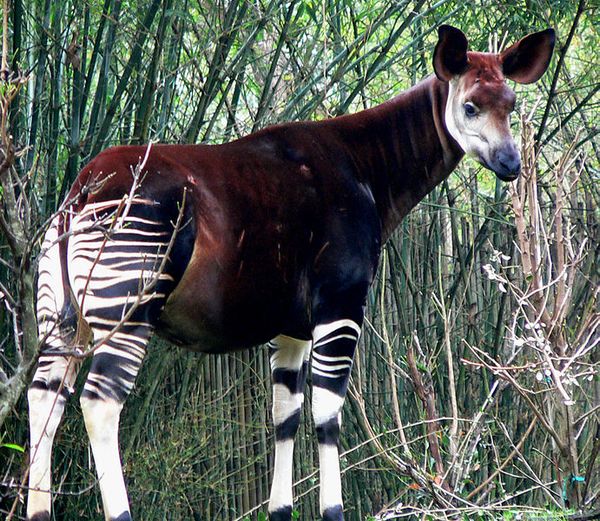
Because the pronghorn’s appearance is similar, I can see why he’s called an antelope, but his nearest relatives are other African animals, the giraffe and okapi.
Giraffe in South Africa (photo from Wikimedia Commons)An okapi (photo from Wikimedia Commons)
Pronghorns probably resemble antelopes because they run like them, a trait they acquired to escape cheetahs(!). Cheetahs used to be in North America but disappeared a long time ago.
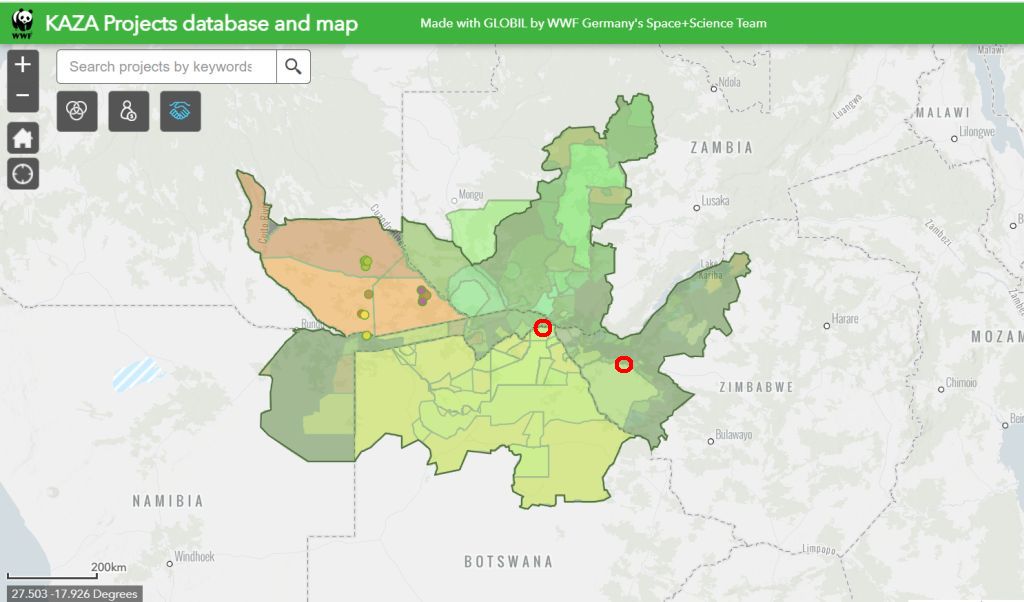
We saw elephants every day in the areas marked on the KAZA map above. Here is what I learned.
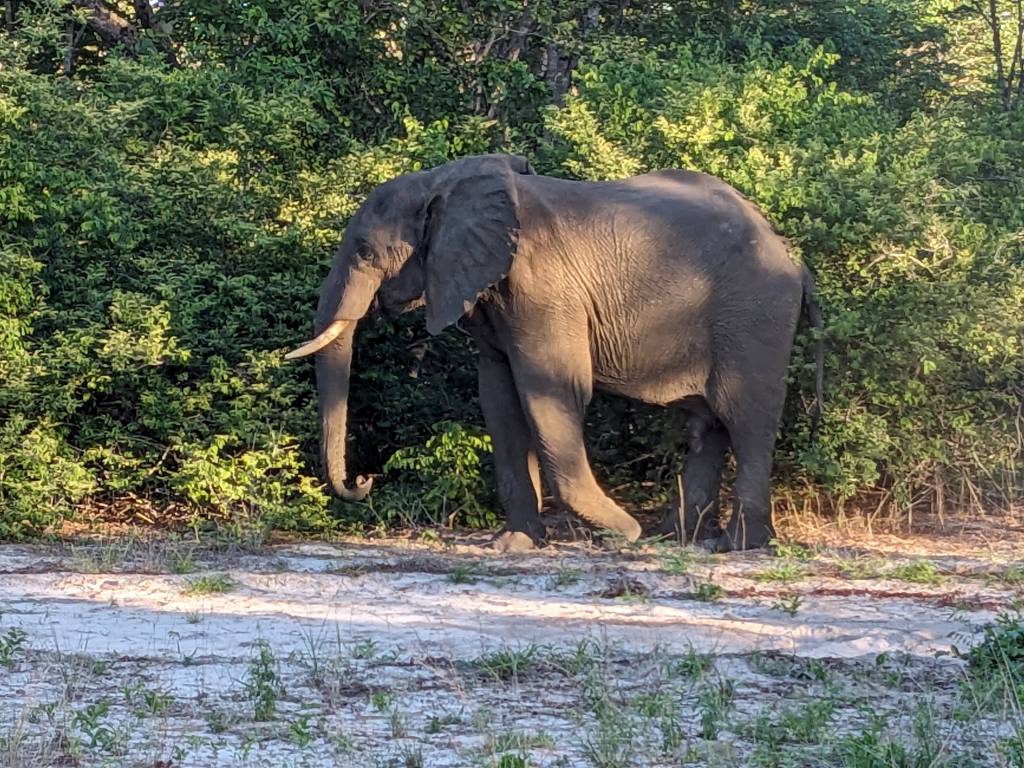
African bush elephants, also called African savanna elephants (Loxodonta africana) are an endangered species having gone from a high of more than 2 million in 1800 to a low of 1,000 in the early 1900s. Now they number about 45,000 but are threatened by human encroachment, poaching, big game hunting (which prizes large tusks thus removing the best genes) and climate change.
Elephants live near fresh water because they must drink and bath so much. Climate change brings drought. Drought kills elephants. This summer there is a drought in southern Africa because of El Niño.
African elephants eat trees, leaves and even the cambium layer of bark. To chew this material they have four molars which they replace throughout their lives until they lose their last molar at age 40-60. Without molars they starve, a common cause of death. (This also happens to white-tailed deer who starve when their teeth wear out.) Tusks are modified teeth and both males and females have them.
We learned about elephant behavior by observing them.
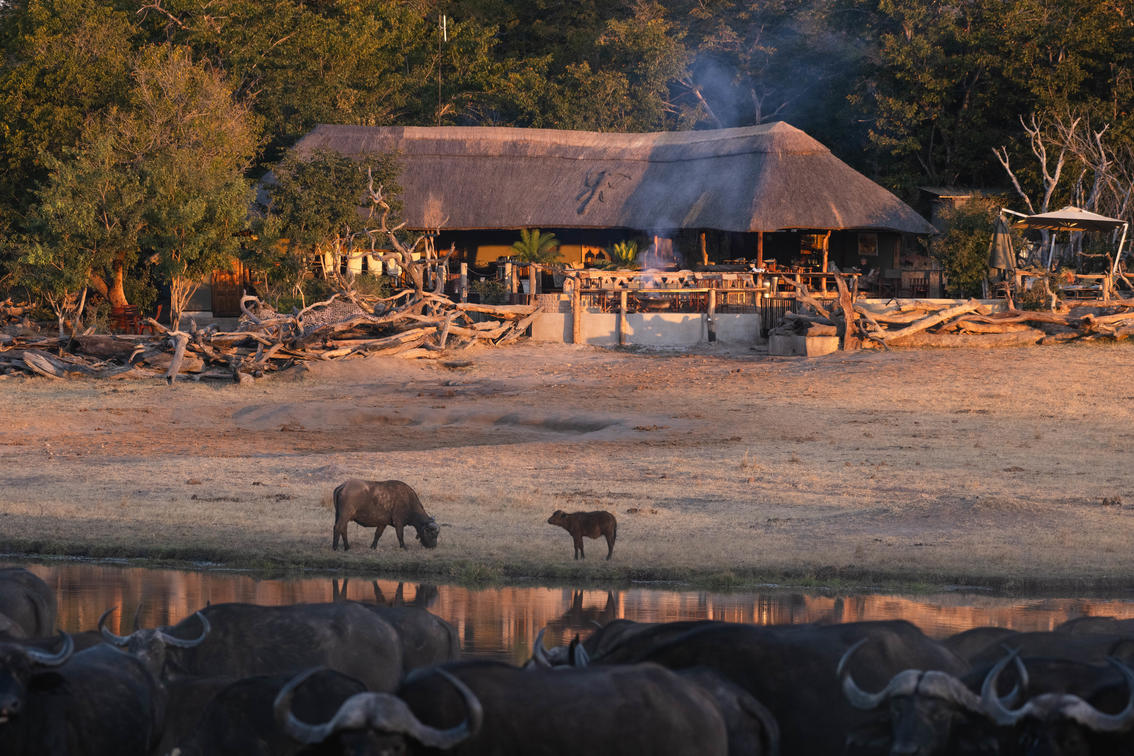
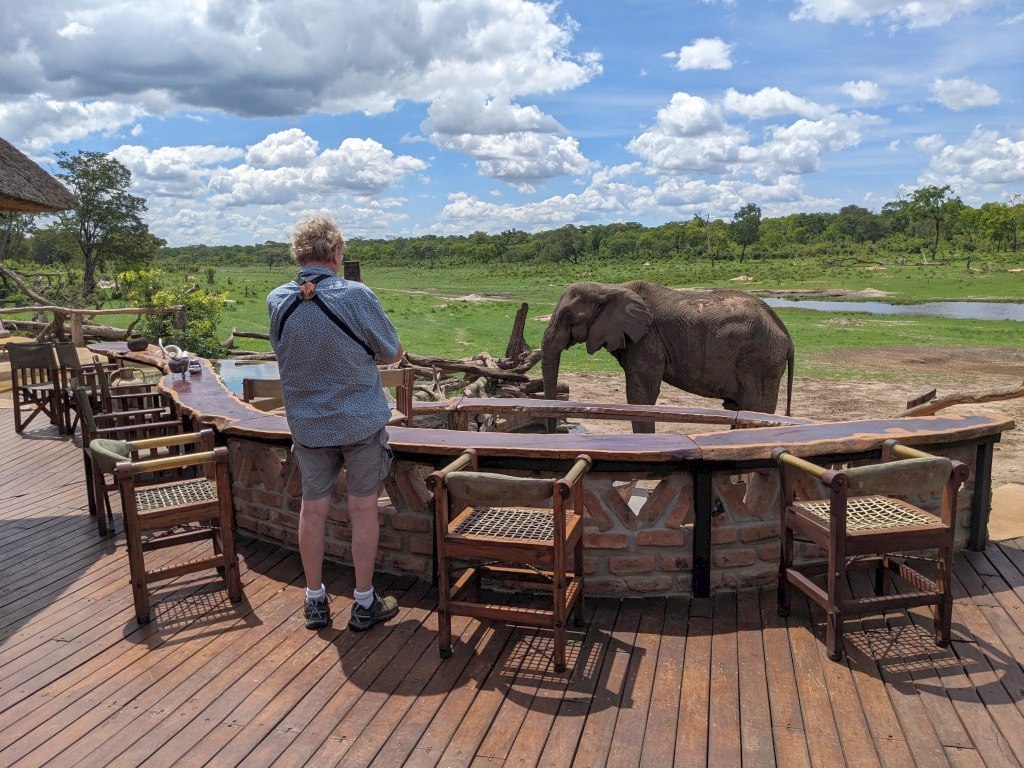
Elephants lived close to us at Khulu Bush Camp. At night they roamed between our tent buildings; I could hear them munching. At midday they came out of the forest to the watering holes near camp to drink and coat themselves with mud against the 97°F afternoon heat.
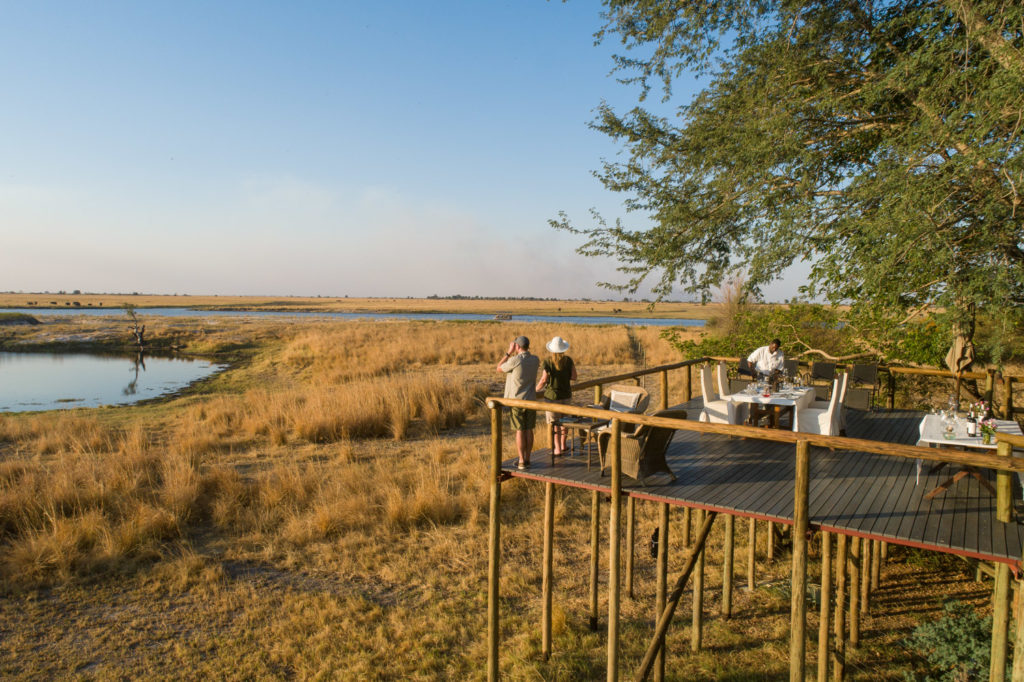
The camp provides a pool of water and minerals attractive to elephants near the dining area which is elevated and protected by a small boma. We could safely view the elephants as they came quite close.
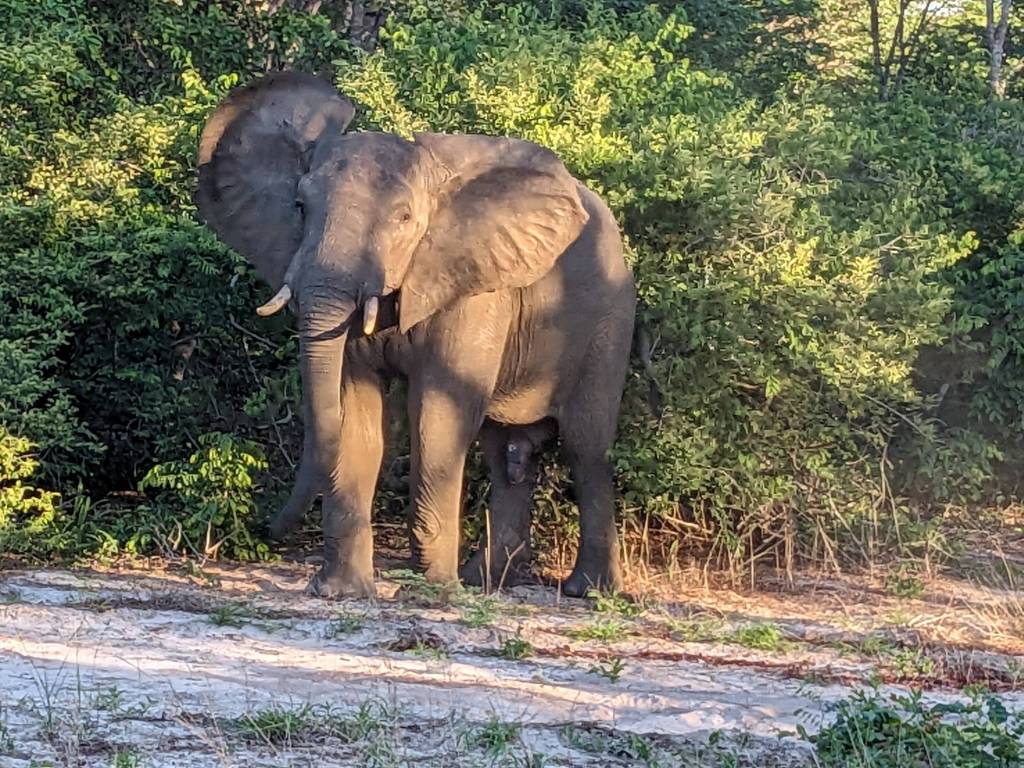
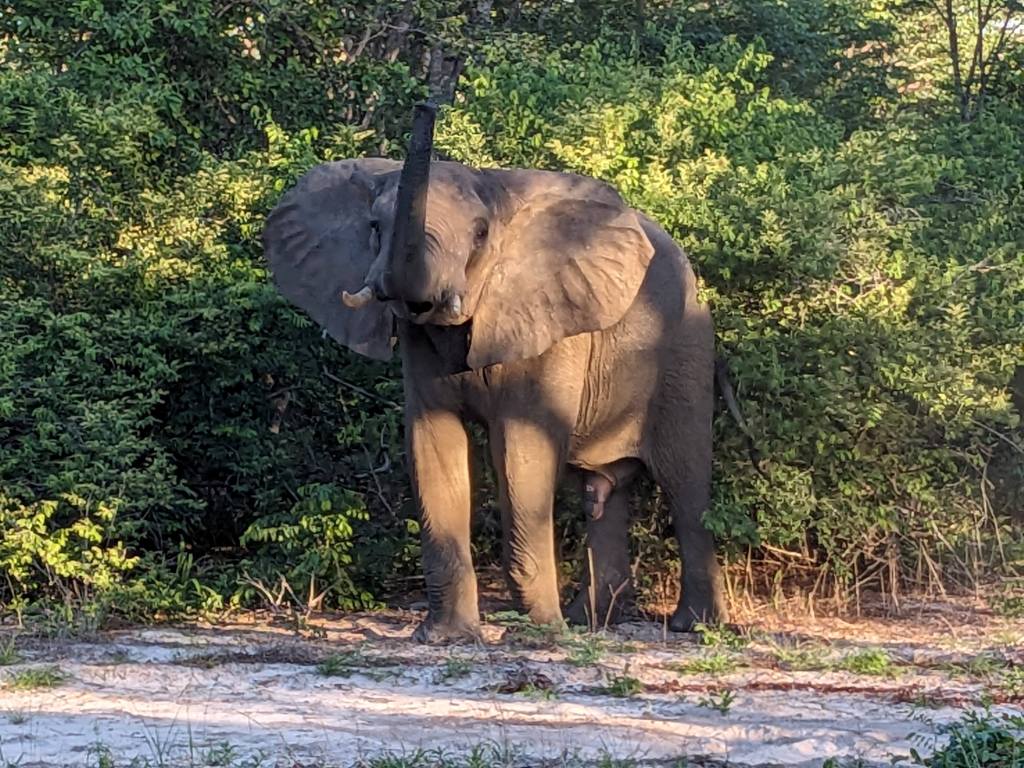
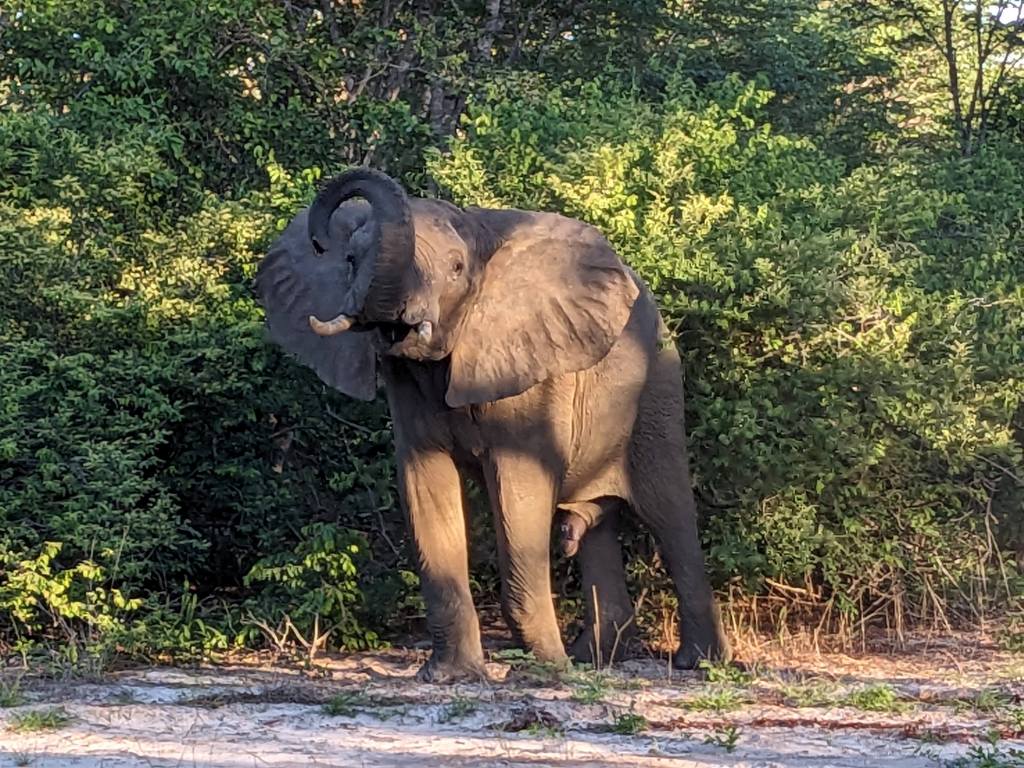
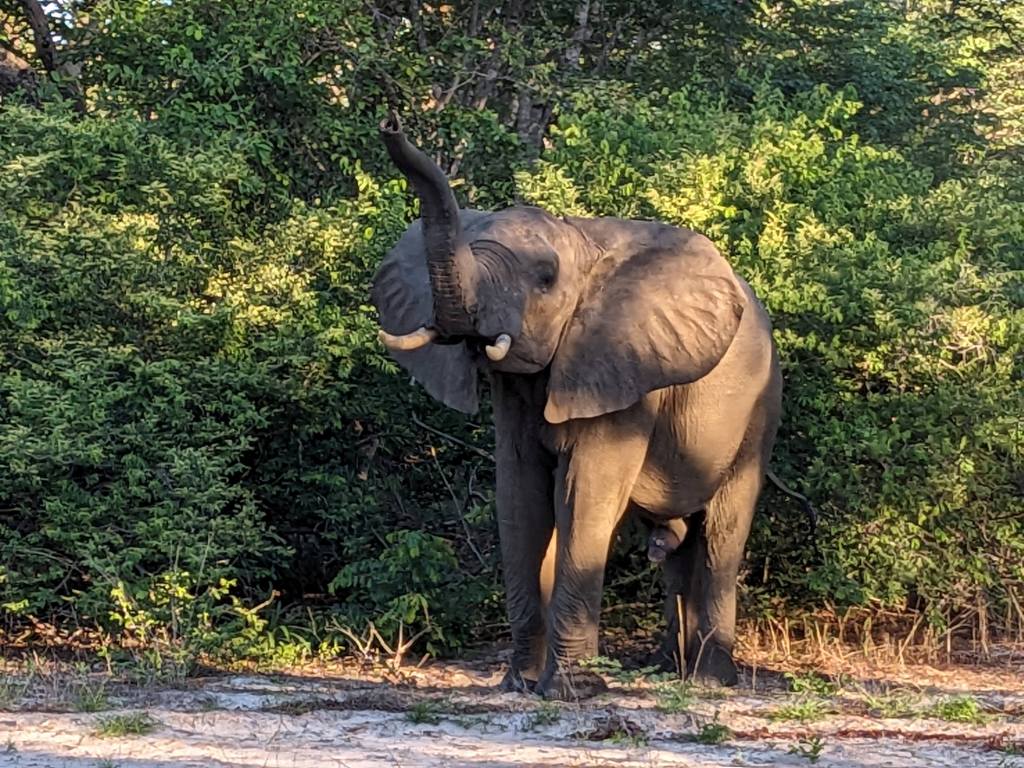
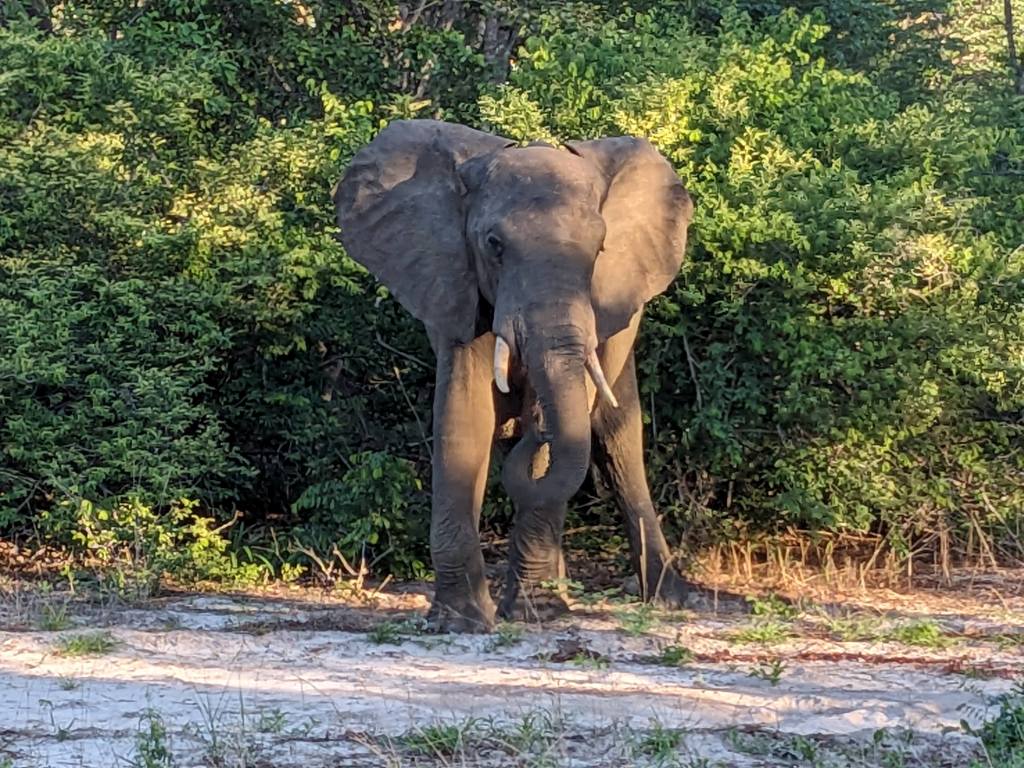
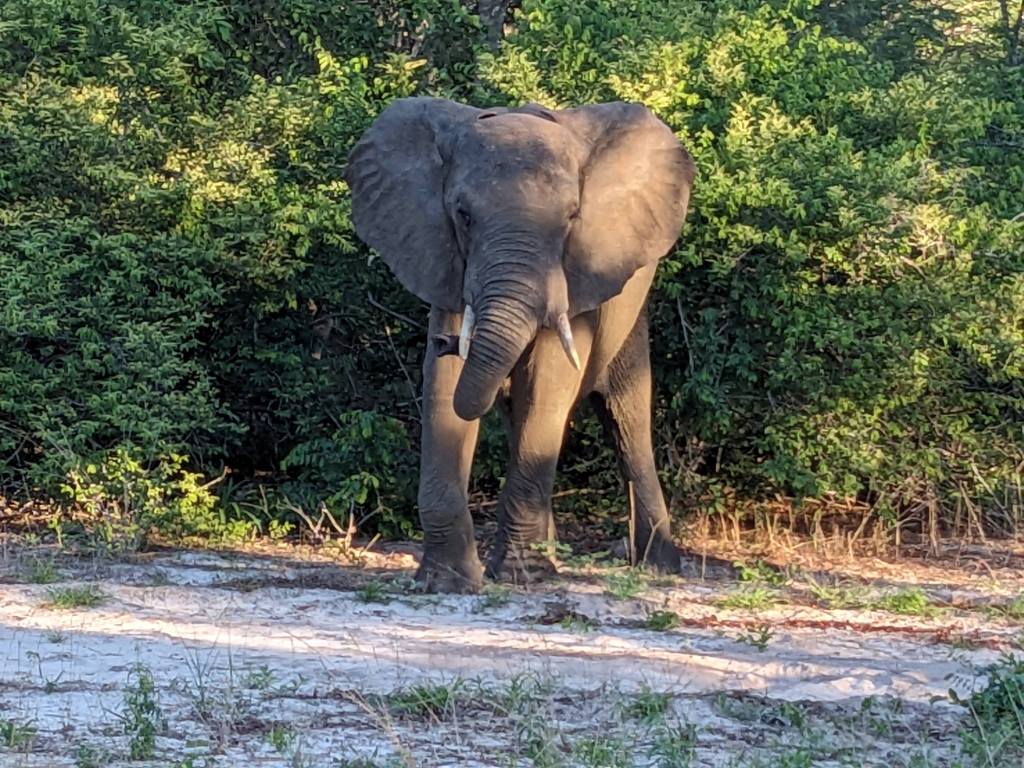
The elephants were close at hand at Khulu Bush Camp, 24 Jan 2024 (photo by Kate St. John)
The females and young elephants move to the watering hole in a matriarchal herd.
Elephants at Khulu Bush Camp, 24 Jan 2024 (video by Kate St. John)
At first only one elephant drank from the pool.
Elephants at Khulu Bush Camp, 24 Jan 2024 (video by Kate St. John)
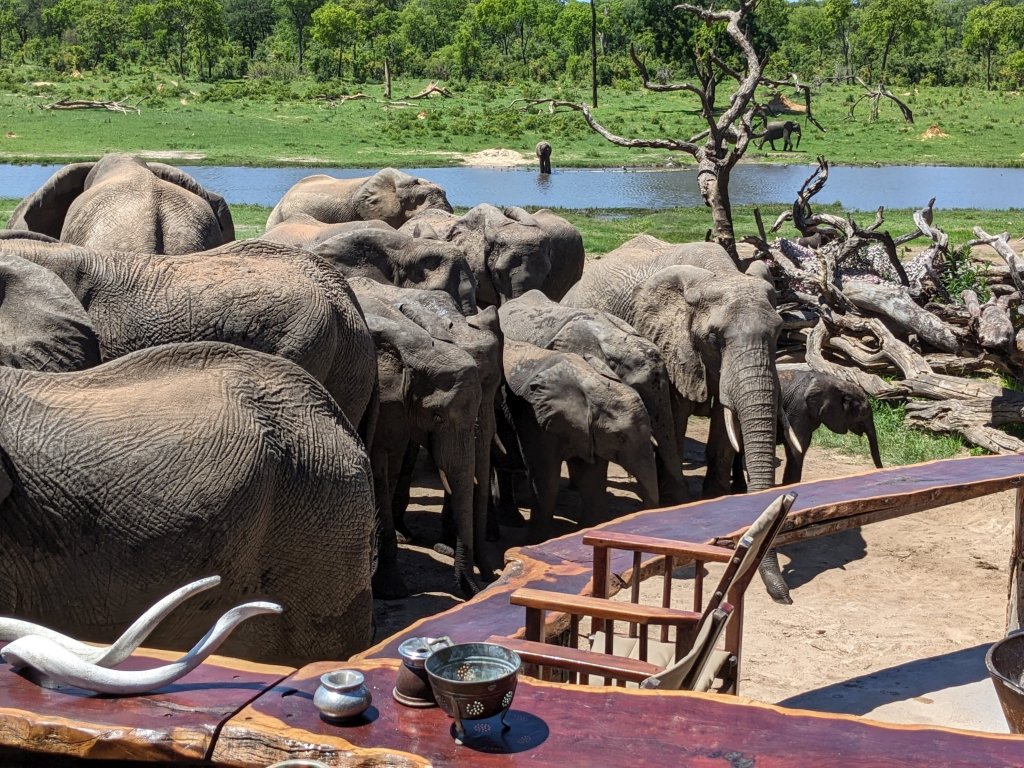
Then the crowd came close.
Elephants at Khulu Bush Camp, 24 Jan 2024 (photo by Kate St. John)
Two days later a bachelor group showed up while an older male was drinking at the pool. The older male challenged them with a stern look. The younger males backed off.
Male elephant standoff at Khulu Bush Camp, 26 Jan 2024(video by Kate St. John)
On safari at Hwange National Park we saw a male elephant hanging out with a lone female. She disappeared into the forest while he appeared to be annoyed that we showed up. Perhaps he was guarding her as his own.
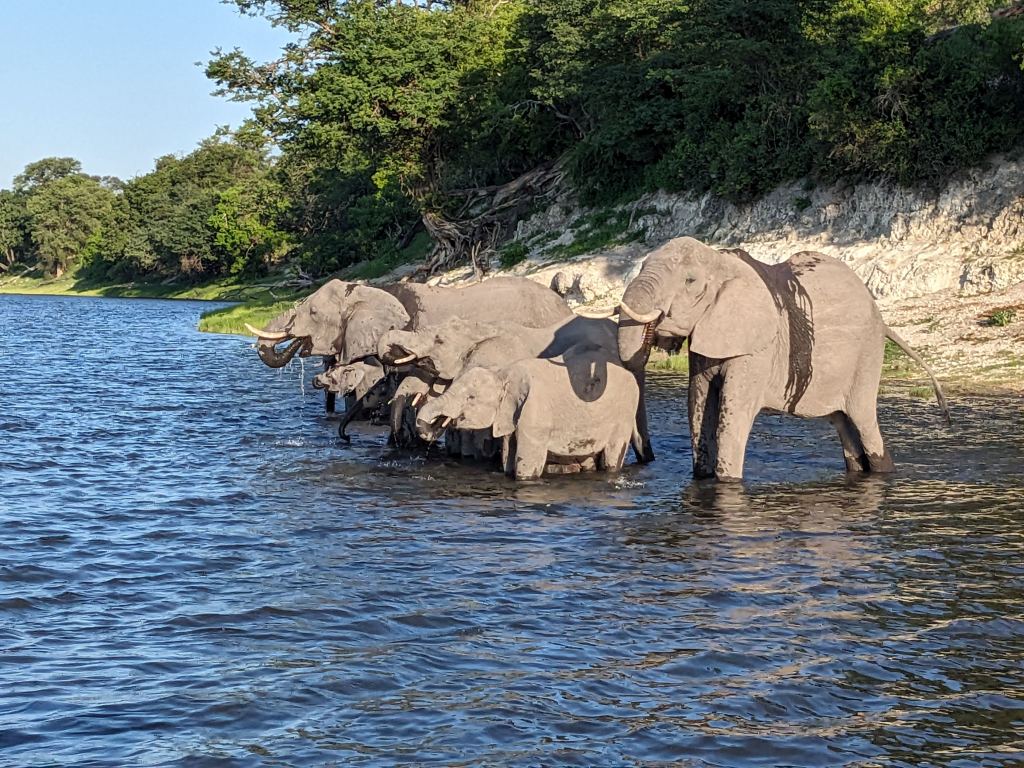
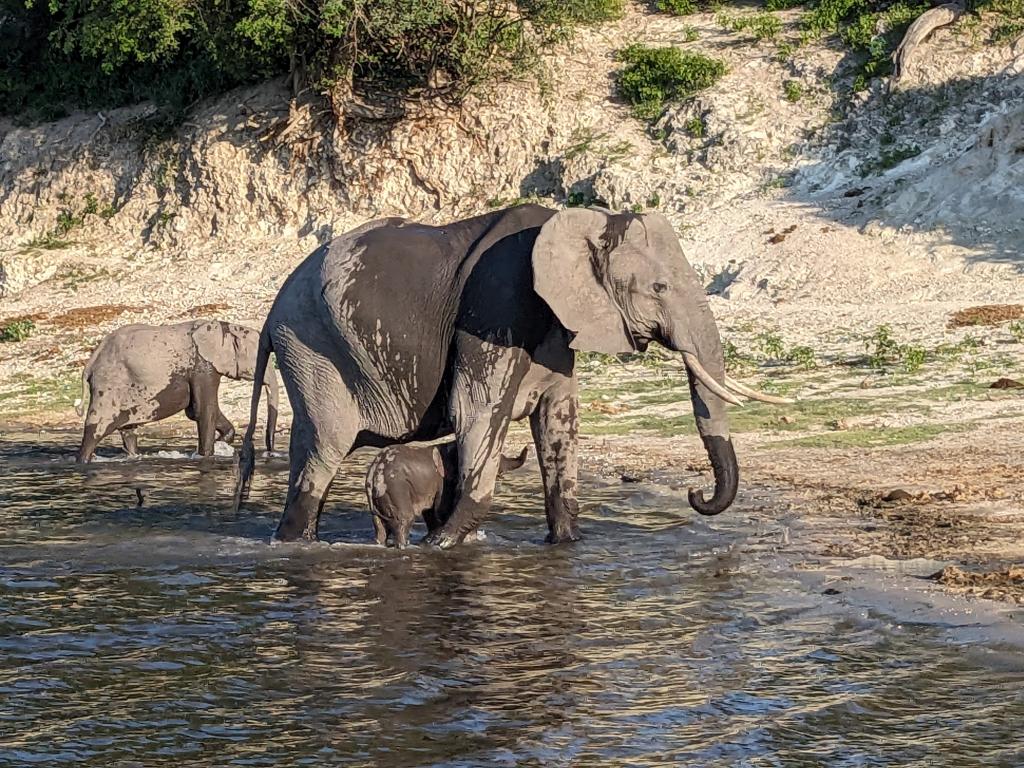
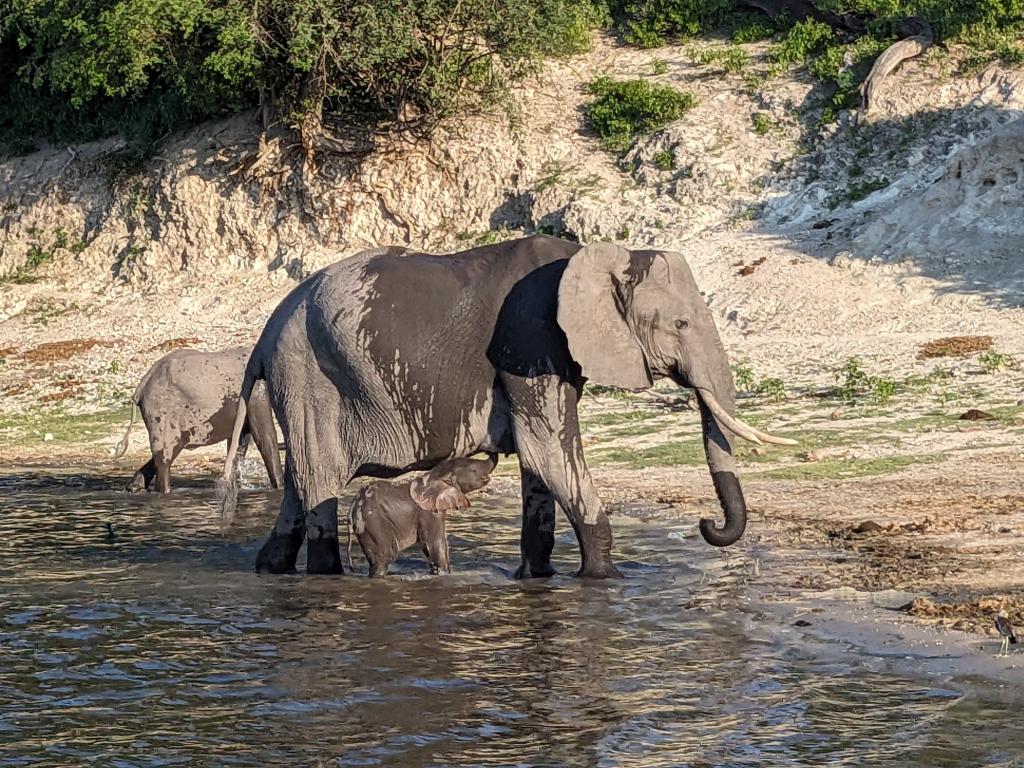
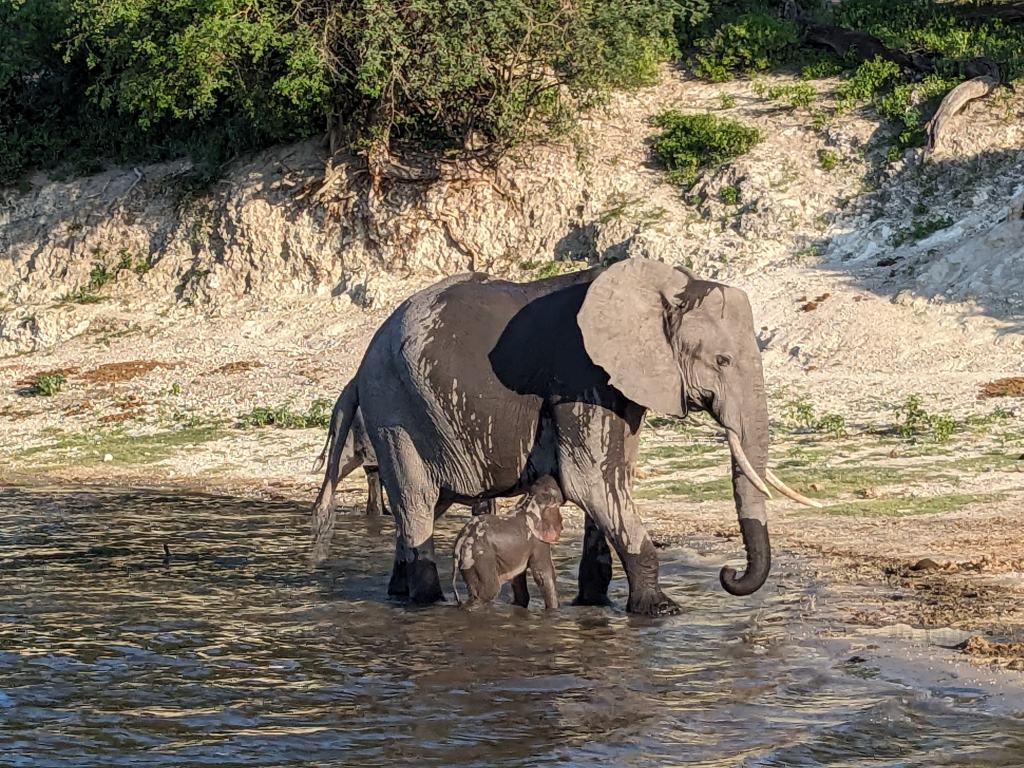
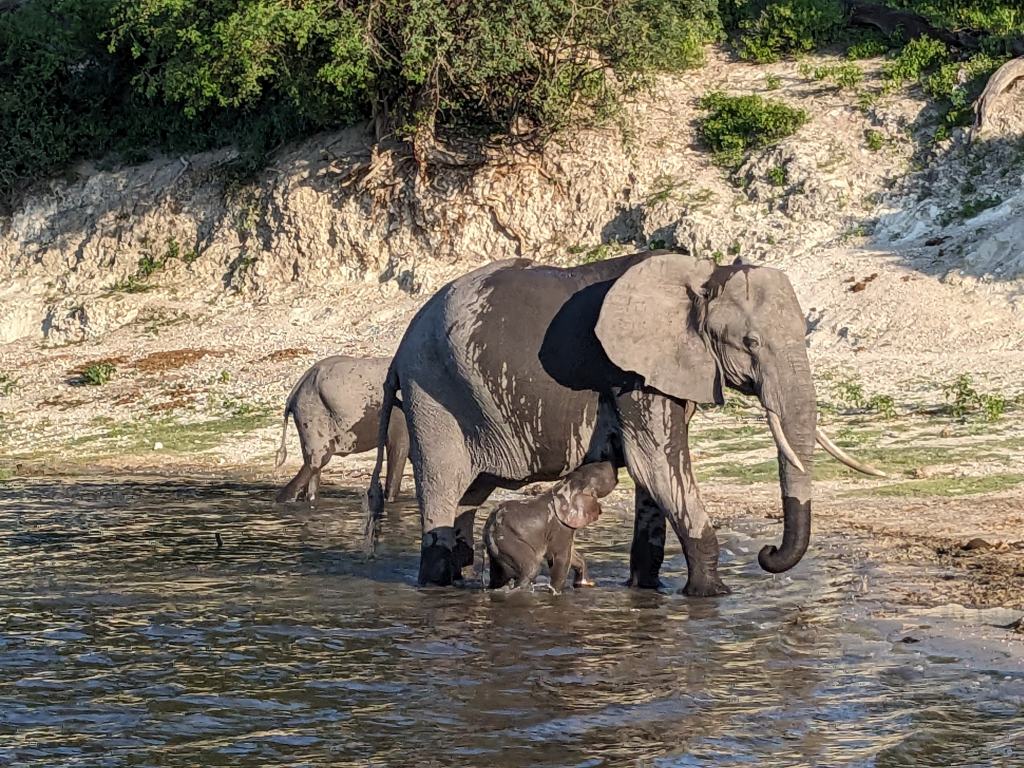
From a pontoon boat on the Chobe River we saw wildlife walking the shore at Chobe National Park. In late afternoon a small herd of elephants came to the river to drink and douse themselves with water. As this mother left the river we saw her baby nursing.
All these photos were taken with my cellphone! What a privilege to see African elephants so close.
p.s. Despite the threats to elephants there is one activity that helps them. Wildlife tourism is the #3 industry in the region & it prompts governments and people to protect wildlife.
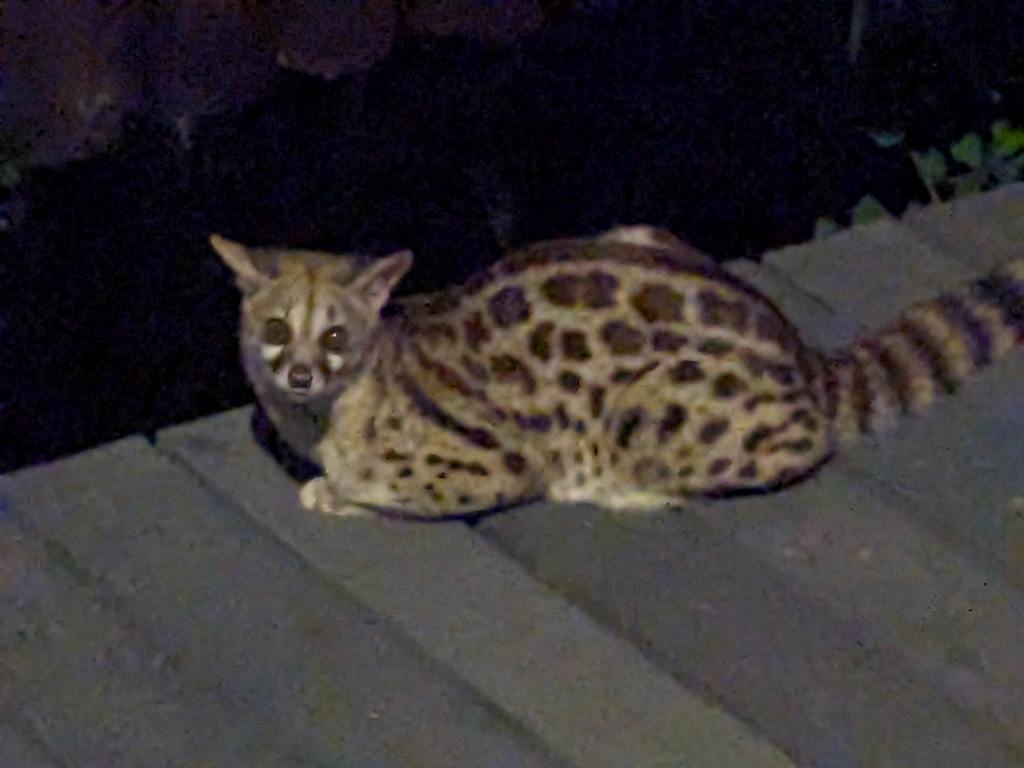
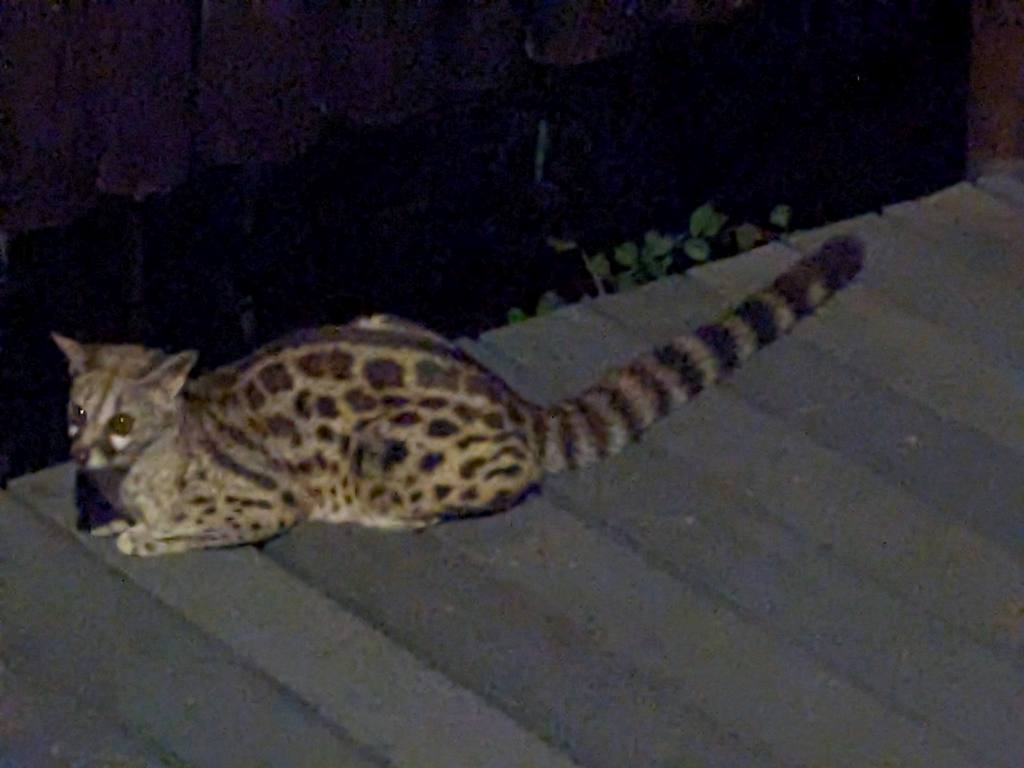
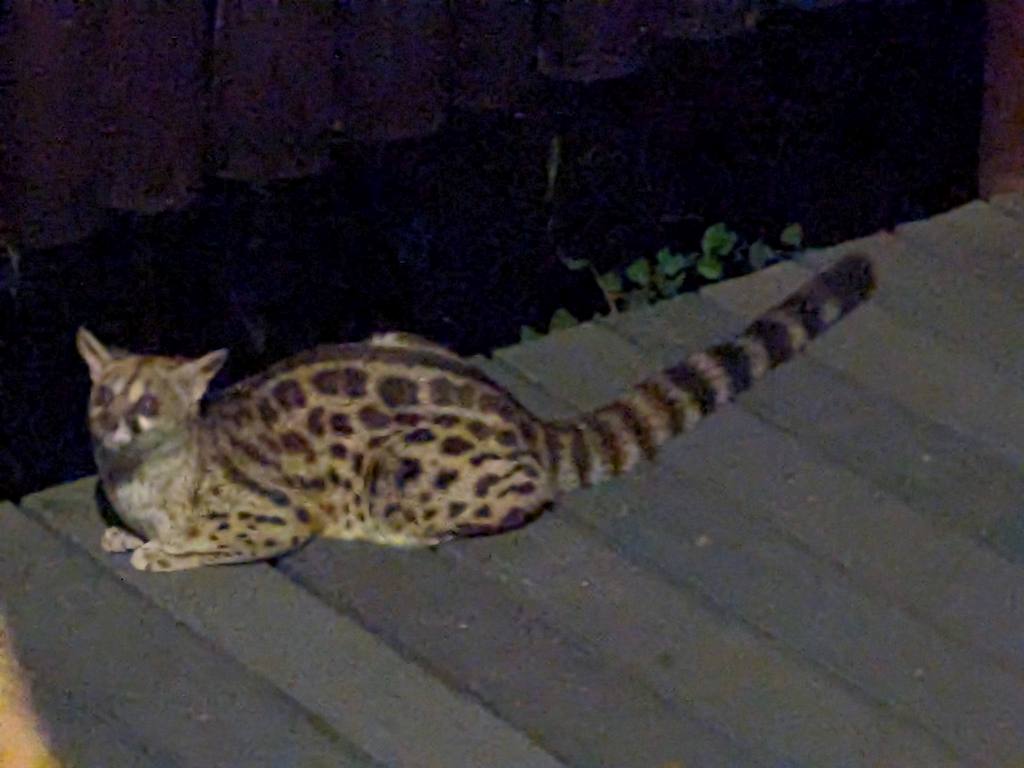
On our second evening we had a visitor that looked like a cat though not a cat at all.
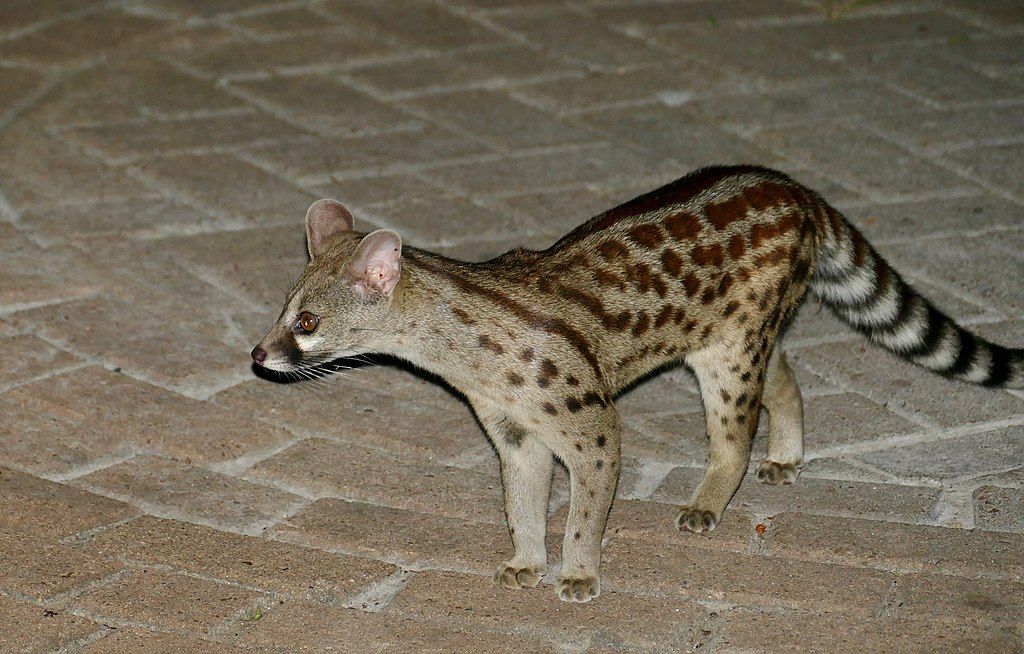
The rusty-spotted or large-spotted genet (Genetta maculata) is a member of the Viverridae family that includes civet cats, none of which are felines.
Genets are excellent climbers so this one must have clambered up the deck poles in the dark to wait at the edge of the dining area for a handout. He has an omnivorous diet that includes rodents, doves, skinks, spiders, eggs, fruits, berries and seeds so our buffet certainly had something to tempt him.
Fortunately for everyone our genet was shy and ran to hide if anyone approached. He always crouched low.
If he’d stood up to his full height we would have realized he was not a cat. (Photo from Wikimedia)
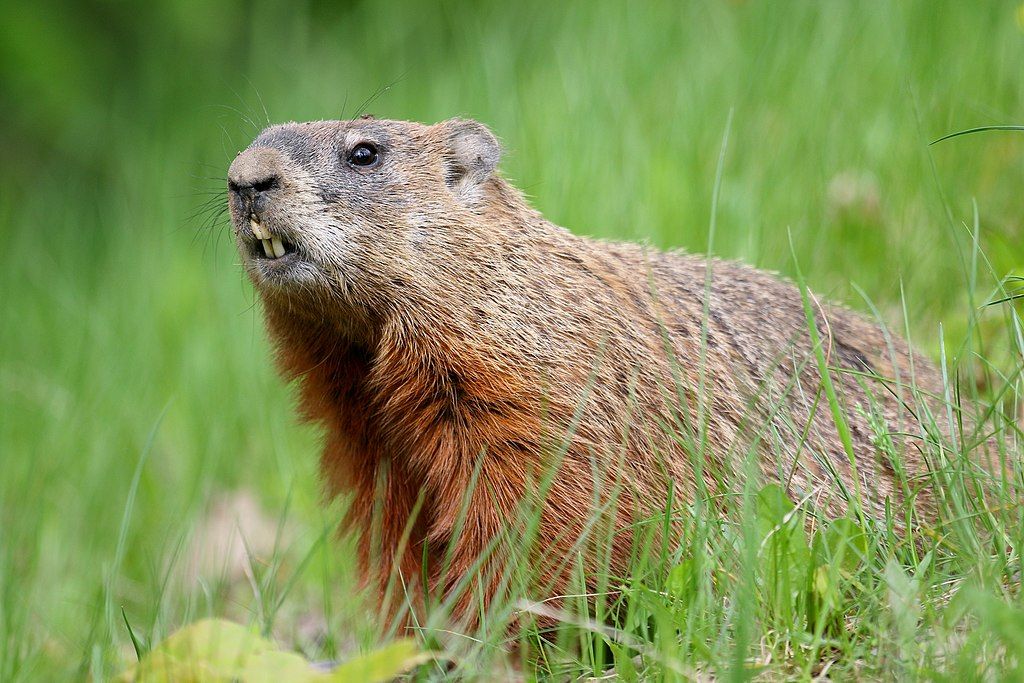
Yesterday I was in an airplane flying home from Southern Africa when a North American marmot (Marmota monax) predicted how long winter will last. The groundhog said we’ll have an early spring.
Punxsutawney Phil predicted an early spring Friday in Gobbler’s Knob, Pennsylvania, the scene of the country’s largest and best known Groundhog Day celebration in the United States.
The annual event is a tongue-in-cheek ritual in which Phil’s handlers, members of a club with roots in the late 19th century, reveal whether the groundhog has seen his shadow.
Just after sunrise Friday, the Punxsutawney Groundhog Club announced Phil did not see his shadow, which will usher in early springlike weather. The groundhog seeing his shadow presages six more weeks of winter, according to the group.
Sunshine is so rare during western Pennsylvania winters that we celebrate whenever we see shadows. However there is one day per year — 2 February — when we’re happy to have clouds.
Yesterday at sunrise in Punxsutawney the clouds were thickly overcast at 900 feet so there was no way Phil could see his shadow. An early spring! The crowd went wild.
Now that we’re over that hurdle, I’m looking forward to sunshine for the next five days.
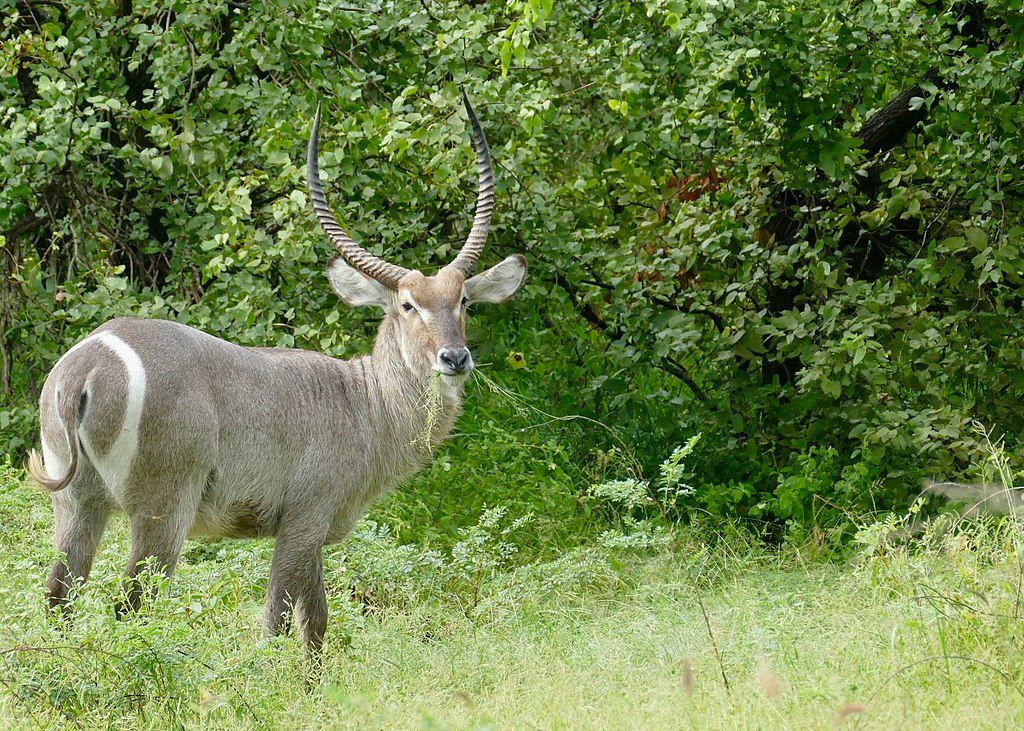
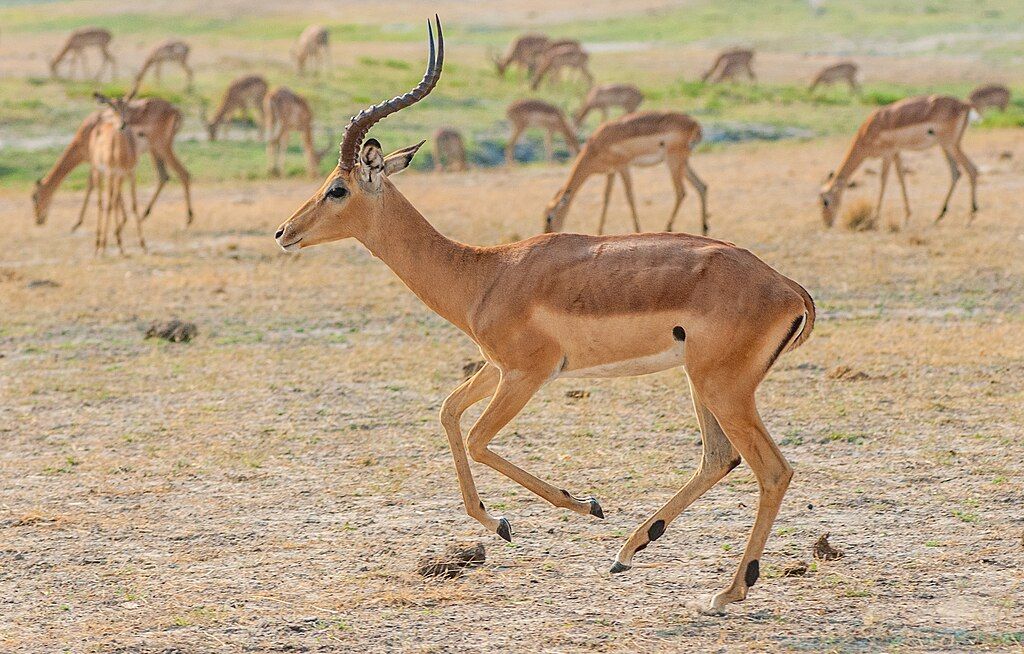
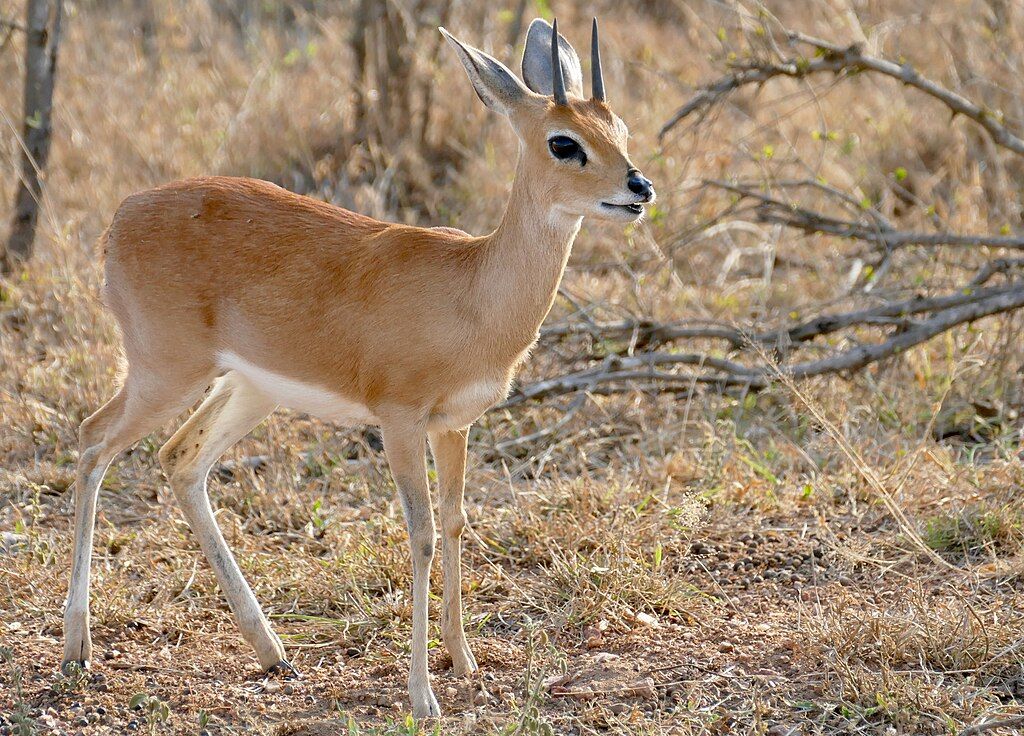
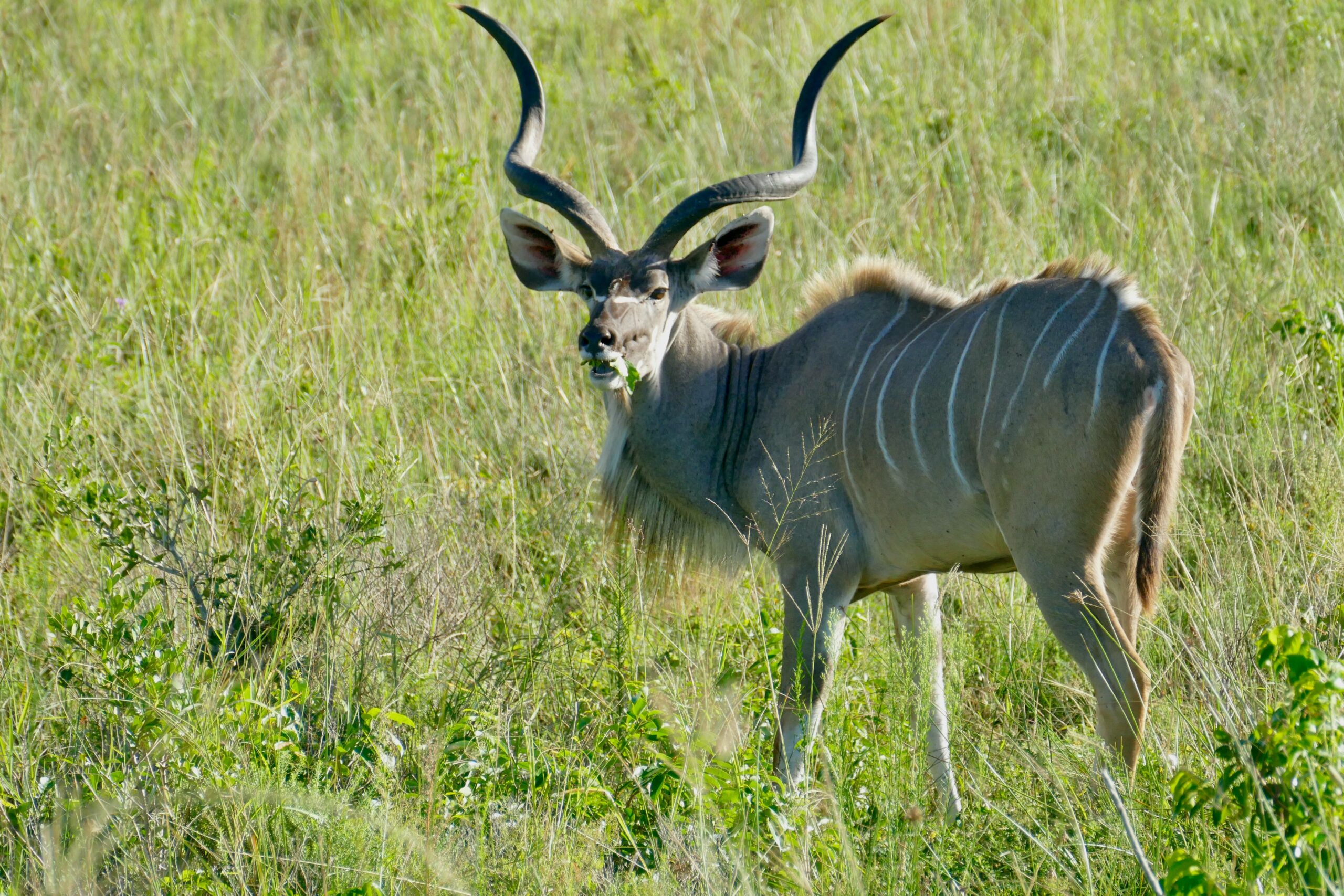
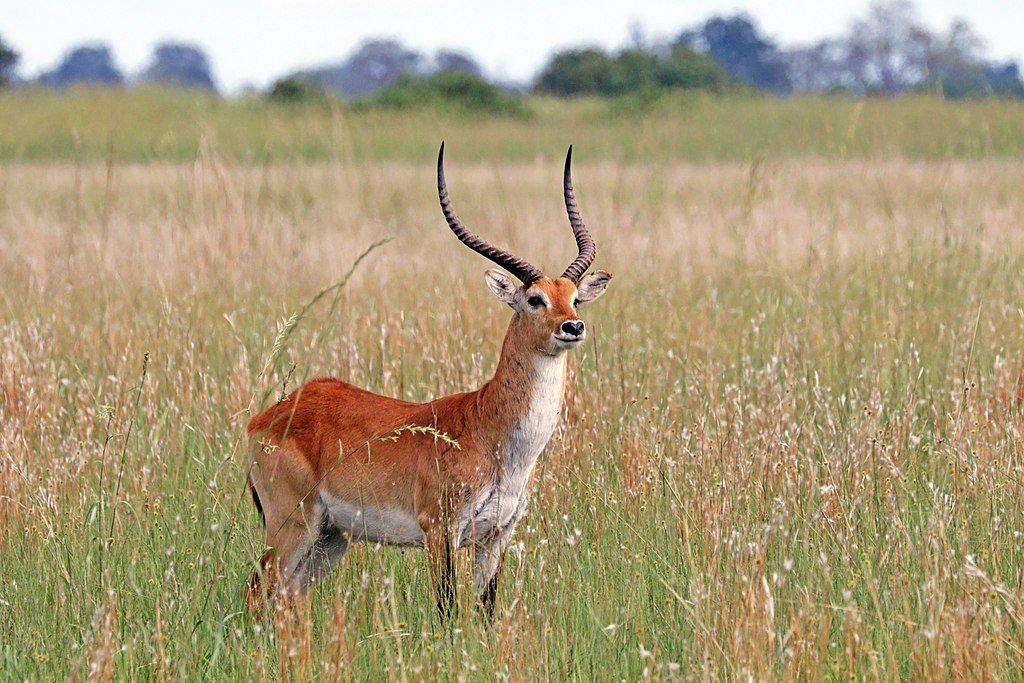
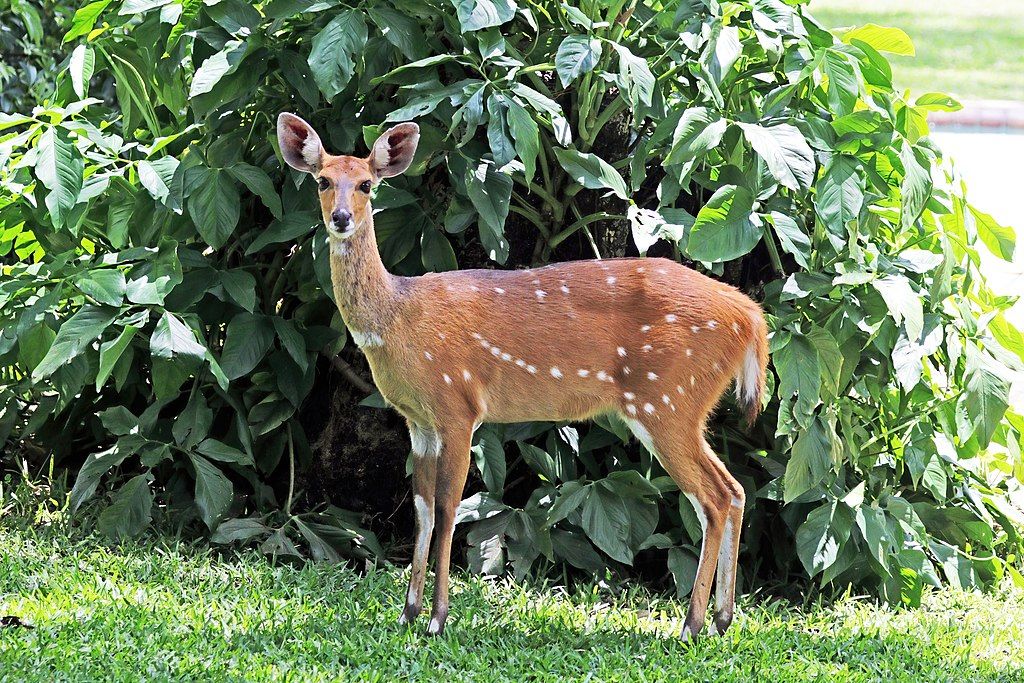
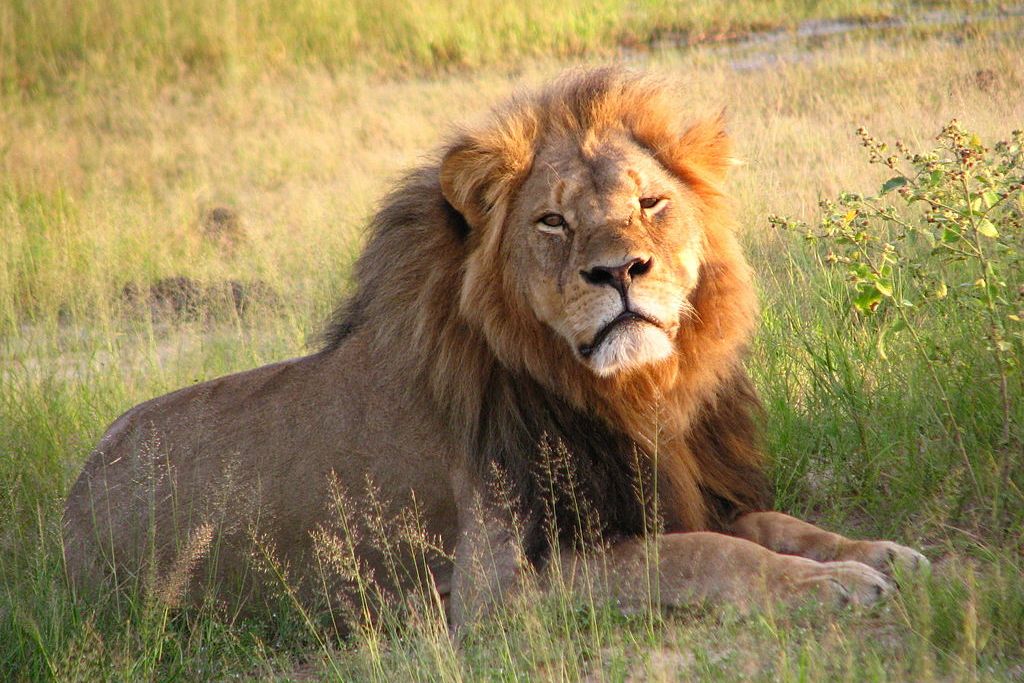
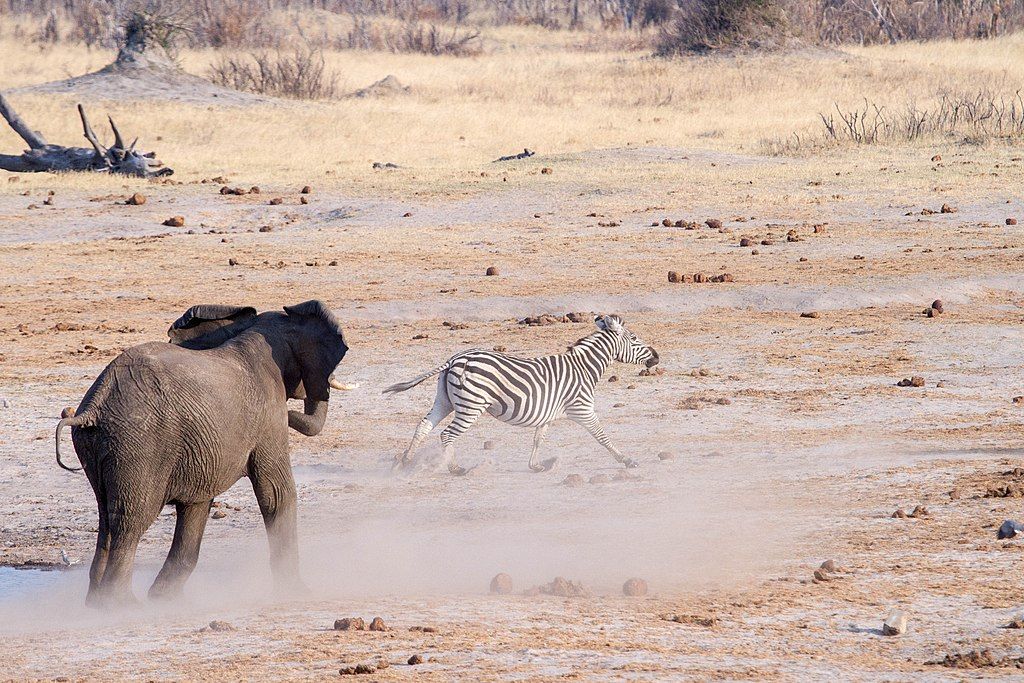
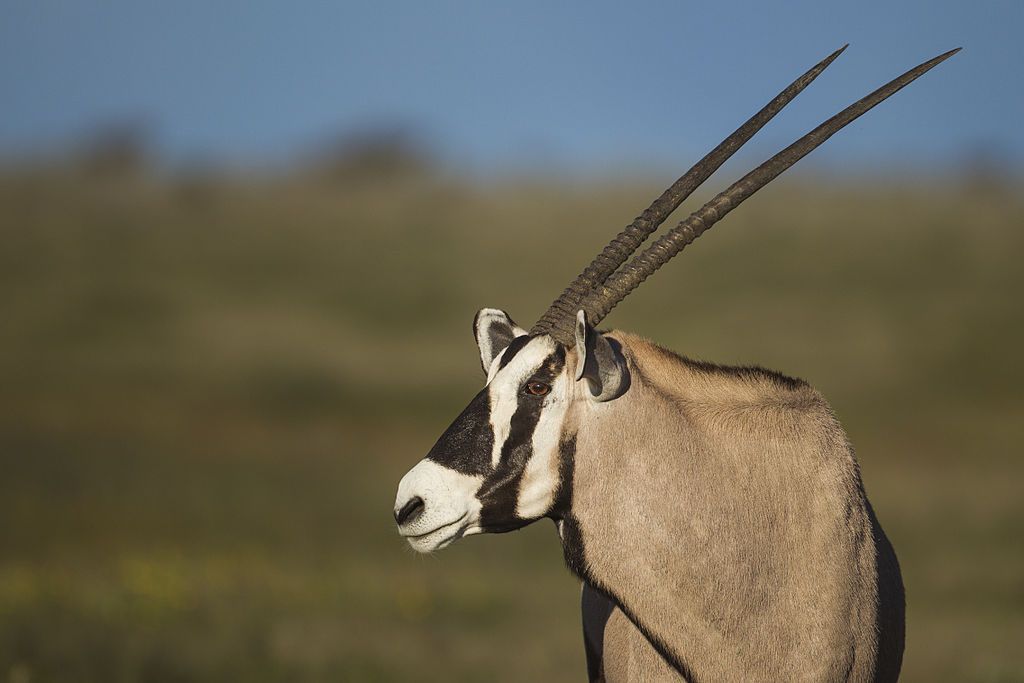
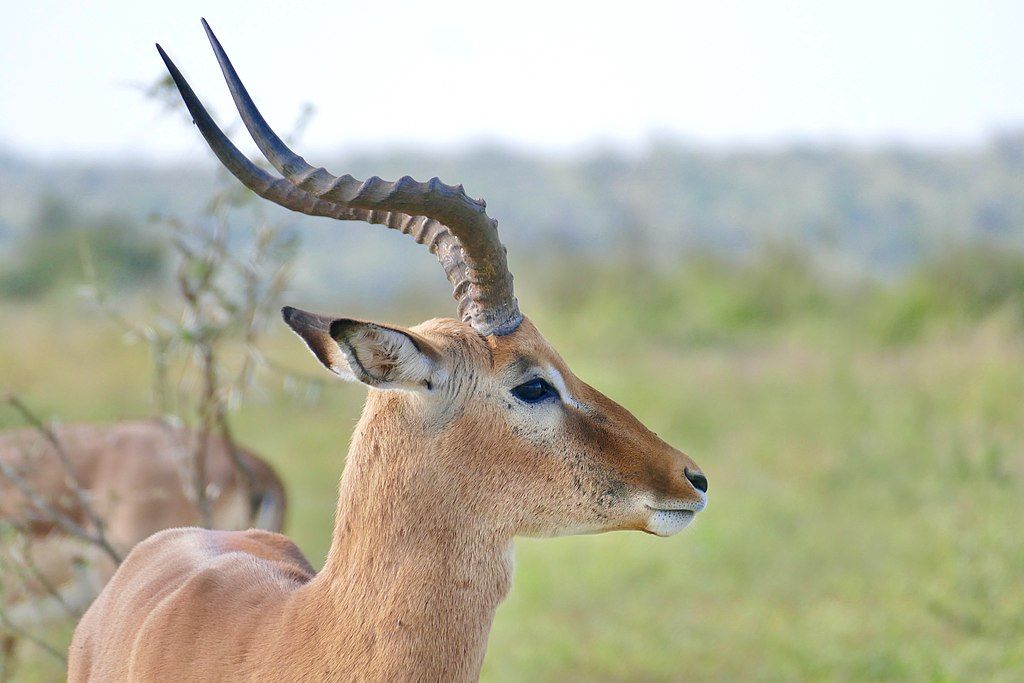
Yesterday we went on a bird drive in Zambezi National Park. Today we drive to Hwange National Park, Zimbabwe for our first game drive. We’ll see many of the animals pictured above and listed below.
Lion
Elephant and zebra
Oryx (did not see this animal)
Greater kudu
Impala
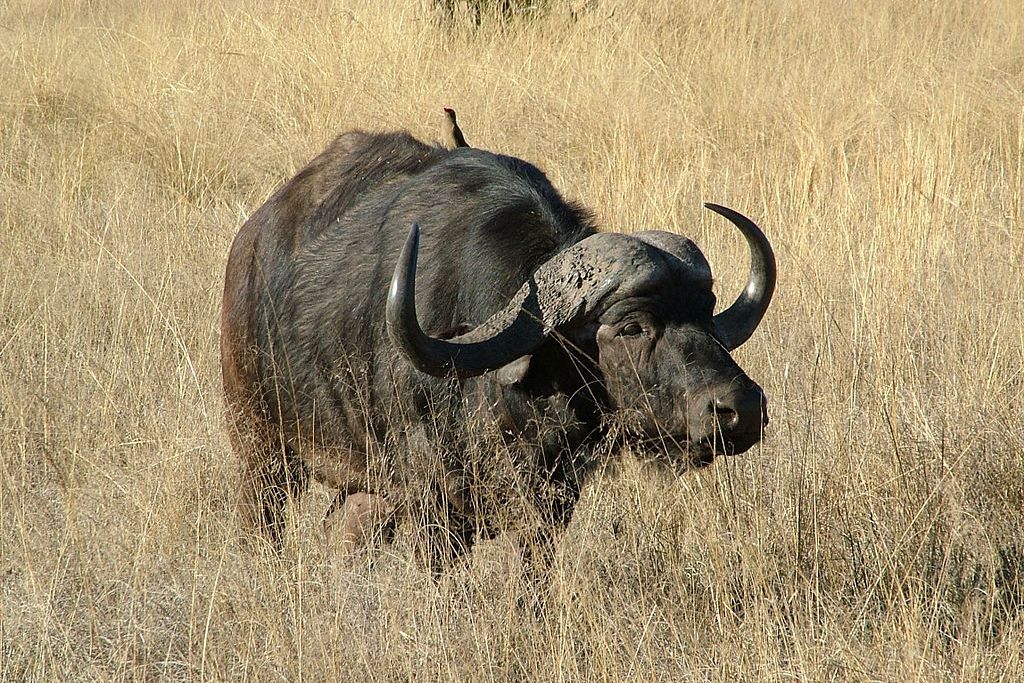
Cape buffalo
During our tour the words Safari or Game Drive mean “Drive around and look for birds and animals.”
To give you an idea of what I’m experiencing I’ve included a promotional video from Road Scholar, created for one of their other African programs.
This is NOT the program that I’m attending. (The video is Program #3645, I’m on Program #21528.) However some of the locations and many of the experiences are the same.
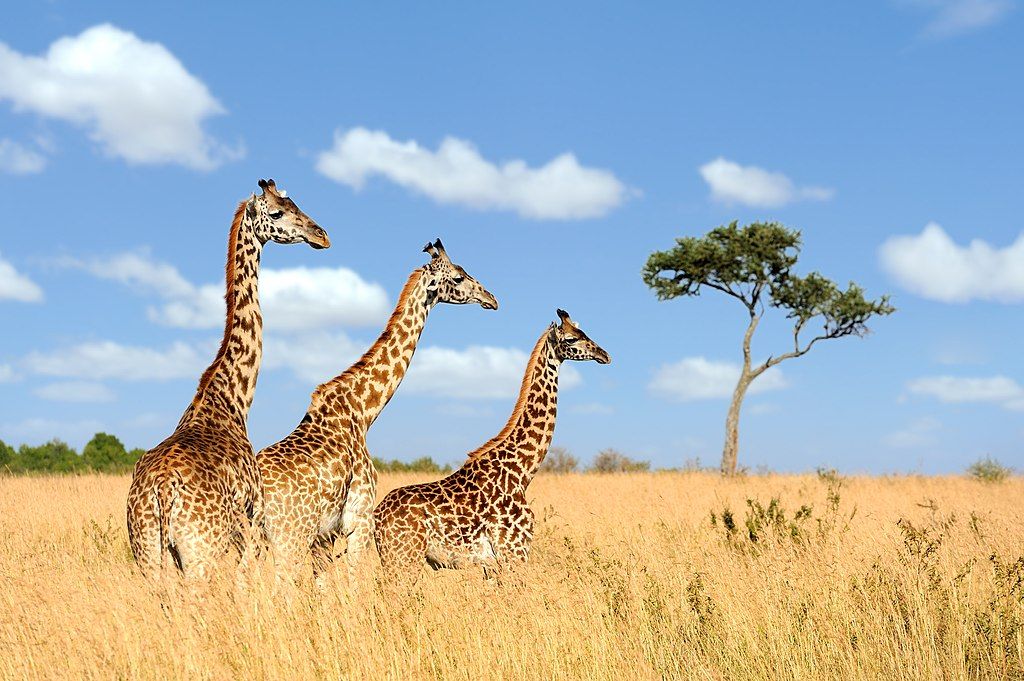
Giraffes are way cool. They’re the tallest mammal on earth, they hardly sleep at all (only 10-120 minutes per day), they need less water than a camel, and they have big hearts … literally. Their population is also declining. In December 2016 they were placed on IUCN’s Red List of Vulnerable species.
Have their numbers improved in the past seven years? How are giraffes doing nowadays?
Today, the Giraffe Conservation Foundation estimates the current Africa-wide giraffe population at approximately 117,000 individuals.
[Since the 1980s] this is a drop by almost 30%, a slightly less bleak picture than previously portrayed in the 2016 IUCN Red List assessment that estimated giraffe at less than 100,000 individuals. However, this updated information is based more on improved data rather than on actual increases in numbers. Unfortunately, in some areas traditionally regarded as prime giraffe habitat, numbers have dropped by 95% in the same period [since the 1980s].
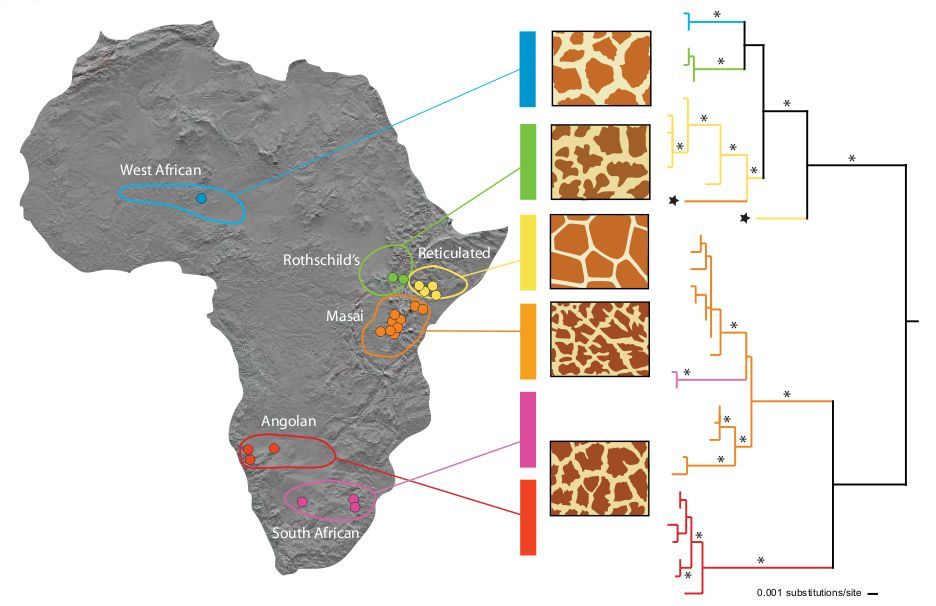
A 2007 analysis suggested six species on the map below. To get the latest four species (2021), lump [blue+green] and [pink+red]. Yellow and orange are distinct species.


.jpeg)