2 May 2024
Last weekend the headline in the Toledo Blade read: Biggest Week 80,000 Birders Return on Friday. The Biggest Week in American Birding begins tomorrow at Maumee Bay Lodge in northwestern Ohio, drawing birders from around the world to see millions of migrating birds, especially warblers.
Normally I would be one of those 80,000 people but this year I didn’t have time for a trip next week so I’m here at Magee Marsh right now, 30 April to 3 May. As your advance scout I can tell you that the situation is different in the week before the Biggest one.
- There were surprisingly few people here. Few on the boardwalk, even fewer at Maumee Bay Lodge.
- Vendors for the festival started arriving yesterday.
- Other than yellow-rumped and palm, there aren’t many warblers. Though the weather has been quite warm, overnight winds have been from the north, blowing off the lake. I’ve seen a small variety of warblers but only single birds and it takes effort to find them.
- I miss the benefits of birding in a crowd. To find really good birds, I look for a crowd with their binoculars up and they help find the bird.
- With so few birds (relative to the Biggest Week), a ruby-crowned kinglet drew a lot of attention.
- This year: Only a short loop of the Maumee Bay Lodge Nature Center boardwalk is open. The majority is closed due to storm damage in June 2023 (shown here).
So the best time to see warblers in northwestern Ohio really is during the Biggest Week.
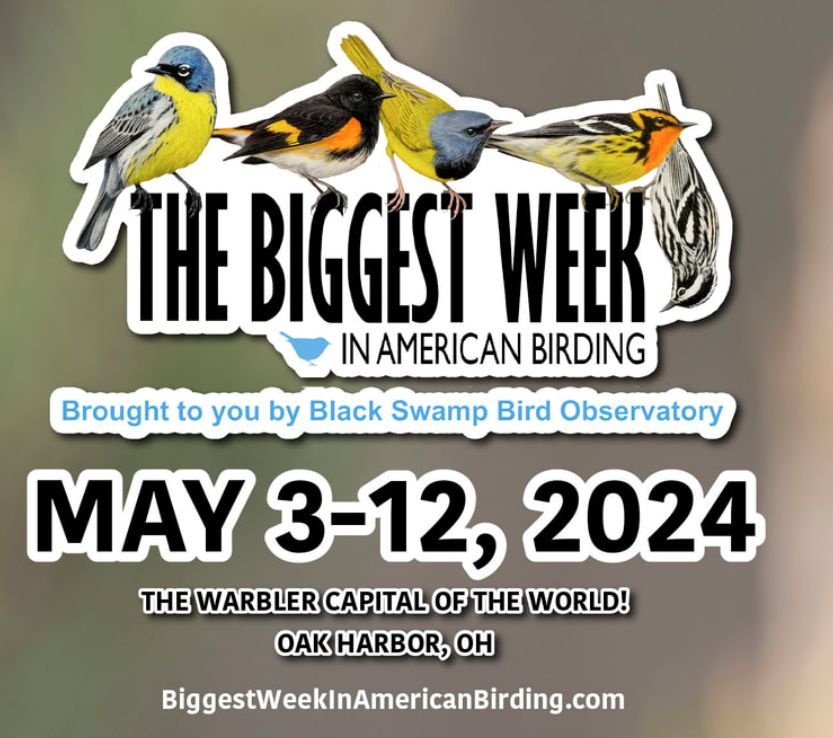
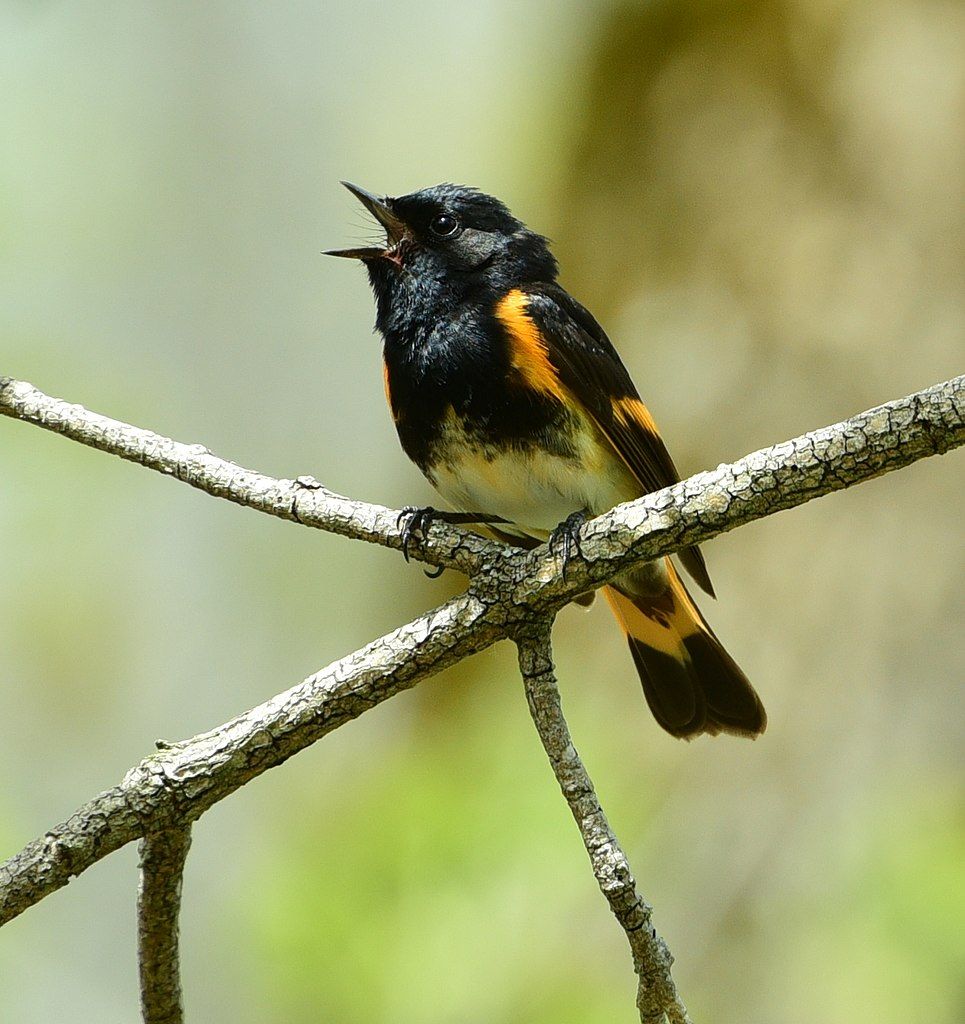
Meanwhile, in Pittsburgh migration is ahead of schedule and has been quite good. I haven’t seen any of the birds shown in the logo above in Ohio this week, but I’ve already seen the orange ones in southwestern PA — an American redstart and a Blackburnian warbler.
If I want to see the other two species — the Kirtland’s and mourning warblers — the best place will be northwestern Ohio during the Biggest Week.
(credits are in the captions)