May
05
2008
Several people have asked me why birds of prey, especially red-tailed hawks and peregrines, would choose to nest close to humans. Isn’t it unnatural? Doesn’t it make them tame? Are the ones who nest on buildings already tame?
In the case of peregrines, whom I know better than red-tails, I can tell you it never makes them tame. To them, we are still their mortal enemies. Instead, conscious or not they have made a calculation: The enemy of my enemy is my friend… and besides, there’s lots to eat.
Birds of prey know that humans can and do hurt them but they also know from personal experience that it is rare. Meanwhile, they have learned there’s an advantage in being near humans because we keep their other enemies away.
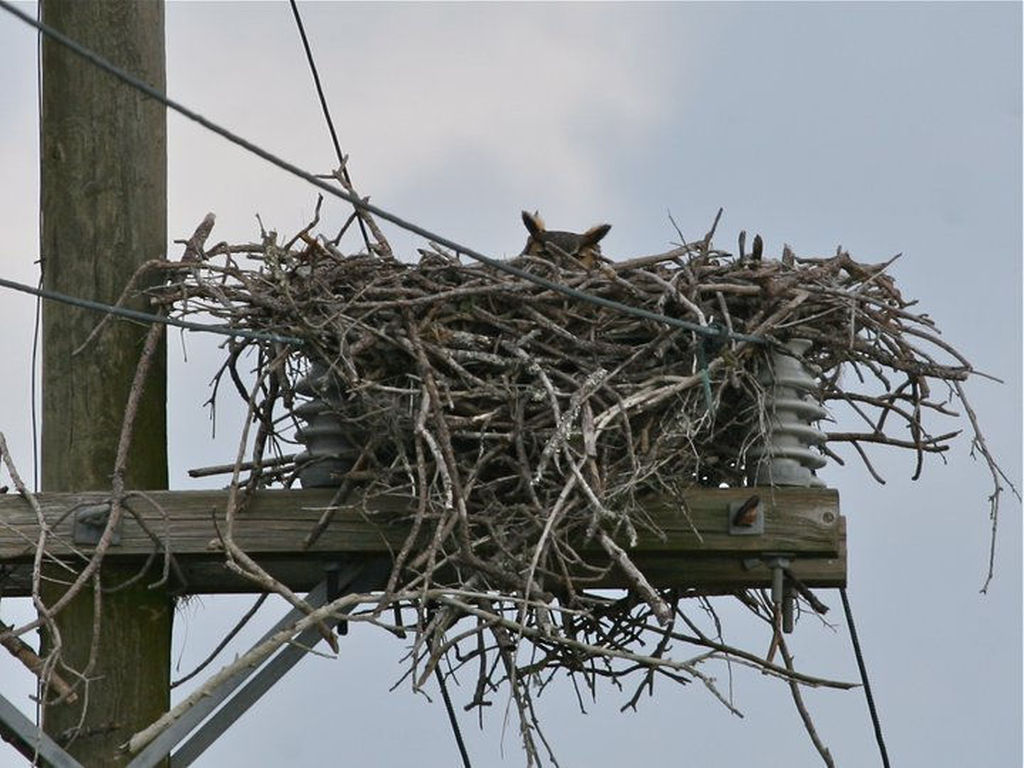
A good example is that great-horned owls, a dangerous predator of peregrines, are rarely if ever found on office buildings. Peregrines who nest on buildings have one less worry as they raise their young.
Another advantage is the food we generate. Humans create a lot of garbage and many prey species eat it. For red-tailed hawks, we indirectly provide rodents. For peregrines, our buildings house pigeons and starlings, a ready food supply.
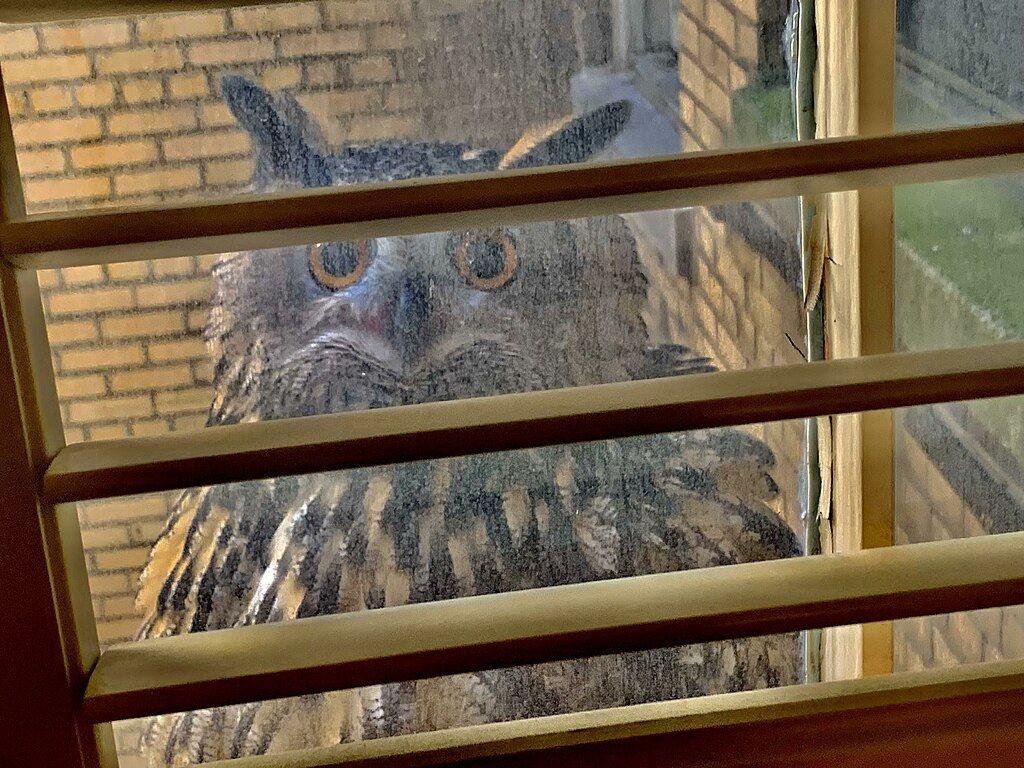
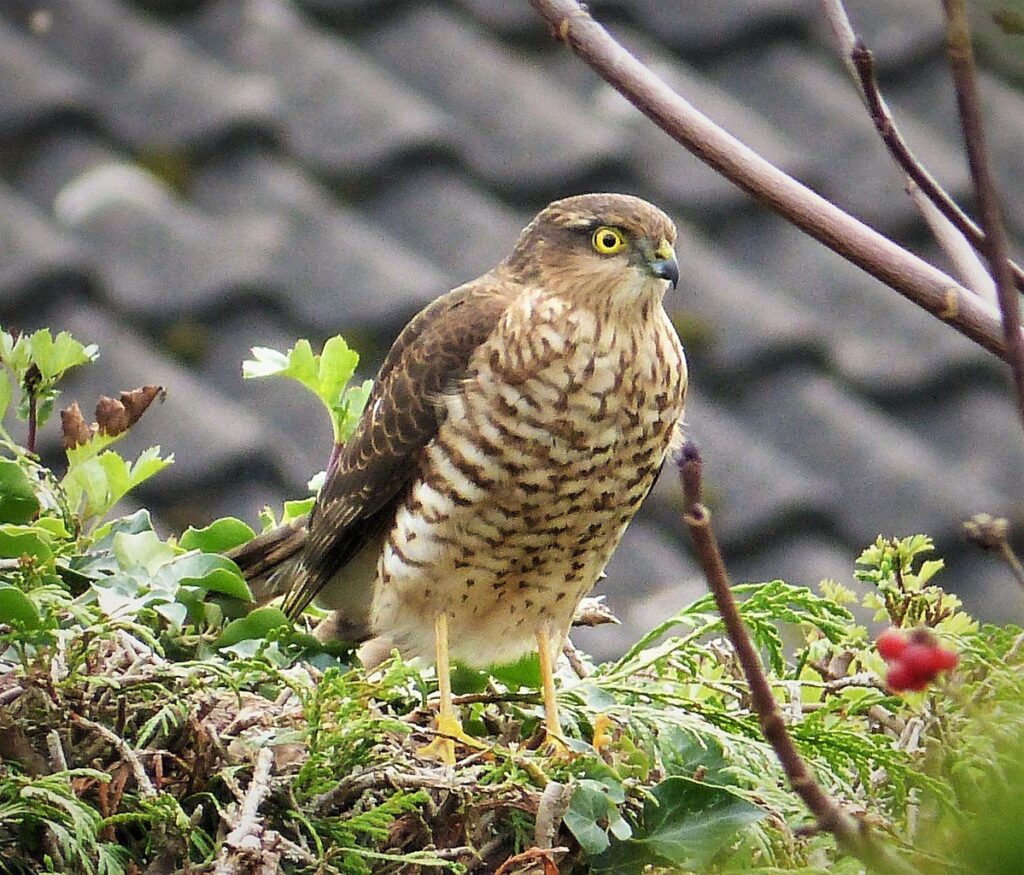
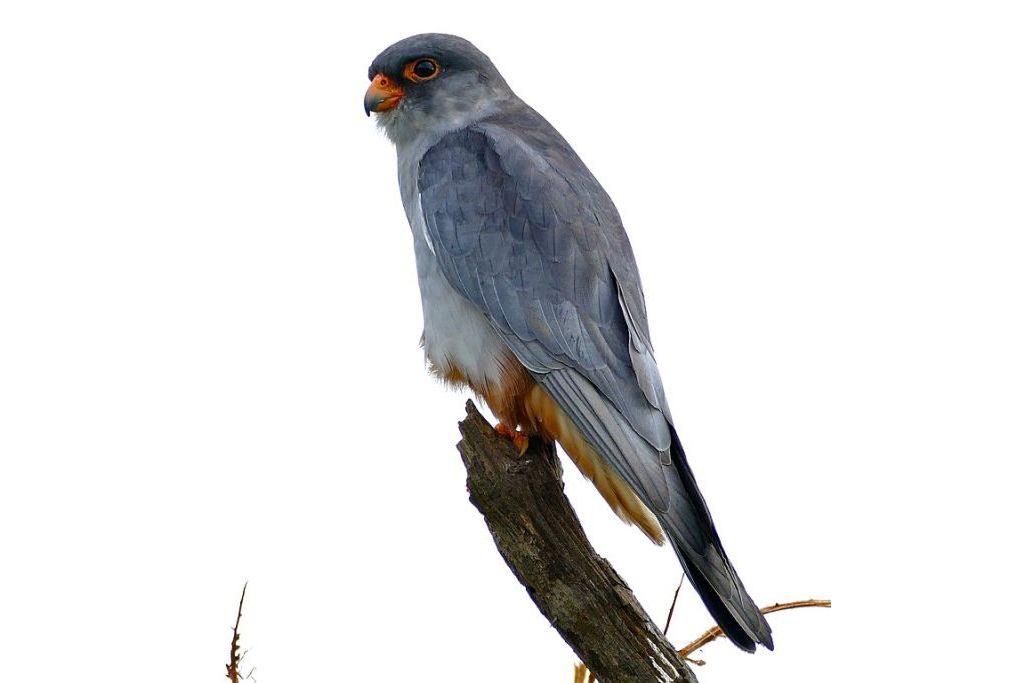
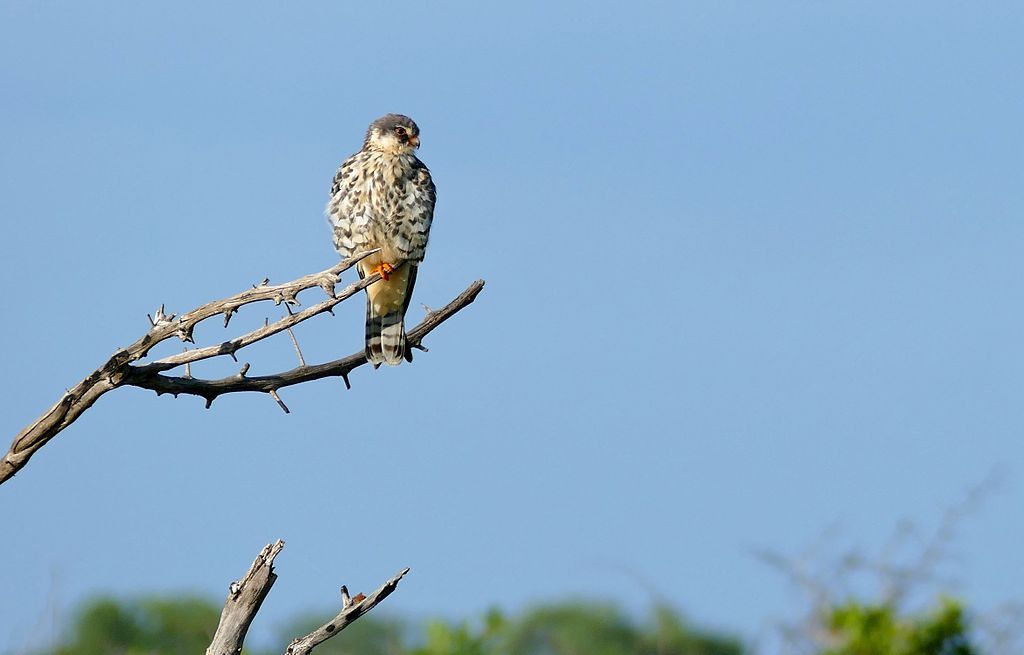
When their nests are successful their hunch about us is reinforced. The juvenile peregrine in the picture is a case in point. She was born in downtown Pittsburgh on the Gulf Tower in April 2007. Her parents made the calculation that the territory was safe with plentiful food and they successfully raised four young birds. As you can see, she was thriving last July when her picture was taken by Matt Frederick as she perched on Roberto Capriotti’s windowsill at K&L Gates in the Oliver Building.
If these birds can put up with seeing humans every day, the rest is easy.
p.s. I wish she’d landed on my windowsill… but if she had, I would have been unable to concentrate for the rest of the day!
Apr
16
2008
If you think the Pittsburgh peregrines’ life is a soap opera, they’re not the only ones.
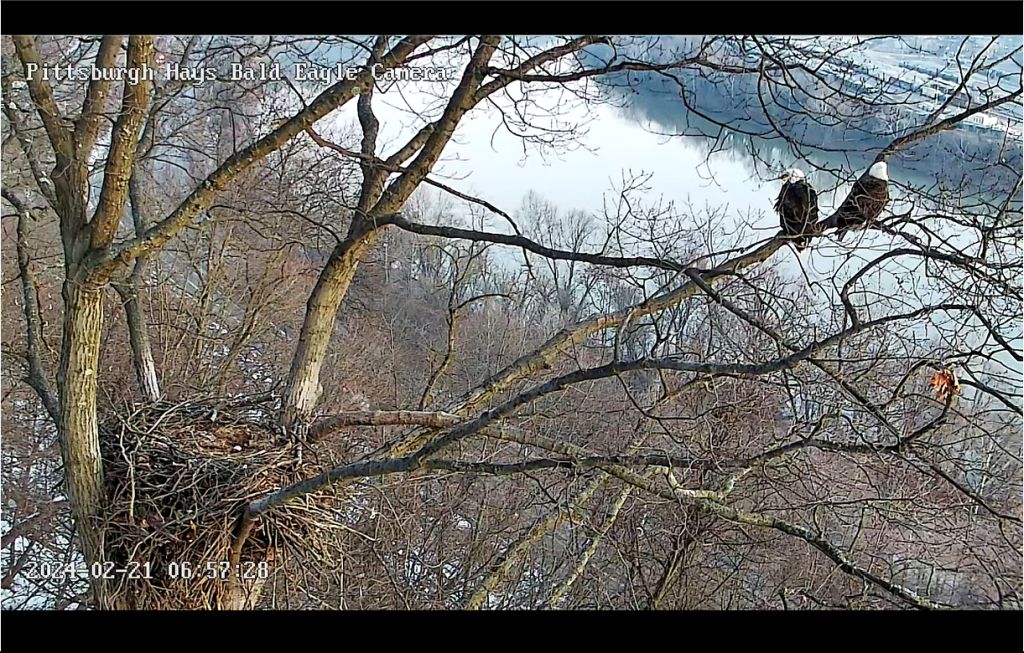
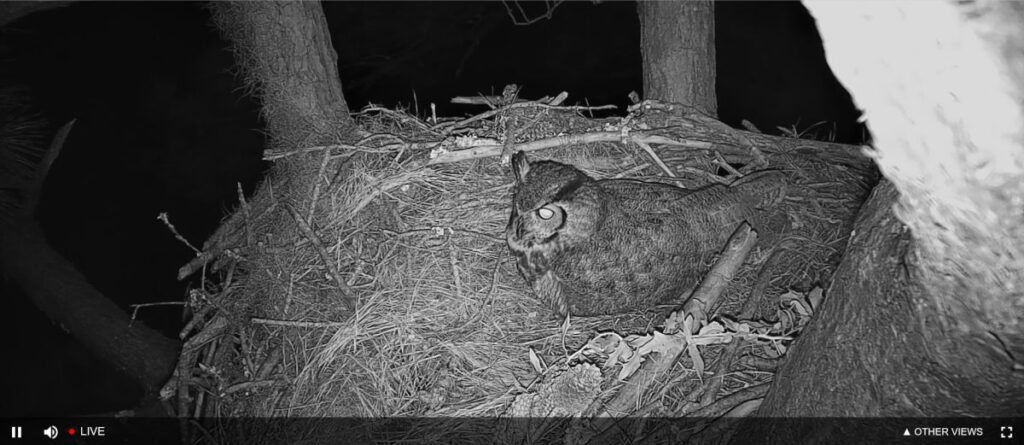
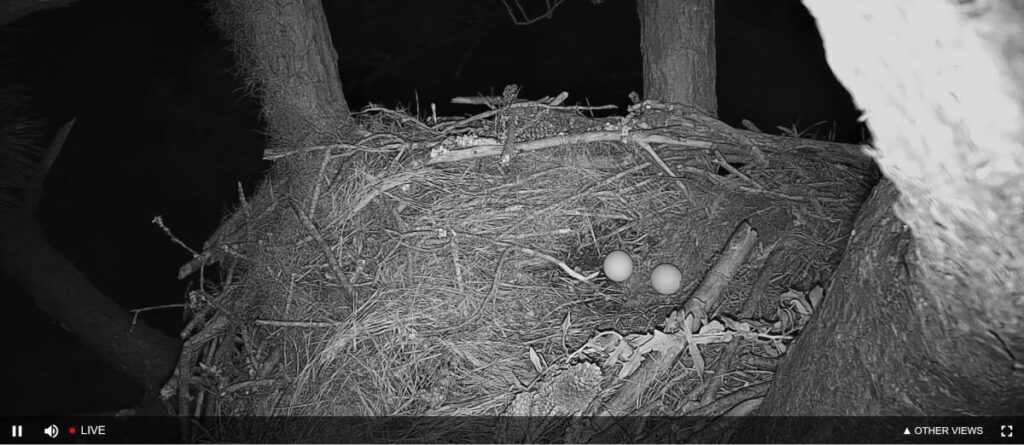
My mother has been keeping me informed about a pair of bald eagles who are living their own Peyton Place at Norfolk Botanical Garden in Virginia. Their nest has an Eagle Cam so people can watch the drama - and there’s been plenty of it.
This pair has nested at the Garden for seven years, but this year after the female had laid two eggs a 4-year-old intruder (female) arrived, chased away the resident female and made herself charming to the resident male. The eggs got too cold to be viable and had to be removed from the nest. After a brief fling, the intruder left and the original pair reunited.
It looked like life was back to normal after the orginal female laid two more eggs, but those eggs bit the dust too. Something scary made her jump around in the nest at night and she stepped on them. Oh no! They cracked! She ate them the next day.
She laid one more egg (her third try this year) and has been incubating it since March 22.
So you see, life can be complicated even if you’re an eagle.
Read more and watch the videos at:
Apr
06
2008
This awesome picture from Bill Barron and some sad news from Boston’s Fenway Park got me thinking about hawks who live near people.
Bill captured this photo of a red-tailed hawk at the moment it took off from his chimney. Obviously the bird is comfortable where there are lots of people - a comfort level that’s a relatively new phenomenon.
Years ago people persecuted and killed hawks, believing they attacked farm animals, but since 1937 a series of laws have made this illegal. There are still some evil-minded people who rationalize that they’re above the law and they shoot hawks, but this is rare and not often found in cities.
Since red-tails are rather safe in cities, they now take advantage of the food in our vicinity (mice, rats, squirrels, chipmunks) and benefit from being near a top-level predator (us) who keeps the other predators at bay.
Which brings me to the Fenway Park incident on April 3rd.
Red-tailed hawks have been hanging out at Fenway for a couple of years. This spring a female built a nest near the press box. She was fine with people’s presence until she laid an egg. As soon as she became a mother her protective instincts kicked in. “Don’t get near my nest!”
Unfortunately a middle school girl got too close during a tour and the hawk told her to back off in the only way she knew how - she swooped down and used her talons. It was a huge misunderstanding. The hawk didn’t realize that people couldn’t honor her nesting boundaries at a place like Fenway and the people didn’t understand that the boundaries had expanded because of the nest. The hawk lost everything. Her nest and egg were removed.
Now for those of who you are thinking, “Oh my, hawks really are dangerous!” I want to point out that on the entire continent of North America this is a stand-alone misunderstanding between people and a bird. It’s not a pattern, it doesn’t happen every day and that’s why it’s news. 99% of the time hawks are smart enough not to nest near people and people are smart enough to stay clear of nesting hawks. Everyone involved in this has learned something - and so have you.
A little bit of common sense is all we need to get by.
Mar
16
2008
The photo in my last blog of the peregrine eggs with no mother sitting on them prompted several of you to ask this question.
Peregrines in temperate climates don’t begin incubating the eggs until the last or next-to-last egg is laid, though they do protect the eggs from cold and rain. I’m not sure why peregrines wait to incubate but the result is that all the eggs hatch within a day or two. This makes the chicks approximately the same age and size as they grow up together. From what I have observed, peregrine nestlings are never aggressive against their siblings.
Bald eagles, on the other hand, begin incubation immediately and the chicks hatch days apart. The first chick is older and larger than the second, and so on. The parents focus on feeding the largest chick who then becomes better able to compete for food. The smallest chick often starves. Sometimes the largest chick kills his siblings.
Frankly, I’d rather be a peregrine.
March 17, 2008: Over the weekend Tasha laid her 3rd egg so she will be incubating pretty much full time now. See her progress on the National Aviary’s webcam
March 19, 2008: We have confirmation today that Tasha has laid 4 eggs. It’s likely her clutch is complete now.
Mar
09
2008
This spring I’m learning a lot about peregrine courtship, thanks to the Aviary’s webcam at the Pitt nest box.
Behind the scenes, the camera is sending snapshots to a server when it detects motion at the nest. For the first time I’ve been able to see how often the peregrines visit the nest and what they do while they’re there.
The surprise to me was how often Dorothy visits when the weather is good and how quick her visits can be. Sometimes she’s there less than 30 seconds. Another surprise was how often the pair arrives to bow in courtship at the scrape.
Our web department put the snapshots in a slideshow so you can see the birds in action. Click here or on the photo to see the show. (You may need to allow pop-ups on your web browser.)
The slideshow moves fast to give you a sense of motion, but not the same speed as the snapshots were taken - one snap every 15 seconds. If you leave your cursor in the slides’ area, captions will appear for some of the photos. Near the end, Dorothy appears headless in one snapshot because she is preening behind her wing. Talk about a flexible neck!
Later this month the Aviary will switch the falconcam website from displaying snapshots to a live motion video feed, almost like TV.
Stay tuned - and keep watching the Aviary webcam for updates.
To read more of my blog entries on peregrines, click here.
Mar
07
2008
Yesterday at work Cliff Curley called me around 4:00pm to say, “Come right now! Your hawk is on the ground by the loading dock eating a rabbit!”
By the time I got there she had created quite a stir. (I could tell it was the female because she has a much paler head than her mate.) According to all accounts, she was perched on our roof for quite a while, staring at the hillside behind the dumpsters. When no one was watching - and certainly not the rabbit- she flew down and pounced. Dinner!
Surprisingly, none of us had a good camera available but Kelly Foreman snapped this picture with her small one. In the original wider photo, the hawk and rabbit both blend into the background so well you can hardly see them. Obviously, this is how they avoid detection - the hunter and the hunted.
Our lady hawk has been very busy these past few days. Not only is she eating well but she has been courting with her mate and building a nest. Three times I’ve seen her fly past my window carrying sticks in her beak to some unknown place nearby. I’ll love to know where that place is. I’m sure she’ll keep it a secret as long as possible.
Mar
06
2008
This morning I saw my best bird at the bus stop.
Out of the corner of my eye I saw a raptor grappling with prey in his talons. He looked a lot like a peregrine and, through binoculars, indeed he was.
As soon as he positioned his prey for long distance flight, he straightened up and made a bee line for home, the Cathedral of Learning.
My neighborhood is 1.5 air miles from the peregrines’ home (photo courtesy of the University of Pittsburgh), and we have lots of pigeons - up to 150 near our grocery store. Yet in eight years of peregrine watching I never saw them catch prey in Greenfield until today. I guess I was finally in the right place at the right time.
I imagine I saw Erie catching food for Dorothy this morning. His offerings help her store up nutrients in her body so she can produce eggs in the next few weeks.
Dorothy usually lays her first egg between March 23 and March 29 so she’s probably “feeling egg-y.” She visits the nest box quite frequently now. Sometimes you can catch her on camera, standing on the scrape and staring into space or perched at the front of the box.
In this picture, Dorothy just ate and is feeling sleepy. Her crop is full so her upper breast feathers are bulging. Her eyes look white because she has closed her “third eyelid,” the nictating membrane.
Have a good nap, Dorothy. We’re waiting and watching for your first egg.
Feb
29
2008
In Central Florida there’s a member of the falcon family who looks and acts unlike any other North American falcon - and it has a very cool name: the crested caracara.
I had almost given up seeing one this year but on the last day of my trip Chuck and Joan Tague took me to Viera Wetlands, a water treatment plant west of Melbourne.
In warm climates it’s become common to use man-made wetlands to treat sewage. The artificial wetlands attract all kinds of birds and that attracts birders. The birds are so easy to see, it knocks your eyes out.
That’s what happened at Viera. The three of us were gazing intently into some reeds, watching a least bittern, when Chuck turned around. Standing on the road behind us was an immature crested caracara looking at us if to say, “Whatcha doing?”
Crested carcaras are classed in the falcon family but are in a separate subfamily called Polyborinae. Unlike “true falcons” caracaras stand on the ground a lot, they don’t have pointy wings, they have extensive skin on their faces, and they are scavengers with eating habits more like vultures than peregrines. In fact they watch for vultures and follow them to feed on carrion.
Our caracara watched us at close range for a while - yet another way in which he wasn’t like the other falcons - then he flew away and I lost track of him. Best Bird of the trip!
I can’t say enough about the birding at sewage treatment wetlands. If you get the chance to visit Central Florida, don’t miss Viera. Two of my other favorite places are Wakodahatchee Wetlands (Delray Beach, Florida) and Henderson Bird Preserve (Henderson, Nevada).
Feb
27
2008
In the past six days I’ve been in Florida - looking at birds of course.
Every winter by the end of February I can’t take the relentless gray and ice in Pittsburgh so I visit my friends Chuck and Joan Tague who spend the winter near Daytona. Birds and friends and warm weather are such a welcome break!
We humans aren’t the only ones who escape to Florida. There are a heck of a lot of birds there right now, the most noticable being the vultures.
Florida has two species: turkey vultures and black vultures.
Turkey vultures are common in western Pennsylvania from March to November but they spend the winter in the south because they can’t eat frozen food. Vultures eat rotting dead things, the more rotten the better. Freezing weather preserves the meat - therefore no rotting - and vultures’ beaks are not strong enough to break apart tough substances, so they go south.
But if it’s possible to have favorites among such ugly birds, my favorites are the black vultures. They are less shy than turkey vultures, they have timid-looking faces and they are rare in western Pennsylvania. I suppose absence makes my heart grow fonder. I don’t have to deal with them all the time.
Near Daytona there are two places where I’m guaranteed to see lots of black vultures: Lake Woodruff National Wildlife Refuge and at my hotel’s parking lot. This has nothing to do with the hotel and everything to do with the fast food restaurants nearby. The black vultures roost overnight on cell towers and pines and coast down to the restaurant dumpsters in the morning. Sweet and shy as they look, I don’t get too close because they projectile-vomit when scared and I don’t want to be on the receiving end of that!
At Lake Woodruff I can get a little closer. The vultures sit in flocks on the dikes and as we approach they hop away, sometimes holding their wings open and skipping ahead of us. They look so silly that I had to imitate them and Chuck snapped my picture.
Yes, I look silly too. Oh well. You’re never too old to have fun.
Feb
20
2008
Another cold night in Pittsburgh. Tomorrow morning it’ll be only 10 degrees.
As I walked home this evening I passed a brush pile on Forbes Avenue and heard the thin ‘zee’ of white-throated sparrows calling to each other. I couldn’t see them but I’m sure they will shelter there tonight to stay warm.
To some of you a brush pile may look like “junk” but to a songbird it’s a life saver, providing protection from bad weather and predators.
My friend Marcy Cunkelman is a great gardener and has made her yard both beautiful and bird-friendly. For the songbirds, she constructed several brush piles. The birds love them.
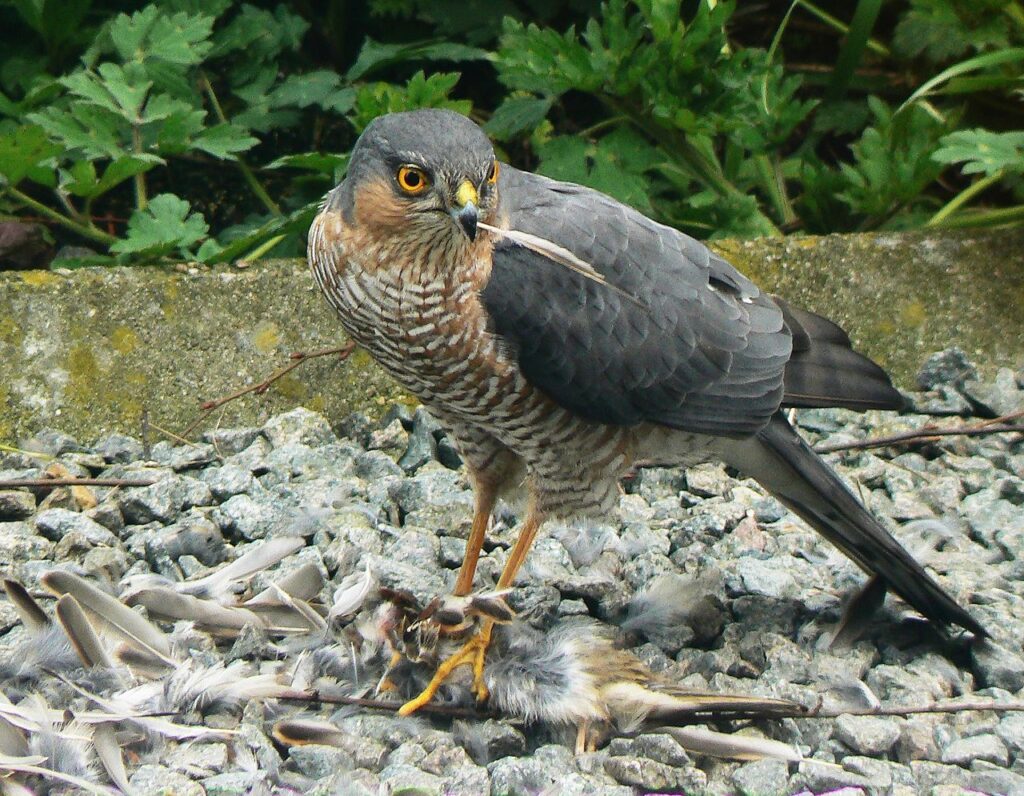
As you can see in Marcy’s photo, the coopers hawk - who eats birds - is very interested in the brush pile. Perhaps he can see the songbirds hiding there. Marcy tells me he sometimes tries to dive in to scare the little birds out of it, but they are safe inside.
Tonight they’ll be in there out of the wind, fluffed up to stay warm. Brrrr!