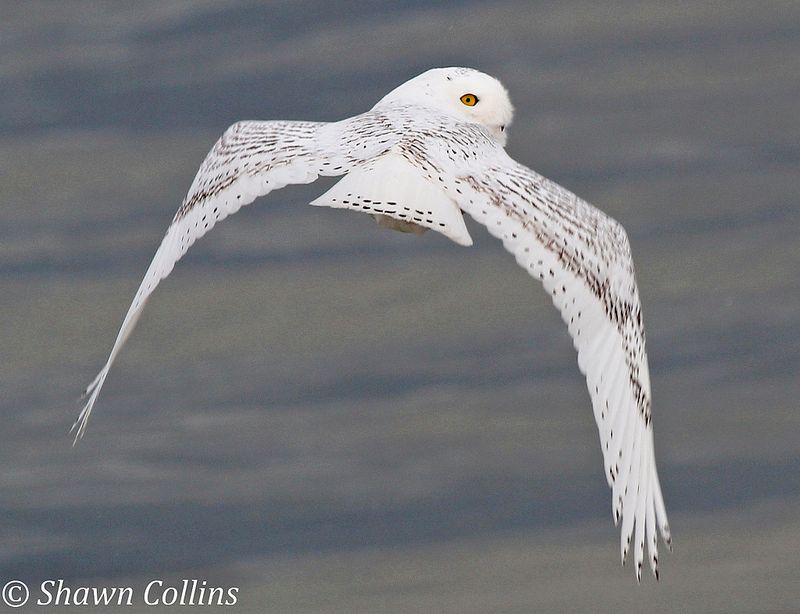
Snowy owl at Presque Isle State Park, 29 Nov 2013 (photo by Shawn Collins)
7 January 2024
It’s been 10 years since the spectacular winter of 2013-2014 when snowy owls irrupted in the Lower 48 States. That winter they invaded the Northeastern U.S. and traveled as far south as coastal North Carolina, Florida and Bermuda!
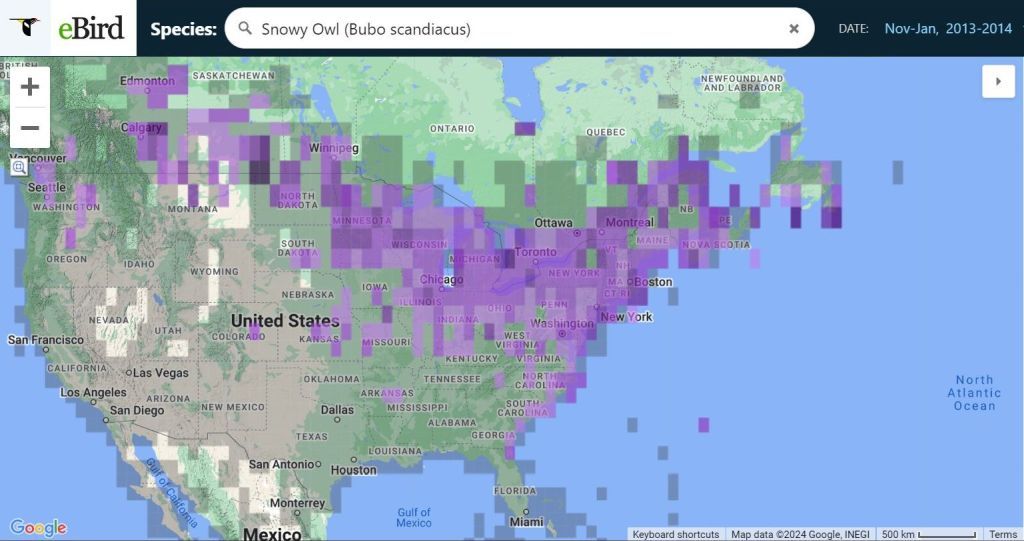
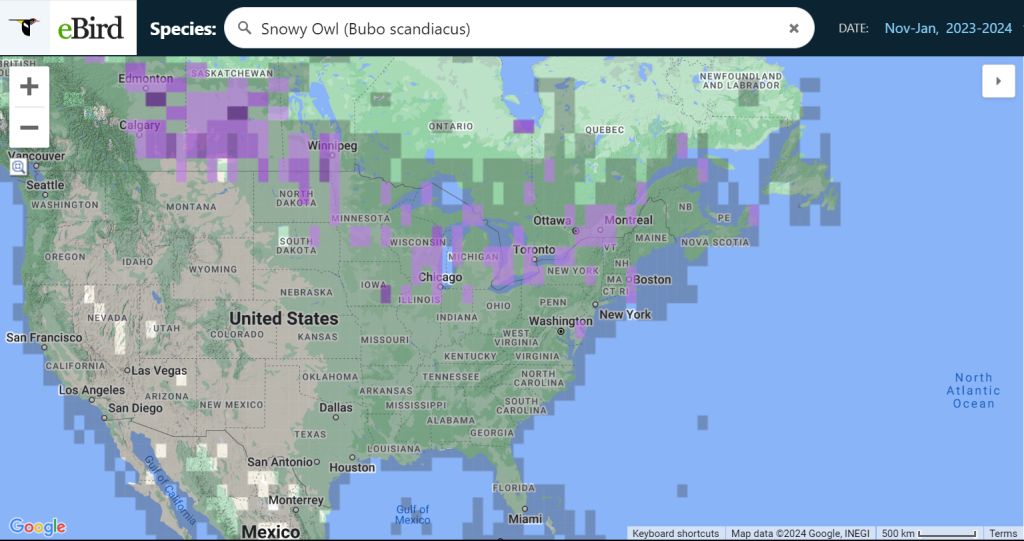
This year a few snowies are visiting the Great Lakes region but the only concentration of owls is in western Canada. You can see the difference in their eBird sightings in these maps of 2013-2014 versus 2023-2024. (Click here to see the eBird Explore map.)
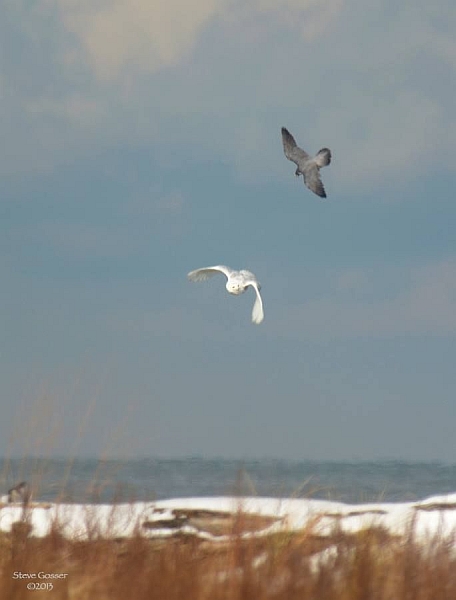
In 2013-2014 there were so many snowy owls that photographers often saw peregrine falcons attacking them. Steve Gosser captured this still shot at Presque Isle State Park in December 2013.
Peregrine falcon attacking snowy owl at Gull Point, Erie, PA, 1 Dec 2013 (photo by Steve Gosser)
Tom Johnson filmed two peregrines harassing snowy owls at Stone Harbor, New Jersey in January 2014.
Peregrines attack snowy owls at Stone Harbor, NJ in Jan 2014 (Video embedded from Cornell Lab on YouTube)
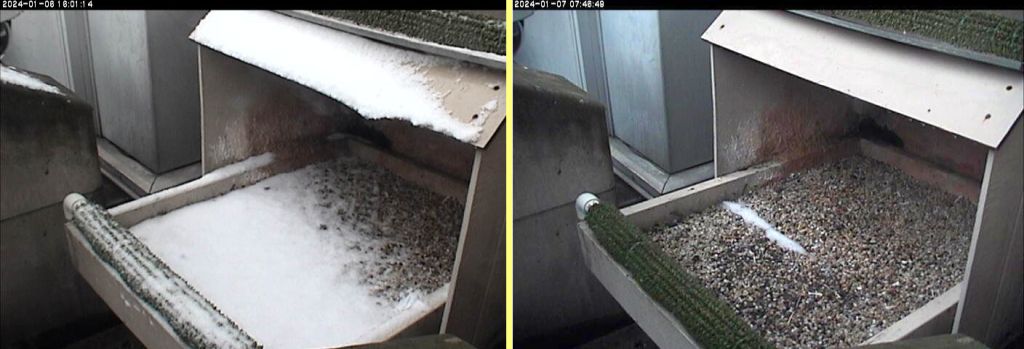
It was also a snowy weather winter. 2013-2014 was very cold with enduring snow on the ground because of the “Polar Vortex.”
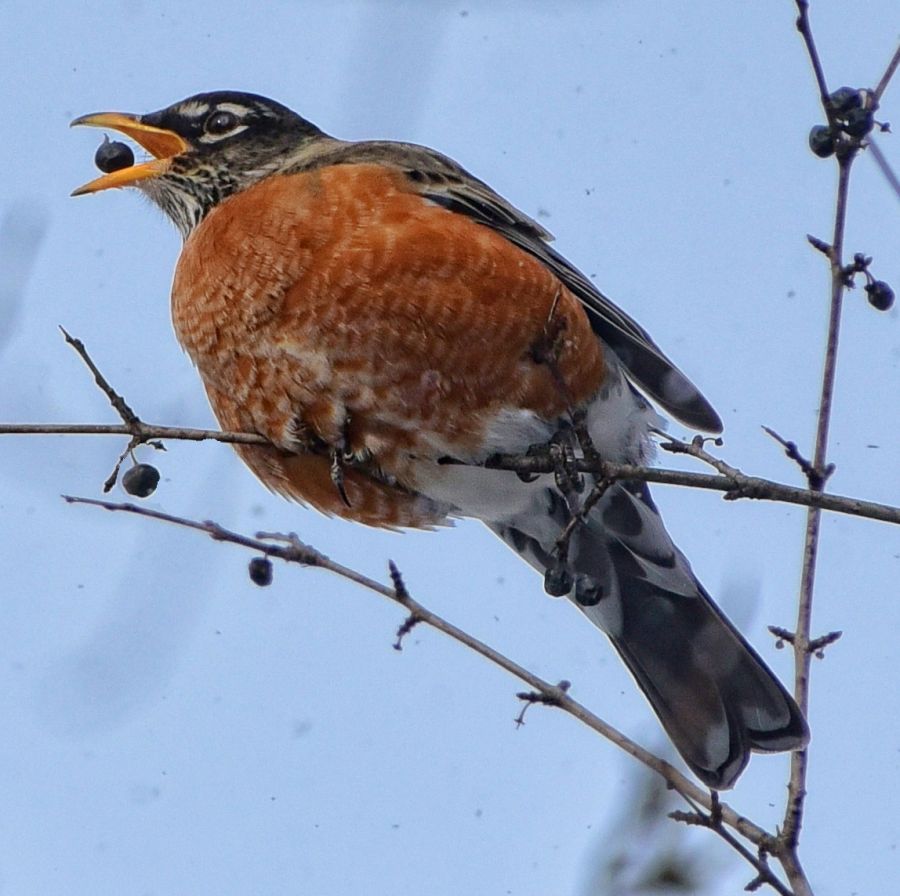
Early this week a big flock of American robins came to my neighborhood, ate all the fruit they could find, and left.
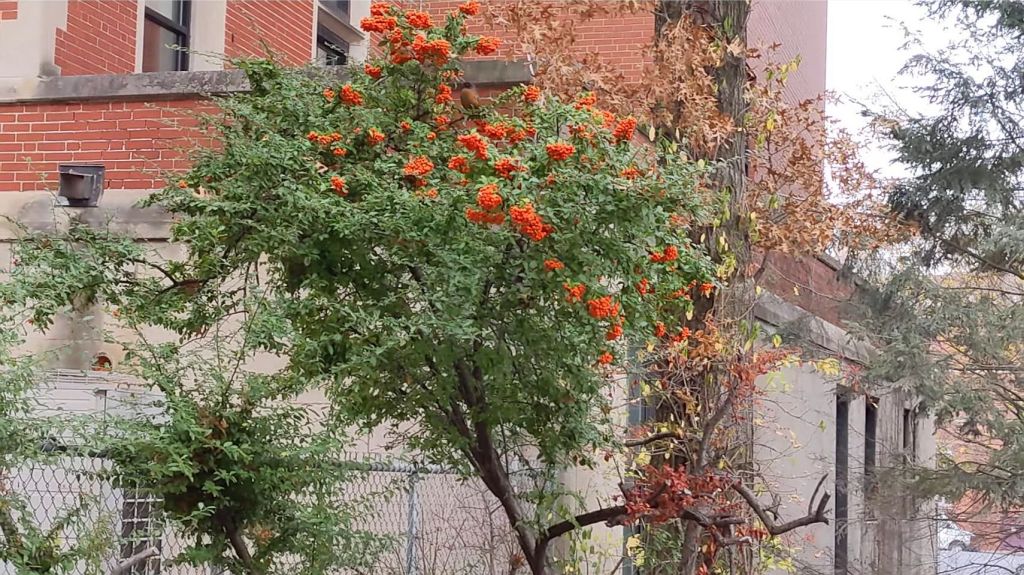
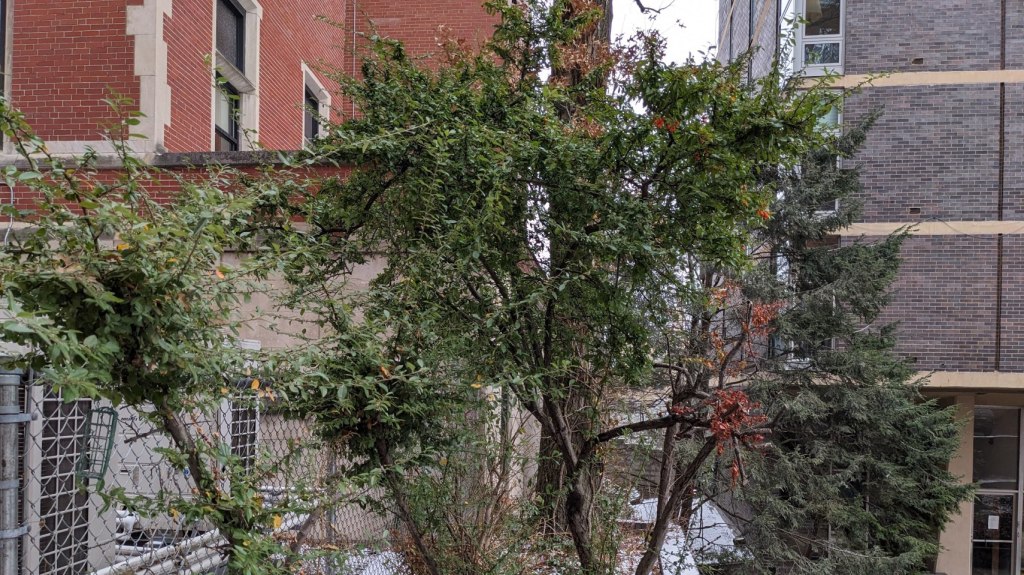
On Monday morning, 18 December, they were frantically eating this pyracantha fruit outside my window. At one point I counted 45 but they were moving so fast I think there were more.
Pyracantha full of fruit, 23 Nov 2023 (photo by Kate St. John)
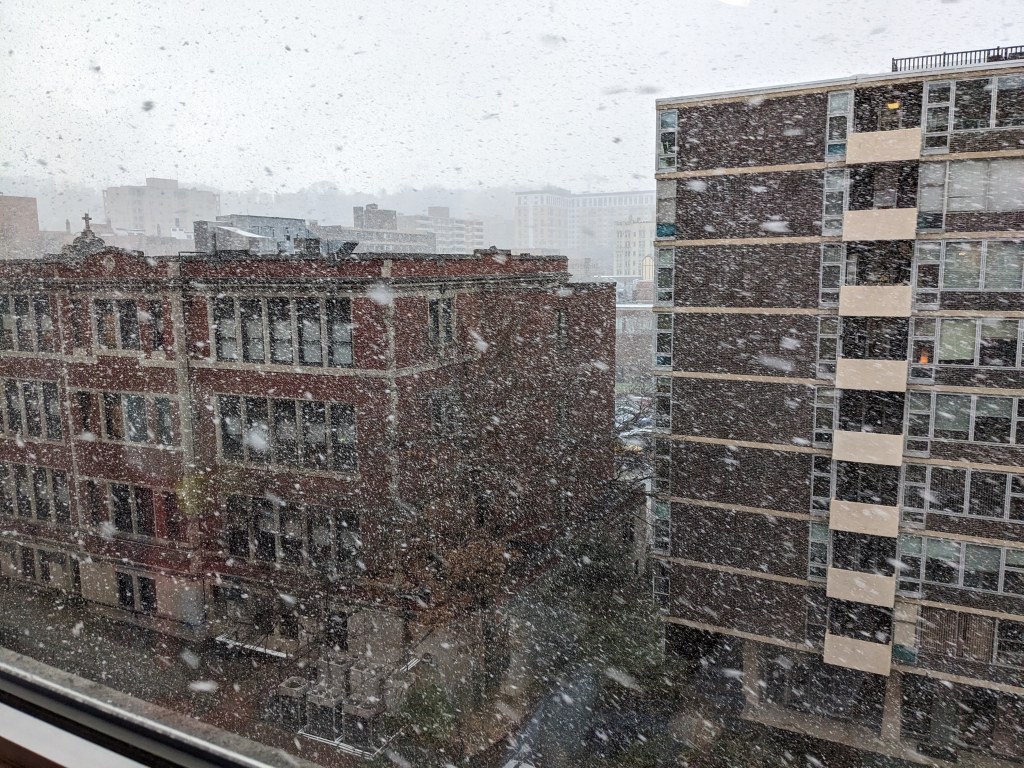
The birds were frantic because they knew bad weather was coming. In mid afternoon it snowed.
Snow flurries 18 December 2023, 3pm (photo by Kate St. John)
The next morning the fruit was gone and so were the robins.
Sam pyracantha with no more fruit, 19 December 2023 (photo by Kate St. John)
American robins are still in Pittsburgh but they’re feasting in other locations. When the fruit is gone and the ground is frozen, the robins will leave.
p.s. Today’s title reminds me of the 2006 bestselling book on punctuation by Lynne Truss called Eats, Shoots and Leaves. The comma in her book title is really important. Did the panda eat, shoot a gun, and then leave? Or did the panda eat two things — shoots and leaves? … In the case of today’s blog title: Robins don’t eat leaves. They eat fruit and leave the neighborhood.
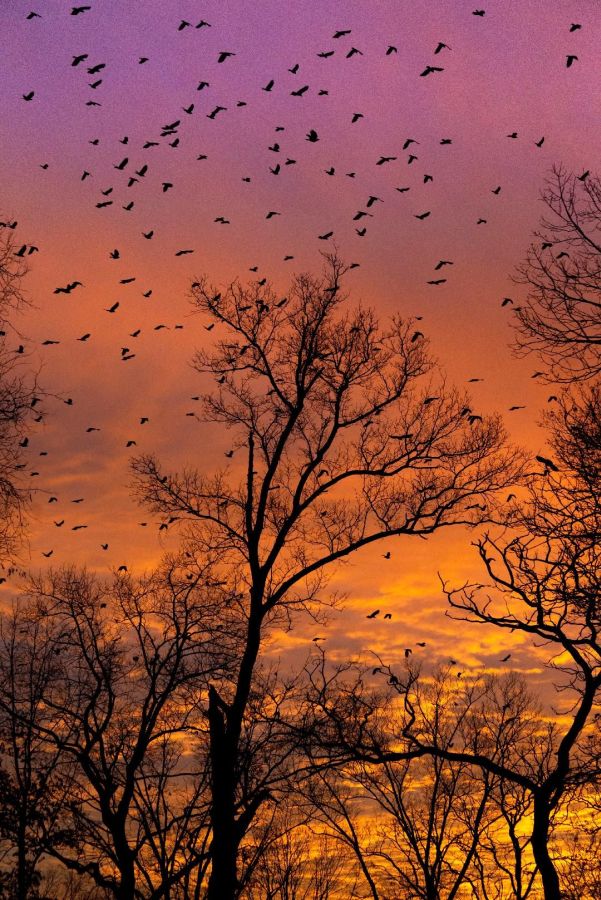
Crows flying to the roost at sunset near Wilkins Ave, Oct 2020 (photo by Joanne Tyzenhouse)
18 December 2023
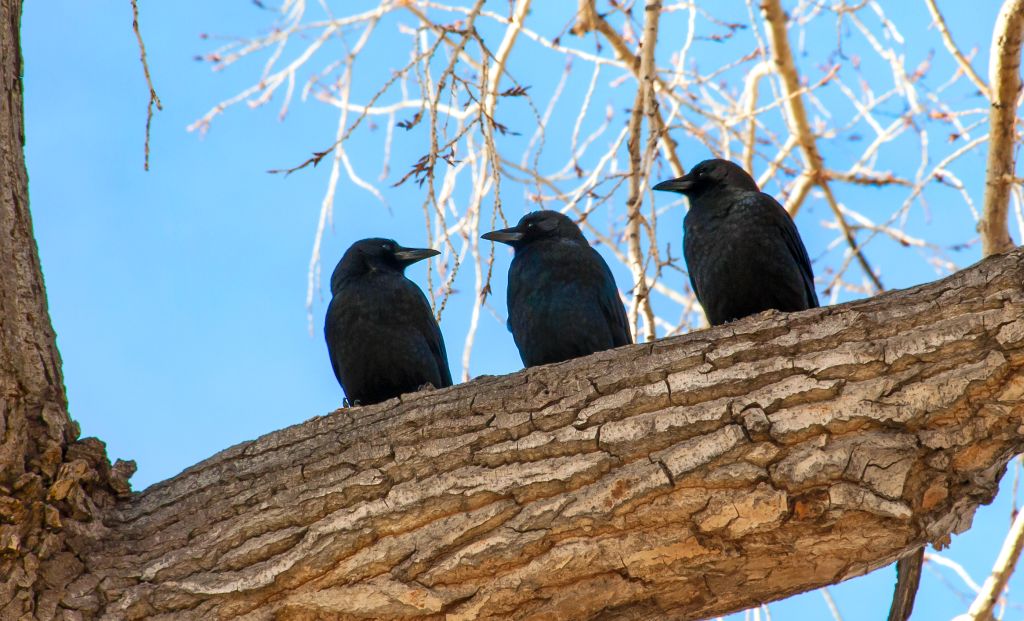
For the past several years Claire Staples and I have counted crows for the Pittsburgh Christmas Bird Count (CBC). In a good year we count 20,000. In a bad year, 220. Stunning, isn’t it. The difference is not in the actual number of crows. It’s whether we can find them.
Please help. Let me know where you see crows overnight or after sunset, especially next week (after Christmas)!
You would think that 20,000 crows would be hard to miss but in late December they get tricky. Just before the CBC the crows change their roost several times or they split the roost and, suddenly, we can’t find half of them.
Several of you responded to Why Do 1000’s of Crows Roost in Town? with dates and locations. Your reports helped me figure out the crows moved on 11 December.
Dec 10: Up until Dec 11 Tom saw them roosting near the VA Hospital in Oakland.
Dec 11: Jeff Cieslak saw 1000s flying over the North Side parallel to Allegheny River, heading upstream.
Dec 12: I counted 4,000 flying west-southwest over Schenley Park’s golf course at dusk. Where were they going?
Dec 13: Sue Faust reported them hanging out on the North Side and flying over the Strip District at dusk.
Dec 16: Carol Steytler counted as many as 10,000 roosting upstream of the 16th Street Bridge across from Heinz Lofts (across the river?).
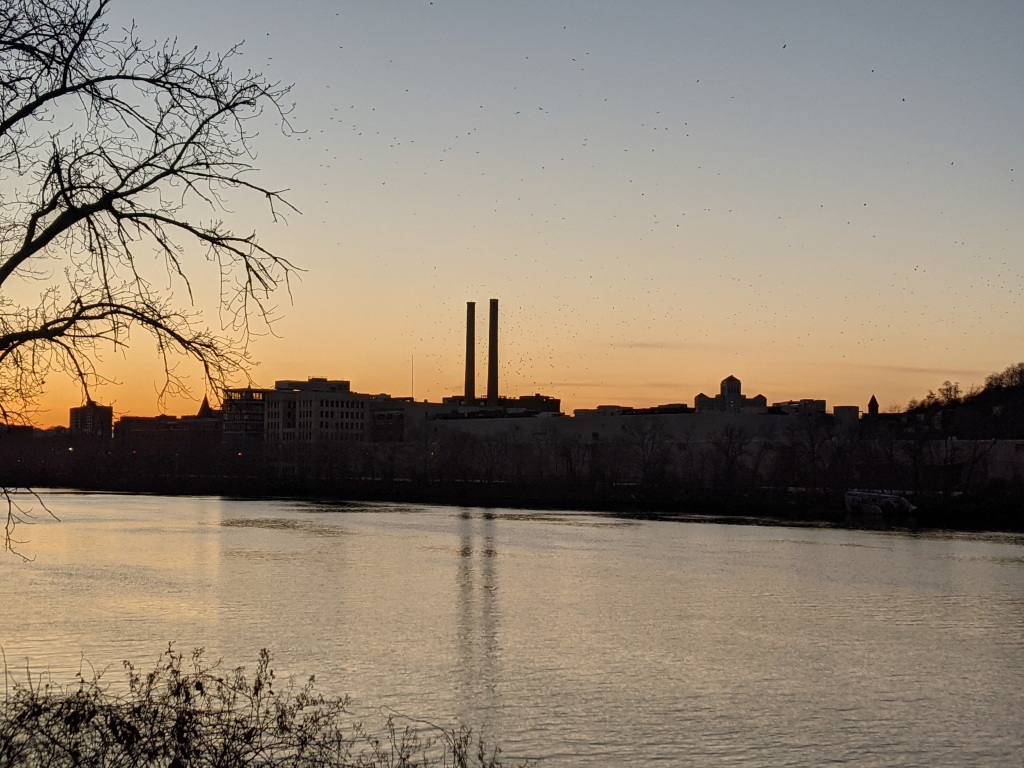
Twilight over the Allegheny River at Pittsburgh. Crows swirl near Heinz chimneys, 6 Feb 2021, 5:50pm, taken at 25th St (photo by Kate St. John)
Carol’s 16 December sighting matches a roost they used back in February 2021 (photo above) but they didn’t stay there long and I fear they won’t stay now. And this is only half of them.
Where will the crows be 12 days from now?
I know I’m going to miss their next move because I’ll be out of town December 21-28. Your help is really crucial. Please let me know where you see crows overnight or after sunset. Let me know where you see a big flock swirling. Claire & I also need to find a good vantage point for counting them.
Fingers crossed that we’ll successfully count the crows on Saturday 30 December.
When 20,000 crows come to Pittsburgh for the winter, they have to sleep somewhere and they inevitably make a mess. Why do they roost near us where the mess will get on our nerves? Why don’t they sleep in the woods? Let’s take a look the reasons crows choose one location over another when it’s time to sleep.
Crows have a few simple requirements for a roost and they all have to come together at the same place. Safety is a big one. Crows want:
Tall trees for roosting
Warmth when it’s cold
No great horned owls!
Safety in numbers
Night lights. Lots of them.
White noise at the roost
No harassment from humans
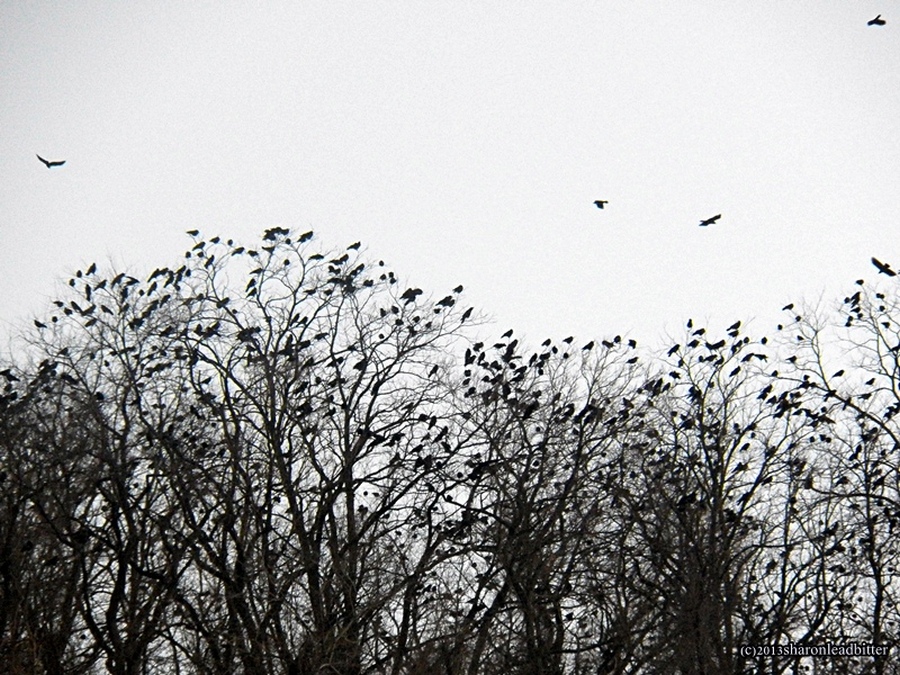
1. Tall trees for roosting: Crows prefer to roost at the very top of mature trees. They perch on the highest twigs that support their weight.
Crows coming to the roost, Pittsburgh, 2017 (photo by Sharon Leadbitter)
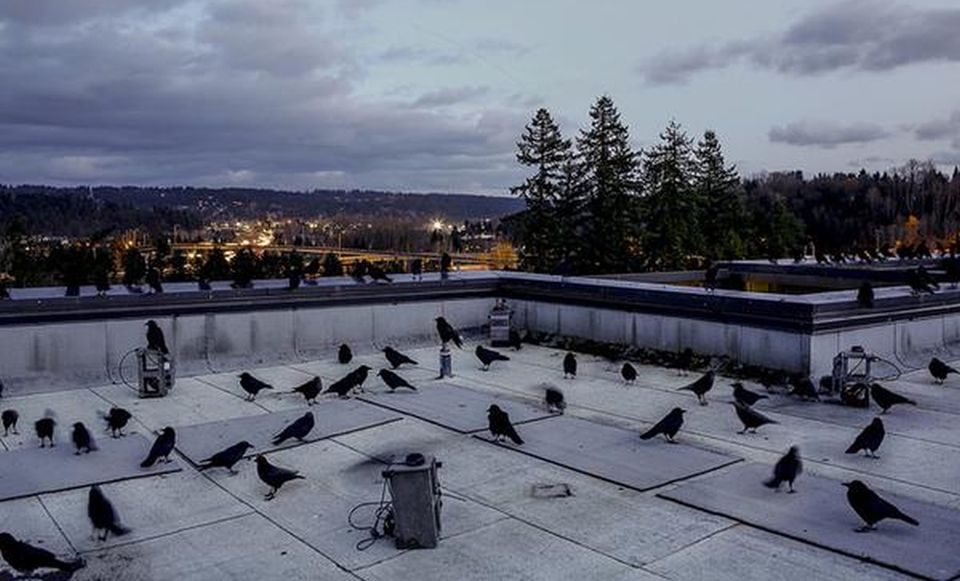
2. Warmth when it’s cold: When the weather is well below freezing trees are too exposed for a good night’s sleep so crows may choose rooftops instead. Cities are warmer than the surrounding countryside due to the urban heat island effect.
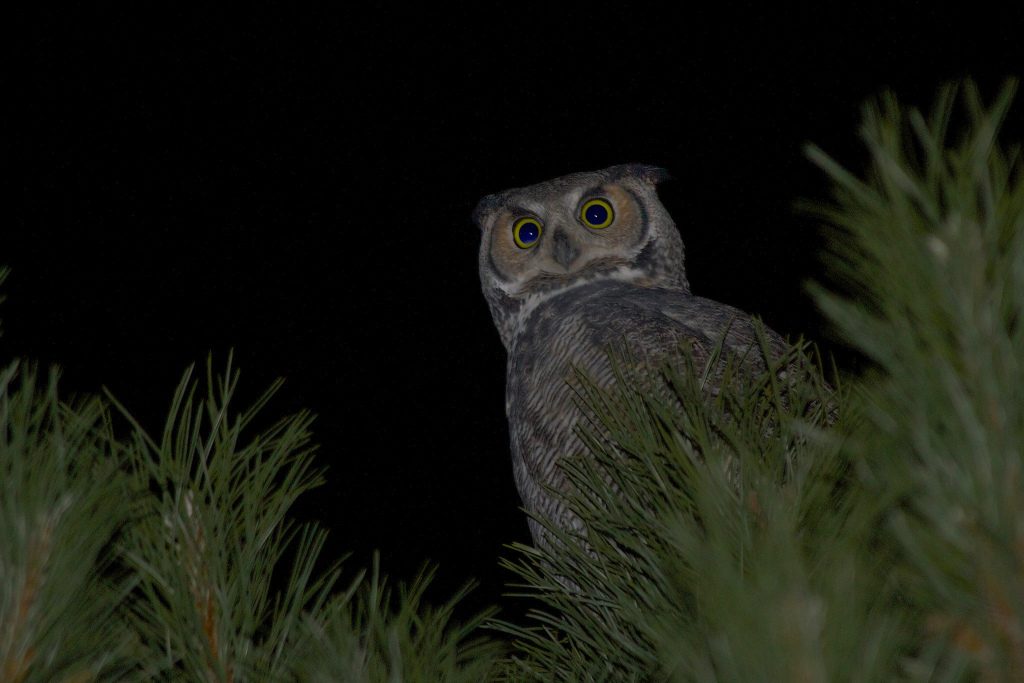
3. No great horned owls! Crows are terrified of great horned owls who can hunt them in the dark. They prefer places that great horned owls avoid.
Great horned owl (photo by Alan Wolf via Flickr, CC license)
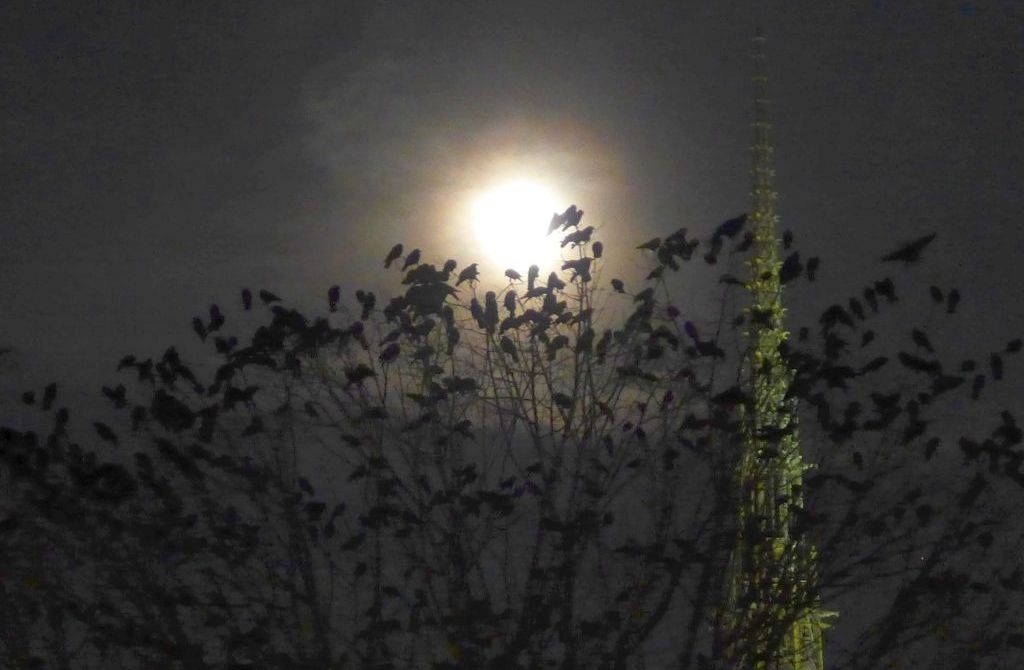
4. Safety in numbers: Crows sleep in a crowd so that someone’s always awake to watch for owls. It also lowers the odds of an individual being eaten.
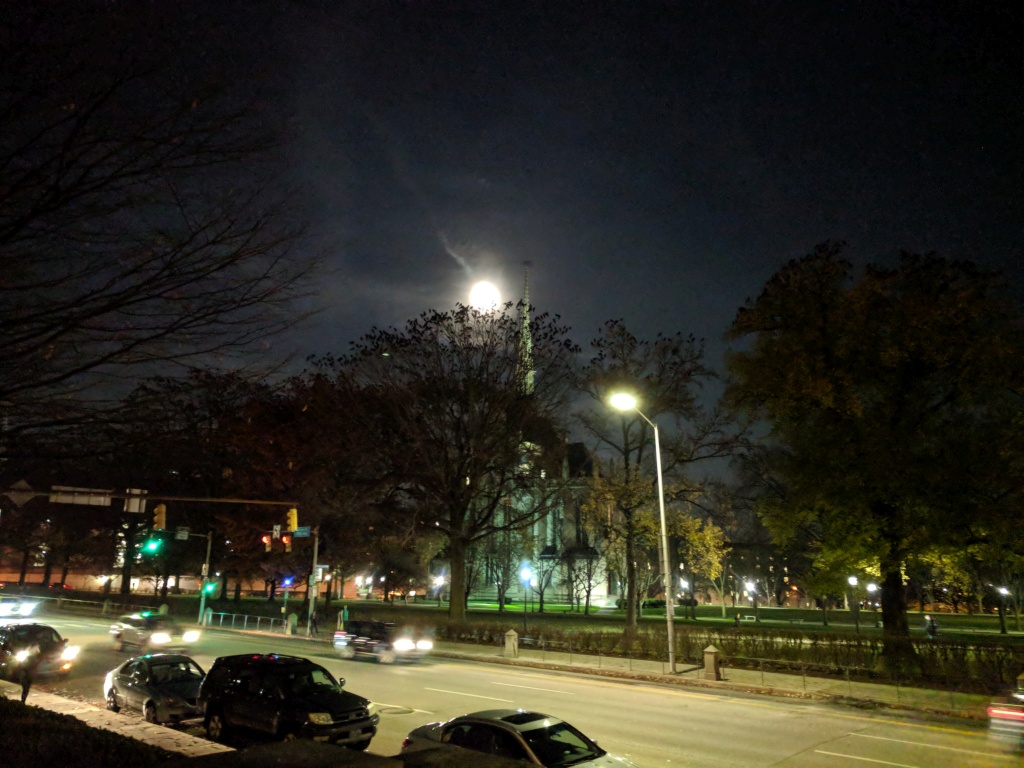
Crows asleep near Heinz Chapel by the light of the Supermoon, Dec 2017 (photo by Kate St. John)
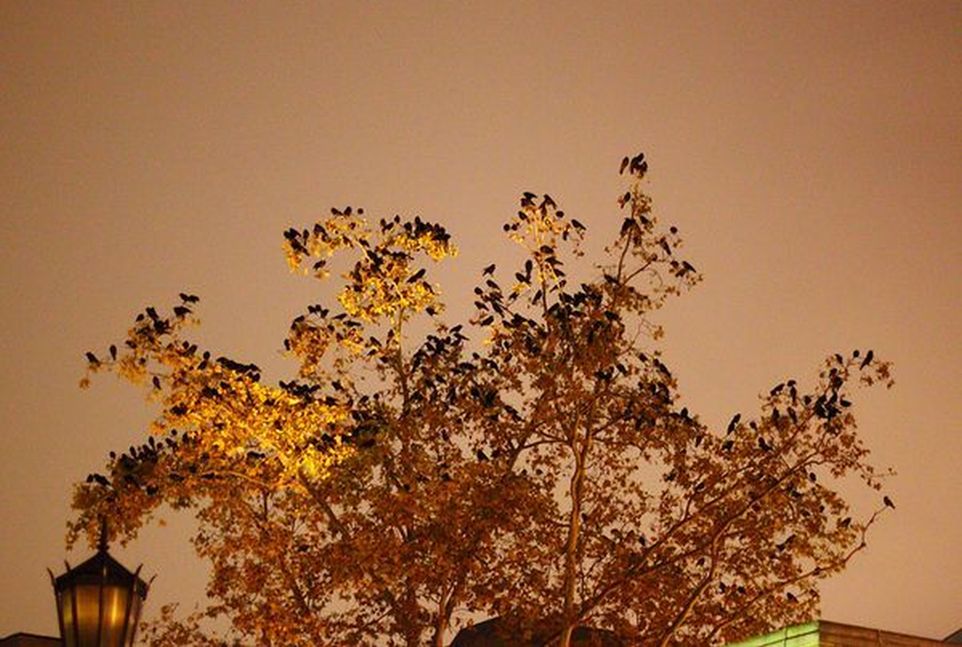
5. Night lights. Lots of them: Crows like to sleep with the lights on. It’s easier to watch for owls when you can see them coming. There are no nightlights in the woods.
Crows in a tree on Thackeray Ave, Pittsburgh, 2011 (photo by Peter Bell)
6. White noise at the roost: In addition to night lights, crows want white noise at the roost(*), the sound of running water or traffic. This location along Fifth Avenue at the University of Pittsburgh combines all their requirements in one place. Except that the mess bothers humans.
Crows roosting along Fifth Avenue in the trees at Pitt, Dec 2017 (photo by Kate St. John)
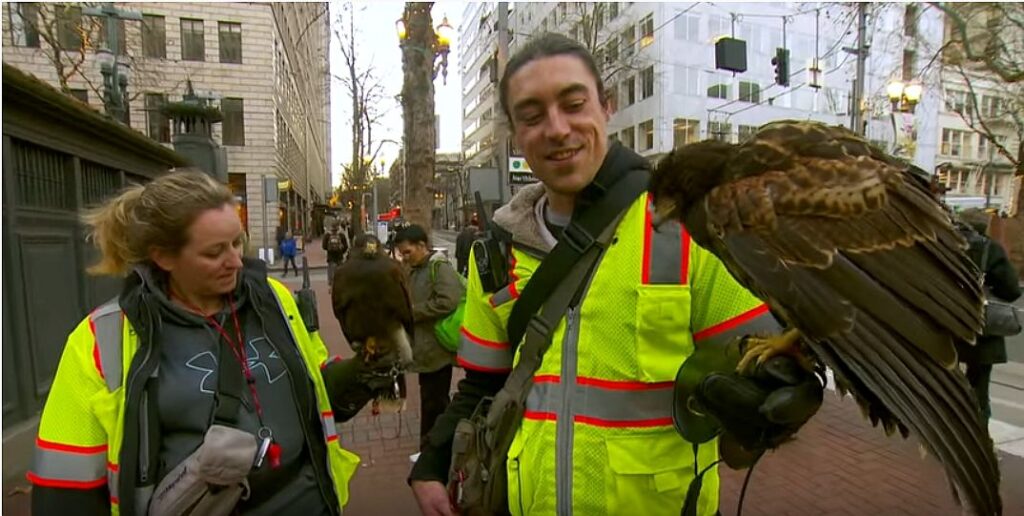
7. No harassment from humans: The perfect roost is usually near humans but crows make an enormous mess that people have to clean up. When the crows wear out their welcome, people figure out ways to get them to leave. This includes loud abrupt noises such as clappers and bangers, flashing lights, and harassment by falconers’ birds.
Now that we know what crows want at a roost we can figure out where they’re likely to be. Convincing them to leave is much easier to do before they land. 😉
(*) p.s. Why do crows want white noise when they sleep? No one has explained it but I have a theory that great horned owls avoid white noise. Owls need to hear their prey when they’re hunting and white noise makes that impossible.
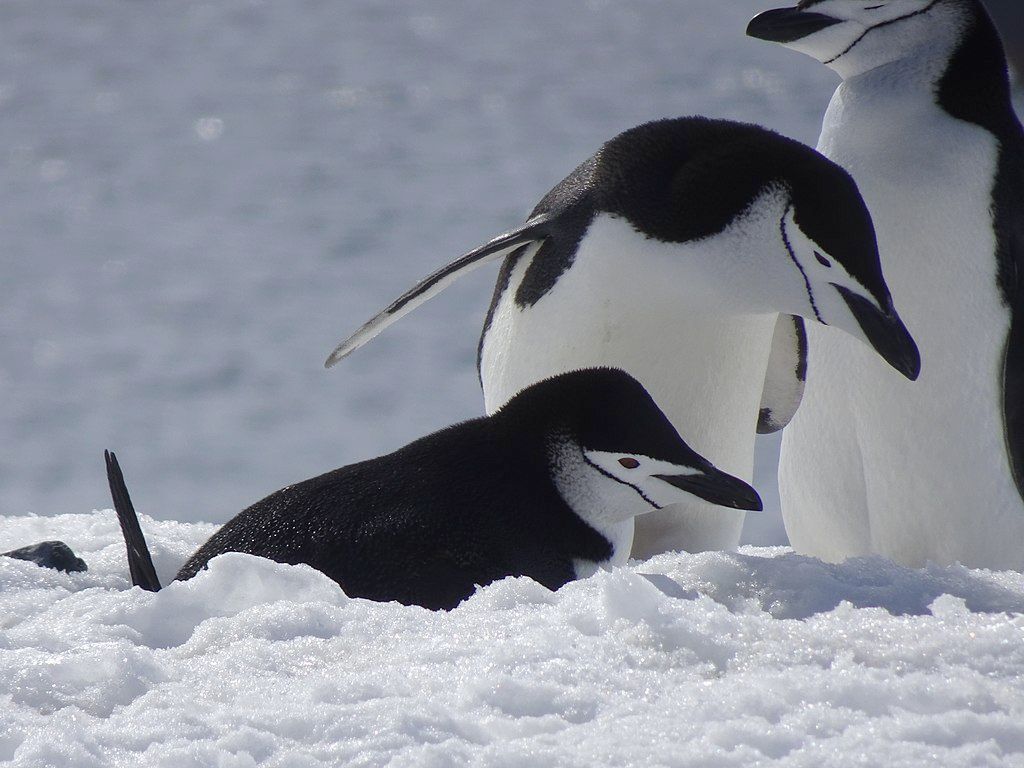
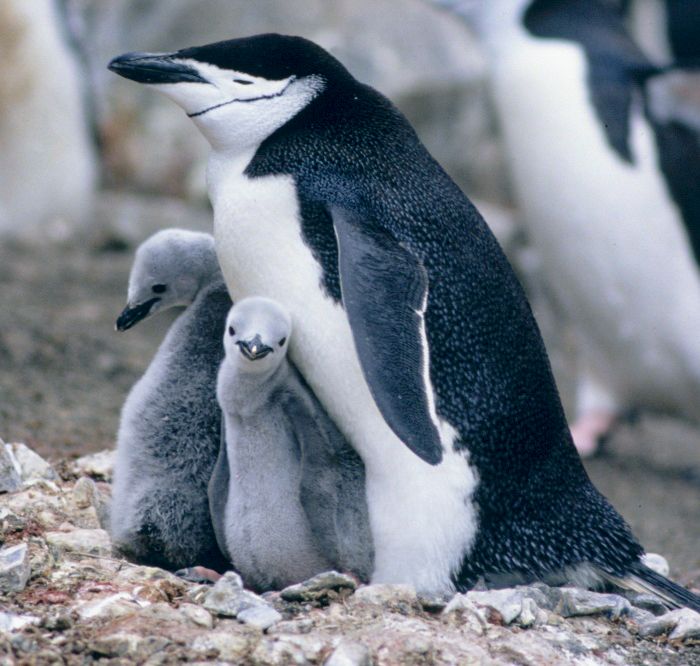
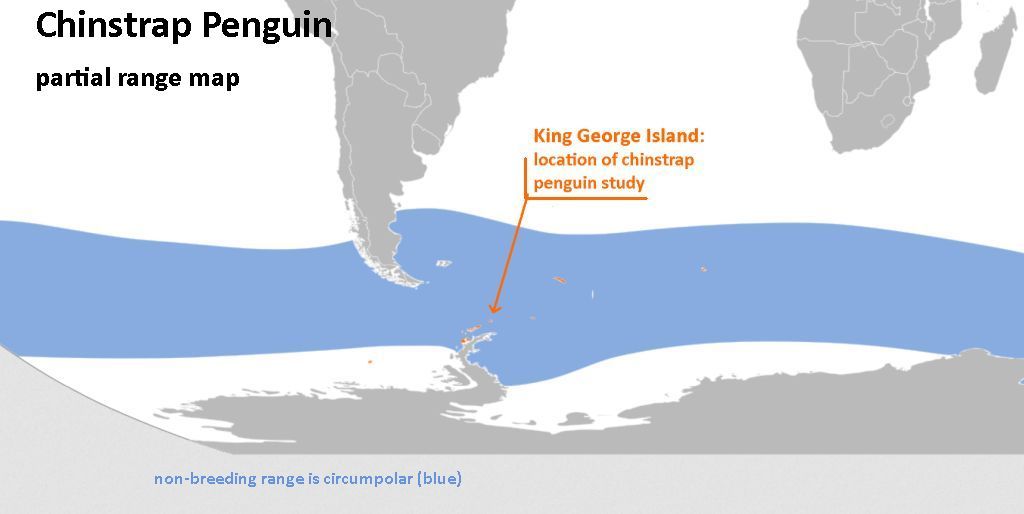
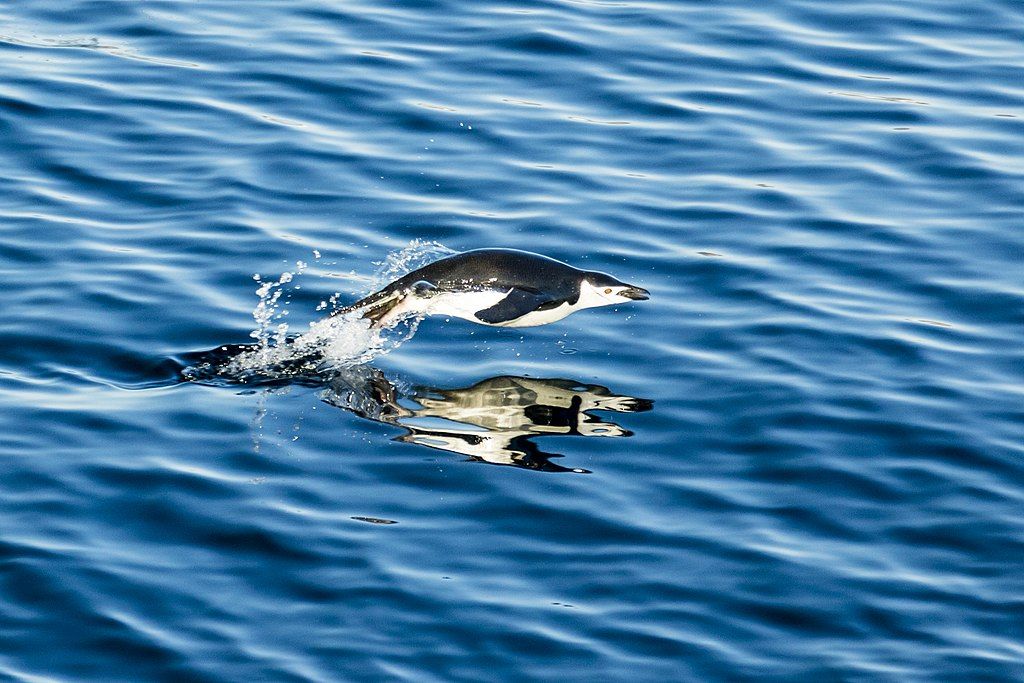
Lots of animals don’t sleep for long periods like we do but a new study has found a polar opposite in Antarctica (pun intended) where chinstrap penguins (Pygoscelis antarcticus) take 10,000 4-second naps each day during the breeding season. In this way they accrue 11 hours of daily sleep.
For us, the micronaps would be a form of sleep torture since we cannot enter restorative deep sleep in such a short time. But the chinstrap penguins do.
Brain waves showed the penguins experience slow wave (deep) sleep during those micro-naps. They nap while incubating or guarding their chicks and even while floating on the ocean.
So now I’m looking at group photos of chinstrap penguins and, sure enough, in every photo some of the adults are sleeping. They’re getting their beauty rest 4 seconds at a time.
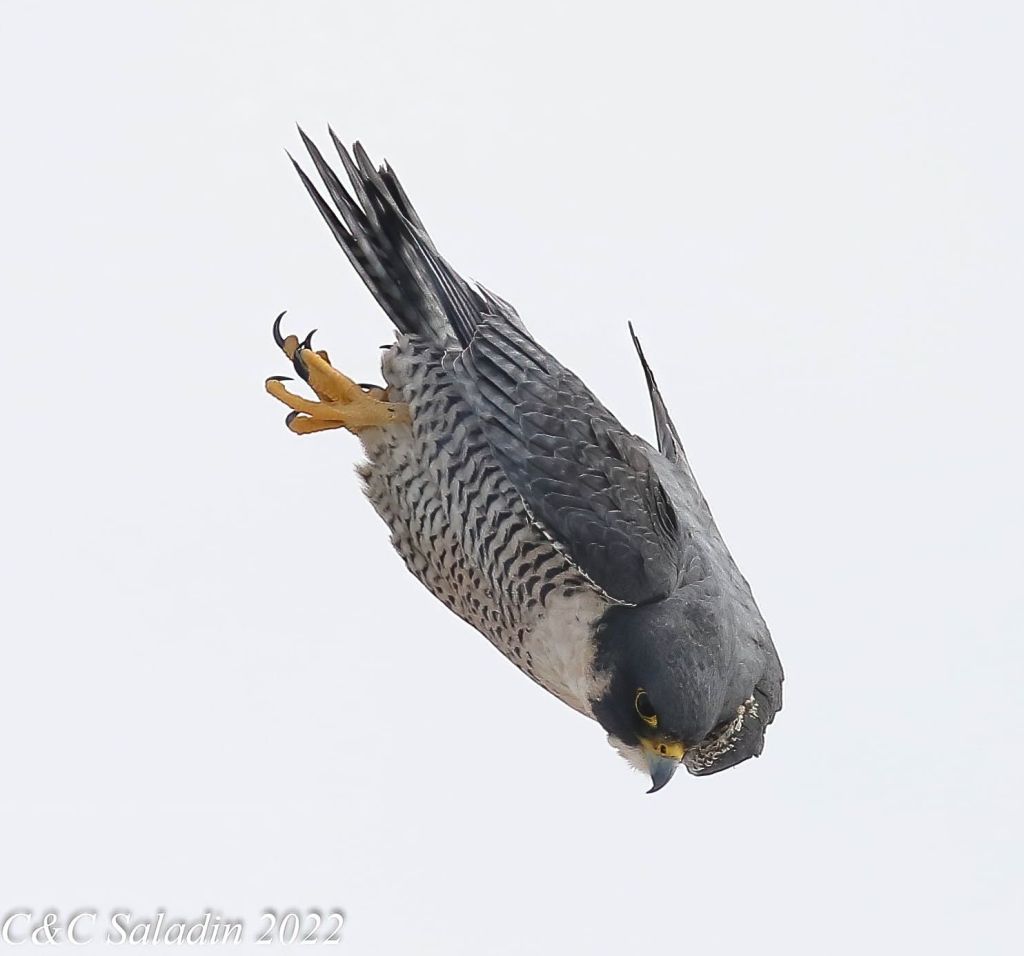
Gusto heads into a stoop, 9 Feb 2022 (photo by Chad+Chris Saladin)
3 December 2023
Peregrines are the fastest animal on earth when they dive at 200 mph to catch their prey in flight. In fact they dive even faster when they’re hunting an evasive bird. The higher speed increases turning force so they’re more accurate at catching prey.
In 2005 Ken Franklin went sky diving with a peregrine to clock its maximum freefall speed at 242 mph (389 km/hr). In 2018 scientists wanted to study the details of the peregrines’ dive, but it was too hard to do in real time, so they created 3D simulations of a stooping peregrine pursuing a European starling.
The simulations showed that optimal speed for catching a bird in straight flight is 93 mph but if the prey is zig-zagging in the sky the best speed is 225 mph.
You’d think that the higher attack speeds would make it more difficult for falcons to adjust to a moving target. But the opposite turned out to be true: The predators were more maneuverable at higher speeds because they could generate more turning force; only then were they able to outmaneuver the highly agile starlings. So stoops don’t just help falcons quickly overtake prey—they also help the predators change directions.
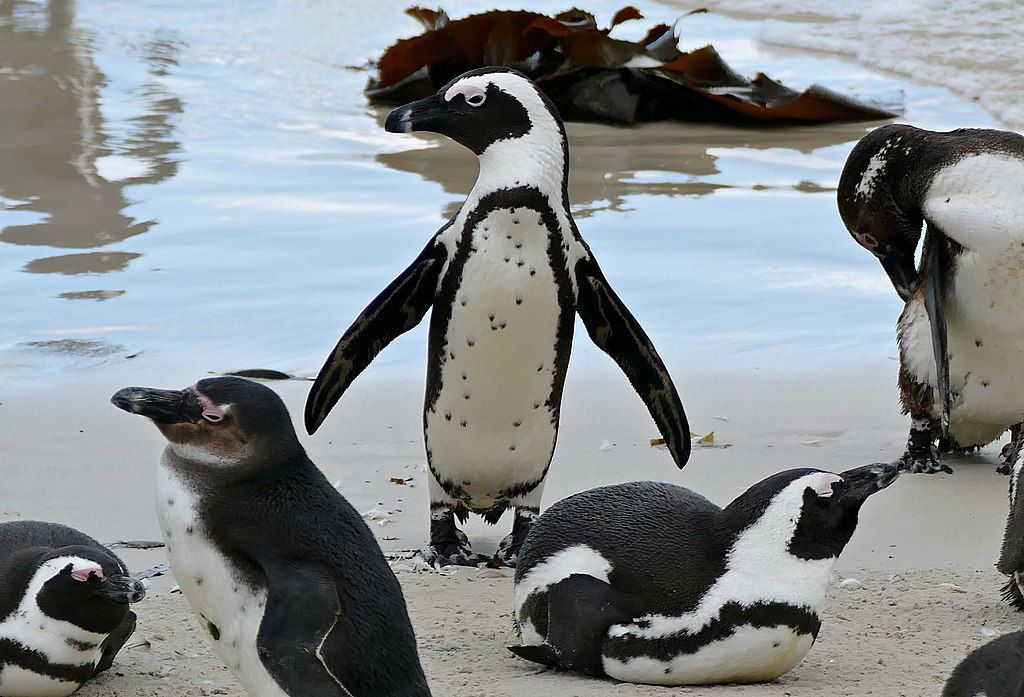
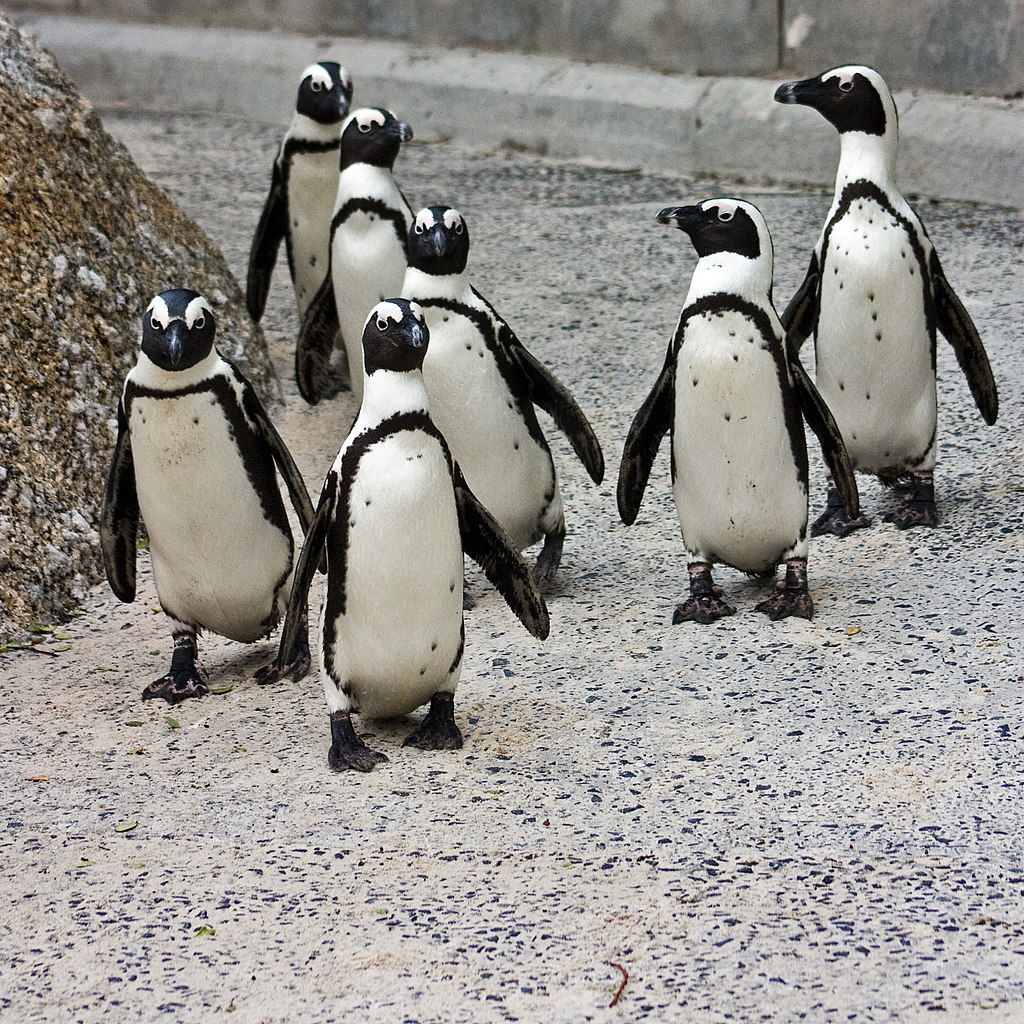
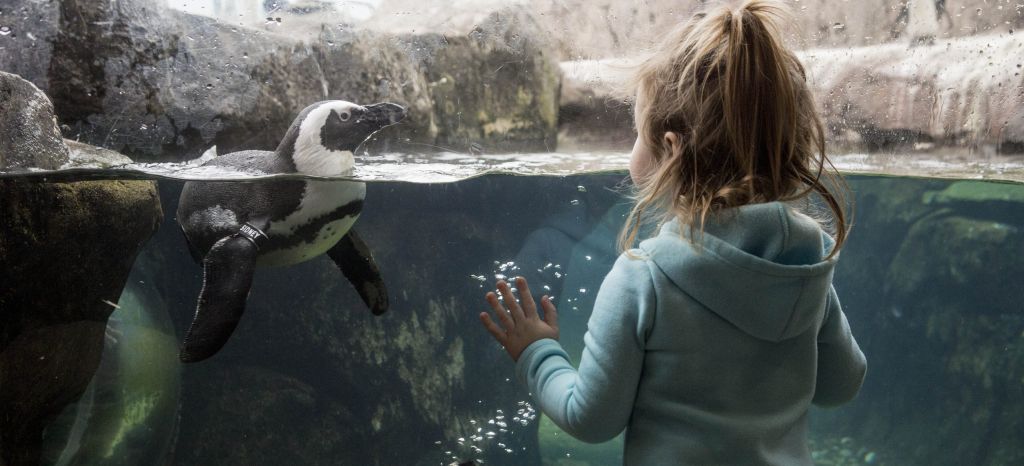
We humans recognize each other by face and can sometimes recognize individuals in other species as well. For instance, African penguins (Spheniscus demersus) have unique patterns of dots on their chests that zookeepers use to tell them apart. Psychologist Luigi Baciadonna wondered if the dots functioned the same way for the penguins themselves so he ran an experiment at Zoomarine Italia in Rome.
In the experiment individual penguins were herded into a small corral with life-size portraits of two group members, at least one of which was his/her mate. African penguins like to hang out near their mates so if the visiting bird stared at the mate’s portrait and gravitated toward it, he/she was recognizing the mate. The experiment had three variations:
Test #1: Accurate photos: one of the mate, one of another member of the colony. Result: In this video of Test#1 a male penguin, Gerry, is presented with an image of his partner, Fiorella, on the left and one of group member Chicco on the right. Notice what he does.
Test 2: Two photos of the mate: one accurate, one with dots digitally removed. Result: The birds spent more time looking at the mate photo with dots.
Test 3: Dots digitally removed from both photos: mate and another member of the group. Result: The birds no longer seemed to recognize their mate. There was no difference in how long they gazed at the mysteriously spotless portraits.
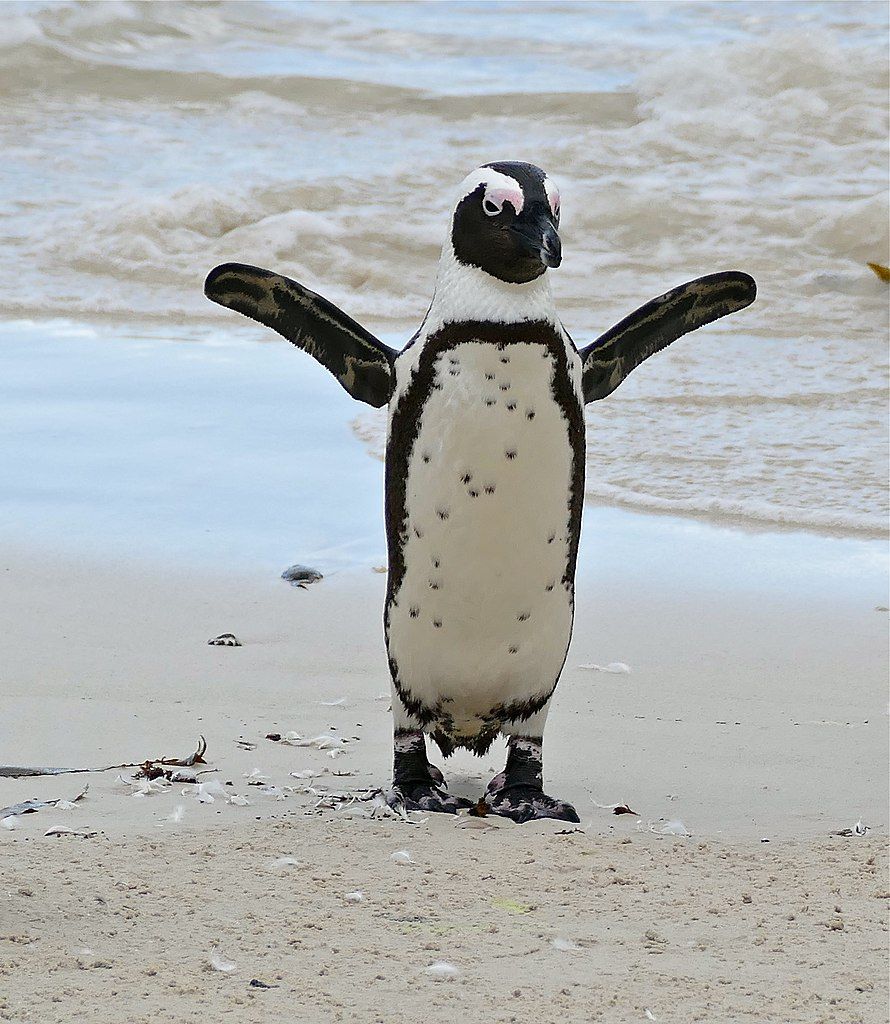
Quiz! Now that I know African penguins have unique chest dots I discovered that the penguin pictured below is also in a photo above. Which one is he?
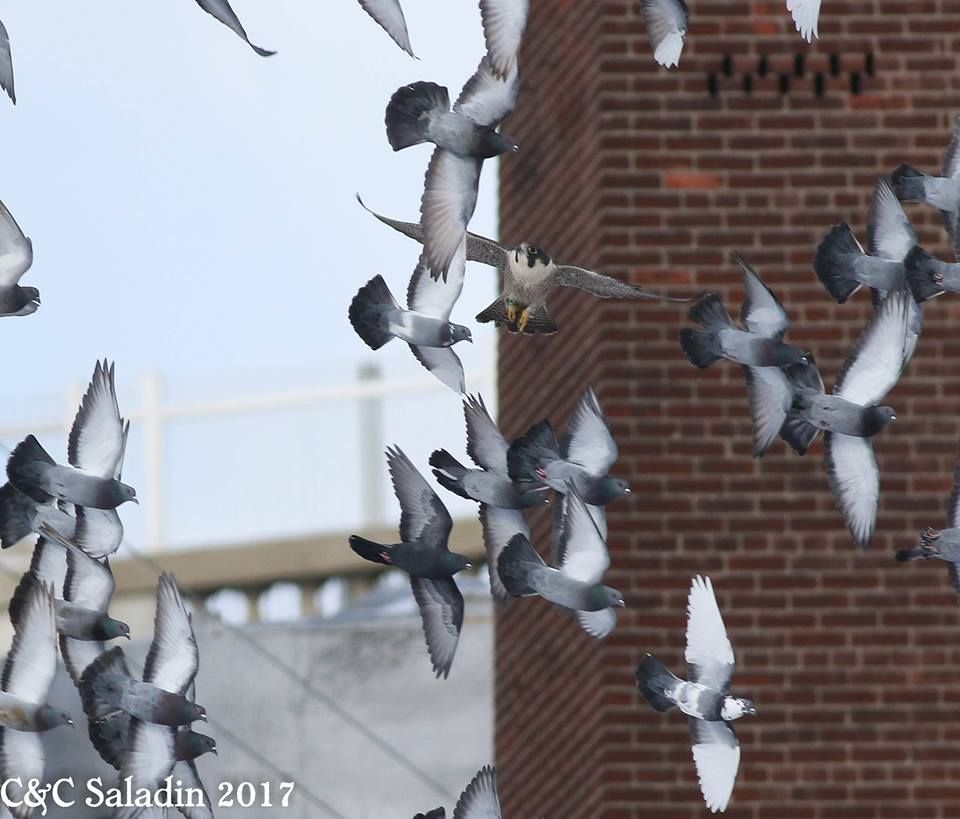
Stirring up the pigeons in Cleveland, 2017 (photo by Chad+Chris Saladin)
17 November 2023
Can you spot the peregrine?
When peregrines are hungry, the birds they’d like to eat flock tightly and move as fast as they can. The denser the flock the harder it is for the peregrine to pick out a solo bird to catch for dinner.
In the photo above pigeons are flying crosswise to avoid an oncoming peregrine. Can you spot the peregrine in the picture?
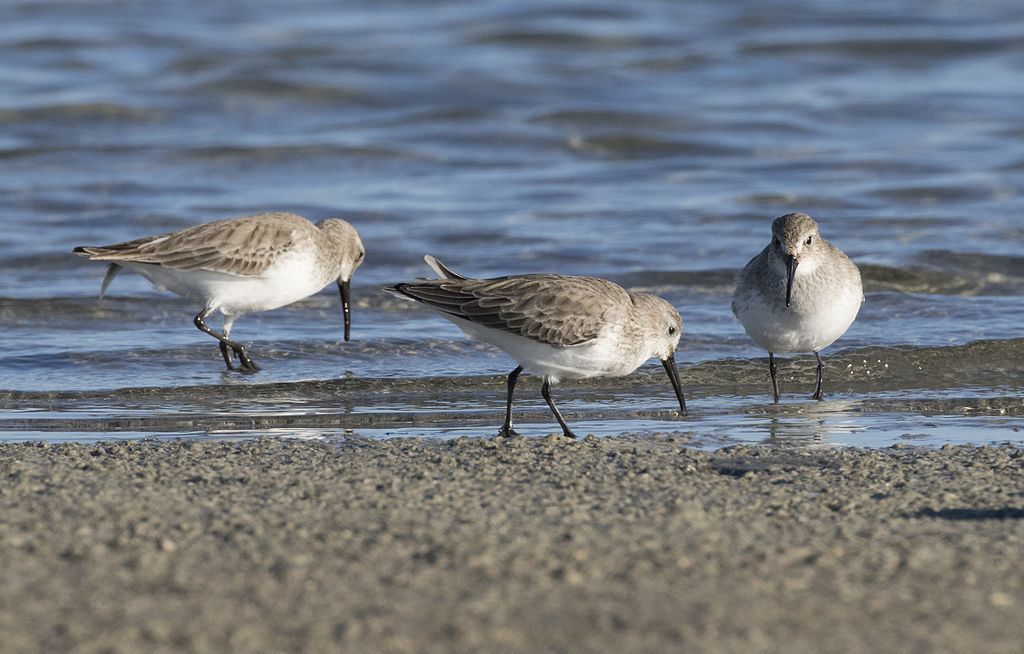
Dunlin (Calidris alpina) are masters of tight flocking and evasive maneuvers when threatened from the air. In the video below by Pacificnorthwestkate (@pnwkate) the dunlin move like a murmuration of starlings as a peregrine harasses them. Can you spot the peregrine?
Notice how the dunlin flock winks off and on in the video, dark at one moment then so white they disappear. In winter plumage dunlin have brown-gray backs and white bellies. The flock changes color as the birds turn in unison in the air.
Arizona's wildlife is really wild! ? Check out these awesome snaps of a bobcat perched atop a saguaro at Lost Dutchman State Park. ? You might think "ouch" but bobcats are adept climbers with tough paw pads. ? P. Giebelhausen (closeup) and Ranger Hailey on a hike last winter pic.twitter.com/q7825rQtwN
In New Jersey a buck ran through a front yard, jumped over two cars, and miscalculated the landing. Despite that he hopped out of the truck bed and ran away.
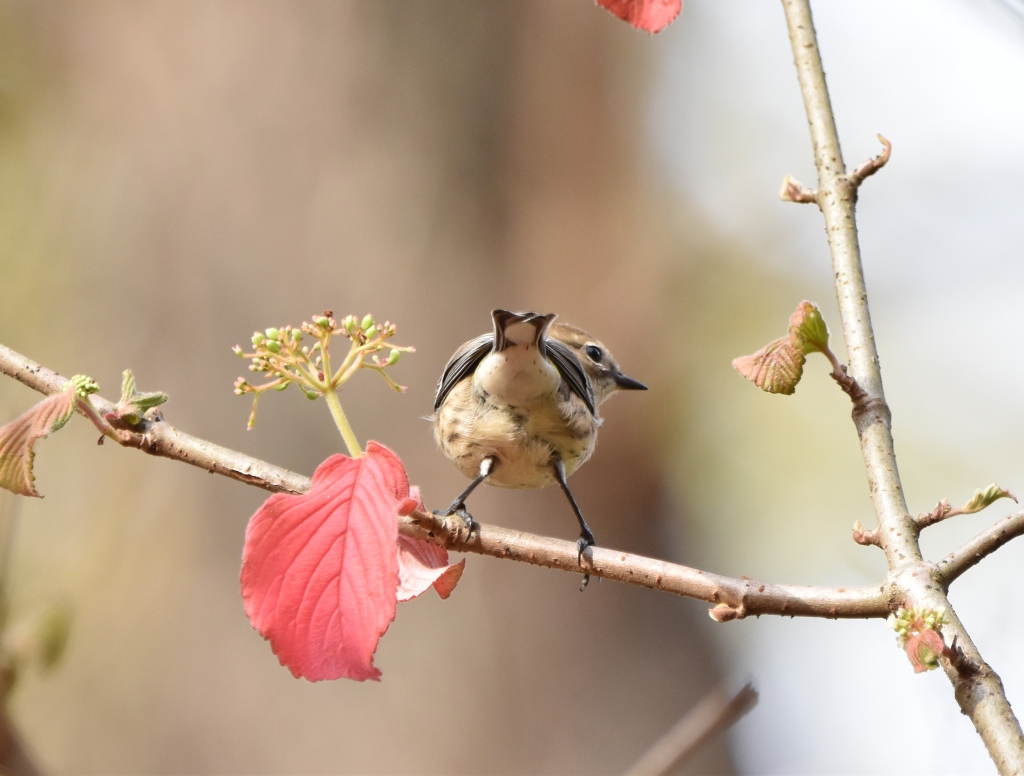
Yellow-rumped warbler, Frick Park, 26 Oct 2023 (photo by Charity Kheshgi)
5 November 2023
Some days it seems like all the birds are turning their backs on us. Warbler season is especially challenging because they tend to pose just like the yellow-rumped warbler above. Fortunately The Warbler Guide by Tom Stephenson & Scott Whittle includes a butt-shot for every bird so if you take photographs you can look them up when you get home.
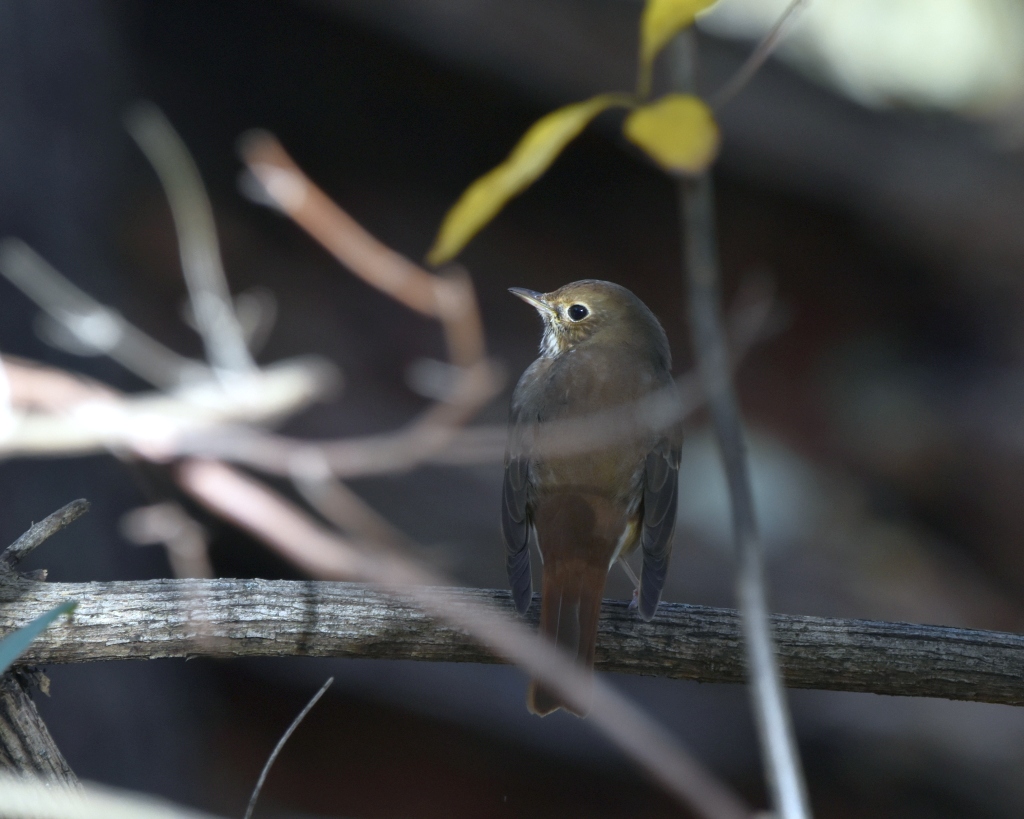
Most birds just happen to be facing away but others, like this hermit thrush, do it intentionally. The thrush was keeping an eye on us while he hid in the shadows with an escape route mapped out ahead of him.
Hermit thrush presents his back and keeps an eye on us, Frick Park, 26 Oct 2023 (photo by Charity Kheshgi)
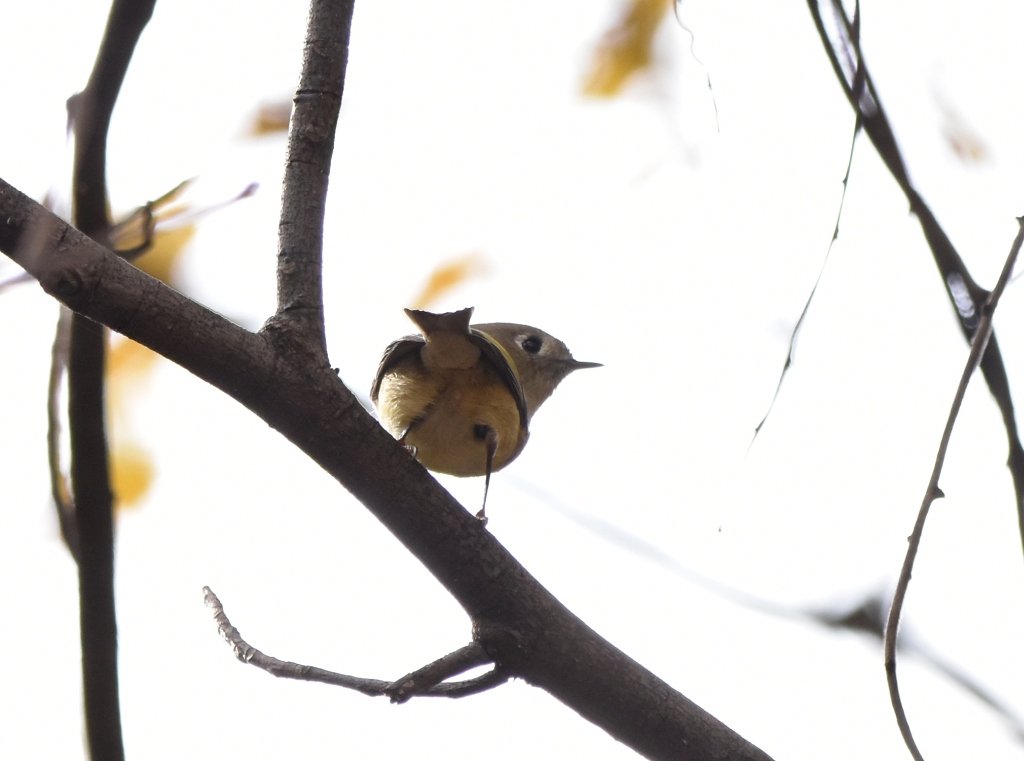
Kinglets face every which way as they busily flit to find tiny insects. Inevitably they end up in a butt shot.
Ruby-crowned kinglet, Frick Park, 26 Oct 2023 (photo by Charity Kheshgi)
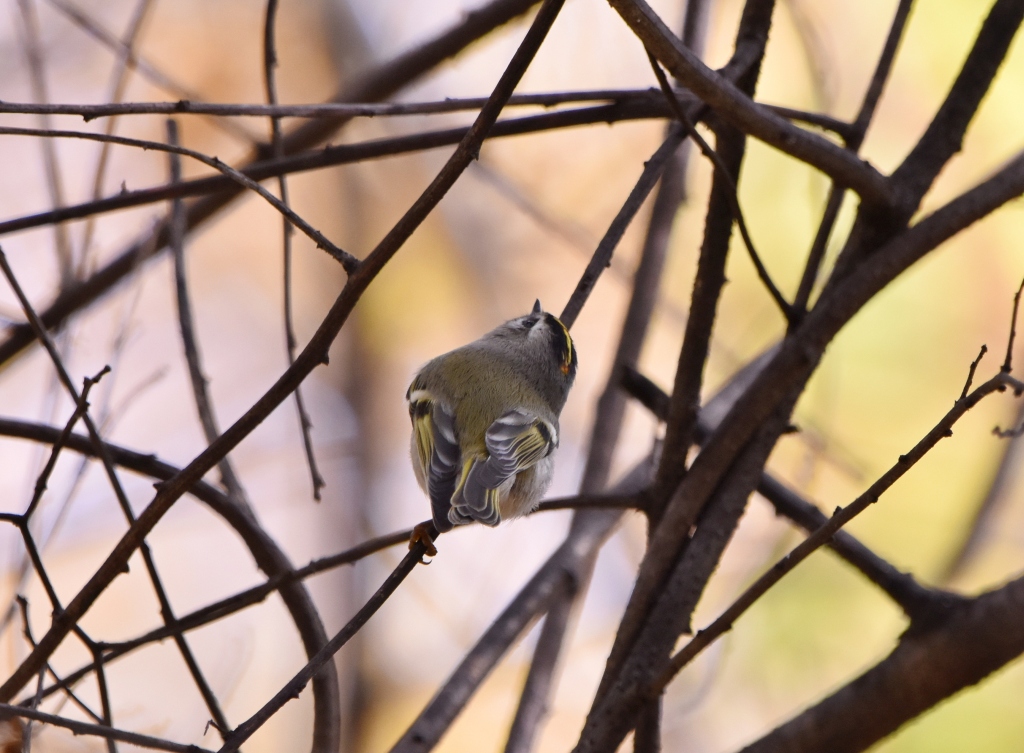
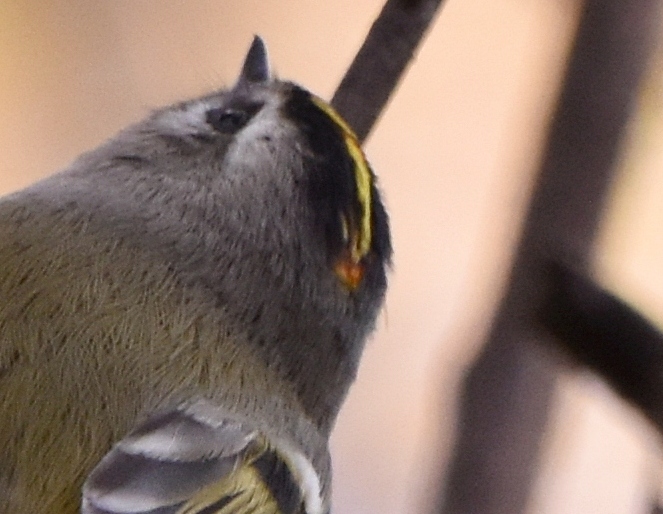
Sometimes we see a new feature of the bird from behind. This golden-crowned kinglet shows a bit of red at the back of his yellow crest …
Golden-crowned kinglet showing a hint of red in his crest, Frick Park, 26 Oct 2023 (photo by Charity Kheshgi)
… as seen in this closeup.
Closeup of golden-crowned kinglet’s head with hint of red in his crest (photo by Charity Kheshgi)
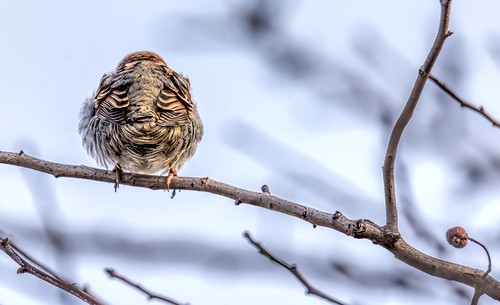
Surprisingly, some sparrows have faces on their back ends as seen in Wes Iversen’s photo of a fluffed up sparrow. Notice how the secondary wing feathers, back, and undertail coverts form eyes, nose and smiling mouth. The photograph is embedded from Wes Iversen’s original here on Flickr.