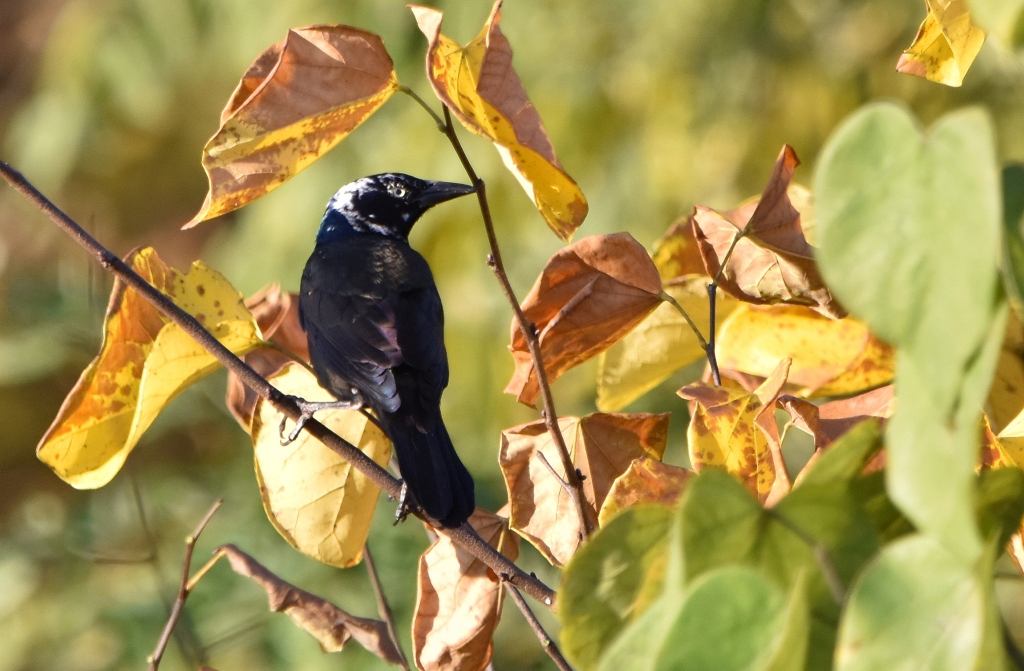
Leucistic common grackle, Frick Park, 26 Oct 2023 (photo by Charity Kheshgi)
7 November 2023
Last month at Frick Park Charity Kheshgi and I saw at least three birds with unusual white feathers in their plumage, a condition that labels them “leucistic.”
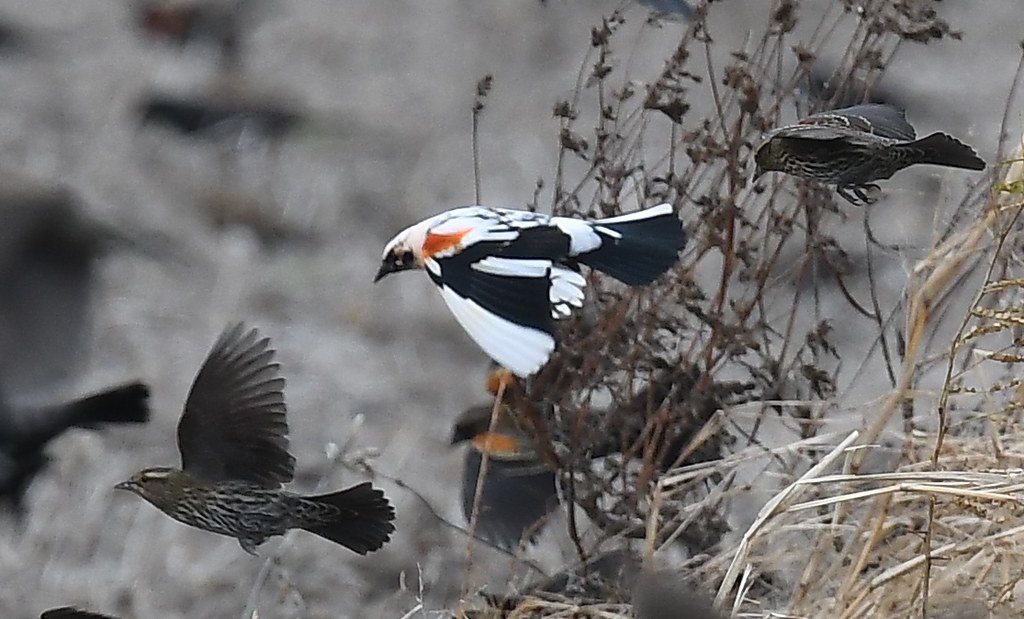
Leucism refers to an abnormality in the deposition of pigment in feathers. There is some disagreement as to whether the condition is genetic or caused by pigment cells that were damaged during development. Whatever the cause, the condition can result in a reduction in all types of pigment, causing pale or muted colors on the entire bird. Or the condition can cause irregular patches of white, and birds with these white patches are sometimes described as “pied” or “piebald.”
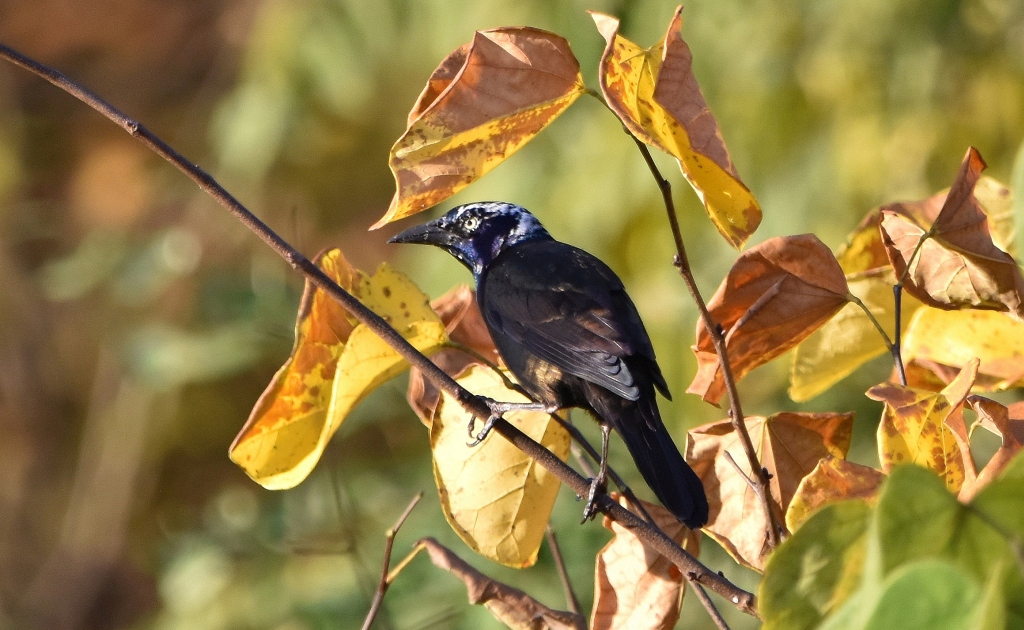
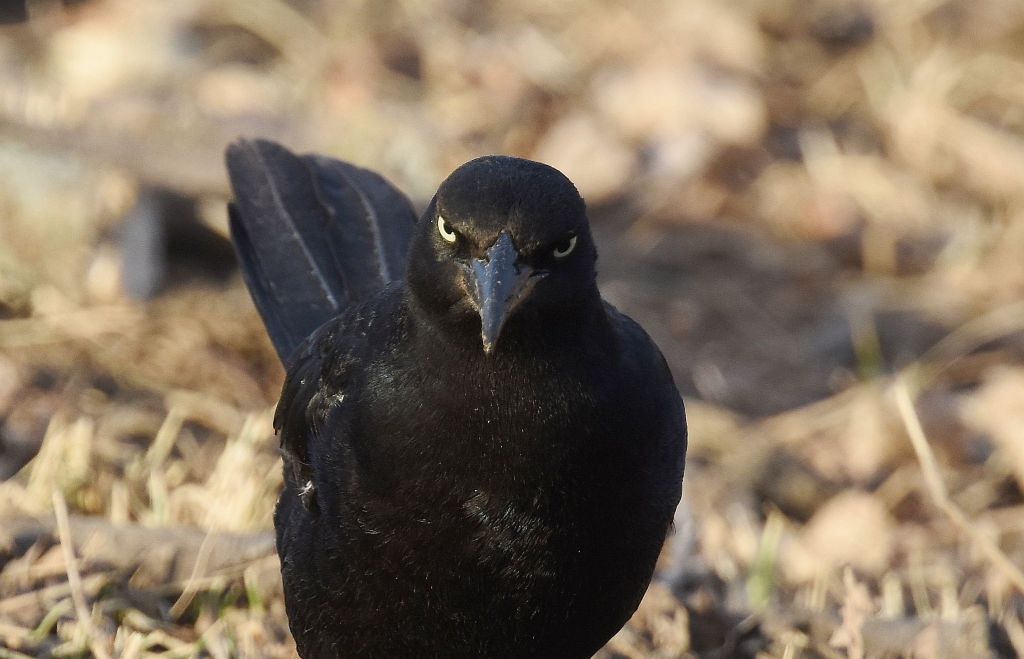
This common grackle had white feather patches on his head that were not uniform from side to side.
Leucistic common grackle, Frick Park, 26 Oct 2023 (photo by Charity Kheshgi)
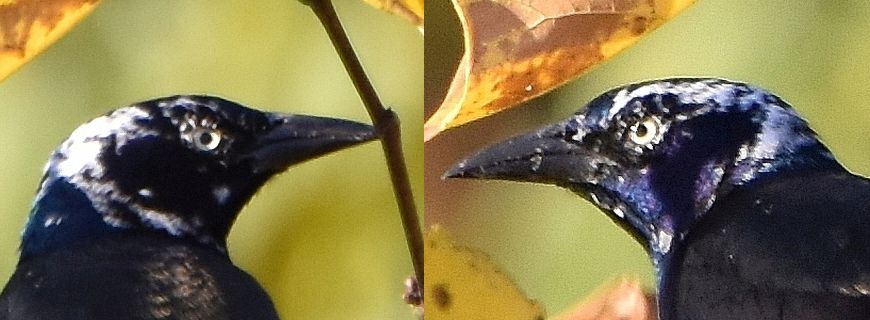
The circle of white dashes around his eyes indicate his eyelashes are white. (Did you know birds’ eyelashes are modified feathers?)
Leucistic grackle zoomed in, white dashes around his eyes (photo by Charity Kheshgi)
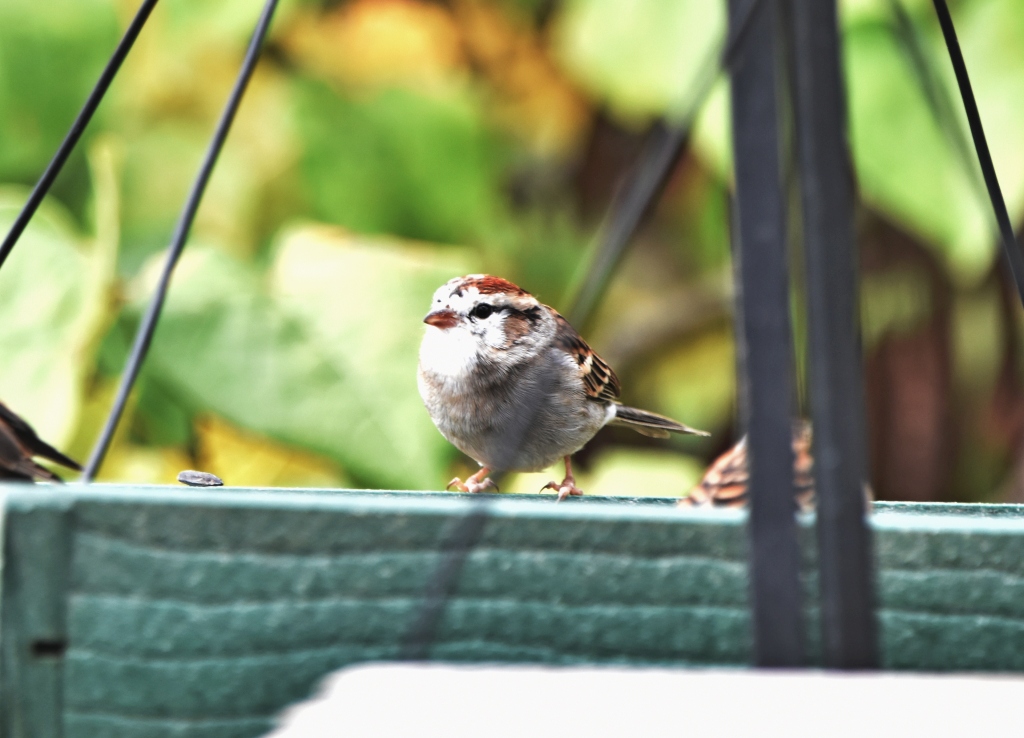
In early October we saw a white-faced chipping sparrow …
Leucistic chipping sparrow — white face, Frick Park, 7 October 2023 (photo by Charity Kheshgi)
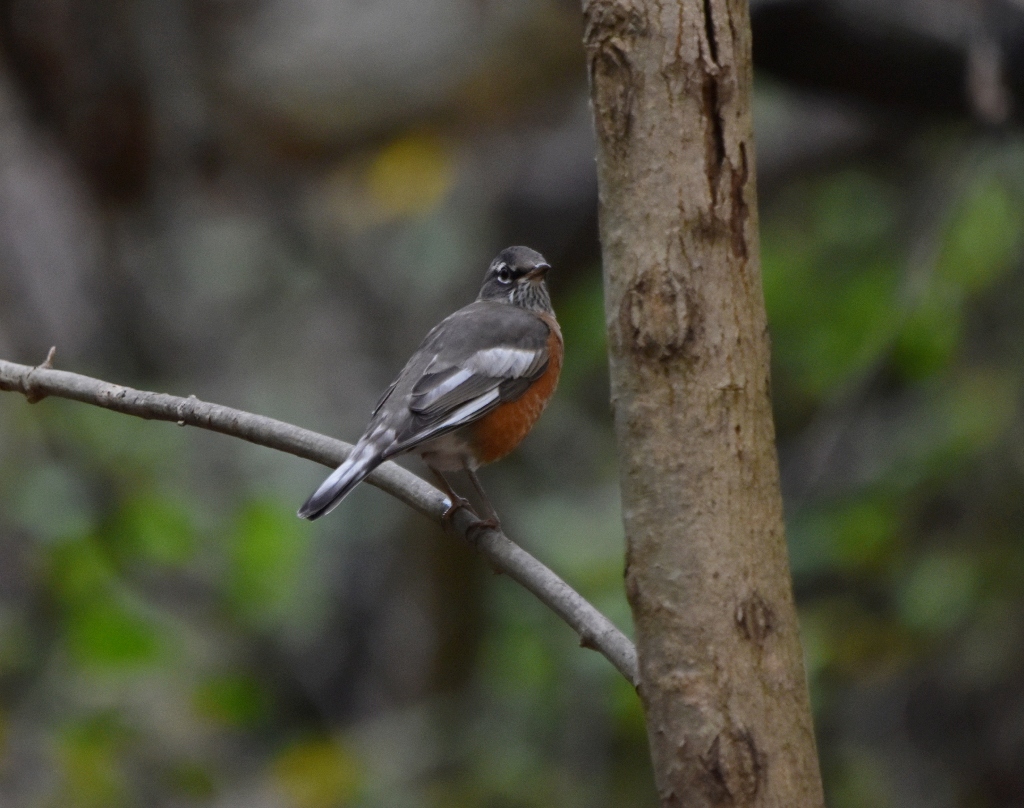
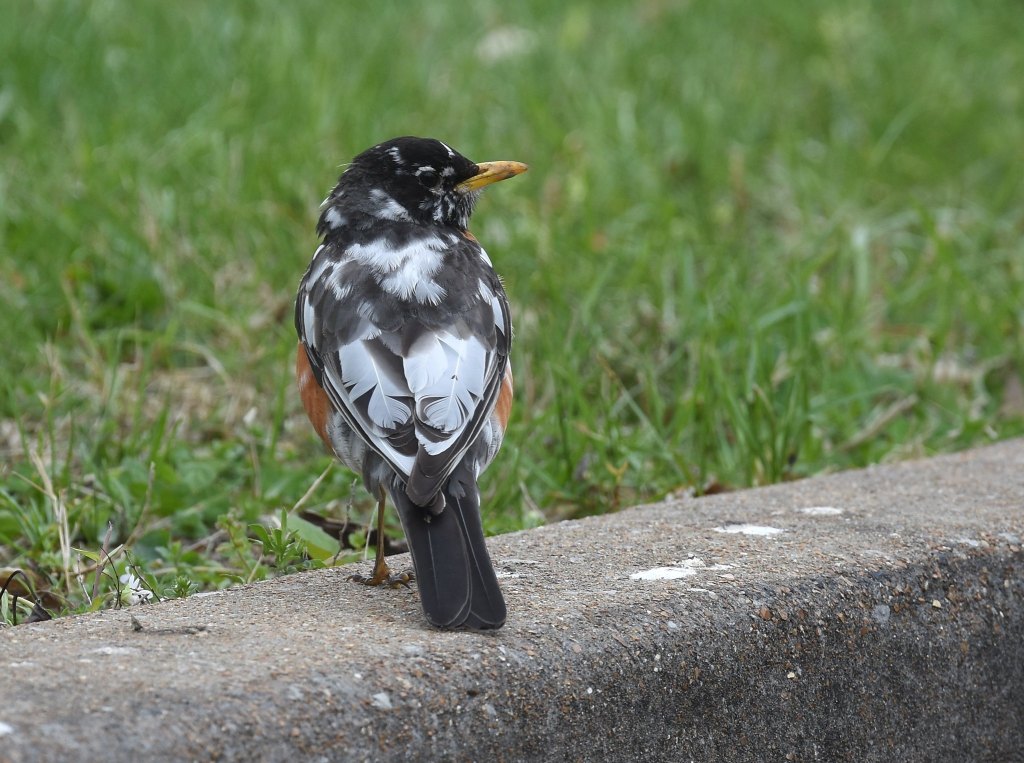
… and a leucistic American robin in the middle of the month.
Leucistic American robin, Frick Park, 18 Oct 2023 (photo by Charity Kheshgi)
It seems that leucism is more common in robins than in other species — or at any rate I see more of them. Here’s one that was photographed in Missouri.
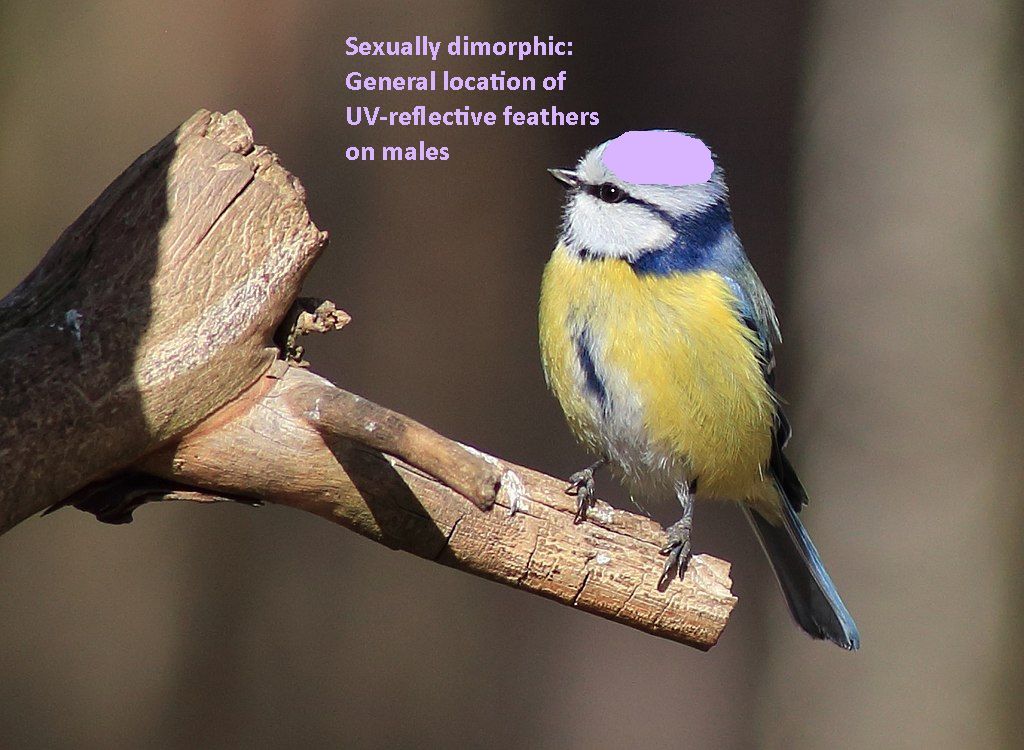
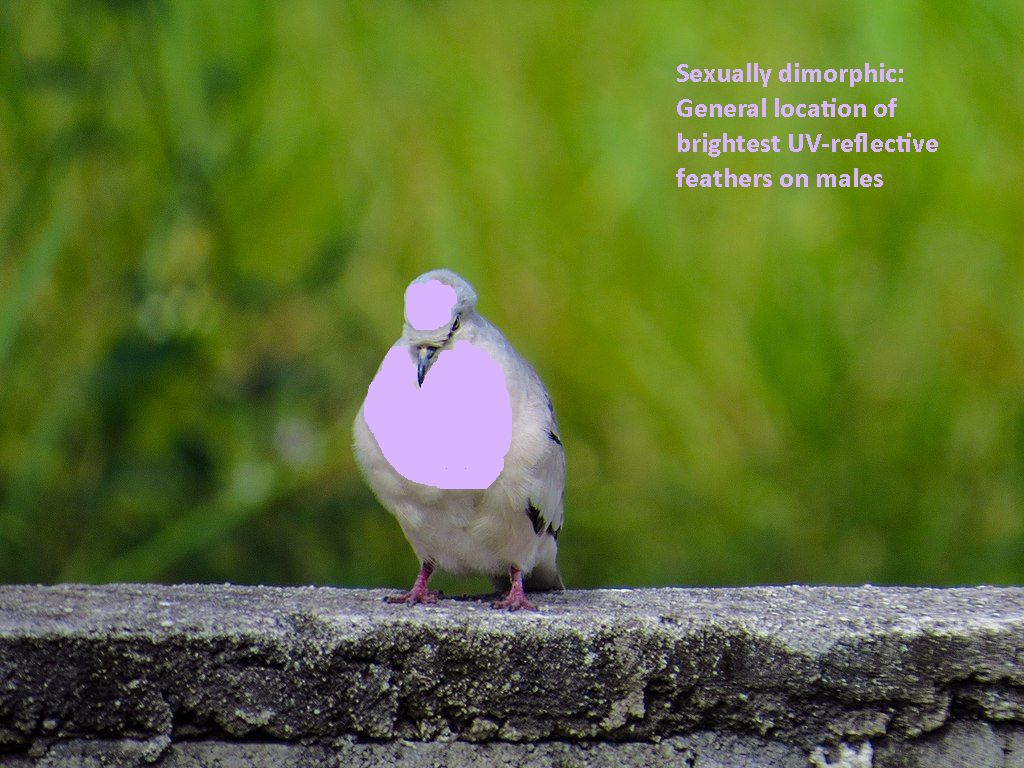
Though 70% of the songbirds in our field guides have sexes that look the same to us, this isn’t true from the birds’ point of view. Birds can see ultraviolet light (we cannot) and often have plumage differences in the ultraviolet range. With the invention of inexpensive UV viewing equipment, scientists looked at birds and were amazed at what they found. 90% of the species tested had differences between males and females under UV light. We humans just can’t see it.
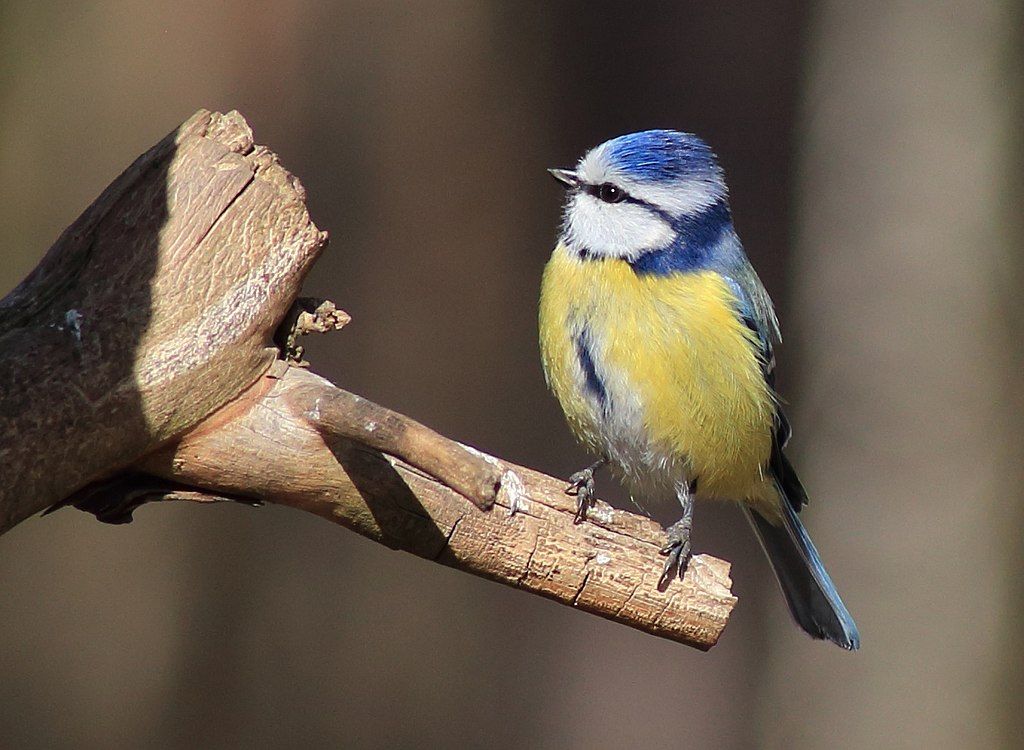
Eurasian blue tits (Cyanistes caeruleus), shown at top, were one of the first wild birds examined in the ultraviolet range. Both sexes look alike … or do they?
Using a spectrophotometry probe to scan the feathers of wild-caught birds, Andersson and his colleagues discovered that blue tits themselves have no problem telling males from females: Males have a patch of feathers on the crown of the head that strongly reflects UV light; females do not.
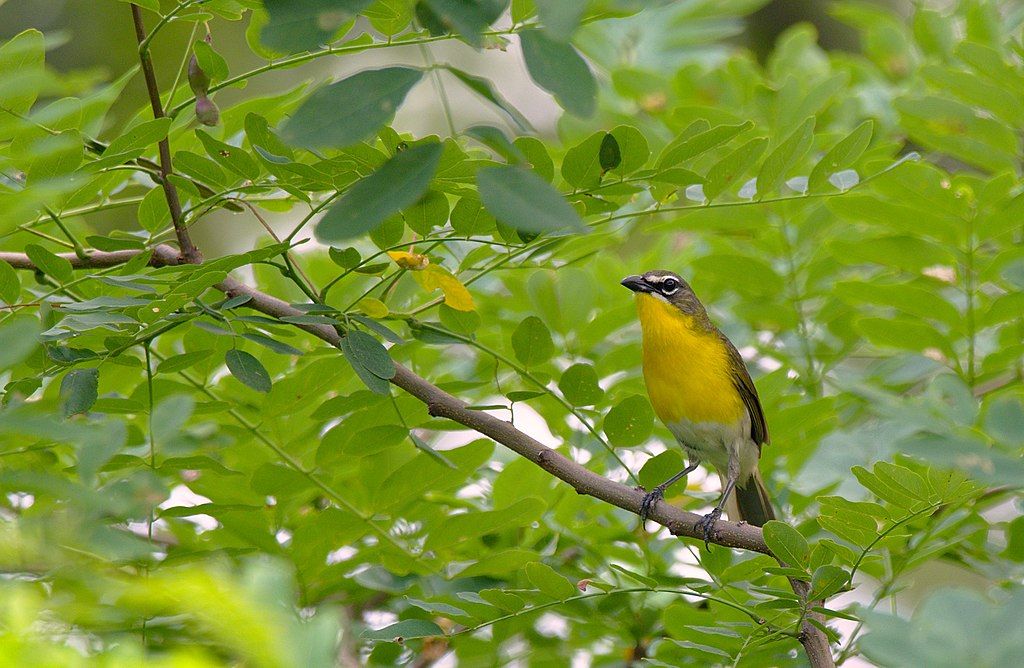
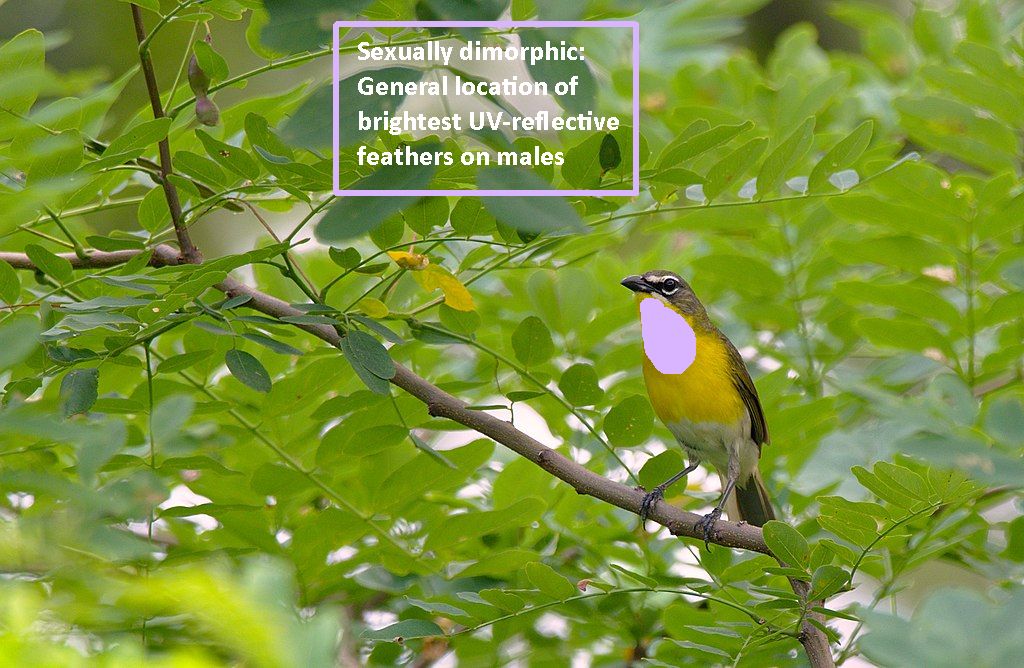
Both sexes of yellow-breasted chats (Icteria virens) look the same from afar, though in the hand the sexes can be distinguished (interior mouth color for instance). A 2004 study, Sexual dichromatism in the yellow-breasted chat, detected that the male’s throat has ultraviolet colors that make it much brighter than the female’s.
Apparently most birds are sexually dimorphic in ultraviolet including cedar waxwings, barn swallows, mockingbirds and western meadowlarks. According to True Colors: How Birds See The World, biologist Muir Eaton scanned the plumage of museum study skins of 139 songbird species in which males and females appear alike — but they aren’t alike under UV. He concluded, “To the birds themselves, males and females look quite different from one another.”
For more information see:
Photos of birds showing ultraviolet features at uvbirds.com. (Check out the flamingo!)
The great-tailed grackle (Quiscalus mexicanus), a close relative of our common grackle, is so numerous and annoying in Austin, Texas in the winter that there are always news stories about them. This interview with a grackle researcher revealed a very cool fact about great-tailed grackles that probably applies to our grackles as well.
Great-tailed grackles can move their eyes independently to keep watch in two different directions at the same time! Check out the video below.
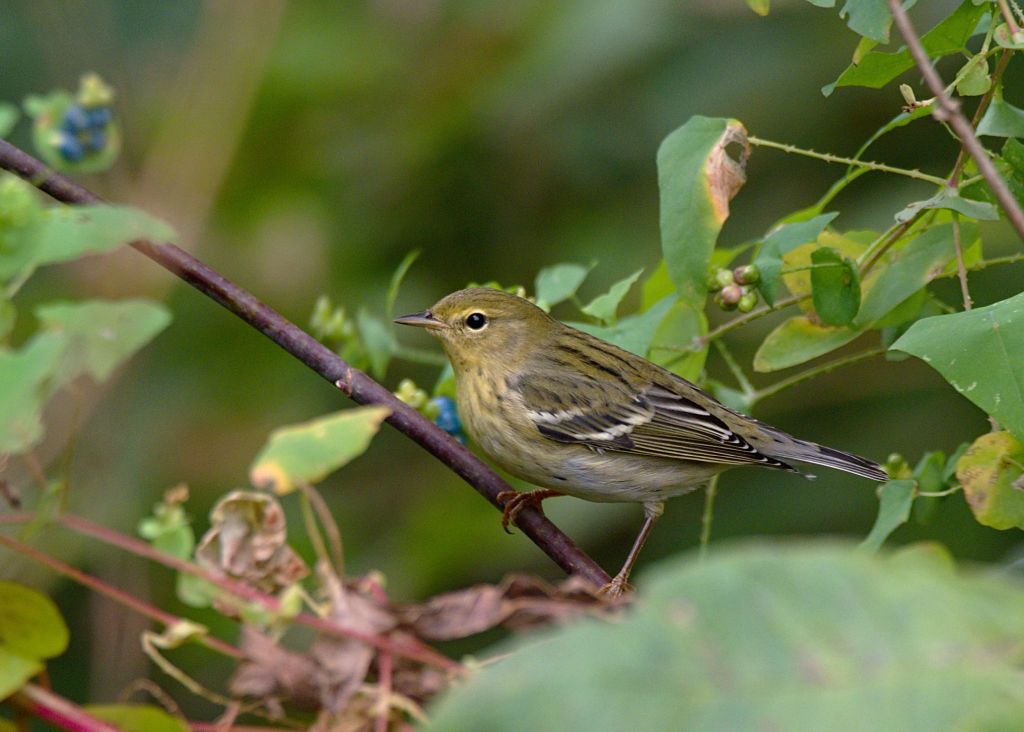
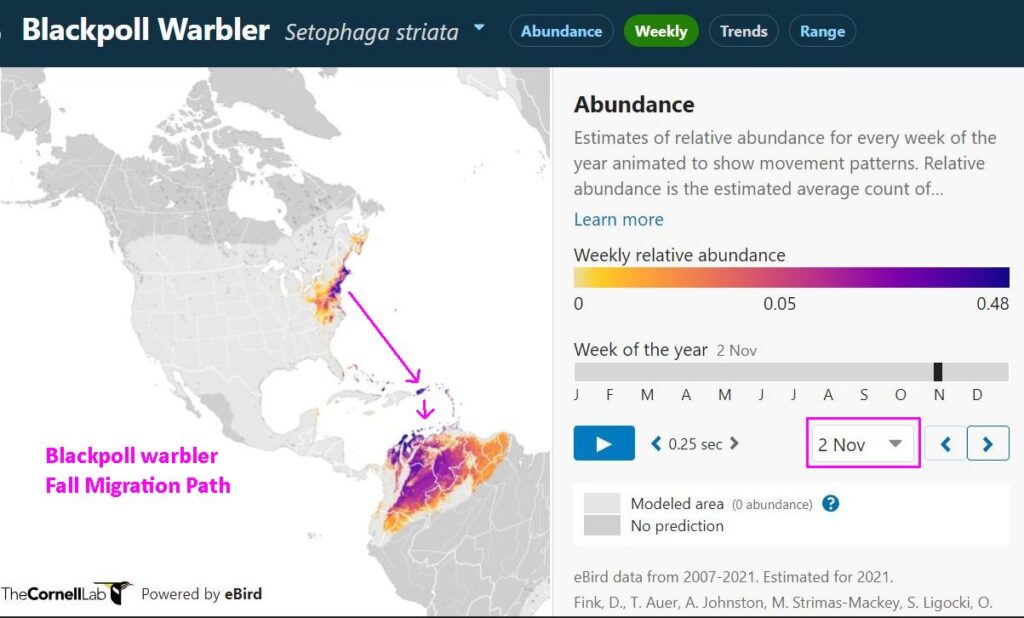
The blackpoll’s transoceanic path was proven in a 2015 study by Bill DeLuca and the Vermont Center for Ecostudies. VCE writes:
Bill DeLuca (Northeast Climate Science Center) and VCE solved this great modern-day avian mystery. Using light-level geolocators attached to Blackpoll Warblers in Vermont and Nova Scotia, DeLuca and colleagues documented the longest distance non-stop overwater flights ever recorded for a migratory songbird. During October, Blackpoll Warblers initiate a ~3-day non-stop transoceanic flight of ~2500 km from the north Atlantic Coast to Hispaniola and Puerto Rico. Radar data show migrating songbirds fly at 2,600 to 20,000 feet while making this journey. After a few weeks, they fly onto Columbia or Venezuela where they overwinter. Their spring migration route takes them over Cuba to Florida, where they journey up the eastern US seaboard to reach their breeding grounds in late May.
Of course I wondered if blackpoll warblers sleep in flight during their 3 day transoceanic trip, but we won’t find out any time soon. Blackpolls are way too small to wear the sleep monitoring gear used on the great frigatebird.
(photo from Wikimedia Commons, maps from eBird Weekly Abundance; click on the captions to see the originals)
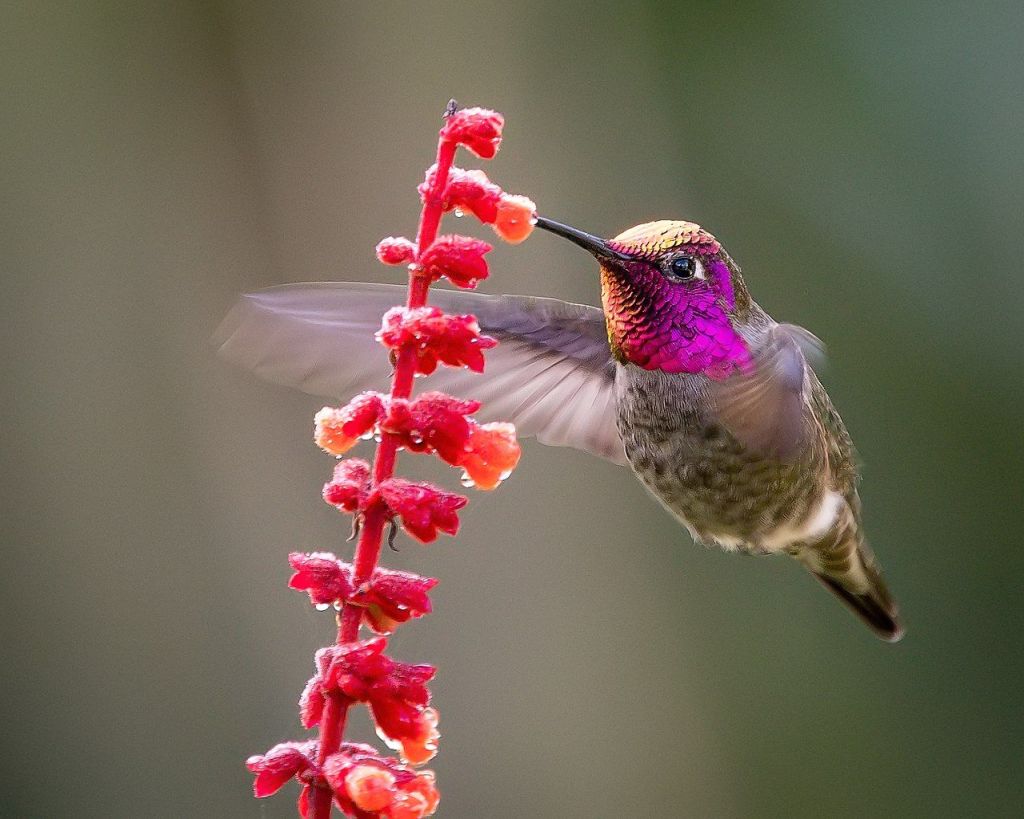
Find out what causes iridescence in this 16 minute video from PBS @BeSmart. If you don’t have much time, watch the first 4+ minutes about hummingbirds.
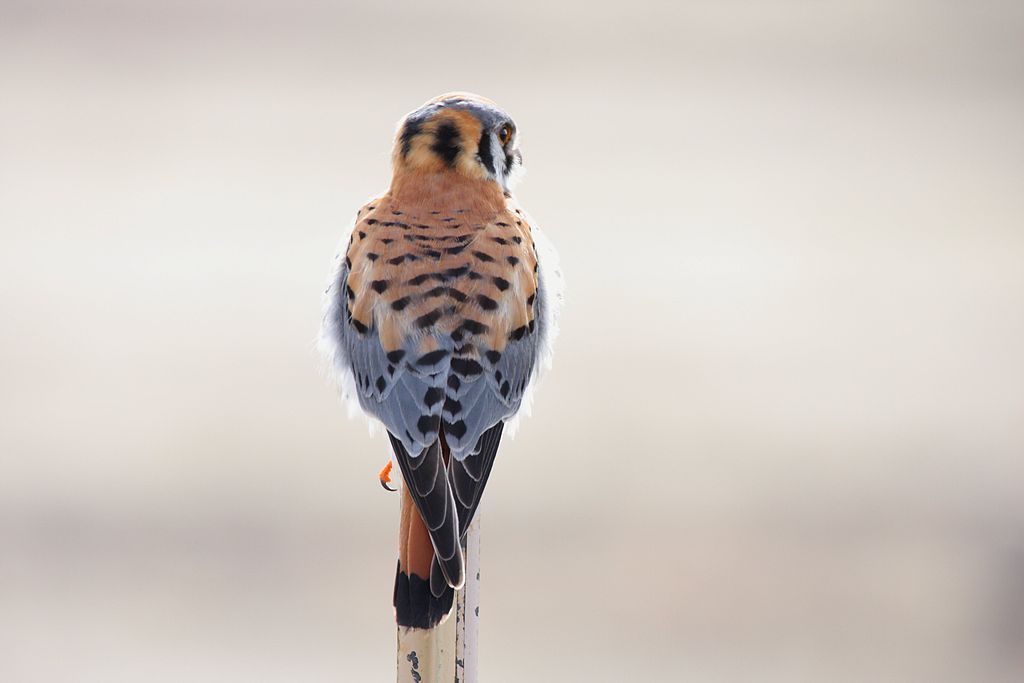
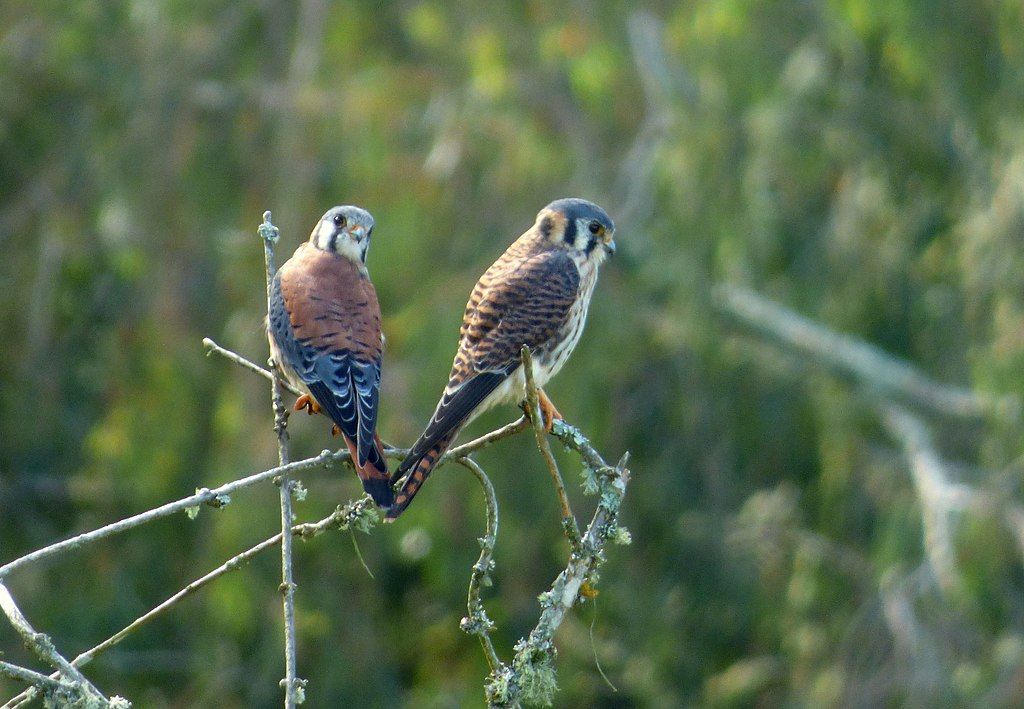
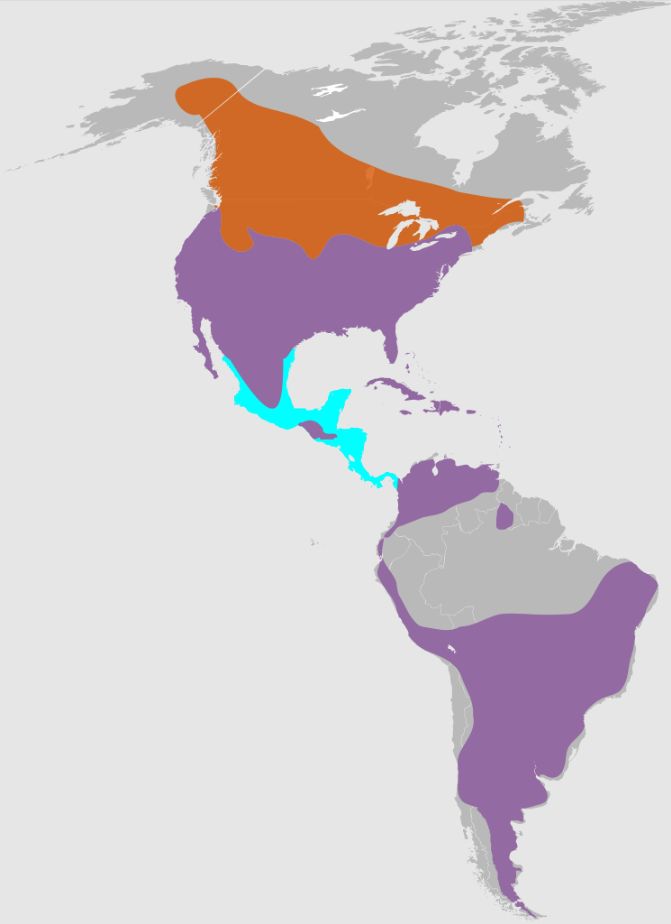
When I began watching peregrine falcons 22 years ago, peregrines were endangered and our smallest falcon, the American kestrel, was doing just fine, but the tables have turned. Peregrines have fully recovered from extinction in eastern North America while kestrels have lost half their population and face an uncertain future. The New York Times described their plight this week in The Mystery of the Vanishing Kestrels: What’s Happening to This Flashy Falcon? Can we save this beautiful bird before it’s gone?
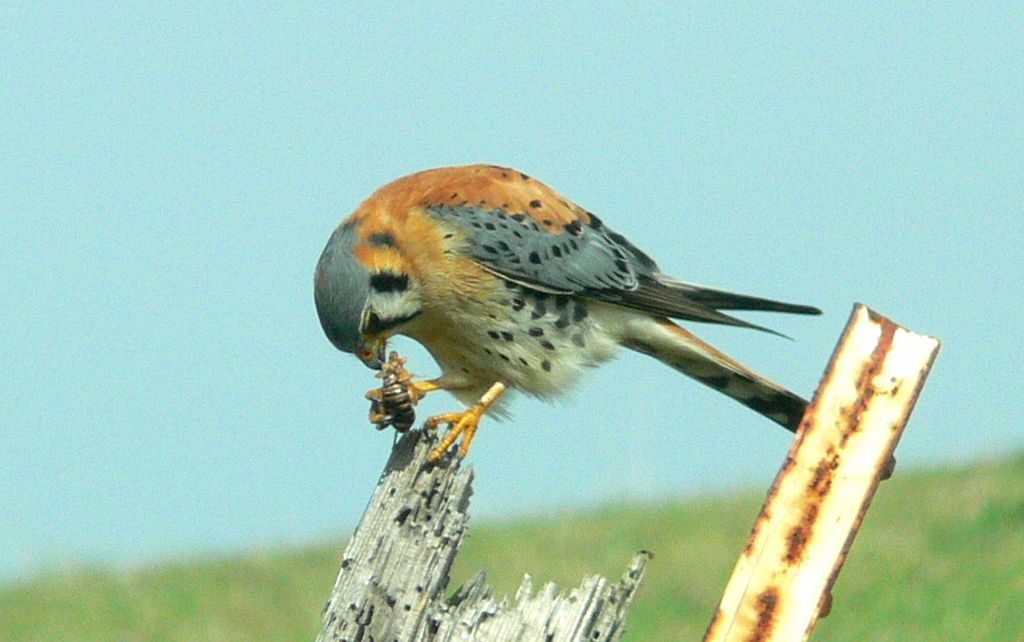
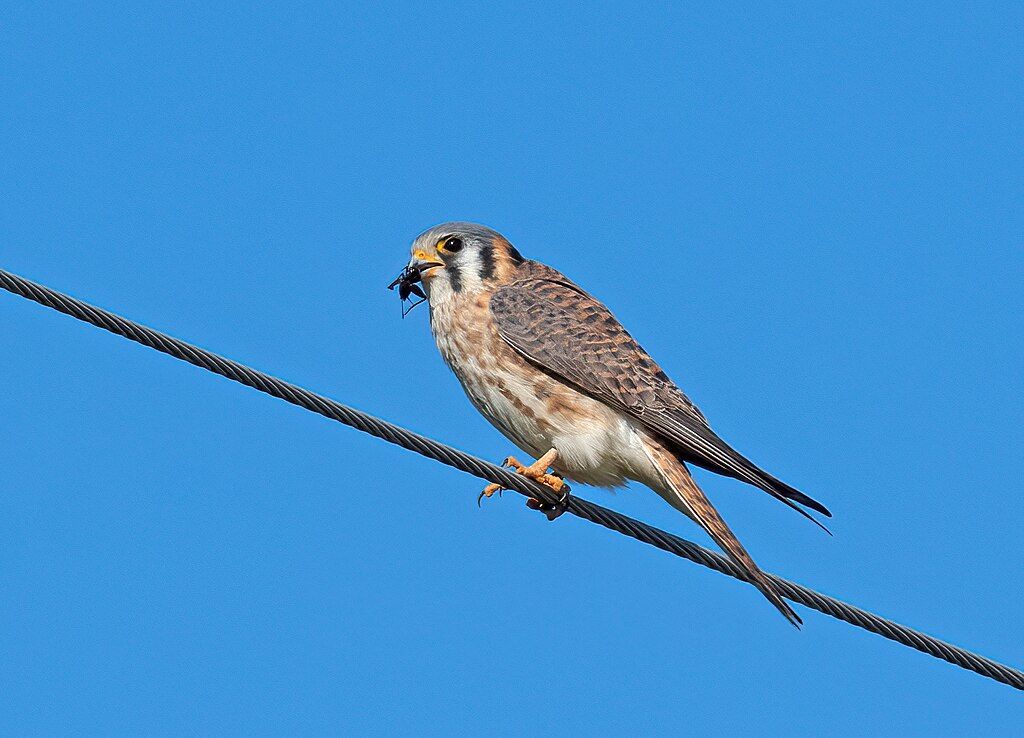
American kestrels are versatile birds. At home in grasslands, meadows, deserts, cities and suburbs, they eat grasshoppers, crickets, large flying insects, beetles, lizards, small rodents and small birds.
Kestrels nest in cavities in buildings, trees, cliffs and nestboxes but more than half of their sites are unoccupied now in eastern North America. I’ve seen the decline first hand in Pittsburgh. A decade ago there were two kestrel nests within a few blocks of Downtown’s Third Avenue peregrines. Now there are none.
Dr. John Smallwood, a professor of biology at Montclair State University interviewed in the New York Times article, has monitored 100 kestrel nestboxes in New Jersey for nearly 30 years. The number of occupied nests at his sites peaked at 61 in 2002 and has dropped ever since.
What’s going wrong for kestrels? Are they out-competed for prey? Are they ingesting poison? What’s happening on their wintering grounds? Are insect declines affecting kestrels? Are neonicotinoid pesticides a factor? And what about the bigger questions of habitat and climate change?
Many kestrel experts think it’s a combination of causes. Dr. Smallwood agrees, but he still has a top suspect. “If I’m only allowed one word: grasshoppers.”
The one parameter that seems to be declining over time, researchers say, is survival of young birds in the summer.
… the thinking is that those juveniles may be more dependent on insect prey because it’s easier to catch.
Meanwhile a nationwide study funded by the USGS and the U.S. Fish and Wildlife Service is looking into the American kestrel’s mysterious decline. I hope they find the answer soon.
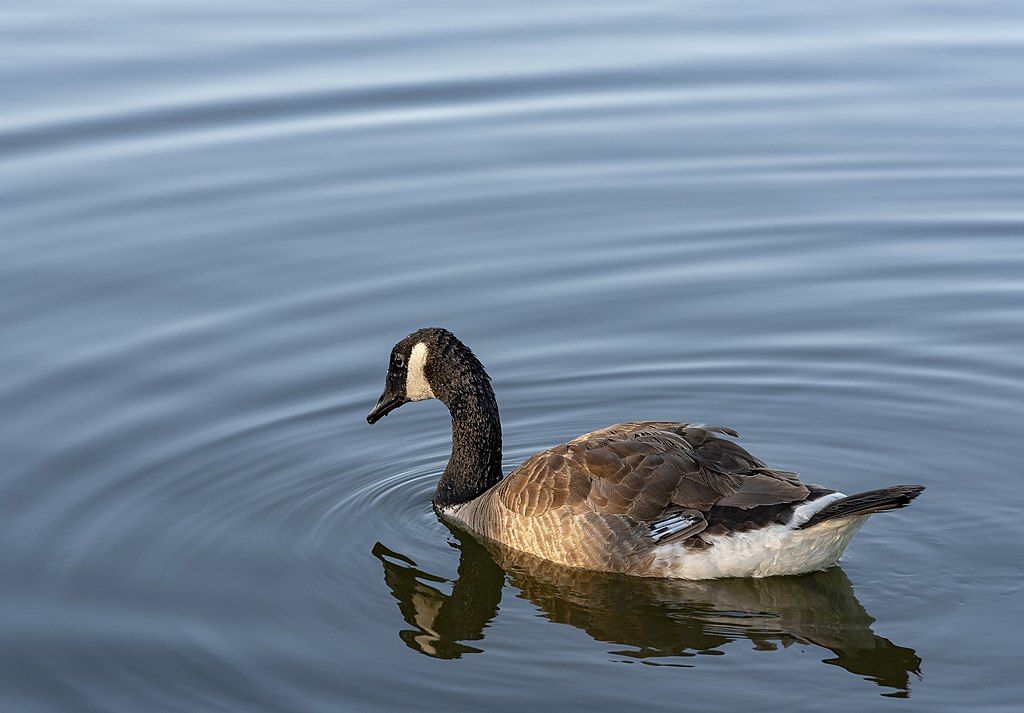
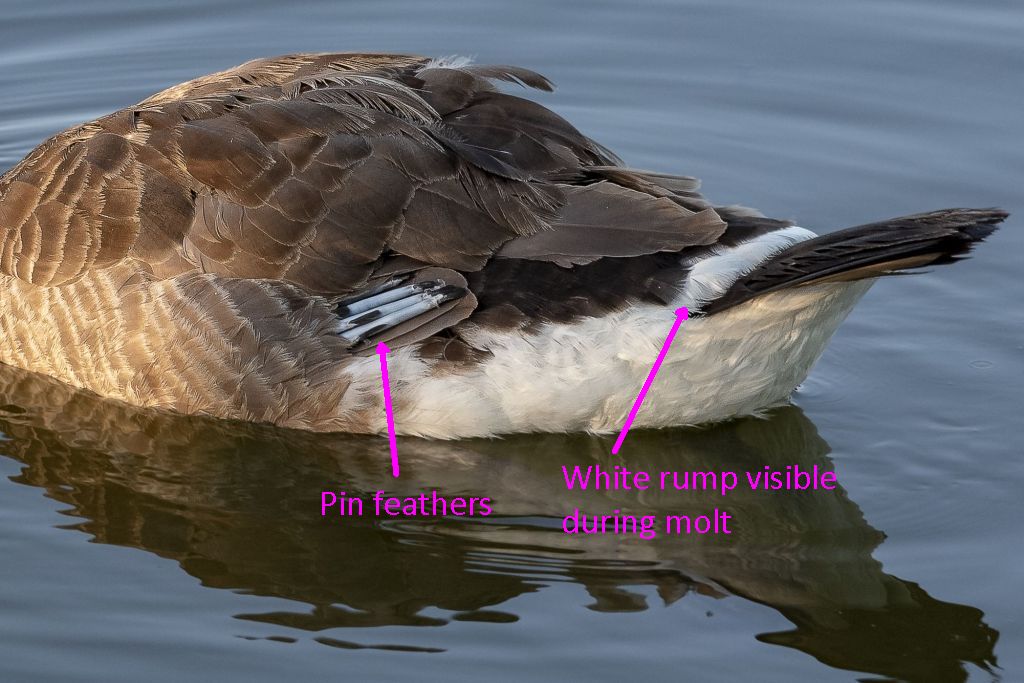
Once a year, from late June until August, Canada geese spend six weeks molting all their wing feathers. This means they can’t fly in July, nor even in late June.
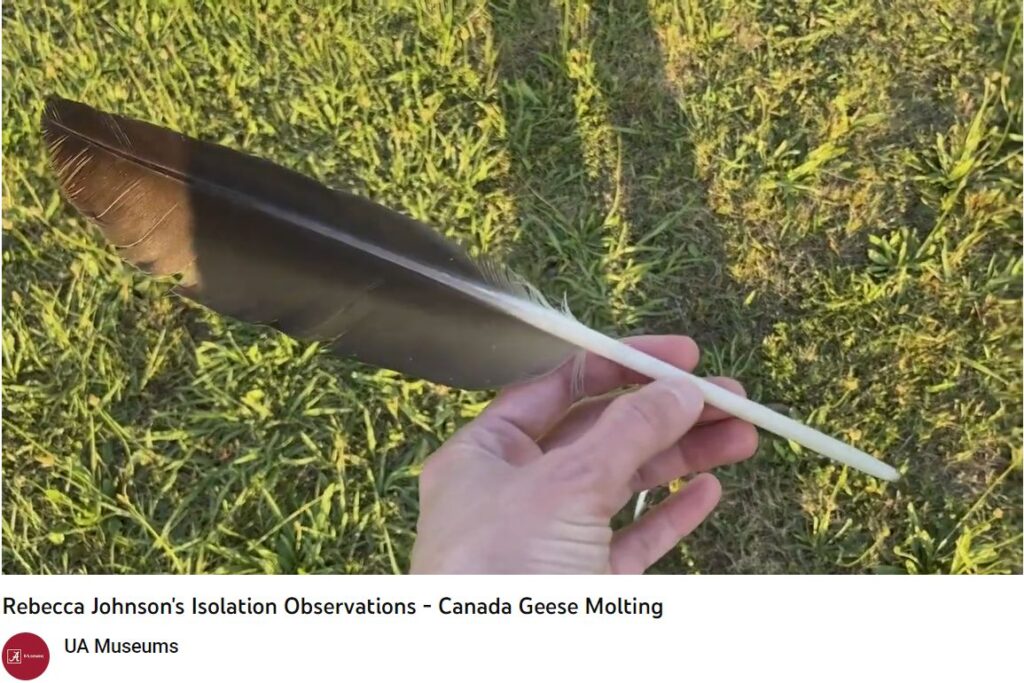
On a walk at Herr’s Island yesterday I saw many Canada geese swimming in the river and a few of their primary feathers — the “fingertip” feathers — scattered on shore. At first I wondered if a goose had been attacked and then I realized the feathers were a sign of their synchronous molt. Here’s a snapshot from a similar discovery made by Rebecca Johnson in 2020. (Click on the snapshot to see her video on YouTube.)
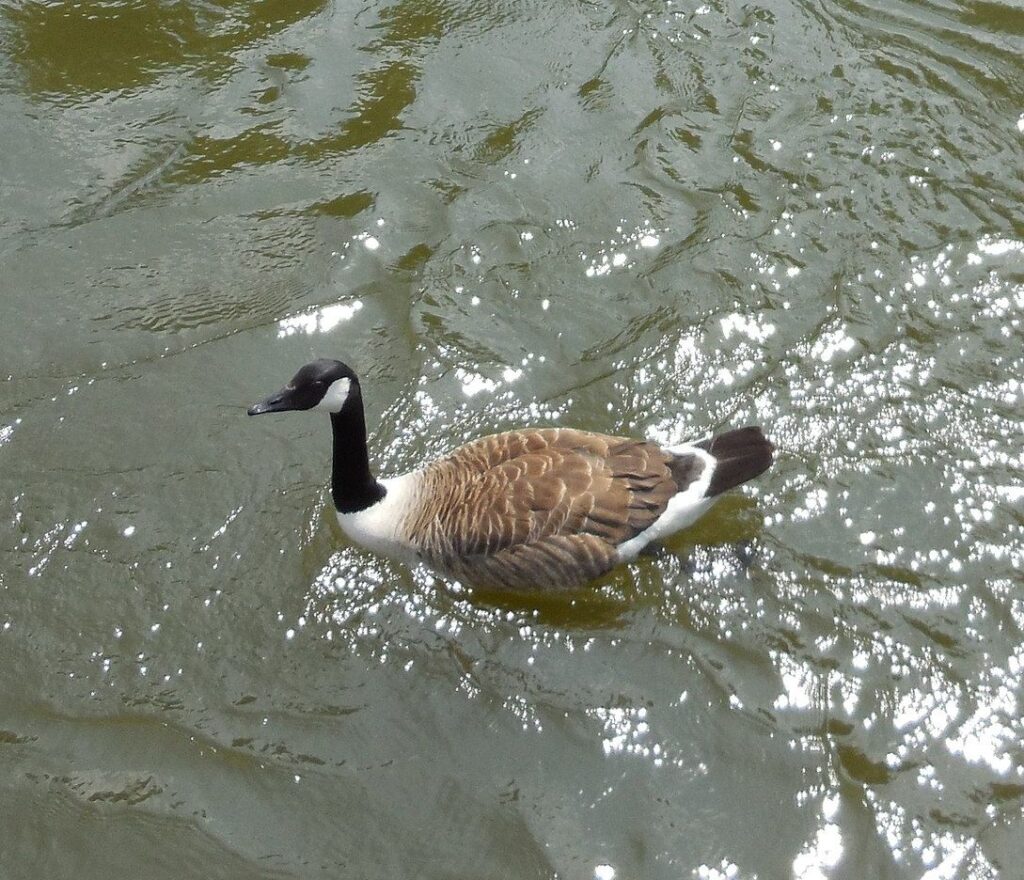
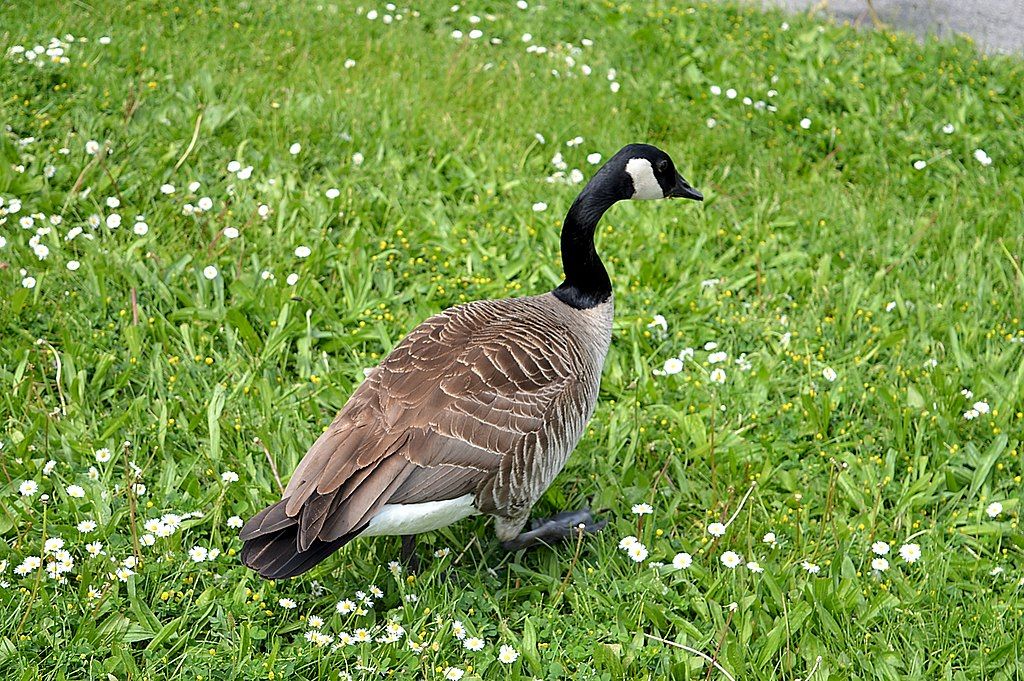
Even if you don’t see discarded wing feathers you can tell a Canada goose is molting because its white rump is visible above the dark tail. It’s really noticeable from above.
In late June and July when they cannot fly Canada geese are safe only in water. You’ll see them feeding just a short walk from a large body of water and notably absent from landlocked places.
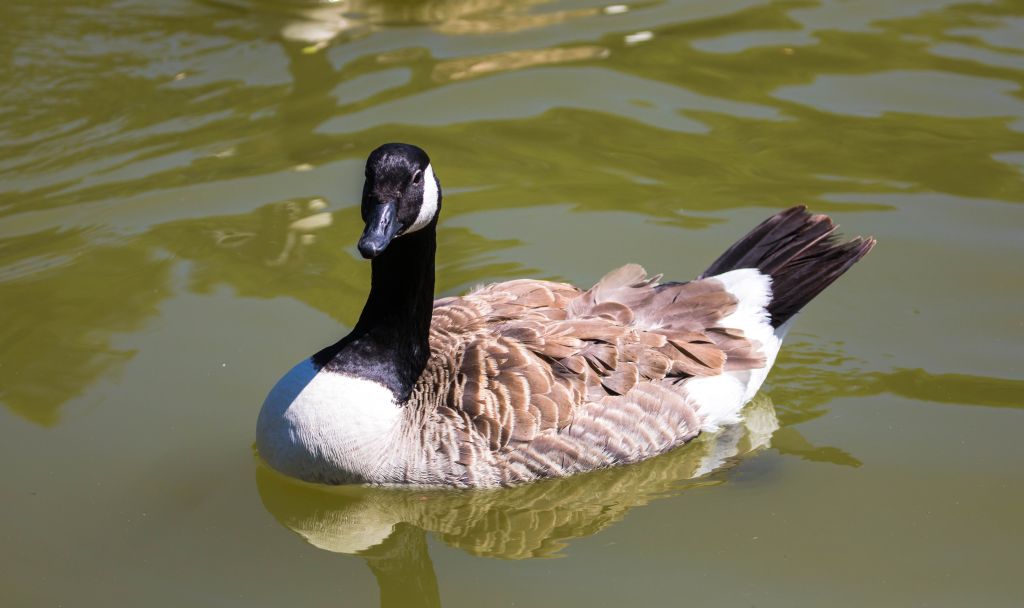
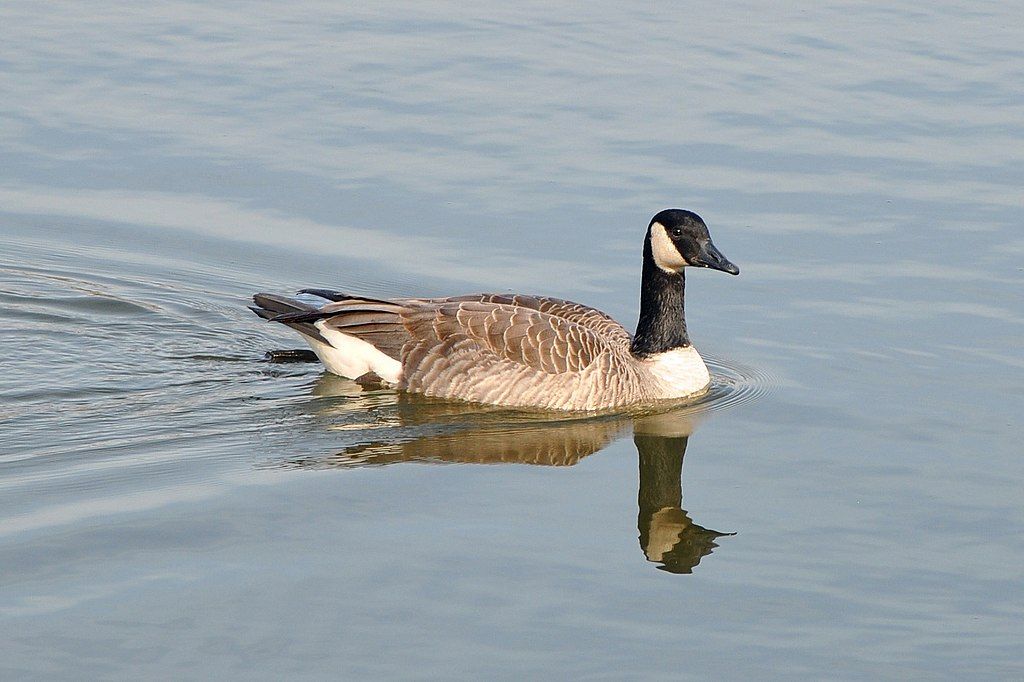
When they can fly again and their tails will look like this.
As humans we recognize each other by face, body shape and the way a person walks, but it’s rare that we can recognize individual birds. Birds move too fast to examine their faces and in most cases we don’t know what to look for. However if you can “hold them still” in photographs it’s possible to see patterns. This is especially true of your backyard birds that can be photographed over and over.
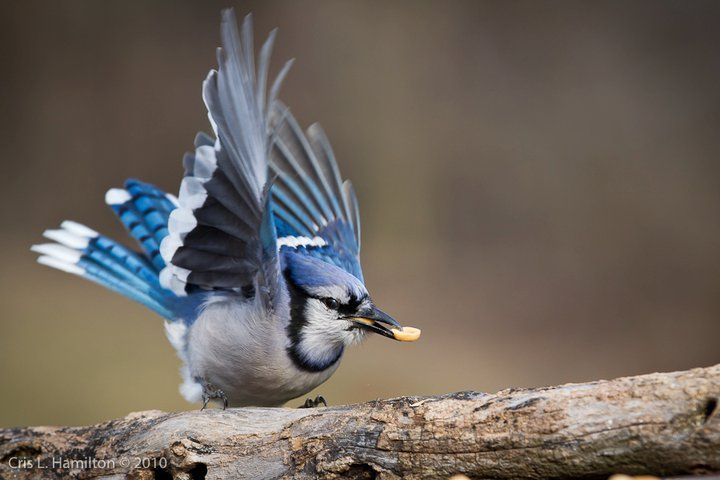
Blue jays all look the same … but not really. Their facial markings can be unique enough to tell them apart in photos. Lesley The Bird Nerd in Ontario, Canada has photographed her local blue jays for many years and learned to tell who’s who by face. Check out her 6.5 minute video below.
On Throw Back Thursday an old topic but a good one …
Humans have a trait called handedness in which we show a preference for using one hand over the other. Interestingly, dominance in the left hemisphere of our brains results in right-handedness and vice versa. About 90% of us are right-handed.
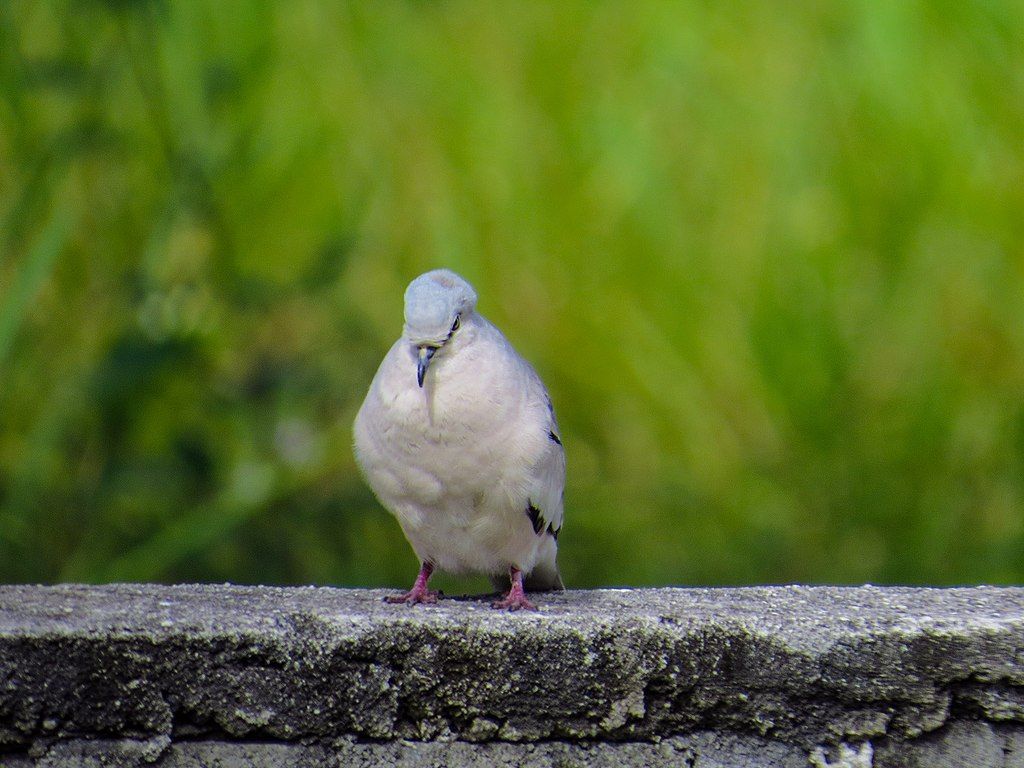
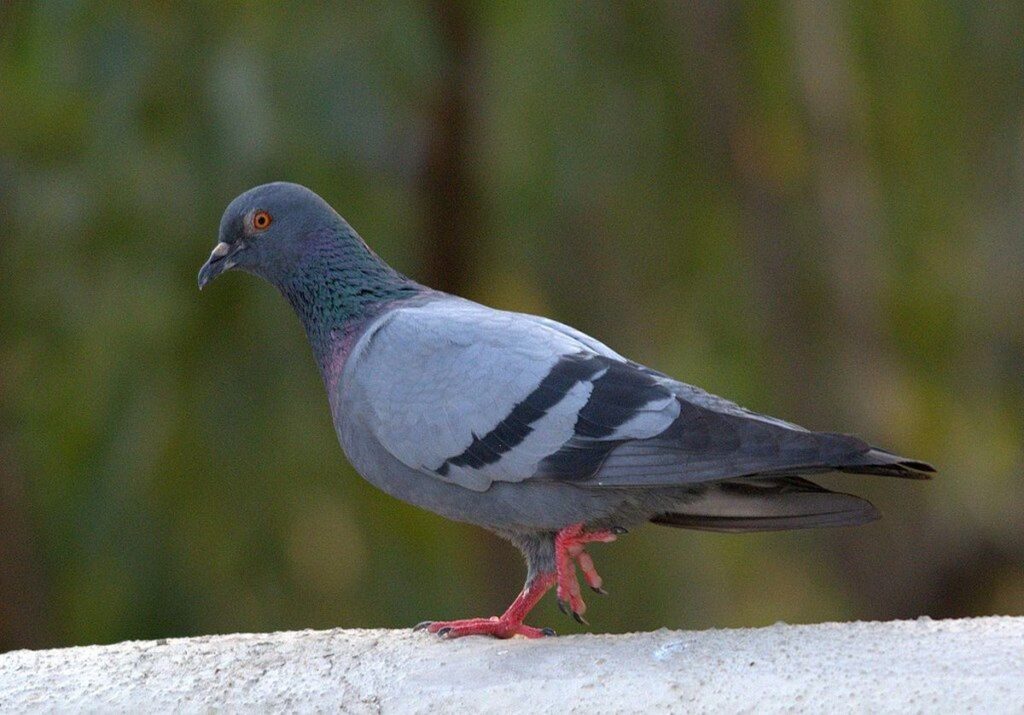
Pigeons show it with their feet. If we could watch closely enough we’d notice that a pigeon leads with one foot when it lands, choosing to land first on its dominant foot. Find out more in this 2016 article:
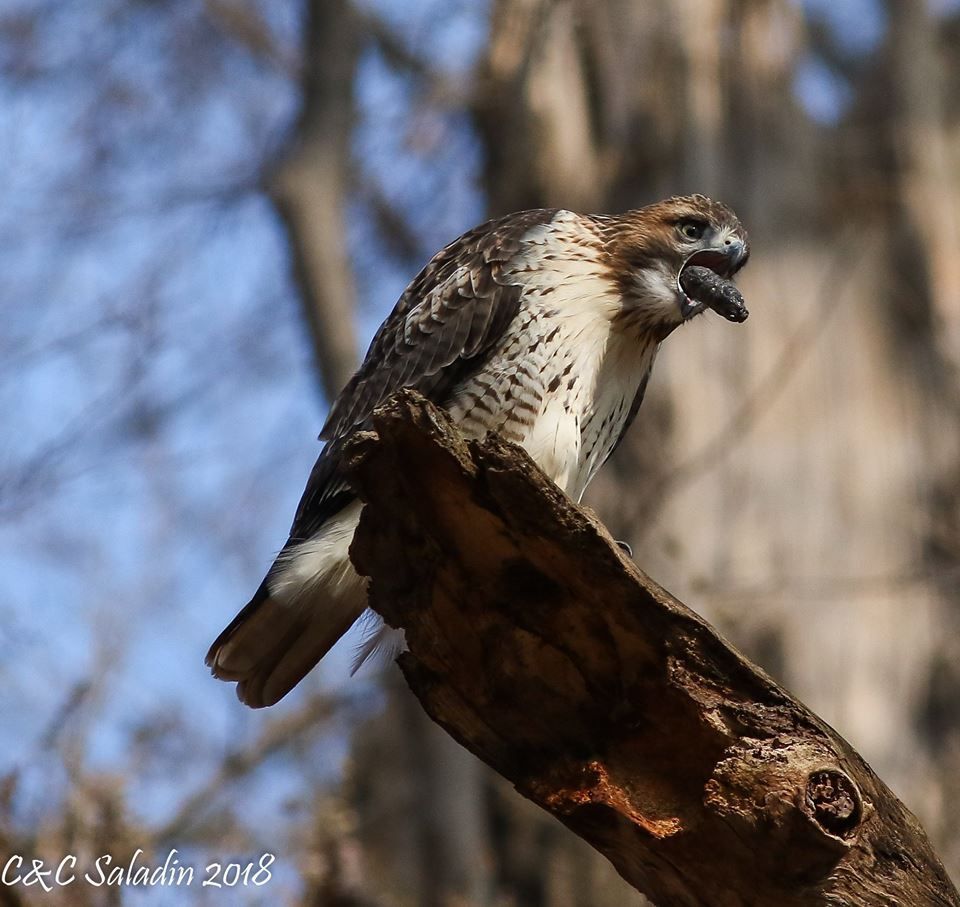
Red-tailed hawk casting a pellet, 2018 (photo by Chad+Chris Saladin)
22 January 2023
This red-tailed hawk is not consuming the lump near his mouth. He’s casting a pellet of indigestible bones, fur and feathers that came up from his gizzard. Pellets are a normal by-product of digestion in birds of prey. If you find one, it can tell you what the bird was eating.
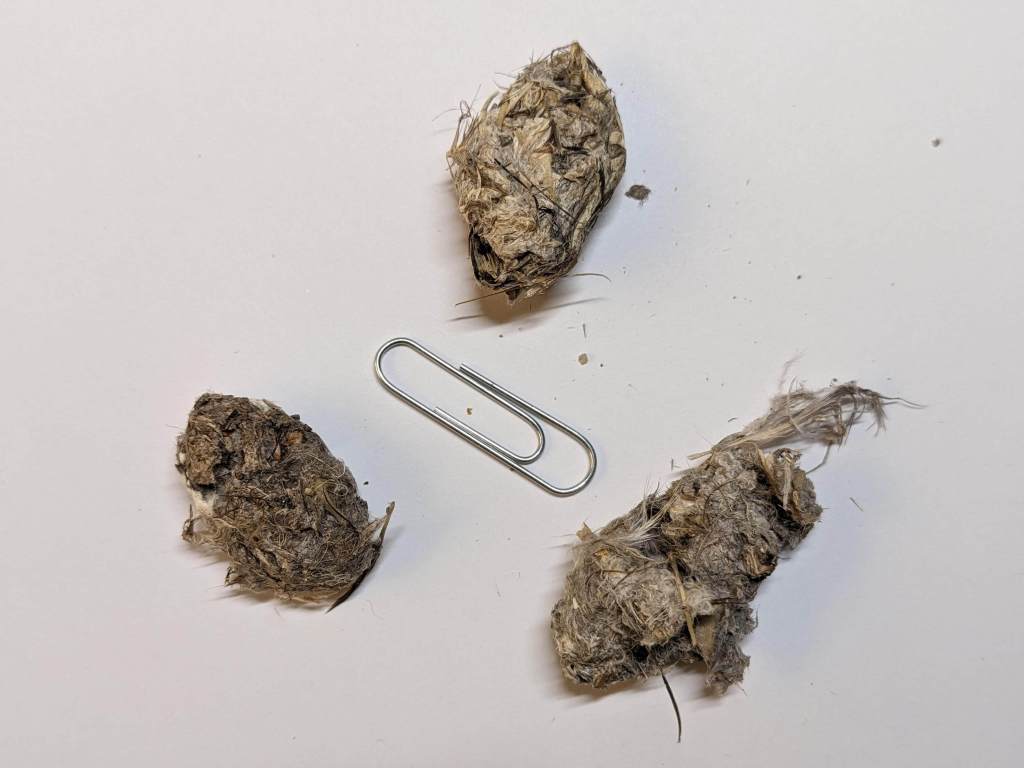
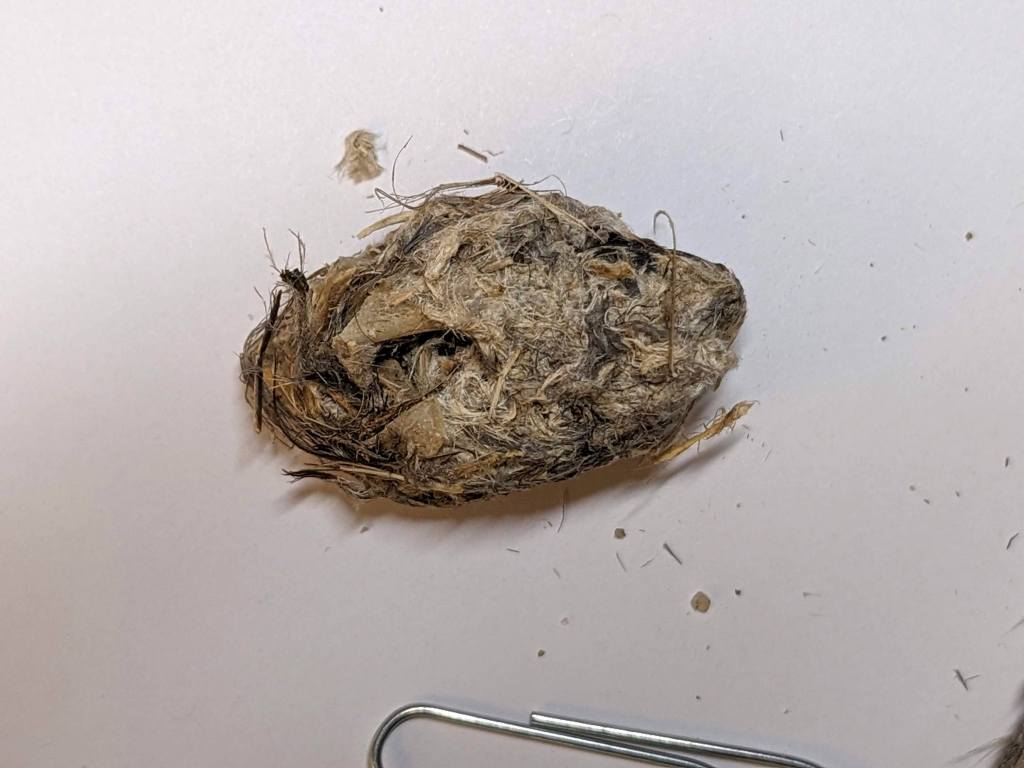
We always find pellets during annual maintenance at the Pitt peregrine nestbox including these three found during our 9 January visit (paperclip for scale). The pellets can be many months old.
Peregrine pellets from Cathedral of Learning nestbox, 9 Jan 2023 (photo by Kate St. John)
A closeup shows feathers and bones (no fur*) but is not very enlightening due to the pellet’s age. Fortunately I stored the pellets in a ziploc bag. After they thawed a small fly appeared inside the bag, hatched from eggs laid on the pellet in much warmer weather. Ewww!
Closeup of peregrine pellet (photo by Kate St. John)
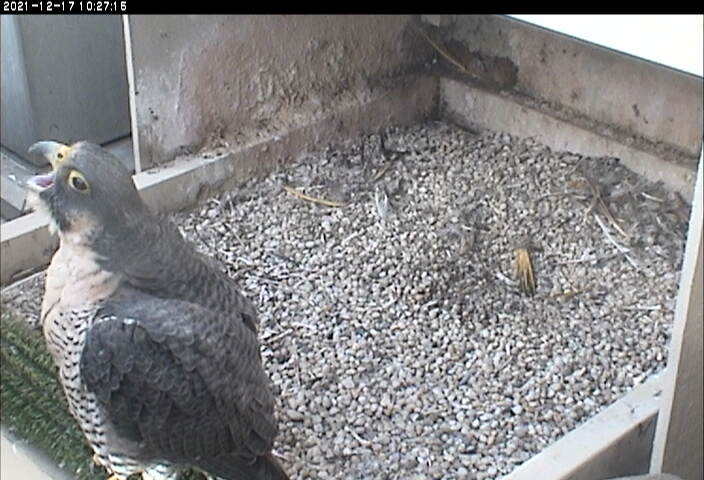
Morela casting a pellet, 17 Dec 2021 (photo from the National Aviary snapshot camera at Univ of Pittsburgh)
Peregrine pellets are slightly longer than a paperclip. Some birds make much larger pellets.
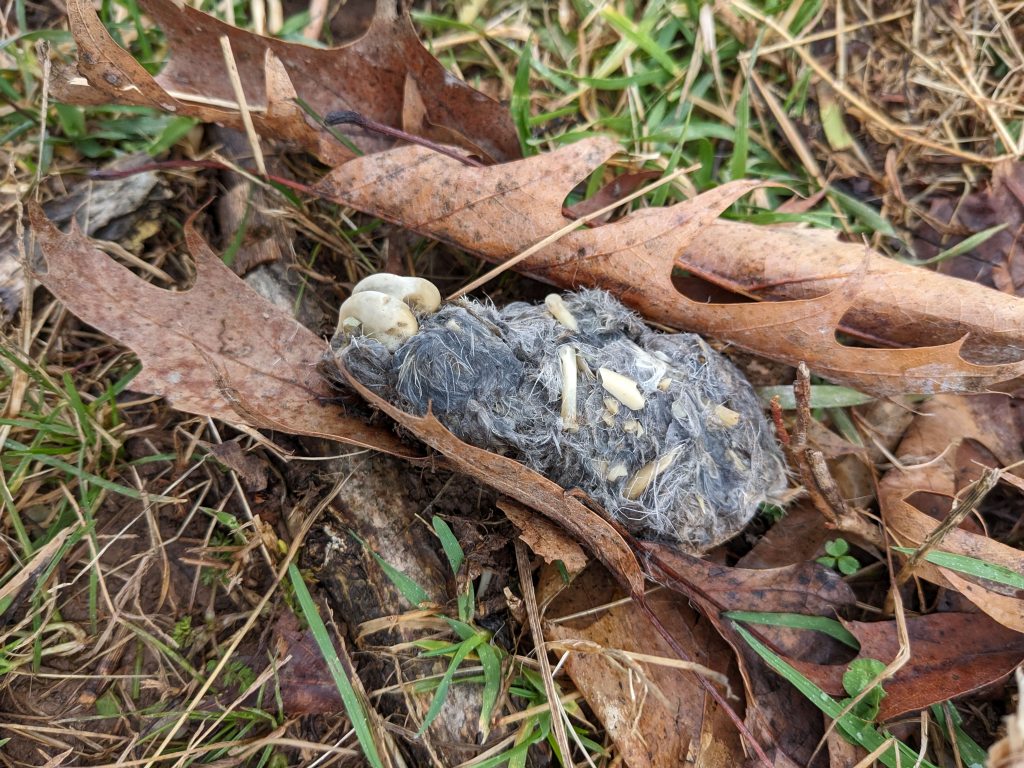
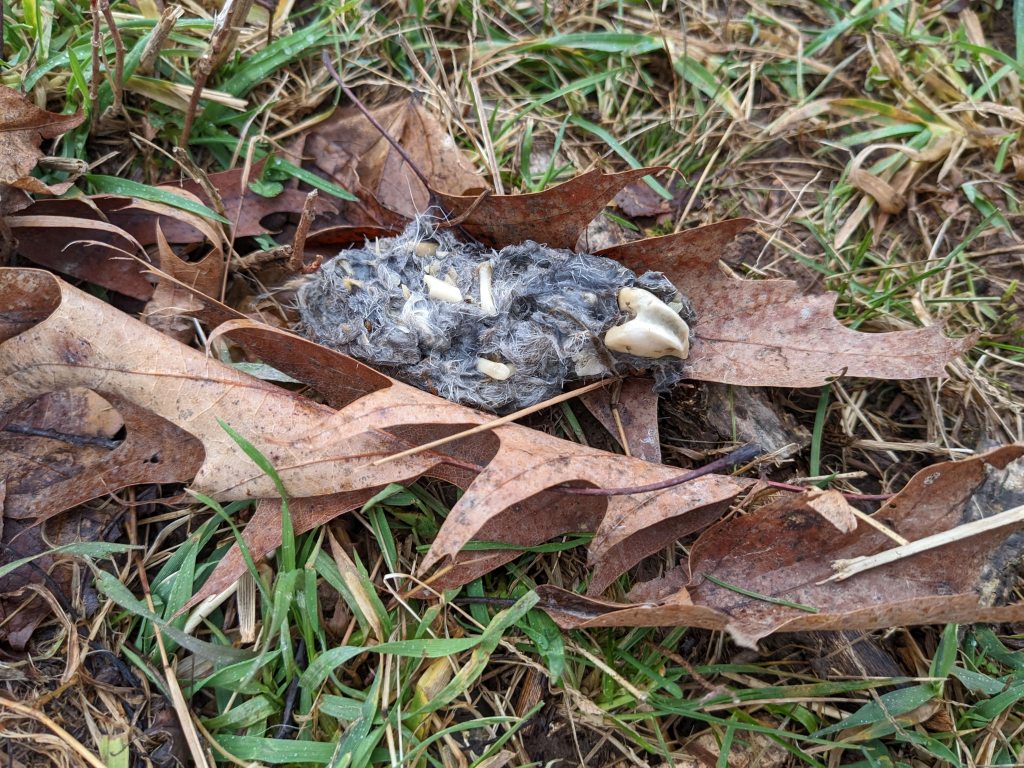
On a hike at Audubon Greenway Conservation Area last Wednesday we found a surprisingly large pellet containing fur, bones and a big tooth. It was so large that we wondered if a bird could produce it. I didn’t pick it up but it looked as though it could span my palm.
Pellet found at Audubon Greenway, 18 Jan 2023 (photo by Kate St. John)Alternate view of pellet found at Audubon Greenway, 18 Jan 2023 (photo by Kate St. John)


.jpg)