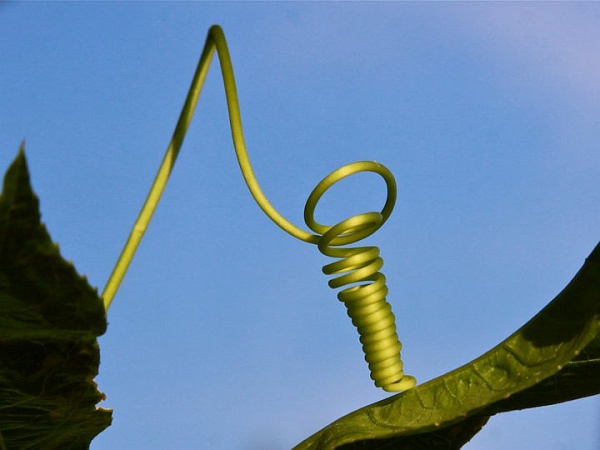
In the 13th century an Italian named Fibonacci changed the course of history. In the process he used numbers to describe this spiral. Here’s how.
Fibonacci was a great mathematician in the Middle Ages. In 1202 he published Liber Abaci (Book of Calculation) to introduce the Arabic numeral system to Europe.
Until that time, Europe used Roman numerals for commercial bookkeeping. Imagine CCXLVIII + MDCCCLXXIX = what? The new math was adopted quickly because it boosted European commerce.
In his book, Fibonacci included lots of examples showing how to calculate using 0-9 digits with place value. He also included “story problems.” Here’s the rabbit problem:
If you start with 1 pair of rabbits, how many pairs will there be at the end of one year?
- Start with 1 male and 1 female rabbit in a field
- They produce 1 male and 1 female rabbit every month from their second month of age onward.
- The young rabbits mature, pair up, and mate producing 1 male and 1 female per month from the second month of age onward.
- The rabbits never die.
The answer is a mathematical pattern. Start with 0 and 1 and put them in a row. Add them together to produce the next number in the sequence. Put this number at the end of the row and add those last two numbers to get the next one. Keep doing this forever.
       0,1
0+1=1  0,1,1
1+1=2  0,1,1,2
1+2=3  0,1,1,2,3
2+3=5  0,1,1,2,3,5
3+5=8  0,1,1,2,3,5,8
The Fibonacci sequence is: 0, 1, 1, 2, 3, 5, 8, 13, 21, 34, 55, 89, 144, 233, 377, 610,…
These numbers also describe spirals.
Imagine drawing squares whose edge lengths are the units in the Fibonacci sequence. Each time you draw a new square, make it touch the ones you drew before. Because each number in the sequence is larger, the new squares touch the old ones on their long edge. Eventually you’ll notice that you are drawing squares in a spiral. …Yes, this is hard to imagine. Here are some real life examples and Vi Hart’s YouTube video that shows how it works.
I’ve only grazed the surface of Fibonacci in nature so if you’d like to learn more see this educational math website from Surry, UK that has good, simple examples and animations.
I hope I haven’t lost you in math! I get excited by these things.
(photo of a maypops tendril by Chuck Tague)
p.s. In August 2011, Science Friday reviewed a new book about Fibonacci.
LOL! Numbers make my brain hurt…and I am an accountant by degree. Go figure…no pun intended. Thanks Kate. Have a super day!!! You brighten mine.
I think my head just exploded … 😉
Reminds me of one of my favorite books: On Growth and Form by D’Arcy Thompson. He describes many of the examples in nature of this spiral, this magic ratio; you’ll never look at a pineapple or pinecone (or your dog’s jaw-line) the same way!
Great article and links. Thanks. Hope all is well in the ‘burgh. Herm D. Atlanta,GA
Isn’t it amazing all of the organization that resides in nature?