 In the past several years we’ve become very aware of the dangers of lead poisoning, especially in children. We test our houses for lead paint, recall toys containing lead and filter our water.
But one problem we haven’t solved yet is the lead poisoning we cause in wildlife – and possibly ourselves – from spent bullets, shot and fishing sinkers. The heartbreaking results are lead poisoned loons, dead California condors and dying eagles. Sadly there’s a direct correlation between deer season and an increase in wildlife lead-poisoning. In Iowa it is the major cause of illness in bald eagles.
Because eagles are scavengers, they feast on the gut piles left behind by hunters. While this is an easy source of food – and it’s a good thing someone eats it – the guts contain tiny fragments of lead dispersed by the bullet’s transit. Some fragments are so small they can only be seen by a microscope. It takes just 30mg to kill an eagle.
Symptoms of lead poisoning include loss of balance, gasping, tremors, impaired flight, blindness, eventual starvation and death in two to three weeks. A lead-poisoned eagle is very, very sick. Click here and scroll down for a photo.
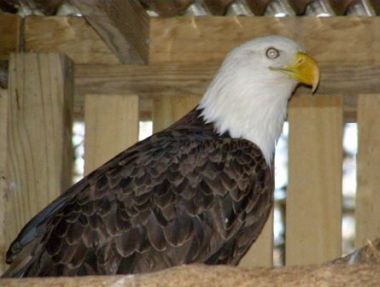
The lucky ones are rescued. That’s what happened to the eagle pictured here. She was found by hunters in Stark County, Ohio on December 28 and delivered to Medina Raptor Center. There she received injections of calcium EDTA, a mineral that binds to lead so the body can expel it in urea. It’s a long process and if blood tests show the bird’s lead level is still too high it has to be repeated.
Fortunately this eagle was found in time. She’s still recovering and doing well. We hope she’ll make a full recovery and be released back into the wild.
Meanwhile, is there anything we can do to prevent this? Yes. In 1991, after people realized that ducks and geese were dying of lead poisoning, lead shot was banned for waterfowl hunting. It could be banned for deer and small game hunting, but in the meantime if you know a hunter or fisherman, urge him or her to use non-toxic bullets and sinkers. And if they do use lead bullets, bury or remove the gut pile from the wild.
Better safe than sorry.
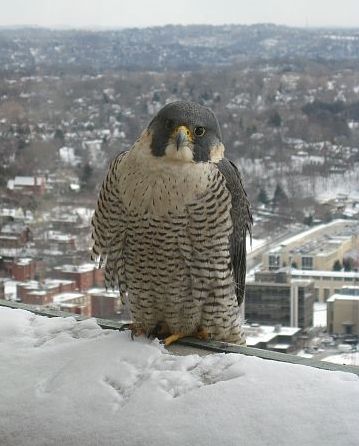
(photo by Debbie Parker at Medina Raptor Center. My special thanks go to the Raptor Center for treating and housing Pitt Stop, an injured and unreleaseable peregrine falcon born at Pittsburgh’s Gulf Tower in 2003.)


 This morning the sky is blue, the sun is shining, the wind is out of the south and the temperature will be above freezing for the first time in weeks. 45oF!
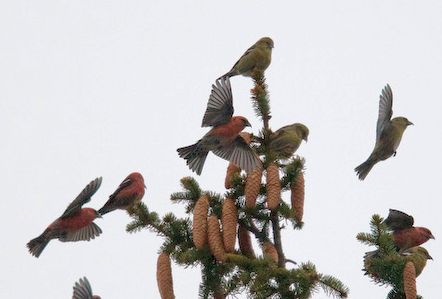
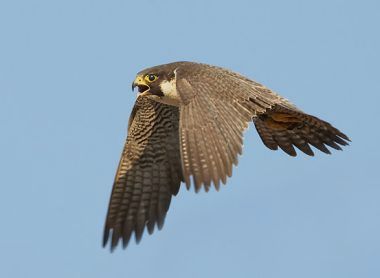 Since US Airways Flight 1549 made a forced landing in the Hudson River last Thursday, the subject of airplane-bird collisions (called “bird strikes”) has been much in the news.
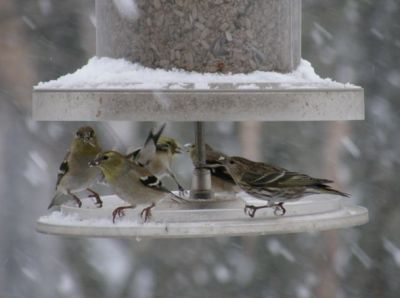 As I write this it’s -4 degrees Fahrenheit (-20 Celsius).
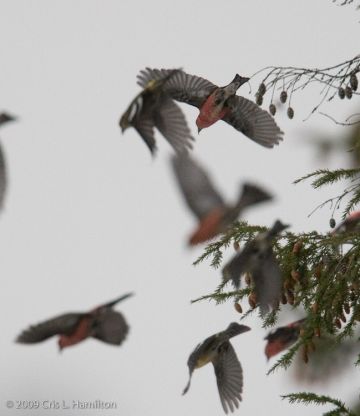 The word went out yesterday. If you want to see the white-winged crossbills at Washington Cemetery in Washington, PA now’s the time to do it. The flock is large – about 100 – the weather is changing and they might leave.