By the end of September broad-winged hawks are south of us and the most numerous species at Pennsylvania hawk watches becomes the sharp-shinned hawk.
Rainy weather (in September 2008) kept eastern migration numbers low for the past few days but the mix of raptors has changed nonetheless. At Hawk Ridge in Duluth, Minnesota, where the weather’s been better, there was an enormous peak of broad-winged numbers on September 15th. After that, sharp-shinned numbers grew.
As hawk watchers will tell you, “sharpie” migration does not make for friendly skies. Sharp-shinned hawks are ornery, even belligerent on the wing. Though they prefer to migrate in small groups, they frequently pick fights with fellow travelers. A typical sharp-shinned fly-by goes like this:
We see a sharp-shinned hawk approaching in his characteristic flap-flap-glide flight style. One or two other sharpies are with him and maybe a kestrel. The birds in this little group make good progress until one of the sharpies decides he can’t stand the guy next to him and dive-bombs him. The bird he attacks takes evasive action or attacks him back. They spar for a while — as they migrate! — then calm down and resume normal flight. This happens over and over.
It’s a wonder that sharpies waste time fighting on migration. They’re so lightweight that they have to flap more than other raptors to make headway and course corrections. You’d think they’d save their energy for flying.
But sharp-shinned hawks are highly territorial, so much so that the female attacks her mate if he waits near the nest after delivering food.
Sharpies even go out of their way to attack raptors that could eat them. Perhaps they think that the best defense is a good offense, but it doesn’t always work. Many a sharp-shinned hawk has ended up as lunch after attacking a peregrine falcon.
(photo by Steve Gosser)


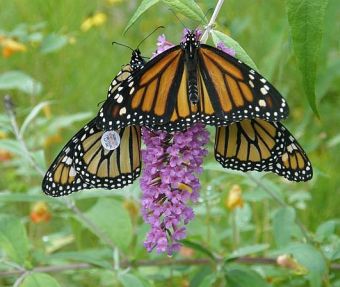 As I write this, eastern monarch butterflies are migrating south to Mexico, a journey of 2,500 miles for those who hatched in Canada.
 Or is it a galaxy?
 …does it make a sound?